XVI Lisbon Summer School for the Study of Culture
in association with
Porto Summer School on Art & Cinema
DISOBEDIENCE
Lisbon, June 29 – July 3, 2026
Deadline for submissions: February 8, 2026
Disobedience: noun. refusal or neglect to obey
Disobedience has long served as a central force behind cultural, political, and artistic transformation. Acts of defiance, refusal, and dissent – ranging from Gandhi’s civil disobedience to the U.S. Civil Rights Movement, the 1989 confrontations in Tiananmen Square, the Arab Spring, transnational antiprecarity movements or the Gilets Jaunes in France, and recent Pro-Palestinian demonstrations on university campuses worldwide – render agency visible and open possibilities for reshaping life and reconfiguring systems of power. In such instances, disobedience is not just a predominately nonviolent tool to destabilize and challenge authority; it is an exercise of freedom and a form of critique – the “art of not being governed like that” (Foucault 2007, 45) –, a moral and a civil duty in the face of injustice and illegitimacy, and the embodiment of what Thoreau (1849) called the fundamental “right of revolution”.
Hannah Arendt conceptualizes disobedience primarily as a collective phenomenon that emerges “when a significant number of citizens have become convinced either that the normal channels of change no longer function, and grievances will not be heard or acted upon, or that, on the contrary, the government is about to change and has embarked upon and persists in modes of action whose legality and constitutionality are open to grave doubts” (1972, 74). Yet, disobedience takes many shapes and forms: it can be collective or individual, local or transnational, and vary from radical to subtle depending on context and motivations. It may occur through embodied, non-verbal action – e.g., sit-ins, die-ins, occupations, road blockades, lock-ons, encampments – that give rise to “spaces of appearance”, as theorized by Butler (2015) as well as Mirzoeff (2017), drawing on Arendt. It can also refer to quieter practices such as hunger strikes, tree-sitting, whistleblowing, grassroots activism, cultural and creative dissent, and everyday resistance (de Certeau 1980). More covert strategies are often employed by subordinated groups who cannot risk open criticism and refusal. Foot dragging, desertion, false compliance, and feigned ignorance are but a few examples of what James C. Scott (1985) identified as the “weapons of the weak”.
Dissent and disobedience become means of reimagining the world – one in which the arts and culture play a crucial role. Artivism (Art + Activism) constitutes a form of counter-power, either by exposing practices of violence or by performatively asking for a new future. Artists such as Thomas Hirschhorn, Tania Bruguera, and Maria Galindo, among many others, vocally affront state powers as well as the social patriarchal structures that demand people’s obedience or compliance. This has been attempted by many filmmakers in a variety of ways: using the archive to unveil hidden machines of propaganda (Sergei Loznitsa, Andrei Ujică); developing forensic filmic analyses of surveillance and power (Laura Poitras and Field of Vision, Forensic Architecture); or even producing fiction films that problematize community demands against multinationals and protection of their livelihoods (Ryusuke Hamaguchi, João Salaviza & Renée Nader Messora, Kleber Mendonça Filho).
The arts can also engage in aesthetic disobedience (Neufeld 2015) through artistic innovation or revolutionary acts that reveal and contest accepted practices and norms in the artworld. While great artistic movements have emerged from “anti-aesthetic” transgressions (Foster 1983) and the violation of artistic conventions – from Stravinsky’s disruption of tonality to Duchamp’s questioning of what counts as art –, aesthetic disobedience can also be enacted by the audience. Reactions such as booing, making noise, and stage-storming can (re)shape aesthetic appreciation and the performance itself (Neufeld 2015).
Artistic and activist practices can also be directed towards meaning by interrupting an original message with another, thus subverting or recoding the prevalent order. This semiotic disobedience (Katayal 2006) includes culture jamming, namely billboard high jacking, vandalism, defacement, cyber-squatting, property mutilation or alteration, and other forms of satirical or parodic subversion aimed at challenging corporate and governmental power and converting passive spectators into active participants.
Disobedience also involves rejecting prevailing knowledge systems. Mignolo (2009) discusses epistemic disobedience as resisting Eurocentric ways of knowing and believing, highlighting how the geopolitics of knowledge expose deep asymmetries in global scholarship and society. Artistic, spiritual, and local epistemologies can introduce alternative ideas, practices, and processes by renegotiating relations and drawing on diverse experiences. In this light, disobedience becomes a form of “epistemic delinking” (Mignolo 2007), creating and articulating meaning that exceeds the boundaries of dominant frameworks. It is about asserting the right to view and understand the world differently.
The XVI Lisbon Summer School for the Study of Culture, in association with the Porto Summer School on Art & Cinema, is dedicated to disobedience as artistic practice and an idea, exploring its multiple forms, dynamics, and limits. It examines both macro and micro acts of refusal and dissent, as well as the visible and invisible tactics used to undermine oppressive systems or disrupt established orders. By considering political action, artistic expression, and everyday transgressive actions, the Summer School ultimately seeks to understand disobedience not as a destructive force, but as a creative and transformative one.
This Summer School is organized in connection with the Disobedience Archive, a curatorial project by Marco Scotini, which will present an iteration of the exhibition at the Amélia de Mello Foundation Gallery in Lisbon, with the collaboration of Ângela Ferreira.
Disobedience Archive is a multiphase, mobile, and evolving video archive that concentrates on the relationship between artistic practices and political action. Presented fifteen times in different countries, Disobedience Archive transforms each time without ever assuming a final configuration. Whether in the form of a parliament, a school, or a community garden, the project turns the archive, typically static and taxonomic, into a dynamic and generative device.
Confirmed speakers: Sergei Loznitsa (filmmaker), Marco Scotini (curator, Disobedience Archive), Ângela Ferreira (artist), Ato Quayson (Stanford University), Markus Messling (CURE, Saarland University), Gabrielle Civil (artist) (more TBA)
Papers are welcome on the following topics, amongst others:
- The arts as practices of disobedience (including cinema, contemporary art, photography or new media art, music, and literature)
- Culture and/of disobedience
- Archives of disobedience
- Representations of disobedience
- Disobedience across the ages
- Resistance, dissent and civil disobedience
- The aesthetics of refusal and nonconformity
- Insolence and petulance
- Contestation, insubordination, insurrection, and upheaval
- Laughter/humor as disobedience
- Epistemic disobedience
- The politics of obedience: compliance, discipline, and normalization
- Disobedience in digital cultures and digital disobedience
We encourage proposals coming from the fields of cultural studies, film and the visual arts, literary and translation studies, history, anthropology, media, and political sciences, among others. We also accept new forms of artistic research, such as audiovisual essays (up to 20 minutes).
Proposals
Proposals should be sent to lxsummerschool@gmail.com no later than February 8, 2026, and include paper title, abstract in English (max. 200 words), name, e-mail address, institutional affiliation, and a brief bio (max. 100 words) mentioning ongoing research.
Applicants will be informed of the results of their submissions by February 27, 2026.
Submission of full papers/audiovisual essays
Presenters are required to send in full papers/audiovisual essays no later than April 30, 2026.
The papers and the audiovisual essays will be circulated amongst the participants. In the slot allotted to each participant (30’), only 10’ may be used for a brief summary of the research piece. The Summer School is a place for networked exchange of ideas, and organizers wish to have as much time as possible for a structured discussion between participants. Therefore, in each slot, 10’ will be used for presentation, and 20’ for discussion.
Registration fees
Participants with paper [for the entire week – includes lectures, master classes, doctoral sessions, lunches and closing dinner]
Early bird [March 6-31] – 350€
Regular [April 1 – June 1] – 450€
Participants without paper [per day – closing dinner not included]
Early bird [March 6-31] – 60€
Regular [April 1 – June 1] – 80€
Fee waivers
For The Lisbon Consortium students, CECC and CITAR researchers, PhD students and MA poster presenters from the Católica School of Arts, there is no registration fee.
For other UCP students, students from institutions affiliated with the European Summer School in Cultural Studies (ESSCS), members of the European PhD-Net in Literary and Cultural Studies, and members of the Critical Theory Network the registration fee is 120€ [Early bird – March 6-31]; 200€ [Regular – April 1-June1].
Organizing Committee
- Adriana Martins
- Alexandra Lopes
- Annimari Juvonen
- Daniel Ribas
- Diana Gonçalves
- Nuno Crespo
- Patrícia Fontes
- Paulo de Campos Pinto
- Peter Hanenberg
- Rita Faria
Scientific Committee
- Adriana Martins
- Alexandra Balona
- Alexandra Lopes
- Ana Margarida Abrantes
- Annimari Juvonen
- Carlos Natálio
- Diana Gonçalves
- Joana Moura
- Luísa Leal de Faria
- Luísa Santos
- Maria Coutinho
- Peter Hanenberg
- Paulo de Campos Pinto
- Rita Bueno Maia
- Rita Faria
- Sofia Pinto
- Sara Eckerson
- Verena Lindemann Lino

This event is supported by the Research Centre for Communication and Culture (CECC) and the Research Center for Science and Technology of the Arts (CITAR) at Universidade Católica Portuguesa, through funding by FCT under the Collaboration Protocol for the Pluriannual Financing Plan (ref. nos. UID/00126/2025 and UID/622/2025, respectively).
Call for Participation
International Summer Workshop:
The Ethics of Storytelling
July 20–23, 2026
International Graduate Centre for the Study of Culture (GCSC) Justus Liebig University Giessen, Germany
In Collaboration With: The Netherlands Winter School on Narrative, University of Groningen; Narrare-Centre for Interdisciplinary Narrative Studies, Tampere University; Faculty of Letters, University of Wrocław
In what has been described as an “age of total narrative,” storytelling plays an increasingly central role in public discourse, professional practice, and everyday life. Yet, systematic exchanges between research on narratives and applied narrative practices remain surprisingly limited. This workshop addresses this gap by examining how narratives operate in real-world settings: how they persuade, mobilize, include and exclude, stabilize identities, and shape ethical judgments across domains such as healthcare, management, organizational consultancy, environmental activism, education, and digital media.
Positioning itself within the rapidly expanding field of applied narratology (the study of narratives), the workshop introduces an ethical applied narratology that foregrounds questions of responsibility, power, and consequence. It treats storytelling not as a neutral tool but as a culturally and politically charged resource whose use demands critical reflection.
Participants will be invited to reflect on how narrative practices can be designed, evaluated, and intervened in to foster greater justice, reflexivity, and sustainability. To this end, the workshop deliberately moves beyond narratology’s traditional focus on literary texts and abstract models while retaining the field’s critical orientation toward narrative as a formative social and ethical force.
Together and over four days, we will:
- Contribute to the development of socially responsible, ethically grounded approaches to storytelling in an age of misinformation, AI-generated narratives, and narrative commodification.
- Encourage dialogue between scholars and practitioners working across disciplines and sectors;
- Foster narrative literacy, enabling participants to critically assess, responsibly employ, and ethically evaluate storytelling practices;
- Examine the ethical implications of narratives in professional, institutional, and everyday contexts;
- Explore how narratological concepts can be applied beyond literary studies.
By combining theoretical reflection with hands-on methodological training, this workshop addresses both the creation of applied narrative tools and the critical evaluation of narrative manipulation, with particular attention to ethics, power, and responsibility.
Target Audience
The workshop is designed for:
- MA and PhD students, early career researchers, and established scholars from the humanities and social sciences;
- Professionals interested in ethical narrative practices (e.g. consultants, educators, artists, content creators, healthcare professionals)
Program Highlights
The workshop will feature four one-day workshops, as well as a keynote lecture by internationally renowned scholars:
One-Day Workshops:
- Prof. Mari Hatavara (Narrare-Centre for Interdisciplinary Narrative Studies; University of Tampere) – The Travelling Methods of Narratology
- Dr. Deborah de Muijnck (International Graduate Centre for the Study of Culture, JLU Giessen) – The Scandalization of Narratives in (Anti-) Social Media
- Prof. Sjoerd-Jeroen Moenandar (The Netherlands Winter School on Narrative, University of Groningen) – Narrative Consultancy and Its Application Across
Professional Fields - Prof. Wojciech Małecki (Faculty of Letters, University of Wrocław) – Applied
Empirical Ecocriticism and Narrative’s Role in Environmental Advocacy
Keynote Speaker - Prof. Rita Charon, M.D. (Executive Director Columbia Narrative Medicine, Columbia
University): The Ethicality of Storytelling: Privacy, Confidentiality, and “Ownership” of Patients’ Stories
How to Apply
Applicants are invited to submit the following materials:
- A short bio of approximately 150 words, including institutional affiliation and research
or professional interests. - A brief abstract / motivation statement of approximately 250 words, outlining:
– the applicant’s research or professional background,
– their motivation to participate in the workshop, and
– the relevance of their interests to the theme of ethical applied narratology.
Application deadline: March 3rd
Applications should be sent to the following address: phdnet@gcsc.uni-giessen.de
Notification of acceptance: April 2026.
Participation Fees
- External participants: 250 EUR.
- Reduced fee (100 EUR waiver) for members of the GCSC, European PhDnet Literary and Cultural Studies, ESSCS, and of the Universities of Tampere, JLU Giessen, Columbia University, the University of Groningen, and the University of Wrocław
Call for Papers
ESSCS 2026: Epistemic Equity
Organized by PASS – Center for Practice-based Art Studies
on behalf of the European Summer School for Cultural Studies (ESSCS)
University of Copenhagen
24-28 August 2026
Epistemic Equity – What counts as knowledge and what knowledge counts?
Epistemic injustice haunts so much of history, especially in its progressivist and modernist forms. What knowledge is valued, and whose knowledge is discarded or discounted across the longue durée of what we now call ‘knowledge producing practices’? In what ways can this lost and repressed knowledge be surfaced and explored, articulated and legitimated – even deployed? To explore epistemic equity is to invite just thoughts, and to imagine new forms of collaboration, knowledge production, and care. What kinds of worlds would be made if the western canon began to meaningfully accommodate traditional and indigenous environmental knowledge-ways? Or if the findings and assertions of artists were taken to be as significant as those of art historians?
As we reckon with the legacies of epistemic injustice across disciplines, cultures, and institutions, this conference invites critical reflection, speculative thinking, and practice-led research on the persistent asymmetries that structure knowledge production. We explore the concept of epistemic equity as both a critical framework and a hopeful method for reimagining what could and should count as knowledge, whose voices are heard, and how alternative forms of knowing can take root within – and transform – our fields.
This conference seeks to elucidate and amplify research that pushes at the edges of disciplinary norms, artistic hierarchies, and institutional authority. The field of Cultural Studies has long been at the forefront of these inquiries, not only diagnosing the colonial, racial, gendered, and disciplinary exclusions embedded in institutions of knowledge, but also modeling new methods for intellectual and artistic production. From feminist theory and Black radical thought to decolonial praxis and indigenous epistemologies, to the experimental, creative and embodied forms of knowing often associated with practice-based research. Fundamental questions in the understanding of humanity, of culture, and of history are tied up in epistemic asymmetries, many of which are now wide open to correction. Feminist theory for 250 years has grappled not only with achieving gender equality, but with asserting the validity of thought that emanates from worldly experiences of women. Black studies as a field attends meticulously to the recursive nature of slavery in undereducation and carceration, and also to the fundamental interdisciplinarity and radicality of Black thought and aesthetics. Literary studies and art history are productively decentered by sustained problematisations of Western notions of genre, convention, periodisations and the genealogies of aesthetics. Decolonial theory and methods addressing the coloniality of knowledge itself are now operative in almost all fields of cultural studies, from anthropology through archives and collections, from geography to literary studies, from artistic practices to curatorial thinking. This too is ultimately a project attempting the complete recalibration of what we understand to be knowledge, and of knowledge institutions such as universities, museums, art schools, publishers and the press. The concept of ‘epistemic equity’, and blueprints for achieving its promise of repair, are clearly among the most significant fruits of cultural studies over the past fifty years.
Core questions include:
• How does this project, these methods, and this aim of ‘total recalibration’ manifest in the kinds of cultural productions that are the objects and subjects of cultural studies?
•Above, beyond and alongside this, how do these questions also manifest in our own ways of making and doing knowledge as critical thinkers? How does epistemic asymmetry, and its hopeful counterpart epistemic equity, infuse our thinking, our working lives and our contexts of practice – and ultimately our very sense of purpose?
•What does epistemic equity look like across diverse contexts and disciplines?
•How do artistic, embodied, and/or non-Western epistemologies contest dominant academic paradigms?
•What are the risks and potentials of de-centering the Western canon within cultural studies?
•How do our practices of research, curation, and pedagogy reflect or resist epistemic asymmetry?
•What might a museum, a syllabus, a research project, or a community archive look like if epistemic equity were its foundation?
•How might cultural formulations of epistemic equity inform urgent debates around Artificial Intelligence and digital hegemonies?
Suggested topics:
•Practice-based approaches to decoloniality, feminist theory, or radical pedagogy
•Artistic research that challenges disciplinary boundaries
•Intersectional critiques of institutional knowledge (museums, universities, media)
•Transdisciplinary and/or situated knowledge practices
•Articulations of representations that either foreground epistemic asymmetries or model epistemic equity (literary, dramatic, artistic, filmic, photographic, philosophical, etc.)
•Curatorial strategies as epistemic intervention
•Reimagining archives, collections, or historiography
•Cultural work and environmental knowledge (including indigenous and traditional)
•The politics of citation, authorship, and intellectual property
•Reflections on epistemic justice and precarity in academic labor
Formats encouraged:
We welcome a broad range of formats and cross-format collaborations, including:
•Academic papers
•Practice-led presentations
•Curatorial case studies
•Visual or performative talks
•Collaborative panels
•Workshops
•Audio-visual submissions
Experimental or dialogic formats
We especially encourage participation from those working across practice and theory, and from scholars, artists, and curators engaging with or deploying underrepresented knowledge traditions
Key thinkers: Historicity & lineages
This conference draws inspiration from the intellectual and artistic legacies of figures including (but not limited to): Sara Ahmed, Gloria Anzaldúa, Pia Arke, Hans Belting, Pierre Bourdieu, Rachel Carson, Kimberlé Crenshaw, Natalie Davis, Michel Foucault, Carlo Ginzburg, Stuart Hall, Donna Haraway, bell hooks, Luce Irigaray, Audre Lorde, Walter Mignolo, Fred Moten, Helio Oiticica, Mary Louise Pratt, Carolee Schneemann, Edward Said, Gayatri Spivak, Mary Wollstonecraft and Sylvia Wynter.
Submission details:
•Abstract Deadline: 15 February 2026
•Notification of Acceptance: 1 April 2026
•Conference Dates: 24-28 August 2026
Location: The University of Copenhagen + other venues in the city
Submit a single-page proposal of 300–400 words, along with a short biographical statement (100–150 words) by email to pass@hum.ku.dk using the subject line ‘ESSCS 2026 Proposal’
If submitting a non-conventional format, please also include a brief description of any technical or spatial needs on a separate page.
Researchers wishing to participate and who may require financial assistance to do so are invited to outline their needs as part of their proposal. Limited funds can be made available to support participation in special circumstances.
About ESSCS & PASS
The European Summer School for Cultural Studies (ESSCS) is a collaborative consortium of institutions dedicated to the advancement of cultural theory, transdisciplinary methodologies, and inclusive intellectual exchange. The 2026 conference is hosted by PASS – Center for Practice-based Art Studies, a hub for critical and artistic exploration of how knowledge is made, shared, and transformed across disciplinary and institutional borders.
Op. Cit.: A Journal of Anglo-American Studies
Series 4, No. 1, General Issue
2026
(New) Beginnings
Deadline: 15 February 2026
Thoughts associated with beginnings often include excitement, anticipation, and a sense of possibility, alongside potential anxiety, uncertainty, and a hint of the unknown. Beginnings can be viewed as a fresh start, a new chapter, or a chance to rebuild, while also acknowledging the potential messiness and challenges that come with starting something new.
Hence, on the plus side, beginnings represent a fresh start, offering the chance to pursue new goals, learn new things, and create a better future. There’s often a sense of thrill and eagerness associated with the start of something new, whether it’s a new job, a new relationship, or a new hobby. Beginnings provide an opportunity for personal and professional development, allowing individuals to expand their horizons and discover new facets of themselves. Starting anew can involve shedding old habits and embracing a different path, leading to significant personal transformation. In a nutshell, beginnings herald positive aspects such as hope and opportunity, excitement and anticipation, the potential for growth, reinvention and transformation.
However, beginnings can also prefigure challenging attributes of uncertainty and anxiety, fear of failure, discomfort, and letting go of the past: the possibility of failure can loom large, creating anxiety and hesitation when embarking on a new endeavour; the initial stages of any new undertaking can be messy and require a willingness to adapt and learn from mistakes; moving forward often requires letting go of past experiences and attachments, which can be emotionally challenging. By definition, beginnings are thus a complex mix of positive and negative emotions, offering both the promise of a brighter future and the potential for difficult adjustments.
For the first general issue in the fourth series of Op. Cit.: A Journal of Anglo-American Studies, we are especially interested in contributions that analyse beginnings, with a focus on both positive and negative aspects as suggested in the literary quotes below:
- “The beginning is always today.” (Mary Shelley)
- “I make so many beginnings there never will be an end.” (Louisa May Alcott)
- “Every new beginning comes from other beginning’s end.” (Seneca)
- “One can begin so many things with a new person – even begin to be a better man.” (George Eliot)
- “Man cannot discover new oceans unless he has the courage to lose sight of the shore.” (Andre Gide)
- “You are never too old to set another goal or to dream a new dream.” (C.S. Lewis)
- “For last year’s words belong to last year’s language/ And next year’s words await another voice./ And to make an end is to make a beginning.” (T.S. Eliot)
We welcome papers from scholars from a variety of academic backgrounds and encourage submissions from postgraduate students and early career researchers. Submissions, between 5,000 and 7,500 words in length, must be sent to op.cit.journal@gmail.com by February 15, 2026. Manuscripts will undergo a double-blind peer reviewing process, and must be unpublished. The authors will be notified by the end of February 2026.
When preparing your manuscript, please ensure that you consider the guidelines available at https://opcit.apeaa.pt/index.php/journal/submission-guidelines, as well as the journal’s stylesheet (https://opcit.apeaa.pt/index.php/journal/op-cit-style-sheet). Failure to comply may delay the processing of your submission.
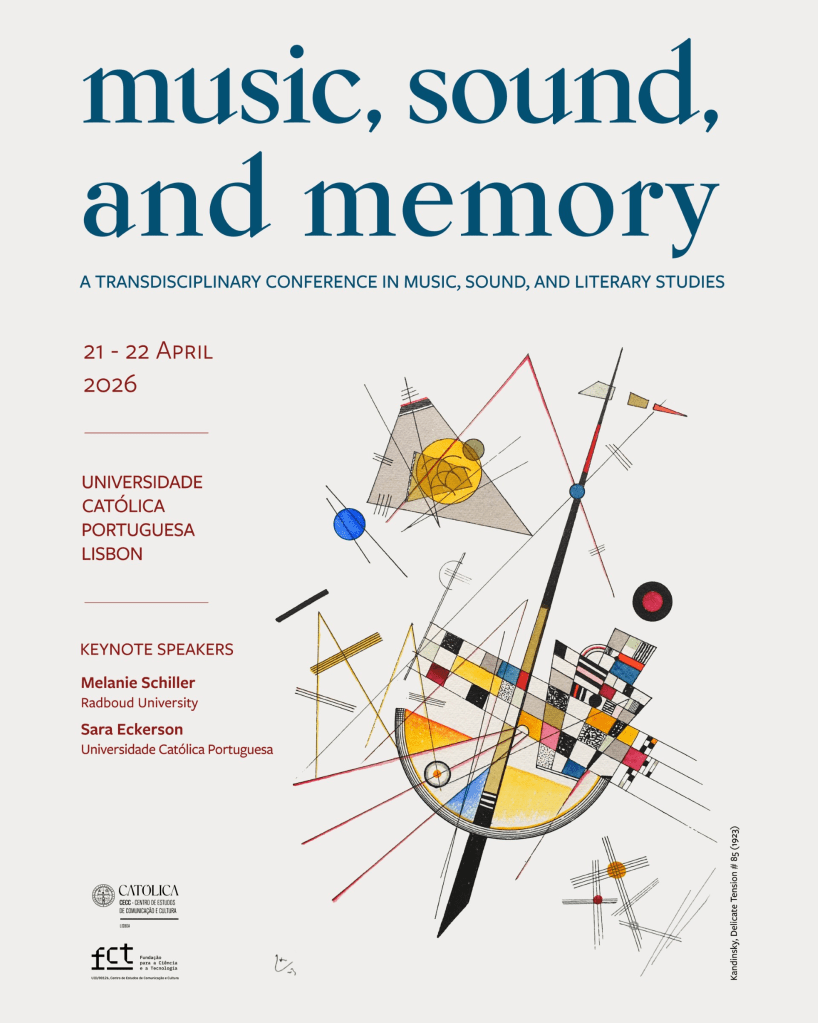
Music, Sound, and Memory:
A Transdisciplinary Conference in Music, Sound, and Literary Studies
The relationship between music, sound, and memory has become a focal point of scholarly inquiry in recent years, illuminating the intricate connections between auditory experiences, cognitive functions, and how these might be written down or discussed in a wider dialogue within culture. Researchers have begun to explore the way various musical elements, such as melody, rhythm, and harmony, can evoke specific memories and emotional responses, thereby influencing individual recollection and perception of past events. This exploration has revealed that auditory stimuli (for example, melodies and other musical material) can serve as powerful triggers for memory recall, often eliciting vivid recollections deeply intertwined with personal experiences (Jancke 2008, 21.3).
At the same time, music and sound are also mobilized to build collective or cultural memories (Assmann 1995, 125–133). These processes can vary widely, from the historical negotiation that elevates a genre into a paradigm for national identity (L’Hoeste & Vila 2017) to the relationship between nostalgia and soundscapes (Brusila, Johnson & Richardson 2016). Further, music, sound and memory can also reflect political meaning, particularly in struggles between ideology and hegemony (Frith 1996), and shape both autobiographical and collective memories.
This conference aims to explore multidisciplinary approaches in the fields of Music Studies, Culture Studies, Literary Studies, Sound Studies, and Memory Studies. Contributions are welcome on (but not limited to) the following topics:
- Autobiographical memory and music or sound;
- Autobiography and the recording/description of music in literature;
- Music, sound, identity, and the politics of memory;
- Collective and/or individual memories and soundscapes;
- Nostalgia and sonic environments;
- Music/sound in film, media, and popular culture;
- The relationships between music, sound, and memory in literature;
- Transcultural and postcolonial perspectives on music and sound
We particularly encourage abstract submissions from early-career researchers, PhD candidates, and independent scholars, as well as posters from MA candidates. Authors are also kindly asked to specify whether they have used AI or any other Large Language Model (LLM) in the writing of their abstract. The conference organizers are additionally considering the possibility of publishing conference proceedings, pending funding approval.
Submission Guidelines
All proposals must be submitted to: cecc.fch@ucp.pt
Papers: Submit a 300-word abstract for a 20-minute presentation, including a working title, a brief bio note (max. 150 words), and contact details.
Posters: Submit a 250-word abstract for a poster. The finalized poster must be submitted as A0-size (with Introduction, Objectives, Method, Discussion, and Conclusion), structured for a 5-minute presentation.
- Deadline for abstract submission: 16 January 2026
- Notification of acceptance: 01 February 2026
- After acceptance of abstracts, participants will be asked to register for the conference.
For more information: https://cecc.fch.lisboa.ucp.pt/en/news/music-sound-and-memory
Registration fees & deadlines
The registration fee includes coffee breaks and conference materials.
Early bird registration (1 – 28 February): €75
Regular registration (1 – 15 March): €100
Late registration (16 – 20 March): €125
References
Assmann, Jan. 1995. ‘Collective Memory and Cultural Identity’. New German Critique, no. 65, 125–33. https://doi.org/10.2307/488538.
Baumgartner, Michael, and Ewelina Boczkowska. 2020. Music, Collective Memory, Trauma, and Nostalgia in European Cinema after the Second World War. London: Routledge.
Belfi, Amy M., and Kelly Jakubowski. 2021. ‘Music and Autobiographical Memory’. Music & Science 4 (January):20592043211047123. https://doi.org/10.1177/20592043211047123.
Brusila, Johannes, Bruce Johnson, and John Richardson, eds. 2016. Memory, Space and Sound. Bristol Chicago, Illinois: Intellect Ltd. DeNora, Tia. 2000. Music in Everyday Life. Cambridge: Cambridge University Press.
Frith, Simon. 1996. Performing Rites: On the Value of Popular Music. Harvard: Harvard University Press. Jäncke, Lutz. 2008. ‘Music, Memory and Emotion’. Journal of Biology 7 (6): 21.
L’Hoeste, Héctor Fernández, and Pablo Vila. 2017. Sound, Image, and National Imaginary in the Construction of Latin/o American Identities. Bloomsbury.
Diffractions – Graduate Journal for the Study of Culture
Speak at Your Own Risk: The Many Faces of (Self-)Censorship
Deadline for abstracts: November 15, 2025
Editors-in-chief: Inês Fernandes and Teresa Weinholtz
“In a society like ours, the procedures of exclusion are well known. […] We know quite well that we do not have the right to say everything” (Foucault 1980, 52). Often regarded as an instrument of repression of ideas and information (American Library Association 2021), censorship “refers to the control by public authorities (usually the Church or the State) of any form of publication or broadcast, usually through a mechanism for scrutinising all material prior to publication” (McQuail and Deuze 2020, 589). Most commonly associated with control that is visible and imposed by the State, censorship can be regarded “as a subject of history, which means that it has to be considered not only in its formal dimension, as an apparatus of State control and repression, but also as a social agent that permanently and complexly shapes the relationship between individuals and institutions” (Barros 2022, 17). Either through literature, with the act of burning books in Bradbury’s Fahrenheit 451 ([1953] 2018) and the control of thought in Orwell’s Nineteen Eighty-Four ([1949] 2023), or the morality or political restrictions in cinema (Biltereyst and Winkel 2013), or even contemporary China with the firewall that controls internet access (Stanford University n.d.; Gosztonyi 2023), censorship has gathered a broader definition beyond that of State control.
The study of censorship should not be limited to dictatorships or historically oppressive political regimes, as it can also be found as an institutionalised social force, based on the concept of “public morality” (Mathiesen 2008, 577), in cultural institutions, digital platforms, and academic environments. In its more formal configuration, censorship can be a tool of repression and strict prohibition. In its informal and more personal perspective, it can be viewed as socially imposed censorship and/or self-censorship, thereby expanding its definition “to the productive force that creates new forms of discourse, new forms of communication, and new models of communication” (Bunn 2015, 26). As Judith Butler (2021) argues, censorship precedes speech, as it determines in advance what type of speech is or is not acceptable. Similarly, Bourdieu (1991) describes how censorship affects language, as what we are authorised to say becomes internalised. Censorship, in this light, is not only a legal or institutional force, but can also become a social imposition. This issue thus seeks to explore the many forms of censorship, self-censorship, and everything in between; past and present, imposed and chosen, visible and hidden.
Recent events have shed light into an ongoing reality of censorship that contributes to the urgency of these discussions. Most recently, in the United States, governmental restrictions on words such as “women,” “diversity,” and “disability” in academic grant applications and school curricula (Yourish et al. 2025) reveal the close relationship between language and ideological control through State censorship. In Germany, artists and curators have been fired or publicly blacklisted for expressing solidarity with Palestine on their personal social media (Solomon 2023), demonstrating that speech can be punished even within liberal democracies when it contradicts socially established narratives, creating environments of fear through instances of social censorship. On social media platforms like TikTok, users increasingly engage in linguistic innovation. With phrases like “unalive” instead of “kill,” they intentionally alter or misspell specific trigger words to avoid algorithmic suppression, or shadowbanning (Calhoun and Fawcett 2023). This form of self-censorship is strategic and creative, but also reveals the pressures users face to remain visible in social media spaces that are moderated by strict automated systems.
This issue invites contributions that critically examine how all forms of censorship and self-censorship operate today, as well as how they have operated historically. We invite interventions from different contemporary, historical, and geopolitical perspectives, and interdisciplinary approaches from all fields in the humanities. Besides proposals for academic papers on the topic of this issue, we also welcome proposals in the form of interviews, book reviews, essays, artistic contributions, as well as non-thematic articles. Suggested topics include, but are not limited to the following:
Historical and contemporary (self-)censorship
- Censorship and political regimes
- Self-censorship as personal, professional, and intellectual preservation
- Censorship and self-censorship…
- in media ecosystems
- in film and cinemain art, performance, and curatorship
- in image and photography
- in language, literature, and translation
- in knowledge and academia
- in artificial intelligence
- in memory: preservation and/or erasure
- in children’s media and literature
- in social media, online content and behaviour
- and cancel culture
…
For artistic submissions, we are interested in proposals that engage in form or content with the theme of censorship and/or self-censorship, such as:
- Visual essays
- Graphic or visual storytelling
- Collaborations between text-based and image-based artists
- Poetry and visual poetry
- …
Submissions and review process Abstracts will be received and reviewed by the Diffractions editorial board who will decide on the pertinence of proposals for the upcoming issue. After submission, we will get in touch with the authors of accepted abstracts in order to invite them to submit a full article. However,this does not imply that these papers will be automatically published. Rather, they will go through a peer-review process that will determine whether papers are publishable with minor or major changes, or they do not fulfil the criteria for publication.
Please send abstracts of 150 to 250 words, and 5–8 keywords by NOVEMBER 15, 2025, to info.diffractions@gmail.com with the subject “Diffractions 12”, followed by your last name.
The full papers should be submitted by MARCH 15, 2026, through the journal’s platform: https://revistas.ucp.pt/index.php/diffractions/about/submissions.
Every issue of Diffractions has a thematic focus but also contains special sections for non-thematic articles. If you are interested in submitting an article that is not related to the topic of this particular issue, please consult the general guidelines available on the Diffractions website at https://revistas.ucp.pt/index.php/diffractions/about/submissions. The submission and review process for non-thematic articles is the same as for the general thematic issue. All research areas of the humanities are welcome, and we accept contributions in English or Portuguese.
Diffractions – Graduate Journal for the Study of Culture
Visual Poetics and Gender: Rendering Absence and Error
Deadline for abstracts: May 31st 2025
Editors-in-chief: Emily Marie Passos Duffy and Amadea Kovič
Absences, both as a verbal phenomenon and textual/visual strategy, are evocative. They can convey even more than what is included in a work—pointing to the unsaid, the unexpressed, redacted, or censored. A space, an error, or an errant form can be seen as a collision between semiotic systems, lending itself to ekphrastic consideration, braiding together the verbal and the visual. History until this day is punctuated with gendered absences, and the visual mode has the potential to underscore them by making them visible; as noted by Elisabeth Frost (2016), there are “specifically feminist possibilities of a visually-oriented poetics” (339). Glitch feminism, for example, builds itself on the notion of the ‘glitch-as-error,‘ a term seeping from the digital world to claim and embrace the fluidity of the material against the dominance and normativity of the binary (Russell 2020). This call finds itself at an intersection between visual poetics as an approach/ philosophy and visual poetry as one of its genre outputs, engaging with both the visual and verbal to explore gender and absence.
Visual poetics are defined through a number of perspectives: as an approach described by Mieke Bal (1988), it denies the “word-image” opposition and explores possibilities of a poetics of the visual and the visual dimensions of the written word, calling for mutual collaboration between and across mediums (178), while Frost (2016) defines it “as writing that explores the materiality of word, page, or screen” (339). Within the genre output of visual poetry—a genre umbrella that may include concrete poetry, asemic (“wordless”) poems, choreopoems, erasures, and redactions—there are countless examples of artists working on “visual compositions precisely to question the gendered politics of the history of poetry, material culture, and reading or performance” (Frost 2016, 339).
Within the context of this call, we are specifically interested in the potential of visual poetics to render visibility to absences, engage with error, and convey histories of silence, censorship and erasure. What happens when certain narratives lack visibility, and present blank spaces within public visual language? Works by 21st century women poets Anne Carson and Gabrielle Civil demonstrate a poetic engagement with absence, as well as the material and visual aspects of both language and translation. In a note following “errances: an essay of errors after Jacqueline Beaugé-Rosier,” performance artist, poet, and writer Gabrielle Civil (2020) describes her ongoing work of translating A vol d’ombre by Haitian poet Jacqueline Beaugé-Rosier as “a trial of wandering,” “a shadow lineage” and “a timeline of discarded choices.” The essay´s visual dimensions—namely, white space, brackets, and cross-outs— constitute an archive of doubt, possibility, absence, and trials.
Absences and errors can convey meaning and possibilities for reading and interpretation—in Civil’s case, they indicate a grappling with the language itself, and the challenges translation presents with “false friends, language, meaning, and memory” (Civil 2020). In Carson’s case, the brackets and white space in If Not, Winter: Fragments of Sappho perform and engage with the loss—an elegy for the missing pieces of the source text itself in its entirety, and an engagement with what remains.
This call is interested in how gender-based concerns can be expressed through visual language and its absences, resulting in visual poetics in their varied and multilayered manifestations—and how these intersections may illuminate the bounds and possibilities of genre, form, and semiotic system.
We invite explorations and examples of artistic productions which utilise the interplay between the verbal, visual, and gender—in particular, the use of visual poetics to highlight absence, invisibility and erasure, considering:
- How can visual language be used to convey narratives that are beyond the verbal?
- How might an absence be translated into visual language?
- What is the role of error in visual poetics, and how does it connect to gender?
Proposals for thematic articles in response to this call are welcome, including but not limited to the following topics:
- The translation of visual or concrete poetry
- Visual poetics and gender
- (In)visibility
- Expressions of error in visual poetry
- Visual rendering/annotation of speech-based poetics
- Absence as evocative, absence as resistance strategy
- Ekphrastic writing—writing in response to visual art
- Collaborations between visual artists and poets
- Street art/graffiti as a form of visual poetics
- Intertextuality/Intersemiotic translation and gender
- Visual poetics, AI and technology
- Visual poetics and theory
For artistic submissions, we are interested in the following:
- Visual essays
- Interviews
- Graphic or visual storytelling
- Memes (original or curated with attribution)
- Poetry that engages with erasure or redaction
- Translated poetry with a translator’s note
- Collaborations between text-based and image-based artists
As with thematic articles, the artistic contributions should not exceed the length of 9000 words, in English or Portuguese. With artistic submissions, authors may also include an optional short (150-200 words) synopsis of the work in lieu of an abstract.
Submissions and review process
Abstracts will be received and reviewed by the Diffractions editorial board who will decide on the pertinence of proposals for the upcoming issue. After submission, we will get in touch with the authors of accepted abstracts in order to invite them to submit a full article. However, this does not imply that these papers will be automatically published. Rather, they will go through a peer-review process that will determine whether papers are publishable with minor or major changes, or they do not fulfill the criteria for publication.
Please send abstracts of 150 to 250 words, and 5-8 keywords by May 31st 2025, to info.diffractions@gmail.com with the subject “Diffractions 11”, followed by your last name.
The full papers should be submitted by August 31th 2025, through the journal’s platform: https://revistas.ucp.pt/index.php/diffractions/about/submissions.
Every issue of Diffractions has a thematic focus but also contains special sections for non- thematic articles. If you are interested in submitting an article that is not related to the topic of this particular issue, please consult the general guidelines available at the Diffractions website at https://revistas.ucp.pt/index.php/diffractions/about/submissions. The submission and review process for non-thematic articles is the same as for the general thematic issue. All research areas of the humanities are welcome.
See full call with bibliography here: https://revistas.ucp.pt/index.php/diffractions/announcement
III Lisbon Spring School in Translation Studies
Translation & Imagination
2-7 June 2025
Extended deadline for submissions: 30 March 2025
La vérité est dans l’imaginaire.
Eugène Ionesco
The Lisbon Spring School in Translation Studies aims to provide an open space for the exchange of ideas, methods, and best practices.
The III Spring School examines the role played by imagination in the production, circulation and reception of translations across time and different geographies. We are interested in exploring the multiple ways in which imagination weaves itself into the interpretation and the textual fabric of different forms of translation – from age-old forms, such as literature or philosophy, to the new challenges posed by intermedial and transmedial texts, and computer-assisted translation. Moreover, the part imagination plays in translation is bound to be complicated (reduced?, transformed? – how?) by the emergence of AI translation.
One further aspect which merits examination is the impact of the translators’ ‘imaginary’ [imaginaire] and of their Zeitgeist. How does the collective and individual imaginary unconsciously shape the possibilities of interpretation? To what extent is the epigraph to this call true?
We would like to invite all doctoral students and early-career researchers from around the world to submit their ongoing work, and to discuss the centrality of imagination in translation practices and conceptualizations. Ideally, this week-long event will highlight contemporary research interests and paths, resulting in a tentative mapping of an inclusive and plural field from the perspective of emerging scholars and their fresh insights and inputs.
The Spring School is a six-day event, comprising lectures by national and international scholars, paper sessions (PhD students and early career researchers) and poster sessions (MA students), translation workshops, and a cultural programme.
We welcome contributions on:
- translation and innovation;
- translator (auto)biographies & their ‘imaginaries’;
- translation and utopia;
- translanguaging and the challenges to monolingualism;
- the crosspollination of imagination & memory in (translation) memoirs;
- imagining others in (pseudo)translation;
- retranslation as imaginative practice;
- imagination, translation & travel writing;
- power and imagination in translation;
- translation and (imagined) places;
- non-human translation;
- paratextuality as an imaginative resource and
- the creative interplay of TS and knowledge production in other fields of enquiry, such as Literary Studies, Culture Studies, Cognitive Studies, Media Studies, History, Philosophy, as well as the hard sciences.
Other topics will also be considered.
Abstracts should be sent to cecc.fch@ucp.pt no later than 10 March 2025 and include paper title, abstract in English (max. 250 words), 3-4 keywords, name, e-mail address, institutional affiliation, a brief bio (max. 100 words).”
Confirmed speakers:
- Ana Margarida Abrantes | Universidade Católica Portuguesa
- Brian James Baer | Kent State University
- Delphine Grass | Lancaster University
- Alexandra Lukes | Trinity College Dublin
- Kirsten Malmkjær | University of Leicester
- Loredana Polezzi | Stony Brook University
- Riccardo Raimondo | Università di Catania
- Brigitte Rath | Universität Innsbruck
- Michelle Woods | SUNY New Paltz
- B.J. Woodstein | Independent scholar
Workshops:
Archive Practices in Translation Studies
Audiovisual Translation: Practices & Theories
Scientific Committee:
Karen Bennett | João Brogueira | Rita Bueno Maia | J Maria Zulmira Castanheira |ane Duarte | Gabriela Gândara | Peter Hanenberg | Alexandra Lopes | Joana Moura | Marco Neves | Isabel Oliveira | Hanna Pięta
Organizing Committee:
Maria Zulmira Castanheira | Alexandra Lopes
Practicalities
Fee: 400€ (includes lunches, coffee breaks, materials, and closing lunch)
Free for CECC and CETAPS members. Closing lunch has a cost of 30€
Venue:
Faculdade de Ciências Humanas – Universidade Católica Portuguesa
Important dates:
Call for Papers: 5 February 2025
Deadline for abstract submission: 10 March 2025 > Extended to 30 March
Notification of acceptance: 25 March 2025
Early bird registration: 25 March – 26 April 2025 [400 euros]
Late registration: no later than 15 May 2025 [600 euros]
XV Lisbon Summer School for the Study of Culture
The Age of Excess
Lisbon, June 30 – July 5, 2025
Extended deadline for submissions: February 17, 2025
After years of financial crisis and politics of austerity, as well as a pandemic that brought ordinary life to a halt, culture today is laden with excess. This excess can take many different shapes and foster diverse readings, some of them positive, focusing on excess as an opportunity, while others reflect on its pernicious effects.
On the one hand, excess can be viewed both as a result from and a driver to a better life. Economic stability – i.e. having more than enough money – can be equated with peace, happiness, education, health, and healthier human relationships. It helps turn plans and dreams into reality, while making worrying about day-to-day circumstances futile. Excess can also lead to a wider range of choices and possibilities: from more career options to broader access to goods and services. It is also worth mentioning the recent technological advances that have made resources and knowledge more readily available. As a result, many processes and decisions, powered by digital transformation and ubiquitous connectivity, have become much easier and quicker, as well as more collaborative, open, and democratic.
On the other hand, excess is also a “problem” (Abbott 2014) and is at the core of some of the most important and urgent contemporary issues: overpopulation, the overexploitation of natural resources, overconsumption, information overflow and information overload, etc. All these phenomena have in common the prefix “over-”, which indicates superfluity. As explained by J.R. Slosar, “we take in more than we need, or engage in behavior without thinking it through” (2009, xviii). Everything becomes overwhelming or “too much”– in volume, quantity, and reach – but also more extreme: more wealth is counterbalanced by more poverty; more accounts of eating disorders are accompanied by bigger obesity rates; more movements and calls for peace and solidarity are offset by more and bigger wars fueled by more and deadlier weapons; more necessary and useful products encourage the creation and commercialization of redundant and wasteful objects and systems.
Things in excess, many of which are initially conceived to improve people’s lives and generate more free time, end up, conversely, greatly reducing time and attention. Mobile devices are a great example. Constant access to the internet and social media, for instance, may trigger a sense of temporal dissociation and addictive behaviors that cause anxiety and social detachment. Moreover, the copious amount of content to post, watch, and comment on functions as a source of distraction and, simultaneously, shortens the user’s attention span to make everything more manageable.
The fear of missing out pushes people to spend more time in touch, “tethered to our ‘always-on/always-on-us’ communication devices and the people and things we reach through them” (Turkle 2023, 122). Being pressured to work longer and faster is the other side of the coin to always being “on”. Recent discussions within academia are challenging this “culture of speed” and stressing the importance of taking control back and slowing down (Berg and Seeber 2016).
In the fast pace of our contemporary times, things are usually short-lived. They are deemed unwanted and discarded more rapidly. Falling victim to the alluring idea of shiny and new, once valuable items are quickly turned into waste. A Leavisian interpretation of the mass production and consumption of things can propel us to think about things produced in excessive quantities as lacking in quality. In this case, the original and unique are deeply compromised by repeatability, which replaces the rare with the ordinary, the expensive with the cheap, the durable with the flimsy, the tasteful with the gaudy and kitsch – the substitute almost always painted in a bad light.
The repeatability, or the proliferation of things, generated by excess is also evident in the multiple and varied events and activities that demand our attention and participation. A proven formula – be it a show, a genre, a festival concept, among others – is copied ad nauseum. The novelty dissipates and excess becomes constricting: instead of variability, it promotes alikeness. We see the same things over and over again and what stands out in the desert of similitude is, usually, what offers something “extra” or exceeds the norm(al).
The XV Lisbon Summer School for the Study of Culture is dedicated to the study of the notion of excess in contemporary culture. Papers are welcome on the following topics, amongst others:
- Culture and excess
- Excess across the ages
- The aesthetics of excess
- Representations of excess
- The rhetoric of excess in literature, arts and politics
- Excessive styles and fashion
- Kitsch
- Discourses of spectacle and excess
- Minimalism and simplicity
- Abundance and/or scarcity
- Usefulness and/or redundancy
- Excess of meanings and interpretations
- Overabundance of communication and translation
- Translatability and excess
- Saturated readings and (re)writings
- Social and cultural overreaction
- Causes and symptoms of excessive behavior
- Decadence and self-indulgence
- Immediacy and impulsivity
- The culture of waste
- Loss in a culture of excess
- Inequality in times of excess
- Theory in times of excess
- Mental health and excess
- Alienation, fascination, and other responses to excess
We encourage proposals coming from the fields of culture studies, film and the visual arts, literary and translation studies, history, anthropology, media, and psychology, among others.
Paper proposals
Proposals should be sent to lxsummerschool@gmail.com no later than February 17, 2025, and include paper title, abstract in English (max. 200 words), name, e-mail address, institutional affiliation, and a brief bio (max. 100 words) mentioning ongoing research.
Applicants will be informed of the results of their submissions by February 28, 2025.
Full papers submission
Presenters are required to send in full papers no later than April 30, 2025.
The papers will then be circulated amongst the participants. In the slot allotted to each participant (30’), only 10’ may be used for a brief summary of the research piece. The Summer School is a place for networked exchange of ideas, and organizers wish to have as much time as possible for a structured discussion between participants. Therefore, in each slot, 10’ will be used for presentation, and 20’ for discussion.
Registration fees
Participants with paper [for the entire week – includes lectures, master classes, doctoral sessions, lunches and closing meal]
Early bird [March 1-31] – 350€
Regular [April 1-June 1] – 450€
Participants without paper [per day – closing meal not included]
Early bird [March 1-31] – 60€
Regular [April 1-June 1] – 80€
Fee waivers
For The Lisbon Consortium students and CECC researchers, there is no registration fee.
The Lisbon Summer School will function as the 2025 edition of the European Summer School in Cultural Studies (ESSCS). For students from institutions affiliated with the ESSCS, there is no registration fee.
For other UCP students, members of the European PhD-Net in Literary and Cultural Studies, and members of the Critical Theory Network, the registration fee is 120€ [early bird – March 1-30]; 200€ [regular – April 1-June1].
Organizing Committee
- Isabel Capeloa Gil
- Peter Hanenberg
- Alexandra Lopes
- Adriana Martins
- Diana Gonçalves
- Paulo de Campos Pinto
- Rita Faria
- Annimari Juvonen
Assessment Committee
- Ana Margarida Abrantes
- Rita Bueno Maia
- Paulo de Campos Pinto
- Sara Eckerson
- Rita Faria
- Diana Gonçalves
- Peter Hanenberg
- Annimari Juvonen
- Luísa Leal de Faria
- Verena Lindemann Lino
- Alexandra Lopes
- Adriana Martins
- Joana Moura
- Sofia Pinto
- Luísa Santos
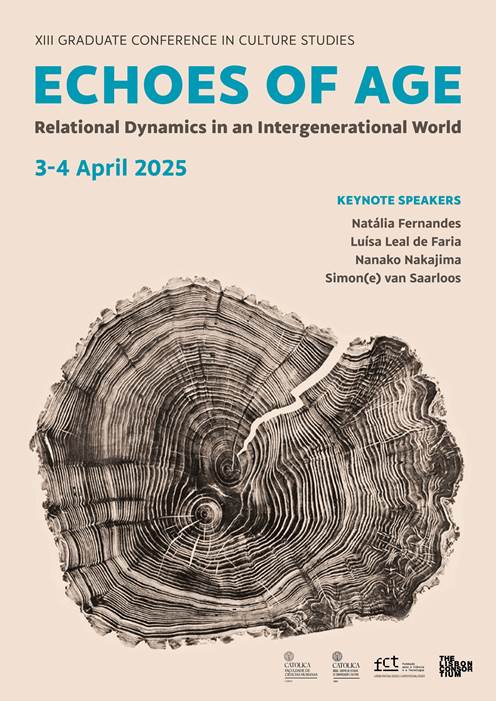
Echoes of Age:
Relational Dynamics in an Intergenerational World
XIII Graduate Conference in Culture Studies 3–4 April 2025
Keynote Speakers
Nanako Nakajima | Luísa Leal de Faria | Simon(e) van Saarloos | Natália Fernandes
Organising Committee
Aishwarya Kumar | Rosalind Murphy | Teresa Weinholtz | Thales Reis Alecrim
In a time of rapidly evolving technology, cultural norms and economic conditions, interactions and (dis)identifications across generations have become more significant and increasingly complex. The distinctions between biological, emotional, and physical age are now blurred, challenging the traditional linear view of ageing. This affects how ageing is perceived, experienced and portrayed, from the human body to the evolution of cities and cultural practices. In the digital age, the anti-ageing discourse demands an examination of social media’s influence on ageing perceptions, the commercialization of anti-ageing products, and the effects on self-esteem and societal expectations.
Key questions arise: How do cultural objects and practices shape behaviours and representations of ageing? How do literature, film, music, and the visual arts depict the ageing process? Or how does culture construct ageing by setting standards on what it is to be a child, a teenager, or an elder? It is also crucial to shed light on the different representations of ageing, whether from childhood (Ariès 1965) to youth (Savage 2007) or adulthood to old age (Swift and Steeden 2020). This also impacts the study of generational clashes, examining how different age groups interact and conflict within various cultural contexts and how this has been discussed in literature and media (Gardner and Macky 2012).
Moreover, representations of ageing are often gendered, with negative connotations for women. Feminist perspectives are crucial in redefining “successful ageing” and exploring how beauty standards affect both younger and older generations. Age and identity are closely linked, with generations defined by shared historical experiences. In the workplace, age diversity introduces both conflict and cooperation, with five generations cohabiting the workforce—Silent Generation, Baby Boomers, Gen X, Millennials, and Gen Z.
This conference aims to address what Simone de Beauvoir termed the “conspiracy of silence surrounding ageing,” examining biases and strategies to overcome intergenerational disparities. How can we foster respect and understanding among generations? How can we overcome generational gaps to promote social innovation and resilience? In what ways do generational differences present both challenges and opportunities for societal cohesion? We invite contributions discussing the multifaceted concept of ageing and intergenerational dynamics, with topics including, but not limited to:
- Cultural representations and creations of ageing
- Memory: practices of remembering and developing
- Feminism and ageing
- Indigenous knowledge and perspectives on ageing
- Generational clashes and solidarity
- Western obsession with youth / Youth culture as city culture
- Media and music expressions / Media portrayal of age / Social media and anti-ageing
- Technological and economic changes / Technological integration
- Workforce diversity and ageing
- Age, Identity, cultural shifts
- Healthcare and ageing populations
- Intern at 70, peaking at 20
- Environmental sustainability and ageing
- Longevity and quality of lifeElderly care and social support systems
- Older people as the Other
- Planetary grief and ageing
- Death calls, death wish, and life beyond
- Age friendly cities and urban planning
- Aesthetics, accessibility, and inclusion (bodies that matter – Sara Ahmed Being in question) / Technological integration Metaphors and cognitive assumptions
- Life-cultures and practices / Life, death, and everything in between and after (Anzaldua)
- Health and well-being services
About the conference
- The working language of the conference is English.
- Individual paper presentations will be allocated 15 minutes for presentation and 15 minutes for questions.
- We invite abstracts for individual or joint papers and presentations as well as alternative interventions including artistic interventions, co-creative workshops, reading groups and more. Please specify any needed materials in your abstract.
- Abstract (approximately 250 words) and short biography (100 words) should be sent by email to echoesofage.conference@gmail.com no later than
615 January 2025. - Notification of acceptance will be sent on 7 February 2025, at the latest. After acceptance of abstracts, participants will be asked to register for the conference and to provide some personal details to this end.
Registration fees
The registration fee includes coffee breaks and conference materials.
- Early bird registration for students/non-academic attendees (from 10 to 16 February 2025): €85
- Regular registration for students/non-academic attendees (from 17 February to 4 March 2025): 110
- Registration for academics €110
- CECC researchers are exempted from registration fees but must register.
Vernissage for Exhibition to be announced soon.
Contact: To read the longer version for the call, visit our website www.echoesofage.wordpress.com or email echoesofage.conference@gmail.com
Our Food-Webbed World: interdisciplinary culinary landscapes
Universidade Católica Portuguesa
6-8 March 2025
Keynote speakers
Marília dos Santos Lopes (UCP)
Sarah E. Worth (Furman University)
Interactive Tasting Workshops
Olive Oil: production, consumption, socio-ecological cultures in the Mediterranean
Johnny Madge, olive oil and honey sommelier, gustatory educator and author
Wine: Socio-political and cultural systems of consumption in Ancient Greece
Sarah E. Worth, full professor of aesthetics, philosophy of food
Interdisciplinary Workshop
CellAgri Portugal – the Portuguese Association for Cellular Agriculture
Joaquim Cabral, distinguished full professor of bioengineering and biosciences (Instituto Superior Técnico), and President of CellAgri Portugal
Carlos Rodrigues, coordinator of the Bioreactor and Biomaterial Technologies for Stem Cell Manufacturing Lab (Instituto Superior Técnico)
Roundtable: “Food in Migration: diasporic cooking and futures of fusion”
André Magalhães, chef, food & wine writer
Margo Gabriel, food writer, author
Gurdeep Loyal, food & travel writer & future food trends consultant

This event brings together researchers from different scientific areas to generate cross-disciplinary debate on how food shapes our everyday lives at various levels of society and culture. Food practices such as production, consumption, and intangible food culture together form what is the most intricately connective web of human experience. Beginning from the primal need of an individual body while simultaneously demanding inter-reliance and community, we are undeniably in a food-webbed world. Despite this, food-related studies have traditionally been delegated to strictly separate academic spheres, which is why this conference aims to offer an opportunity for truly interdisciplinary dialogue.
Our Food-Webbed World: interdisciplinary culinary landscapes runs for three days (March 6-8, 2025) at Universidade Católica Portuguesa and other venues in Lisbon, Portugal, and includes a series of keynote lectures, panel discussions, interactive workshops, and off-site excursions with curated culinary programming.
At this multi-disciplinary and international forum, we address the essential role of food for communication and transmission of traditions, and the (re)establishment of peoples and communities throughout time. We are particularly interested in the relationship between food and processes of cultural transformation and change, as well as the centrality of food to/the impact of food on technology, migration, media and communications, political and economic development, social initiatives, and cultural and artistic expressions.
Through this conference, we hope to share and discuss food practices with the awareness that all food-related studies can and should benefit from shared perspectives on how food is both an instrument and a vehicle of culture.
We welcome contributions for paper sessions, interactive workshops, or presentation of case studies related to food studies from researchers with different backgrounds. The aim of this conference is to offer a shared experience through a unique approach based on bringing together theory and practice.
Possible topics (although not exclusive):
- Culinary histories on recipes or menus
- Cookbooks and menus as narrative text / in translation
- Food writing and journalism/ food in the news
- Food in film, literature and fine arts
- Food policies/ the politics/economics of food
- Food and the senses
- Food and memory or cognition
- Industrial food practices production
- Food and the environment
- Food and social media/ food and influencers
- Food and migration/ as vehicle for hospitality
- Food and human rights and/or activism
- Food with social impact/ the social impact of food
- Food, health and nutrition
- Food in/ and institutions (ex. Schools, hospitals, prisons)
- Food and community
- Food and religion/ food and ritual
- Food and tourism
Paper proposals
Proposals should be sent to foodconf2025@gmail.com no later than October 31 November 10, 2024, and include:
- Paper title
- Abstract in English (max. 250 words)
- Name, email address, institutional affiliation
- Brief Bio (100 words)
Applicants will be informed of their submission results by December 2, 2024.
The registration is open only to those with an accepted abstract. Deadline to register is December 31, 2024.
Paper sessions will run 1.5 hours. Each participant will have 20 minutes for speaking, followed by 10 minutes for Q&A.
All participants are expected to attend the full conference, for the benefit of knowledge-production and knowledge-exchange.
Fees*
| Early bird | Normal | |
| Senior researchers | 200€ | 240€ |
| PhD researchers | 100€ | 130€ |
| CECC full researcher | 20€ | 20€ |
| CECC PhD researcher | 10€ | 10€ |
* The fees include coffee breaks, lunch, and conference materials. Early bird fees are valid until December 15, 2024.
Organizing Committee
Annimari Juvonen
Márcia Dias Sousa
Rissa Miller
Verena Lindemann Lino
Scientific Committee
Adriana Martins | UCP
Ana Margarida Abrantes | UCP
Isabel Drumond Braga | FLUL
Ana Isabel Buescu | NOVA de Lisboa
Luísa Santos | UCP
Sofia Pinto | UCP
Peter Hanenberg |UCP
Rissa Miller | UCP
Márcia Dias Sousa | UCP
Maria Graça da Silveira | Univ. dos Açores
Diffractions
Issue 10
‘You are What you Eat’: On Food, Culture(s), and Identity
Editors-in-chief: Rissa L. Miller & Federico Bossone
Few sentences can express the significance of food for our being human as concisely and pointedly as ‘You are what you eat’. This saying is found in different languages and could be one of those transversal notions that has existed in some form throughout history. From French gourmand Brillat-Savarin to German philosopher Ludwig Feuerbach, belief in the entanglement of food habits and identity can be observed across time and cultures, in that food constitutes an indispensable aspect of human existence, serving not merely as sustenance but also as a mirror reflecting culture, history as well as individual and collective identities (Shapin 2014, 377). Culinary traditions, rituals, and practices have profoundly influenced how individuals dine, socialize, and forge connections with one another. As a potent medium for expressing cultural identity and safeguarding traditions, food embodies a compelling narrative about humans, encompassing countless social aspects that vary across regions, communities, and even individual households.
Food can also be a measure of prestige within a given social order: it can serve as a symbol of power within social hierarchies and status structures. Interestingly, the cultural interpretations of its symbolism are intricate and sometimes conflicting. Claude Lévi-Strauss (1966) delved into this complexity in his culinary triangle, suggesting that boiled food signifies refinement and sophistication compared to roasted food. However, the consolidation of gender roles reversed these associations, as boiled dishes are often linked to familial intimacy and traditionally prepared by women. At the same time, roasted fare is associated with public celebrations and a more masculine domain. Not only have these assumptions shaped gender roles within families, but they have also shaped the male-dominated world of fine cooking in terms of prestige and social status.
Looking at the brighter side, food acts as a unifying force, nurturing a feeling of camaraderie and inclusion among people. Regardless of cultural background, the act of cooking or partaking in a meal carries significant symbolism, deeply intertwined with rituals and ceremonies. Certain dishes are important in religious and cultural contexts and are crafted with utmost respect and attention. These culinary practices frequently serve as a means to pay homage to ancestors and deities alike, commemorate significant life events, and express profound convictions. Beyond nourishment, these traditional foods are vital in transmitting cultural heritage and strengthening familial bonds (Fieldhouse 2013).
Patterns of migration significantly shape and sometimes come to define culinary landscapes. Assimilation theories suggest that as individuals adapt to a new culture, there is a corresponding cultural exchange that occurs. This exchange becomes visible when mainstream societies include culinary practices originating from outside ethnic groups who have been excluded from access into the prevailing society – whether previously or currently (Boch, Jiménez, Roesler 2020 64-65). The culinary traditions brought by migrant communities have often been subject to alienation by the mainstream surrounding society, being perceived as unclean or too ‘exotic’. This is the case for Chinese and Italian immigrants who settled in the U.S. starting in the mid1800s. Up until the 1950s U.S.-American society perceived the “newcomers as barbaric” (Inness 2006, 41) and as not integrated. Nowadays, many of those dishes that were introduced by those communities have become a staple of the mainstream culinary habits of U.S.- Americans. On the other hand, for migrant communities, traditional foods provide a tangible connection to ancestry, recounting historical migrations and cultural interactions. As ingredients, methods and tastes blend, fresh culinary customs develop, fostering lively and evolving food scenes. One example among many, Louisiana’s Creole cuisine history exemplifies this cultural fusion, drawing from French, Spanish, African, and Caribbean culinary legacies to create a uniquely multi-layered and symbolically loaded culinary tradition (Smith 2013, 423).
We look forward to receiving contributions addressing these or related questions. Topics
include but are not limited to:
- Culinary Traditions: Delving into the intricate tapestry of traditional food practices, rituals and customs within specific cultural contexts, as evidenced in literature and various cultural artifacts.
- Food and Identity: Investigating how food shapes both individual and collective identities, from the culinary memoirs of immigrant communities to its symbolic significance.
- Representations of Food in Media and Literature: Analyzing depictions of food across different forms of media – the arts, literature, film, television – and their influence on cultural perceptions and practices.
- Globalization and Food Cultures: Examining the ramifications of globalization on culinary traditions, including the dissemination of cuisines, culinary fusion, and the commercialization of food in today’s fast-paced world.
- Food and Power: Scrutinizing the complex dynamics of foodways, especially in relation to social inequalities and justice as portrayed through literature and cultural narratives. How do gender, race, and class impact culinary heritage? Who decides what is ‘palatable’?
- Food Rituals: Exploring the deep-rooted significance of food-related rituals, festivals, and ceremonies as reflections of cultural values and beliefs, as depicted in arts, literature and/or liturgy.
- Food’s Role in Memory and Heritage: Investigating how food shapes personal and collective memory, nostalgia, and cultural heritage, as seen through literary reminiscences and historical narratives.
- Food and the Climate Crisis: examining the environmental footprint of food production and consumption practices and exploring cultural responses to sustainability challenges through literature and cultural representations.
- Food and Health: the intersections of food culture, nutrition, and public health policies, as portrayed in literary works and cultural discourses.
Abstracts will be received and reviewed by the Diffractions editorial board who will decide on the pertinence of proposals for the upcoming issue. Authors of accepted abstracts will be invited to submit a full article. However, this does not imply that these papers will be automatically published. Rather, they will go through a peer-review process that will determine whether papers are publishable with minor or major changes, or if they do not fulfill the criteria for publication.
Please send abstracts of 150 to 250 words and 5-8 keywords as well as a short biography (100 words) by MAY 15th, 2024, to info.diffractions@gmail.com with the subject “Diffractions 10”, followed by your last name.
The full papers should be submitted by SEPTEMBER 30th, 2024, through the journal’s platform: https://revistas.ucp.pt/index.php/diffractions/about/submissions.
Every issue of Diffractions has a thematic focus but also contains a special section for nonthematic articles. If you are interested in submitting an article that is not related to the topic of this particular issue, please consult general guidelines available at the Diffractions website at https://revistas.ucp.pt/index.php/diffractions/about/submissions. The submission and review process for non-thematic articles is the same as for the general thematic issue. All research areas of the humanities are welcome.
XIV Lisbon Summer School for the Study of Culture
Culture at War
Lisbon, June 24 – 29, 2024
Extended deadline for submissions: February 29 March 14, 2024
We are living in times of war. Now, more than ever, war occupies a central role in both national and international affairs and pervades various spheres of our societies and cultures.
The 21st century has been marked by violence of different varieties and levels. Having started with a massive terrorist event, the attacks of September 11, 2001, the last two decades have witnessed many examples of aggression that have come to dominate both the media and public discussion. Acts of terrorism of various kinds, revolutions and wars, with the conflicts in Ukraine and the Middle East among the most recent, are illustrative of contemporary warfare, its characteristics, and challenges. While new military technology such as high-tech weapons and attack drones promote more remote, noncontact operations, the ever-present media strive for immediacy and proximity and thus contribute to a new and distinctive experience of war. Their continuous, play-by-play coverage promotes the illusion of a 360º view and allows audiences to follow the events in near-real time. However, their omnipresence has also turned them into desirable instruments of warfare. They not only inform about the war but also have the ability to mobilize for/against it. Furthermore, the rise of social media and its pivotal role in both documenting conflicts and generating and disseminating misinformation cannot be disregarded. As military conflicts unfold, a parallel war is also fought between communication mechanisms. It can even be argued, with Paul Virilio (War and Cinema, 1989), that war, or its experience, is becoming increasingly a product of visual media construction.
Wars are not circumscribed to military conflicts, though. Contention has become an intrinsic part of everyday life, leading to social and cultural movements that call out misguided practices, injustices, and violations of basic laws and rights. On the one hand, bottom-up mobilizations such as #MeToo, the gilets jaunes, or Fridays for Future, reveal a world in crisis, responding to systemic violence with dissent. On the other hand, the dismantling of structures of oppression by means of decolonizing processes clashes with the incapacity to effectively deal with past wrongdoings and the tendency to forget or avoid uncomfortable discussions. These movements may, at times, also represent a dynamic of destruction based on the collective readiness to criticize, denounce, hold accountable, and ultimately cancel what or who is considered to have behaved in an unacceptable way.
This culture of war, of diverging opinions and interests, extends also to the relationship between man and nature, and more specifically the ongoing environmental emergency. One rhetorical device used to stress the escalating effects of climate change is precisely the war metaphor (employed also in the context of the COVID-19 pandemic). The use of military language and the idea of a war against climate change, widely used in public speeches and in the media, is meant to spark a fighting spirit and incite action. There is, however, the risk of having the opposite effect if the enemy remains abstract, the message is not made understandable, and governments and individuals fail to take responsibility for the current situation.
The XIV Lisbon Summer School for the Study of Culture is dedicated to the study of the relationship between culture and war. Papers are welcome on the following topics, amongst others:
- Culture and conflict
- Ancient and modern warfare
- Culture in modern warfare
- War and the creation of modernity
- The cultural construction of terror/terrorism
- Rules of war and humanitarian law
- The ethics of war
- The forensics of war
- Rituals of the fallen
- Battlefields and landscapes of war
- Media and war, media at war: (mis)communication, (mis)information, and fake news
- Representations of war
- Art and artists at war
- Art and reparations
- (De)Colonizing discourses and practices/asymmetric conflict
- Conflict escalation and conflict resolution
- Cultural wars and language
- Dialogue and tolerance/Soliloquy and intolerance
- Culture of violence
- Warrior culture: between heroes and villains
- War as metaphor
- Environmental emergency and war against climate change
- War-induced uncertainty and instability
- Epistemologies at war/theories at war
We encourage proposals coming from the fields of culture studies, film and the visual arts, literary and translation studies, history, anthropology, media, and psychology, among others.
Paper proposals
Proposals should be sent to lxsummerschool@gmail.com no later than February 29 March 14, 2024, and include paper title, abstract in English (max. 200 words), name, e-mail address, institutional affiliation, and a brief bio (max. 100 words) mentioning ongoing research.
Applicants will be informed of the results of their submissions by March 29 April 8, 2024.
Full papers submission
Presenters are required to send in full papers no later than May 31, 2024.
The papers will then be circulated amongst the participants. In the slot allotted to each participant (30’), only 10’ may be used for a brief summary of the research piece. The Summer School is a place for networked exchange of ideas, and organizers wish to have as much time as possible for a structured discussion between participants. Therefore, in each slot, 10’ will be used for presentation, and 20’ for discussion.
Registration fees
Participants with paper – 300€ for the entire week (includes lectures, master classes, doctoral sessions, lunches and closing dinner)
Participants without paper – 60€ per day (lunches and closing dinner not included)
Fee waivers
For The Lisbon Consortium students and CECC researchers, there is no registration fee.
For other UCP students, students from institutions affiliated with the Transform4Europe Alliance, the Critical Humanities Network, the European Summer School in Cultural Studies (ESSCS), and the European PhD-Net in Literary and Cultural Studies, the registration fee is 80€.
This edition of the Lisbon Summer School for the Study of Culture will function as the 2024 Critical Humanities Network Summer School and the 1st Transform4Europe Summer School.
Organizing Committee
- Isabel Capeloa Gil
- Peter Hanenberg
- Alexandra Lopes
- Adriana Martins
- Diana Gonçalves
- Paulo de Campos Pinto
- Rita Faria
- Annimari Juvonen
Assessment Committee
- Peter Hanenberg
- Alexandra Lopes
- Adriana Martins
- Diana Gonçalves
- Paulo de Campos Pinto
- Rita Faria
- Ana Margarida Abrantes
- Luísa Leal de Faria
- Joana Moura
- Rita Bueno Maia
- Verena Lindemann Lino
- Sofia Pinto
- Luísa Santos
Conjunctures of Hospitality:
Conditions, Articulations, and Affects of Border Encounters
7-8 November 2024
Universidade Católica Portuguesa, Lisbon, Portugal
The “Conjunctures of Hospitality” conference aims to provide a space for an interdisciplinary inquiry into the conditions, articulations and affects of hospitality in different temporal and geographical settings. Inspired by Stuart Hall’s work, we are interested in broadly defined “conjunctural analysis” that shed light on or map the cultural-historical contexts in which cultural artefacts, artistic practices, activism or theories take shape. The conference will take place at the Universidade Católica Portuguesa, in Lisbon, Portugal, on the 7-8 November 2024.
Hospitality has been an object of reflection and debate for centuries. And yet, in a world of increasing border anxieties, perpetual “migration crises”, “culture wars” and the renegotiation of the human/nonhuman divide, the encounter and welcoming of strangers continues to be of utmost topicality. Despite an ongoing or even increased academic interest, the definition and theorization of hospitality are anything but obvious. Research on hospitality ranges from the research on the accommodation, food or drink industries in Tourism and Management sciences to philosophical inquiries about its relation to citizenship, human rights and the encounter with others in the Humanities and Social Sciences (Lynch et al. 2011). However, the difficulty of defining the concept and practice of hospitality stems not only from disciplinary diversity, but also from its intrinsic polyvalence and contradictions. Hospitality bears on many problematics: from identity, difference, and belonging to the relationship between host and guest, individual and collective, as well as questions of inequality, human rights, and (political) power. Drawing on the etymological study of Benveniste, Derrida emphasized that hospitality is structured by a paradox: in order to welcome the stranger, one must be the master of one’s own home. Beneath its welcoming surface, hospitality thus inscribes not only forms of violence in the encounter with strangers, but also the limits of its own unconditionality (Derrida). As it regulates the relationship between inside and outside, hospitality is not only at stake when borders are crossed, confused or readjusted, but also in the very process of their drawing (Still 20210). Since, as Sara Ahmed suggests, it might well be “the processes of expelling or welcoming the one who is recognised as a stranger that produce the figure of the stranger in the first place” (2000, 4).
This conference aims to bring together interdisciplinary inquiries into particular articulations, conditions, and conjunctures of hospitality. While we welcome a wide range of theoretical and methodological approaches, we particularly encourage a reflection about hospitality and its relationship to processes of bordering and hierarchization. This also implies a particular interest in “histories of determination” (Ahmed 2000) and their affective dimensions.
Possible topics may include, but are not limited to:
- Hospitality and (anthropological) difference
- Hospitality and border(ing)/border regimes
- Hospitality and (im)migration
- Hospitality and affect
- (Linguistic) hospitality and translation
- Hospitality and the politics of translation
- Queer hospitality
- Aesthetics of hospitality
- Politics of hospitality
- Ethics of hospitality
- Arts of hospitality
- Hospitality and violence
- Hospitality and biopolitics
- Hospitality and governmentality
- Hospitality and Posthumanism
- Hospitality and memory
- Hospitality and area studies
| Keynote Speakers
Michel Agier (École des Hautes Études en Sciences Sociales)
Encarnación Gutiérrez Rodríguez (Goethe-Universität Frankfurt)
Alexandra Lopes (Universidade Católica Portuguesa)
Alexander Ghedi Weheliye (Brown University
| Scientific Committee
Diana Gonçalves
Annimari Juvonen
Andreas Langenohl
Verena Lindemann Lino
Marília Lopes
Adriana Martins
Rita Bueno Maia
Paulo de Medeiros
Joana Moura
Dzifa Peters
Sofia Pinto
Luísa Santos
Loredana Polezzi
Márcio Seligmann-Silva
| Practicalities
Abstracts should be sent to hospitalityconf2024@gmail.com no later than 15 March 2024 and include
paper title, abstract in English (max. 250 words), name, e-mail address, institutional affiliation, and a brief
bio (max. 100 words) mentioning ongoing research. Notification of acceptance will be sent by 31 April
2024 at the latest.
We invite abstracts for individual and joint presentations and also welcome artistic interventions and cocreative, performative presentations. Accepted participants will be asked to register for the conference
and provide some personal details for that purpose.
The conference will take place on site, at Universidade Católica Portuguesa. For more information about
the conference please consult: https://conjuncturesofhospitality.wordpress.com/
| Costs
Registration fees
Early Bird Regular
Graduate/Student/Post-Doc Early bird: 70 € Regular: 90 €
Senior Scholar/Researcher Early bird: 100 € Regular: 120 €
*Fees include coffee breaks, lunches, and conference materials.
The Organizing Committee may consider reducing or waiving a limited number of registration fees in
case of documented financial difficulties. CECC researchers are exempted from the registration fee but
will need to officially register.
| Organizing Committee
Annimari Juvonen
Verena Lindemann Lino
Sofia Pinto
II Lisbon Spring School in Translation Studies
the translator, the author, the editor, the client & their others
3-8 June 2024
Call for Papers
The Lisbon Spring School in Translation Studies aims to provide an open space for the exchange of ideas, methods, and best practices.
The II Spring School addresses the topic of translation and agency in multiple forms, from age-old analogies of the past [the translator as matchmaker, as slave to the original, as a cannibal] to the most recent debates on translator intervention and collaborative efforts (see Munday 2008; Cordingley and Frigau Manning 2017) via the decade-old discussions on the (in)visibility (Venuti, 1992, 2018), and voice (Hermans 1996, Andermann 2007, Alvstad et al. 2017). Most recently, attention has focused on the role of the translator and its absolute centrality (see Zethsen and Korning 2009; Milton and Bandia, 2009; Kaindl, Kolb and Schlager, 2021), leading to the emergence of a branch of inquiry aptly named Translator’s Studies. Translators, however, do not exist in a vacuum, and the context they live in, the people they work under or with, the constraints and blindspots of their individual existence do matter and need to be scrutinized. Within this framework, contributions on the historical, political, socioeconomic and imaginative loci of translators, adapters, editors, publishers, proofreaders, reviewers, patrons, clients, etc. are welcome.
The Lisbon Spring School, which invites fruitful discussion and dissent, results from a twofold goal: on the one hand, to do justice to the nature of TS understood as an interdiscipline (SnellHornby, Pöchhacker, Kaindl, 1994; Chesterman, 2017) and, on the other, to welcome (and learn from) young scholars working in TS, regardless of topic, preferred school of thought, language(s), and/or country of origin. Ideally, this week-long event will highlight contemporary research interests and paths, resulting in a tentative mapping of an inclusive and plural field from the perspective of emerging scholars and their fresh insights and inputs. Students and early-career researchers from around the world are invited to submit their ongoing work, and to discuss it with their peers, as well as with internationally renowned TS scholars.
The Spring School is a six-day event, comprising lectures by national and international scholars, paper sessions (PhD students and early career researchers) and poster sessions (MA students), translation workshops, and a cultural programme.
We welcome contributions on:
- translation agents: voice, visibility & other forms of presence;
- agency in translation;
- fictional translators and their impact on the conceptualization of translation;
- translator’s memoirs, diaries, autobiographies and the emergence of autotheory;
- translation and activism;
- translation and creative practices;
- translation as conservatorship;
- translators as revolutionaries;
- the relationship between translating and gender, race, power, and minorities;
- translation, mobility & ‘extraterritoriality’ (Sela and Amir, 2016);
- the creative interplay of TS and knowledge production in other fields of enquiry, such
as Literary Studies, Culture Studies, Cognitive Studies, Media Studies, History,
Philosophy, as well as in the hard sciences.
Other topics will also be considered.
Confirmed Keynote Speakers include:
Paul Bandia | Kathryn Batchelor | Karen Bennett | Klaus Kaindl | Susan Pickford | Loredana Polezzi | Manuel Portela | Michelle Woods
Scientific Committee:
Ana Margarida Abrantes | João Brogueira | Rita Bueno Maia | Maria Zulmira Castanheira | Jane Duarte | Gabriela Gândara | Peter Hanenberg | Alexandra Lopes | Joana Moura | Marco Neves | Isabel Oliveira | Hanna Pieta | Teresa Seruya
Organizing Committee:
Maria Zulmira Castanheira | Alexandra Lopes
Practicalities
Fee: 350€ (includes lunches, coffee breaks, materials, and closing dinner)
Free for CECC and CETAPS members.
Venues:
Faculdade de Ciências Humanas – Universidade Católica Portuguesa
Faculdade de Ciências Sociais e Humanas – Universidade Nova de Lisboa
Important dates:
Call for Papers: 31 January 2024
Deadline for abstract submission: 29 February 2024
Notification of acceptance: 2 April 2024
Early bird registration: 2 April – 1 May 2024 [350 euros]
Late registration: no later than 15 May 2024 [450 euros]
4th Lisbon Winter School for the Study of Communication
Media and Ambivalence
9-12 JANUARY 2024
The 4th Lisbon Winter School for the Study of Communication takes a comparative and global approach to the study of media and ambivalence. Jointly organized by the Faculty of Human Sciences (Universidade Católica Portuguesa) and the Center for Media@Risk at the Annenberg School for Communication (University of Pennsylvania), in cooperation with the School of Journalism and Communication (Chinese University of Hong Kong), and the Helsinki Institute for Social Sciences and Humanities (University of Helsinki), the 4th Lisbon Winter School offers an opportunity for doctoral students and early career post-doctoral researchers to strategize around the study of media and ambivalence together with senior scholars in the field.
CALL FOR APPLICATIONS
It is perhaps paradoxical that media scholars tend to regard ambivalence in ambivalent ways. Many maintain that ambivalence undercuts and undermines the media environments it inhabits, introducing a level of uncertainty that obscures not only multiple aspects of the media’s workings—including its messages, roles, technologies, practices and effects—but also what is most patterned and exceptional about the media writ large. Others see ambivalence as a necessary complication of the tired and overused binaries of late modernity, sustaining what the American novelist F. Scott Fitzgerald described as the “test of a first-rate intelligence,” whose “ability to hold two opposed ideas in the mind at the same time, and still retain the ability to function” would produce generative opportunities built around the “the improbable, the implausible, often the impossible.”
Regardless, then, of how positively or negatively scholars feel about ambivalence, its presence is a clear component of media environments everywhere. But what kind of presence does it have? What are its primary attributes and pitfalls? In what ways does ambivalence make media environments better or worse? In what ways does it foster or complicate widely-adopted notions of media practices, processes, production, consumption and effects? How does it foster resistance and under which conditions?
This Winter School will examine the pairing of media and ambivalence in all its recognizable forms. Orienting to the broad spread of ways in which ambivalence can be understood to inhabit the media, it aims to develop a fuller understanding of why ambivalence is such a longstanding inhabitant of media environments. Possible questions stretch across the wide range of entry points for contemplating the media that allow for media representation and processing, media use and media refusal, media production and consumption. They include, how do the media and ambivalence shape each other? What role do the media and associated technologies play in structuring ambivalence, and what role does ambivalence play when associated with the media? Under which conditions does ambivalence emerge? How is it represented and where? How is it recognized and by whom? What impact does it have on media fare, the representation of marginalized groups or the shape of audience engagement? How does it affect the capacity to form identities, make informed decisions or embrace polarization? How does it figure in decisions to refuse or reject the media? How is ambivalence being weaponized in current political climates, and to what end? How has it been weaponized in the past?
We welcome proposals by doctoral students and early career post-doctoral researchers from all over the world to discuss the intertwined relation between media and ambivalence in different geographies and temporalities. The list below illustrates some topics for possible consideration. Other topics dealing with media and ambivalence are also welcome:
- Ambivalence towards media platforms, content, practices or effects
- Ambivalence and AI
- Techniques to counter ambivalence
- Ambivalence and identity formation
- Ambivalence and human rights
- Promoting ambivalent representations of the past
- Ambivalence in the public arena in specific national or regional contexts
- Ambivalent discourses on science and climate change
- Ambivalent discourses on racism, misogyny, classism, settler colonialism
- Ambivalence and journalism
- Ambivalence and popular culture
- Resistance to media, including media rejection, media detox, pushback on social media, news avoidance or domestic practices to control media usage
- Children and media ambivalence
- Ambivalence, media and imaginative future
- Ambivalence and conflict
- Ambivalence and overload
- …
Proposals should be sent to lisbonwinterschool@gmail.com no later than 30 September 2023 and include a paper title, extended abstract in English (700 words), name, e-mail address, institutional affiliation and a brief bio (max. 100 words) mentioning ongoing research. Applicants will be informed of the result of their submissions by mid-October
Presenters will be required to send in full papers (max. 20 pages, 1.5 spacing) by 15 December 2023.
Issue 9 | Beyond the Object: Immaterial Pasts, Immaterial Futures
Diffractions
Deadline for Abstracts: December 15th 2023
Deadline for Papers: March 31st 2024
Guest Editors: Federico Rudari, Teresa Pinheiro
The next issue of Diffractions explores immateriality in artistic and cultural practices as a form of both expression and resistance. For centuries, the histories of artistic practices (as well as historiographies and historicities) have been anchored to materiality and the production of objects. As Michel Claura argues, “[t]he history of art is the history of the technique of art” (1969, 83). Indeed, curatorship as we know it today initially developed around objects and their need of care.
However, artists have constantly been questioning and deconstructing the need to produce objects, shifting the focus from physical artworks to their assigned concepts and intentions. These practices include performances, happenings, participatory and socially engaged artistic movements, and Nicolas Bourriaud (2002)’s relational aesthetics in one of the best-known examples. While artistic production has challenged the dogmatic authority of materiality and its exhibition and conservation practices (from private collections to national archives, among many others), cultural institutions and political bodies (and the so-called Western ones in particular) have only recently started to value the immaterial artistic expressions of individuals and communities.
For instance, the UNESCO Convention for the Safeguarding of the Intangible Cultural Heritage only dates back to 2003, and is still today a source of discussion for its polarising nature and limitations (Van Damme and Jacobs 2002). A very discussed case is the 2010 inscription of the Mediterranean Diet in the 2003 UNESCO Convention, which comprises as geographically and culturally different cuisines as the Cypriot, Italian and Portuguese culinary traditions.
However, it has emerged that the description of the Mediterranean diet has turned out to be complex and almost impossible (Ferro-Luzzi and Sette 1989), while “[r]ecent investigations of the dietary patterns and health status of the countries surrounding the Mediterranean basin clearly indicate major differences among them in both dietary intake and health status” and therefore “the term “Mediterranean diet” is a misnomer” (Simopoulos 2001, 3065). To fit the limits of the Convention, the inscribed object ended up being broad and even generic, as a result of the absence of a specific domain of culinary heritage and the significant territorial differences between the co-signatory countries.
Despite the western centric idea that Marcel Duchamp’s conceptual turn caused an unprecedented shift in the artworld by allowing intentional acts to be technically considered art, the presence of immaterial practices as both cultural artefacts and tools for the production of knowledge has long existed in multiple cultures over millennia. Described by Brandt as the art of “picking up an object and displaying it, or even of merely declaring the intention to do so” (2004, 210), Duchamp’s ready-mades (but also Isamu Noguchi’s practice of rock placement, for instance) have long and improperly been addressed as a first example of physical and technical abstraction. Not only has the dematerialization of art been explored in different periods and geographies as a way of criticising art systems and challenging institutional structures (Osborne 2018; Ramírez 1993; Stimson 1999), but certain cultures have rarely or even never resorted to physical media, favouring, for instance, orality over the use of writing.
On this subject, in her book Immaterial Archives: An African Diaspora Poetics of Loss comparative literature scholar Jenny Sharpe addresses “the paucity of documentary evidence concerning the lives of people who were immaterial to the archiving process, but not by treating contemporary art and literature as an alternative archive” (Sharpe 2020, 3). Here, she continues, immaterial “refers to the intangible quality of affects, dreams, spirits, and visions that art and literature introduce into material archives” and, in particular, “to the degraded status of African-derived knowledge, languages, and cultures within colonial archives, as well as the diminished status of the humanities in an information-based society today” (2020, 4). If these phenomena are made up of visions, affects, mythologies, dreams and even silence (and much more), Sharpe asks, are they something or nothing? Do they have substance even though they have a different relationship to traditional Western archival practices and written records?
The link between materiality and extractivist colonialism first and accumulative capitalism later is not new. As sociologist Rolando Vázquez writes, the objectification of the world is needed in order to conquer it (2020). This economic interest-based attitude towards materiality traces back to the enlightenment rational belief that the natural world subsists only as an instrument for human ambition. In their article “Posthumanist Performativity: Toward an Understanding of How Matter Comes to Matter”, Karen Barad challenges this anthropocentric separation arguing that “«[w]e» are not outside observers of the world. Nor are we simply located at particular places in the world; rather, we are part of the world in its ongoing intra-activity” (2003, 828). In fact, the idea that humans are outside nature is addressed by Anna Grear as a contributing factor to the “climate and environmental fallouts; the fundamentally colonial capitalist imperatives driving the continuing structural dominance of the fossil-fuel economy; extensive, and continuing, corporate enclosures in the Global South; and the pervasive and expanding commodification and technification of «nature»” (2020, 338). Within a context of fast-paced logic of industrial and cultural production (Bouteloup 2020) based on practices of human and non-human exploitation, how should we question the historically dominant focus on materiality in artistic and cultural practices today?
This issue of Diffractions wants to start a discussion about how multiple perspectives and fields of research and action have blurred the boundaries between binary conceptions such as human-nature, subject-object, and material-immaterial to acknowledge alternative narratives, existences, and temporalities (Bellacasa 2017; Krasny 2022; Vásquez 2020). These include, but are not limited to, posthumanist studies, decolonial and care practices, gender and feminist studies, artistic and activist actions, and many more. It intends to challenge materialist theories and reflect on the importance of non-materials such as ideas, emotions, sensations, and questions of being and becoming – what Elizabeth Grosz coined as the “incorporeal” (2017) – on our ethical and political existences and on the relationships between humans and other living beings. In fact, we believe that new materialities and immaterialities are particularly significant in their attempts to question and eventually overcome anthropocentrism, but also in the celebration of listening practices and oral traditions through the recognition of knowledge as discursive, embodied, and affective across “more than human materialities and existences” (Bellacasa 2017, 221).
We look forward to receiving proposals for contributions addressing these or related questions in several different formats (research paper, creative essay, documentation of art-based research and practices, …). Topics include but are not limited to:
● Immaterialities and new materialities in artistic and cultural practices;
● Alternative art histories, historiographies, and historicities;
● Documenting, archiving and collecting the immaterial;
● Curating the immaterial;
● Performativity and relationality in immateriality;
● Listening practices from the past, through the present, and towards the future: orality and transmission;
● Ancestral, virtual, hybrid: on non-physical bodies;
● Immateriality as decolonial and postcolonial praxis;
● Capitalism and commodification: immateriality as resistance;
● Dematerialization of artistic practices: the curatorial, research, dialogue, and knowledge production;
● Physicality and ephemerality: cultural spaces;
● Digital and virtual expressions;
● Immaterial existences: posthumanism and new materialism;
● Immateriality and alternative temporalities;
● Material and immaterial power dynamics.
● …
Submissions and review process
Abstracts will be received and reviewed by the Diffractions editorial board who will decide on the pertinence of proposals for the upcoming issue. After submission, we will get in touch with the authors of accepted abstracts in order to invite them to submit a full article. However, this does not imply that these papers will be automatically published. Rather, they will go through a peer-review process that will determine whether papers are publishable with minor or major changes, or they do not fulfill the criteria for publication.
Please send abstracts of 150 to 250 words and 5-8 keywords as well as a short biography (100 words) by DECEMBER 15th, 2023 to info.diffractions@gmail.com with the subject “Diffractions 9”, followed by your last name.
The full papers should be submitted by MARCH 31st, 2024, through the journal’s platform: https://revistas.ucp.pt/index.php/diffractions/about/submissions.
Every issue of Diffractions has a thematic focus but also contains a special section for non-thematic articles. If you are interested in submitting an article that is not related to the topic of this particular issue, please consult the general guidelines available at the Diffractions website at https://revistas.ucp.pt/index.php/diffractions/about/submissions. The submission and review process for non-thematic articles is the same as for the general thematic issue. All research areas of the humanities are welcome.
 The Lisbon Consortium