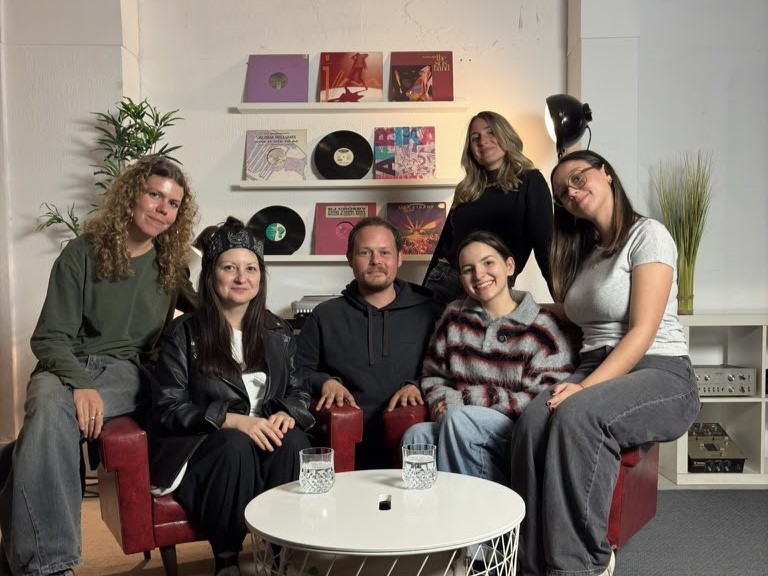
A new series of podcasts by the MA students in Culture Studies, related with the exhibition What We Can(‘t) Hold , has been released.
The first episode features Fernão Cruz, talking about fragility, humour, and the story behind his work Cair em Palco that makes part of the exhibition.
The second episode is a conversation with Manuel Botelho and it reflects on memory, war, and the story behind his work confidential/declassified: combat ration that makes part of the exhibition.
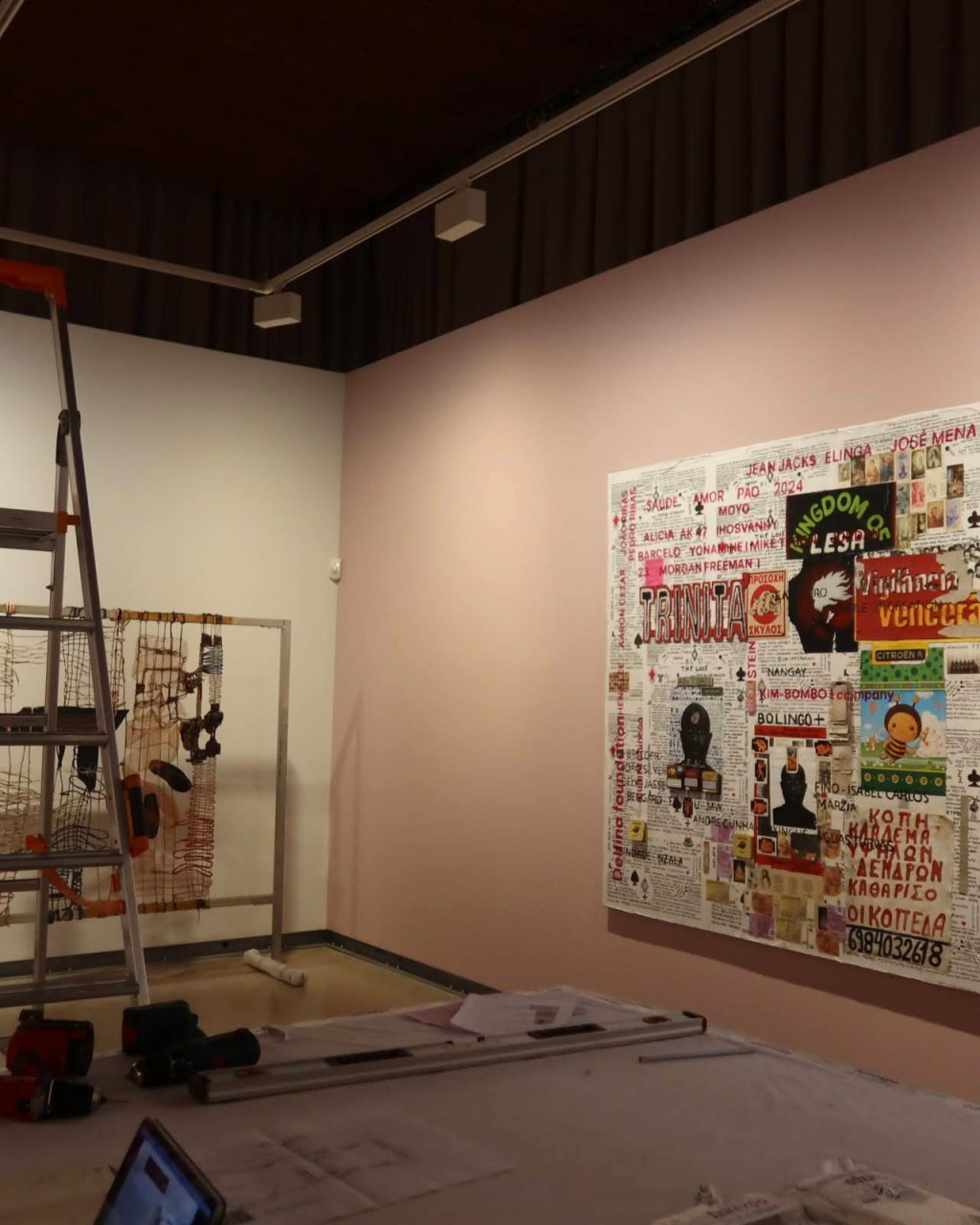
‘What We Can(‘t) Hold’, curated by students of Culture Studies (UCP) under the Curatorial and Scientific Coordination by Prof. Luísa Santos opens on 29 April 2026 at 18:30 in Galería Fundação Amélia de Mello.
‘What We Can(‘t) Hold’ is an invitation to pause, to look closely and to hold things more lightly, while reflecting on the multiple dimensions of fragility.
When everything we hold firm seems to be collapsing under the weight of uncertainty and rapid transformation, ‘What We Can(‘t) Hold’ considers fragility not as something that breaks but as a force that shapes how we live, remember, and relate to one another. Bringing together nine artists and a selection of works from the CAM – Centro de Arte Moderna Gulbenkian Collection, this exhibition offers a reflection on multiple dimensions of fragility.
The works displayed are situated along a spectrum of intertwined notions of fragility: the personal, the structural and the frictional. Each dimension offers a different way of understanding how vulnerability cracks, bends and sometimes falls apart as soon as we touch it.
The structural dimension looks outward at the vast web that seems to hold our society together. It questions what happens when the systems we depend on begin to fracture, and injustices resurface as history repeats itself. Manuel Botelho (1950, Lisbon), through his ‘101.rç-cmb (from the series Confidential / Declassified: combat food)‘ (2007-2008), collects artefacts of moments that he didn’t witness and puts them on full display, while Miguel Palma (1964, Lisbon), in ‘Upa! Union of the People of Angola‘ (2006), seems to lock them away in plain sight. Here, fragility emerges not as a weakness, but as a signal that transformation is both unavoidable and necessary.
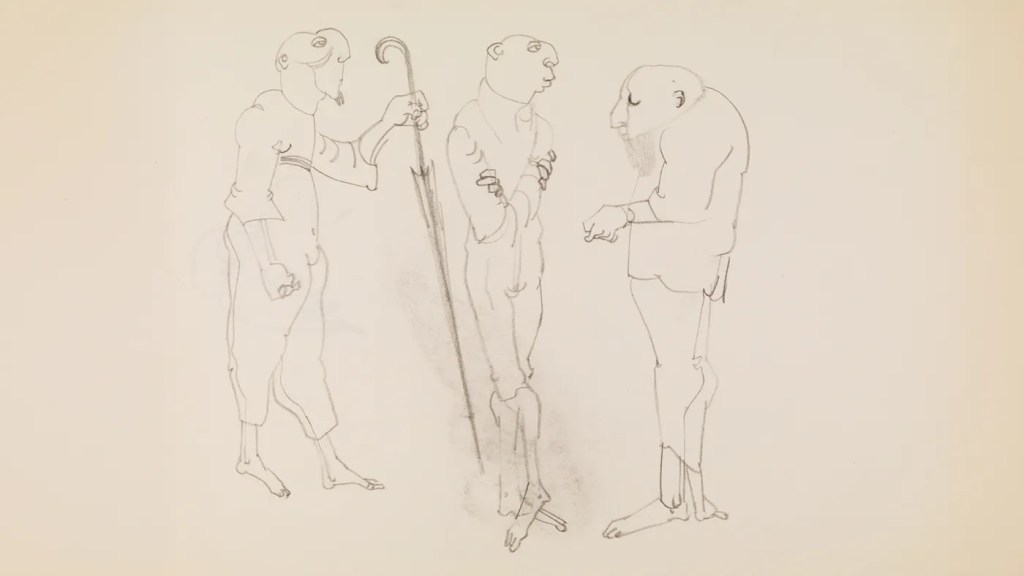
The personal dimension directs us inward into the delicate architecture of ourselves. It reflects identities that are always shifting, the collections of memories we archive within ourselves, and the persistent urge to hold on to what is fleeting. Yonamine (1975, Luanda), with ‘Eu não sou eu‘ (2004), and Maria Altina Martins (1953, Luanda) with ‘Time – Childhood, Adolescence, Maturity‘ (1997/2000), arrange fragments, textures of daily life, discarded materials, and scraps of memory to evoke this unstable construction, while Maria Antónia Siza (1940, Oporto – 1973, Oporto), in her series ‘Untitled‘ (60s) construct potential images leaving gaps to be filled in by the gaze of others. In ‘Falling On Stage‘ (2021), Fernão Cruz’s (1995, Lisbon) protagonist is in free fall, rendered vulnerable before the gaze of an audience.
The frictional dimension exists in a liminal space where the forces of the past and future, destruction and renewal, and the personal and collective converge. Margaret Benyon (1940, Birmingham – 2016, London) gives these dimensions holographic images that resist being grasped in her ‘Conjugal Series: Hands and Rice and Binding 2‘ (1983). In her ‘No trace of accelerator‘ (2017), Emily Wardill (1977, Rugby) transforms us into spectators of the qualities that never sit still. Finally, Gabriela Albergaria’s ‘To turn around 40‘ (2001) weaves elements of nature with artificiality.
Together, these perspectives invite us to reconsider fragility as a force of revelation of what we choose to preserve, allow us to die or rebuild. Ultimately, ‘What We Can(‘t) Hold’ is an invitation to pause, to look closely and to hold things more lightly as we navigate continuous change.
This exhibition, organised in the context of the partnership between The Lisbon Consortium of the Universidade Católica Portuguesa and CAM – Centro de Arte Moderna Gulbenkian, was curated by the MA students in Culture Studies (seminar of Curatorial Practices), for the Amélia de Mello Foundation Gallery, at the Universidade Católica Portuguesa, in Lisbon.
The exhibition guide written by the 3rd-grade students, Class B, Elementary School Sampaio Garrido is available here.
This exhibition also includes a Podcast with a series of interviews; all the episodes will be available in this playlist.
Organisation Universidade Católica Portuguesa Cultura @ Católica 2026
Artists Featured
Emily Wardill; Fernão Cruz; Gabriela Albergaria; Manuel Botelho; Margaret Benyon; Maria Altina Martins; Maria Antónia Siza; Miguel Palma; Yonamine (All works: Collection CAM – Centro de Arte Moderna Gulbenkian)
Curatorial and scientific coordination Luísa Santos
Curated by Editorial: Anika Borko; Sarah Zammit Munro; Melissa Liebertha; Direndra Selvanayagam; Sarah Tober; Anna-Sohpie Löhr Communication: Justin Stewart Ross; Natalia del Río; Leonor Marques dos Santos Queiroz; Silvia Lomdardini; Léanne Charron; Iana Kardanova Installation design: Amal Abu Nafisah; Imani D. Cooper; Margarida Dias; Margarida da Fonseca; Giulia Benetti; Circé Poisson; Tatiana Fraisse Paralell programme: Lucille Gerebtzoff; Yoosun Choi; Hajer Khader; Vitor Fonseca; Margarida Martins Raimundo; Constança Mafra (Students of the seminar in Curatorial Practices, The Lisbon Consortium – 2025/26)
Amélia de Mello Foundation Gallery – Universidade Católica Portuguesa
Director: Paulo Campos Pinto Assistant: Benjamim Lucas Pires Production: Creative Industries Programmes by SC – Sara Cavaco Graphic Design: Íris Sousa Installation: Feirexpo
CAM – Centro de Arte Moderna Gulbenkian
Head of Exhibitions: Rita Albergaria Museography: Laurindo Marta Collection (registrar): Isabel Vicente Collection (museography): Rui Nunes; Jennifer Coito
Amélia de Mello Foundation Gallery – Universidade Católica Portuguesa. João Paulo II University Library Building, Palma de Cima
This exhibition, organized in the context of the partnership between the international academic network The Lisbon Consortium and CAM – Centro de Arte Moderna Gulbenkian, was curated by the MA students in Culture Studies (seminar of Curatorial Practices), for the Amélia de Mello Foundation Gallery, at the Universidade Católica Portuguesa, in Lisbon.
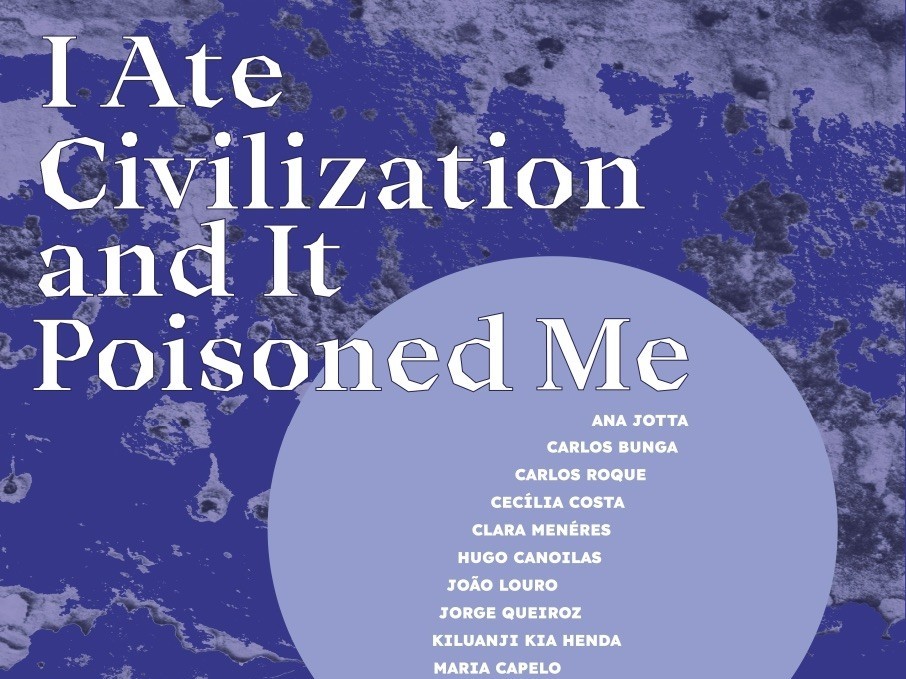
The exhibition I Ate the Civilization and It Poisoned Me, curated by the MA students in Culture Studies, will open on May 19 at 18:00 in Galeria Fundação Amélia de Mello, UCP.
The exhibition is organized under the collaboration protocol between CAM – Centro de Arte Moderna Gulbenkian and The Lisbon Consortium.
Rita Ravasco’s Tempo Sentido is moving to Casa do Comum from 13 November – 8 December.
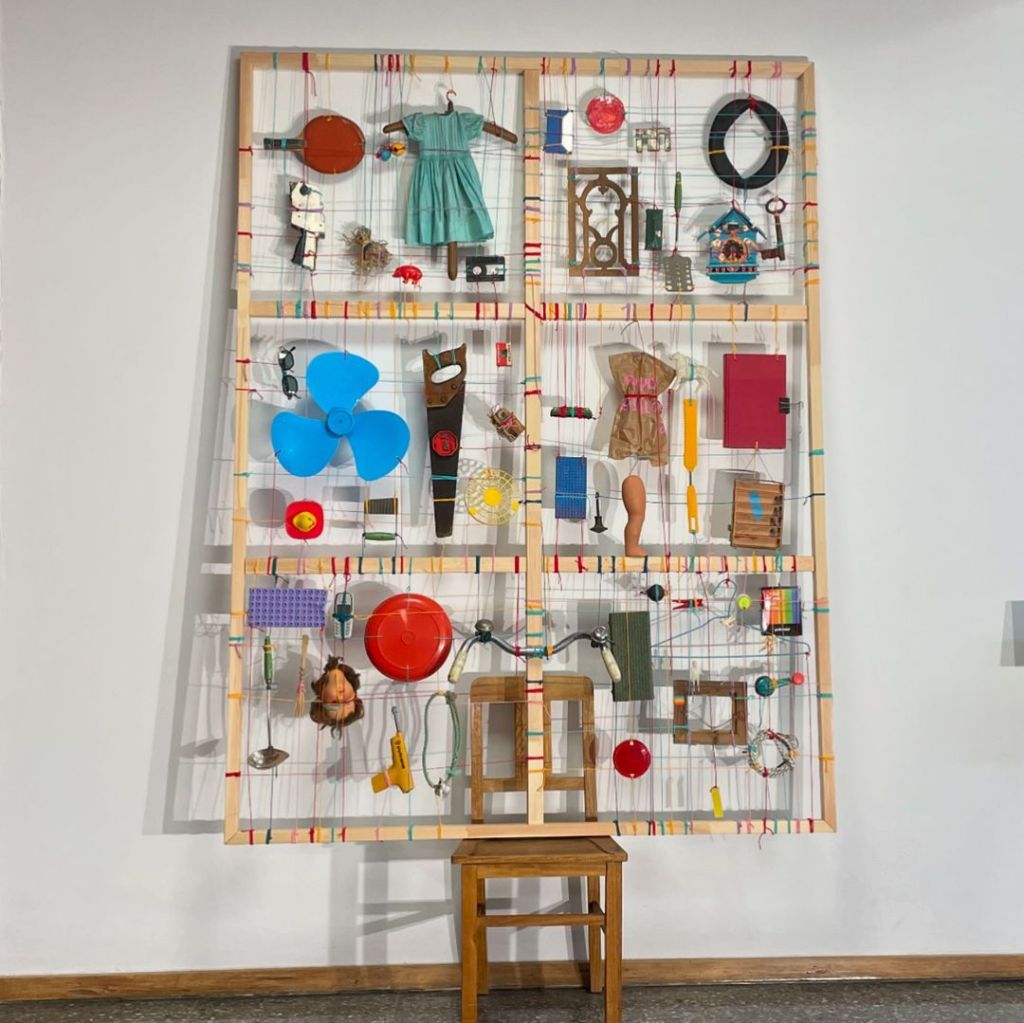
Tempo Sentido [Time Sensed] is Ravasco’s multimedia digital and on-site installation, originally developed for the Nostalgia exhibition (Universidade Católica Portuguesa, 2024) as part of the current Diffractions issue 8 on the topic of nostalgia. The work consists of three parts: the digital issue cover in conversation with a video-animation, both accessible online, and the material piece.
In this piece Ravasco figuratively represents the human mind as a sensory archive through a web of interconnected objects, representing the way memory and nostalgia can be triggered by sensory experience, creating an endless network of memory, longing and affect across time and space. The close communication between the digital and the physical mirrors the extension of our own lives and memories into digital space and evokes a myriad of questions connected to the functioning of nostalgia as a felt experience fusing diverse memories, times and spaces in the human mind as it is triggered by the physical and the digital.
The piece has been funded by CECC – The Research Centre for Communication and Culture.
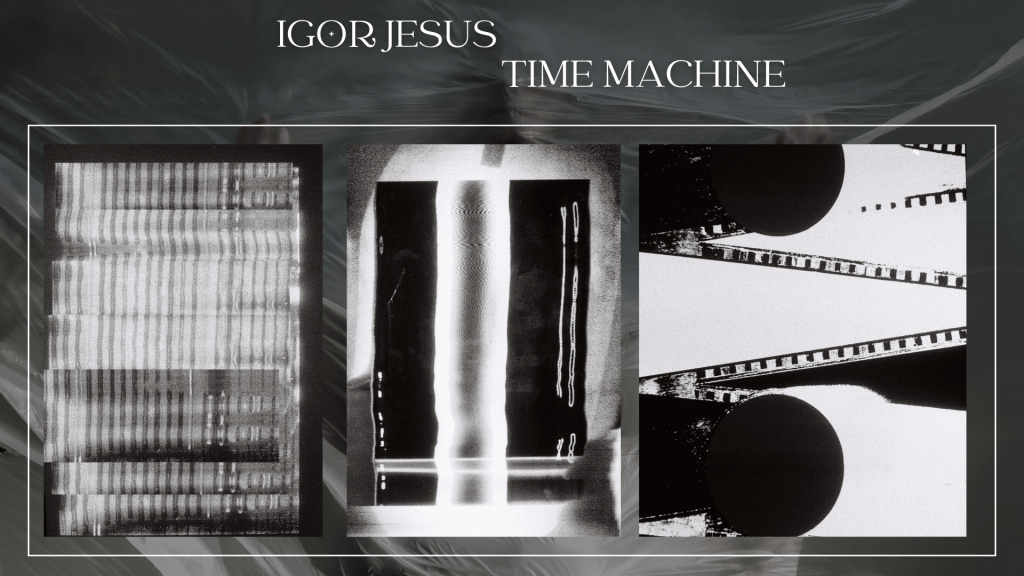
We would like to invite you to the fifth installation of Ayni: Theorems of Reciprocity, the multi-media installation Time Machine (2023), by Igor Jesus. This installation integrates photography, movement, interactive sound, and radio elements and will premiere at Galeria Antecâmara,on the 28th of March 2024, from 6 p.m. Join us as we watch Time Machine transition from day to night.
Presented at Antecamara starting on the 28th March to 4th May 2024, Igor’s Time Machine explores philosophical perspectives that give priority to human-centric views of reality. Consistent with Igor practice, the exhibition highlights that creativity and artistic expression have the special power to make visible what is invisible.The work, in conversation with the physical space of the here and now, also pulsates with dynamic sound and visual effects, offering a sensory journey that extends beyond the boundaries of the gallery space.
Time Machine builds on Igor Jesus’s previous works, including Poem of Fire (2021), where he blended classical and electronic music together with light and astrological activity. Inspired by the unfinished work of Russian composer Alexander Scriabin (1871–1915), Poem of Fire explored the modeling of sound after the visual, using a NASA database to translate solar pulses into song. Lastly, by framing the piece’s multisensory elements within Galeria Antecâmara, one can imagine Jesus’s narrative infusing the hollowed spaces of the building’s architecture, while also, due to the space’s exhibitionism-ready windows, extending beyond the confines of the gallery.
Igor Jesus lives and works in Lisbon and has a degree in Sculpture from the Faculty of Fine Arts of the University of Lisbon. In 2013, he won the first prize in the ICA (Institute of Cinema and Audiovisual) competition for the making of short films. Igor most recent group exhibitions include: HangarOut – EntreLinhas, Palácio Marquês de Abrantes (2017), 2016 Artists’ Film International (at MAAT, Lisbon, Whitechapel Gallery, London, Istanbul Modern, Turkey, GAMeC – Galleria d’Arte Moderna e Contemporanea di Bergamo, Italy, and Projecto 88, Mumbai, India).
Curated by PhD and MA Students in Culture Studies at The Lisbon Consortium, Universidade Católica Portuguesa: Teresa Weinholtz, Aishwarya Kumar, Rosalind Murphy, Ida Svee and Joana Nóbrega. In the framework of the seminar in Curatorial Practices, coordinated by Luísa Santos. Support: República Portuguesa – Cultura | DGARTES – Direção-Geral das Artes.
The opening of the exhibition installation An Experiment in Intervals III – Violet Desert by The Third Thing will take place on March 7, 2024, at 18h.
The Third Thing (PT/AUS) is an arts-based research collaboration between Nithya Iyer and Vlad Mizikov. It seeks to investigate experimental methodologies in the negotiation, actualisation and instrumentalisation of the body in spatial territories. Opening at Antecâmara on the 7th of March, An Experiment in Intervals III – Violet Desert (2022) reads the site of the industrial park in Barreiro, Portugal, through the lens of ‘monstrous architecture’. When the live, attentive and improvisational body – the phenomenological agent – encounters this territory, an Interval is begun: the multiplicity of futures manifest in the tensile and reflexive passage of a body leaking through space-time.
Curated by MA and PhD Students in Culture Studies: Silvia Laurelli, Hannah Dörfel, Anna Salvi, Inés Solustri and María Moreno Navarro.
You can find more information about the project at AYNI instagram and website.
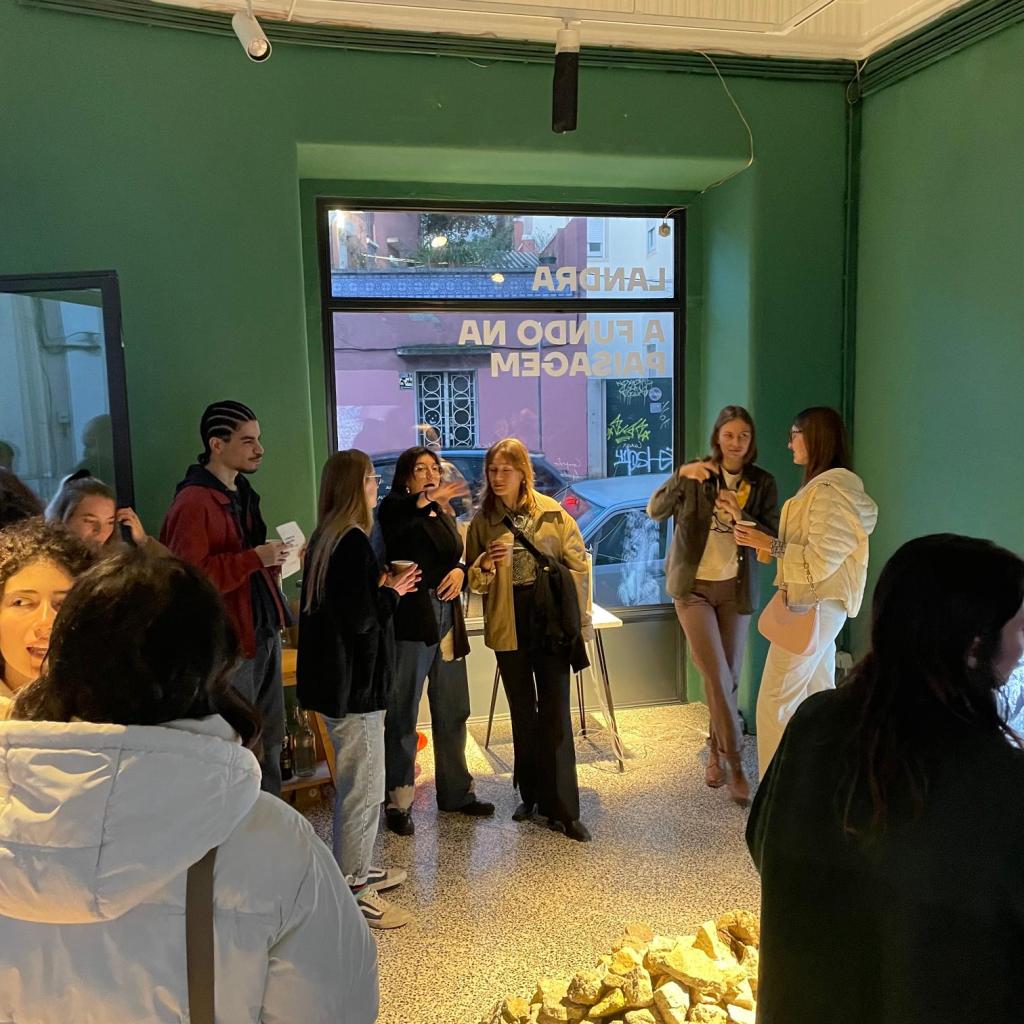
We’re thrilled to invite you to join us on February 15 at 18:00, in Galeria Antecâmara, for the opening of the A Fundo na Paisagem exhibition, by LANDRA, running till March 1.
A Fundo na Paisagem – Deep into the Landscape is a project about life’s unapologetic resilience. In Porto, nestled in the patio of the CCOP, an extraordinary transformation began in August 2022. The artist duo poses a riddle steeped in wonderment: how can a cold cement patio become a vibrant agroforest? In Antecâmara, we will be able to see the different processes behind this transformation, as well as different elements that made the destruction/construction possible.
We hope you can join us for the afternoon filled with creativity and conversation. LANDRA, known for their innovative artistic expressions, will be showing the work at the gallery. Galeria Antecâmara, with its captivating ambiance, serves as the perfect meeting place for this unique gathering.
Should you have any questions or require further information, please do not hesitate to contact us in reply or on instagram. You can also find more information on our website.
We would like to invite you to the second installation of Ayni: Theorems of Reciprocity, the projection of “Goals”, a video performance piece by Jabulani Maseko, followed by a roundtable talk with the artist and the curators. It will take place at Hangar on the 18th of January 2024, from 7 p.m.
The event will be the second installation of the Ayni: Theorems of Reciprocity project, which is a set of five project rooms at Brotéria, HANGAR, Antecâmara, and Universidade Católica Portuguesa that will feature works by Rita Ferreira, Jabulani Maseko, LANDRA – Sara Rodrigues and Rodrigo Camacho, The Third Thing – Nithya Iyer and Vlad Mizikov, and Igor Jesus.
Presented at Hangar, in January 2024, Maseko’s video installation Goals (2018) takes center stage. This ten-minute piece unfolds against a winter-landscape in Switzerland, capturing Maseko’s struggle as he pushes a goalpost from one side of the frame to the other. The video cleverly plays with the idiomatic expression “moving the goalpost”, embodying a physical and metaphorical push, reflecting the artist’s journey to redefine boundaries and test the limits of the body. This work also reaffirms the artist’s way of working, which often reflects where he is geographically at any given moment. Following the screening of Goals, the evening transitions into an interactive conversation with Maseko. The talk delves into the overarching theme of the body in his work, exploring its recurrence and significance in his broader artistic portfolio. A unique exploration of the body as a site of contradictory emotions and states is promised, threading the narratives of both personal and collective memory, and offering visitors an engaging and reflective experience.
Jabulani Maseko, born in Apartheid South Africa in 1977, was the first black student at Redhill, a private school for white children at the time. He left the country at 18, coinciding with the collapse of the regime. His pursuit of higher education led him to the UK, where he earned a master’s degree at the Slade School of Fine Art in London. Maseko’s works have graced group and solo exhibitions across the United States, Europe, and Africa. Maseko’s creative arsenal, which spans sculpture, drawing, painting, installation, and performance, often gravitates towards materials rich with meaning from his childhood in Apartheid South Africa. His works delve into the collective black experience throughout history- a history based on the black body in conflict with society and ultimately in conflict with itself.
Curated by students of the MA and PhD programmes in Cultural Studies, The Lisbon Consortium, Universidade Católica Portuguesa, in the framework of the seminar in Curatorship, coordinated by Luísa Santos. Support: República Portuguesa – Cultura | DGARTES – Direção-Geral das Artes.
Learn more about the project on our website, and our Instagram @ayni_theoremsofreciprocity.
Artivism = Capital – puts together the students’ final projects of the 2nd edition of the Curatorship seminar, in the frame of the MA & PhD international program in Culture Studies. This curatorial project unites 4 artworks prepared by the Portuguese and international artists Alexandra Ferreira & Bettina Wind, Maria Trabulo, Marilá Dardot and Nikolaj Bendix Skyum Larsen, who draw attention to problems such as migration crisis, passive citizenship, economic instability, and political injustice.
Artivism = Capital will be published online as a special edition of Contemporânea magazine.
The project ‘5/5: 5 artists, 5 project rooms places together the students’ final projects for the Curatorship Lab’s first edition, inline with the international MA and PhD frameworks in Cultural Studies, under the signature of The Lisbon Consortium programme.
The project will exhibit Portuguese artists such as Miguel Palma, Luísa Jacinto, Teresa Braula Reis, João Biscainho and Paula Prates from the 3rd to the 18th of March. The exhibitions will take place at Carpe Diem Arte e Pesquisa and at Faculdade de Ciências Humanas – Universidade Católica Portuguesa, Lisbon.
For more information, please check the following links: