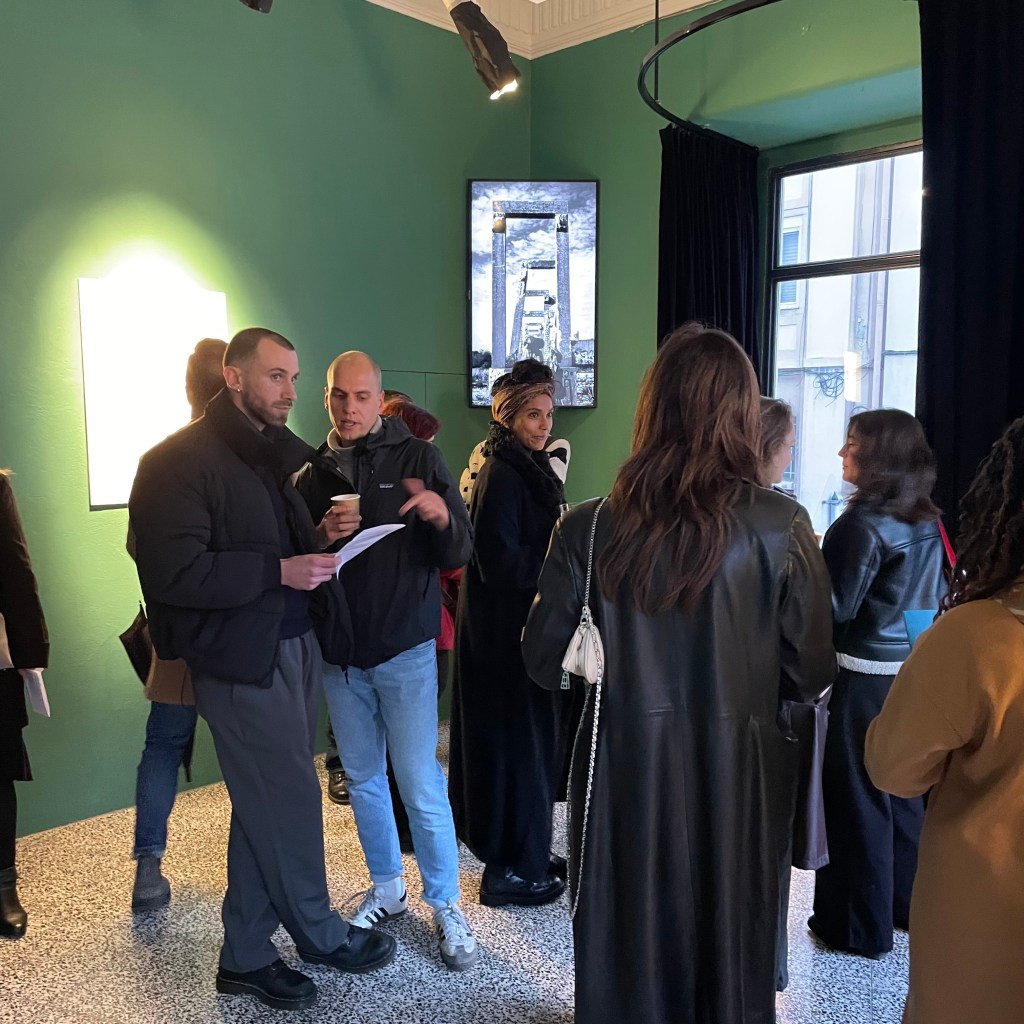
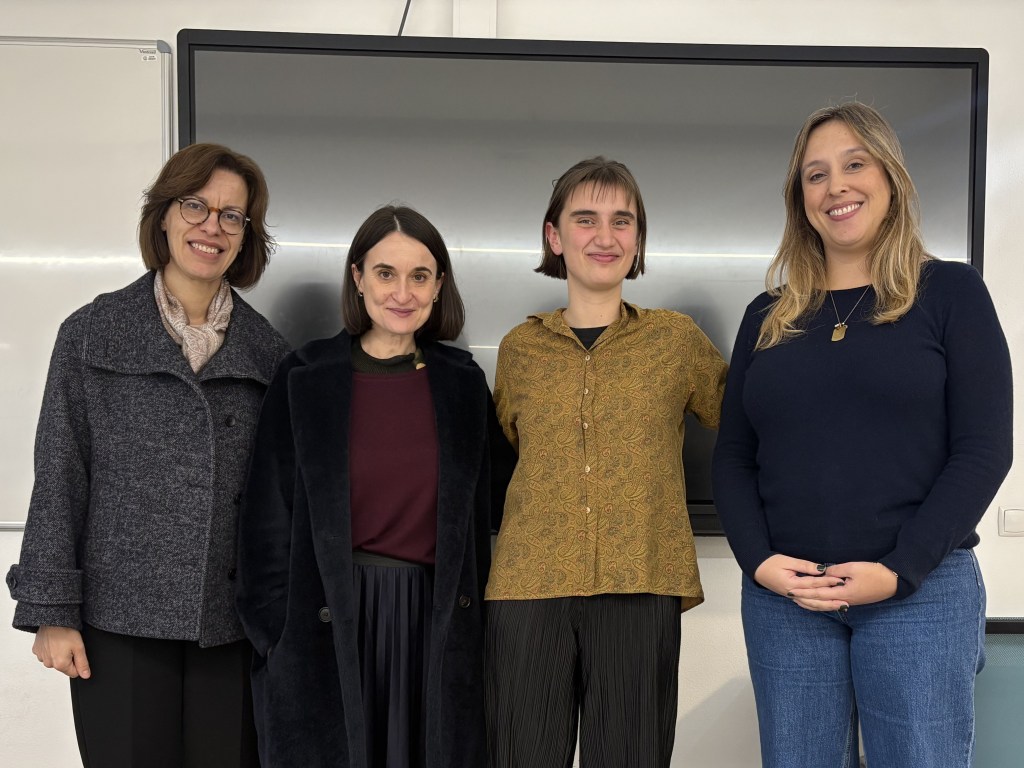
Emma Hallemans successfully defended the MA dissertation “Thinking in, about and through atmospheres: A research on the atmosphere of the camino de Santiago de Compostela” on January 8, 2025.
Category: MA
-
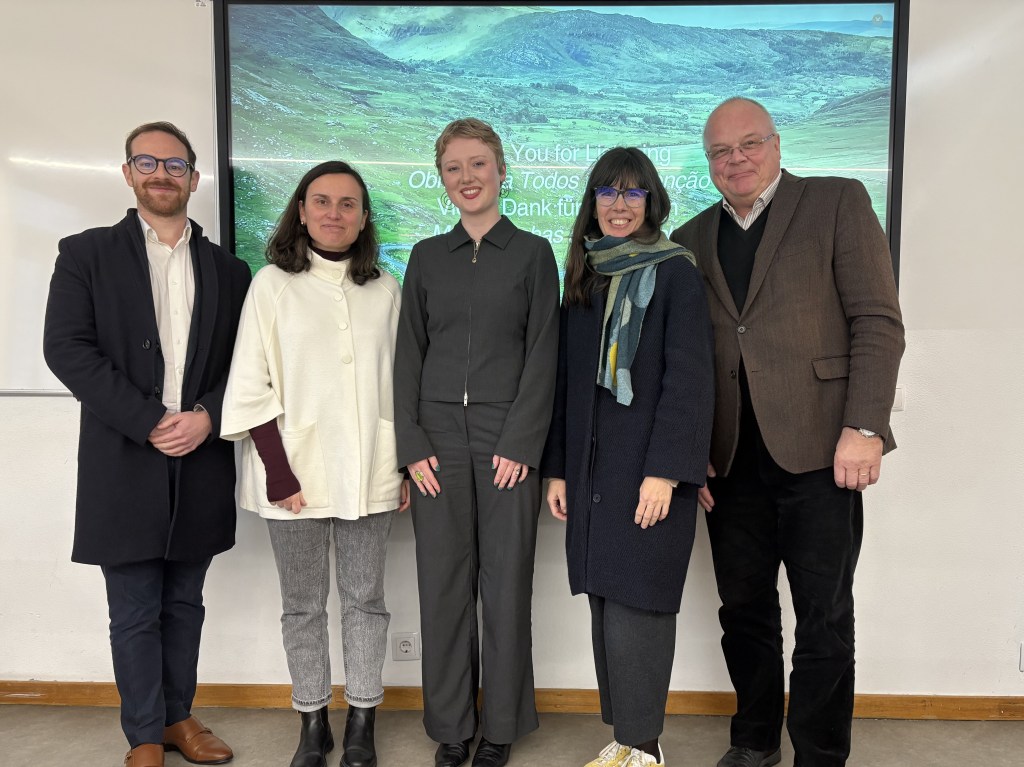
Congratulations, Rhian!
Rhian O’Sullivan successfully defended the MA dissertation “Cartographic culture: Mapping relations between the Irish state and it’s ‘Culturescape’ from empire to e-commerce” on January 6, 2025.
-

Congratulations, Leonor!
Leonor Terenas successfully defended the MA dissertation “Fiction writing amidst today’s demand for representation: ‘Authenticity’ in young adult (YA) literature” on December 18, 2024.
-

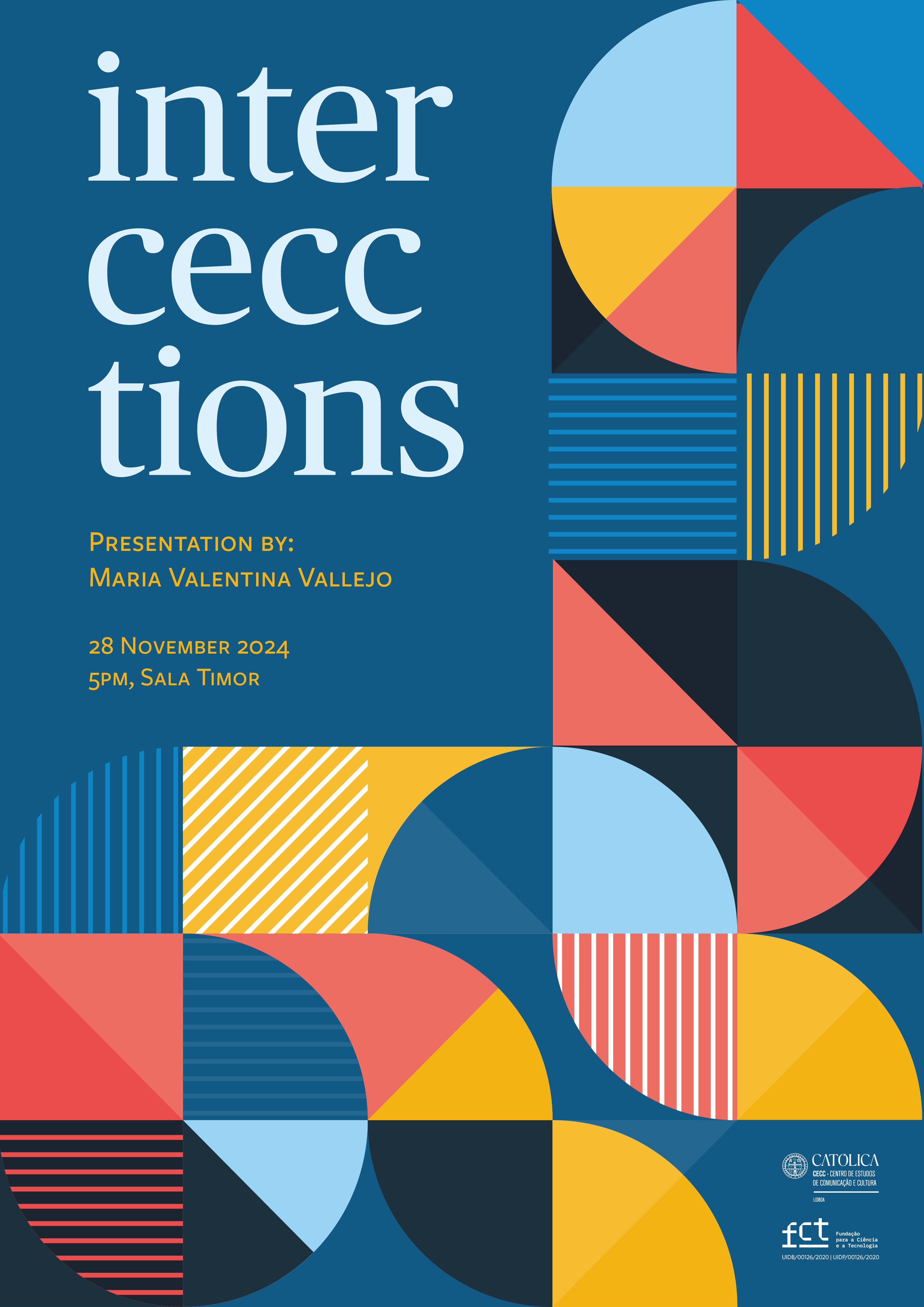
InterCECCtions | Maria Valentina Vallejo (MA) presents Arctic Routes, Southern Ways (28 November 2024, 5pm, Timor)
This month’s InterCECCtions will feature Maria Valentina Vallejo, MA student in Culture Studies, who will be discussing her study conducted as part of CECC‘s research project Arctic Routes, Southern Ways.
Arctic Routes, Southern Ways is a joint research project implemented by CECC members which seeks to compare/contrast two different colonial legacies – the Portuguese and the Norwegian – and create alternative narratives and methods of knowledge production in art institutions and academia.
Hegemonic narratives of the search for national unity in Norway, or the view of a “good” colonialism or “lusotropicalism”, in Portugal, bring these otherwise distant countries close in the way that such experiences have prevailed in many instances of public discourse, policies in institutional practices, in academia and in art institutions. The project will include online meetings, listening sessions in Lisbon and in Bergen, and research visits to Portugal and Norway.
The project puts together two academic institutions (CECC-Universidade Católica Portuguesa and UiT-The Arctic University of Norway) and two contemporary art centres (HANGAR, from Portugal, and Bergen Kunsthall, from Norway), and will organize several scientific activities throughout its lifetime.
Arctic routes was officially launched in 16 January 2024, is coordinated by CECC, financed by an EEA grant and supported by a Globus OpStart grant from the Nordisk Kulturfond.

-

Marta Alves Silva (MA) receives Honorary Mention of “Estudar a Dança” Award
We would like to congratulate Marta Alves Silva (MA in Culture Studies) who received the Honorary Mention of the Estudar a Dança Award with the dissertation Emotional contagion: the transformative potential of performance art.
At the time of the ceremony, Marta Alves Silva was in an artistic residence and could not be present in person, but accepted the Honorary Mention via videoconference.
The Estudar a Dança Award is an initiative of the National Museum of Theatre and Dance (MNTD) and Museus e Monumentos de Portugal. It celebrates the extraordinary collection of the MNTD and aims to reward academic work of exceptional quality that contributes to the knowledge of this art and stimulates the development of this less studied disciplinary area in our country. The prize is sponsored by the Millenium BCP Foundation, which is associated with the recognition and promotion of academic research in the performing arts, especially in the field of theatrical dance.
The jury is composed of Nuno Costa Moura, José Carlos Alvarez, Luísa Taveira and Rui Vieira Nery. According to the jury, Silva’s work proposes “an original theoretical reflection on the inclusion of the public in performative practices, through strategies of emotional stimulation that enhance collective creativity, based on the case study of Silent Disco (2019), a performance by Alfredo Martins”.
The Estudar a Dança Award was attributed to Laura Rozas Letelier for the thesis Formas Coreográficas de Reflexão Histórica: Para uma Timeline a Haver. Genealogias de Dança enquanto prática artística em Portugal.Congratulations to the winners!
-

T(h)eses | Julian F. Massa: Muses and Management — Corporate Cultural Responsibility in Germany
The new publication of the series T(h)eses that celebrates the best dissertations of The Lisbon Consortium is Julian F. Massa’s “Muses and Management — Corporate Cultural Responsibility in Germany”.
This dissertation analyses the concept of Corporate Cultural Responsibility in Germany, considering key aspects of corporate responsibility. As public finances tighten, corporate social engagement, including in the arts and culture, is becoming increasingly important. However, the discourse remains largely national. Hence, two case studies illustrate best practice examples from Germany. Ultimately, the question remains whether business supports culture or vice versa.
Available at:
https://www.uceditora.ucp.pt/pt/the-lisbon-consortium-theses/3382-muses-and-management.html
Indice:
Table of Contents
List of AbbreviationsCHAPTER I
Introduction
1.1 Does it pay to be good?
1.2 Research Methodology
1.3 StructureCHAPTER II
A Tribute to Virtue: Corporate Responsibility
2.1 Manifestations of Corporate Responsibility
2.1.1 Corporate Social Responsibility
2.1.1.1 Corporate Sustainability
2.1.1.2 Corporate Social Responsibility in Germany
2.1.2 Corporate Citizenship
2.1.2.1 Corporations and Citizenship
2.1.2.2 Corporate Philanthropy
2.1.2.3 Modes and Motives for Corporate Citizenship
2.1.2.4 Corporate Citizenship in Germany
2.1.3 Corporate Governance
2.1.3.1 Corporate Governance in Germany
2.1.3.2 The ‘German Corporate Governance Code’
2.2 Corporate Cultural Responsibility
2.2.1 Beyond Cultural Sponsoring
2.2.2 Measures
2.2.3 Benefits
2.2.3.1 Culture & Confidence
2.2.3.2 Strategic DimensionsCHAPTER III
Corporate Cultural Responsibility in Germany
3.1 A Short History of Private Cultural Funding
3.2 Political Framework Conditions
3.3 Quantifying Corporate Cultural Responsibility
3.3.1 The 2010 Kulturkreis Survey
3.3.2 Corporate Cultural Sponsoring
3.3.3 Corporate Foundations
3.4 Kulturkreis der deutschen Wirtschaft im BDI e. V.
3.4.1 Funding Areas
3.4.2 Working Groups
3.5 The Chemistry of Societal Commitment – BASF SE
3.5.1 “Creating Chemistry for a Sustainable Future”
3.5.2 BASF’s Cultural Engagement
3.5.2.1 Commitment to the Region
3.5.2.2 Best Practice ExamplesCHAPTER IV
Conclusion
Bibliography
-

Congratulations, Emma!
Emma Legaye successfully defended the MA dissertation “From Patrimonialisation to Depatrimonialisation: Crafting a New Narrative to Rethink Cultural Heritage Preservation in a Global Context” on October 15, 2024.
-
Master’s degree in Culture Studies #2 in the world in Eduniversal ranking
Our Master’s degree in Culture Studies is now the second best program in “Cultural Management/Creative Industries Management” according to the prestigious Eduniversal ranking.
In the words of Isabel Capeloa Gil, Rector of Universidade Católica Portuguesa and director of The Lisbon Consortium, “The Master’s degree in Culture Studies is the result of 14 years of fruitful work between the arts sector and academia at national and international levels. From Lisbon to the Venice Biennale, our students are present in the places where the best in art and culture is presented”.
Diana Gonçalves, Coordinator of the Master’s in Culture Studies, says that this “is a singular program and a unique experience because it brings together excellent academic reflection and the vibrant practice of the cultural sector. The second place in the Eduniversal ranking in the area of Cultural Management/Creative Industries Management acknowledges the program’s innovative format and recognizes the merit of the Faculty of Human Sciences at Universidade Católica Portuguesa, the Lisbon Consortium, and its partners. We are very proud of this position, which also brings added responsibility. Following our motto, ‘thinking ahead’, we continue to move towards the future, always doing more and better”.

-
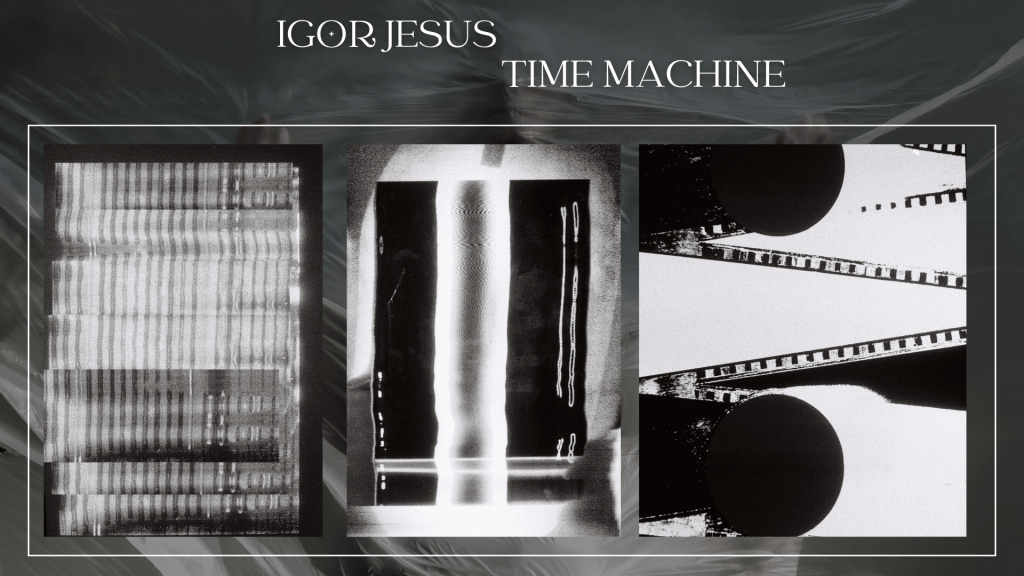
AYNI | Igor Jesus: Time Machine (2023) Galeria Antecâmara 28.3. 18h
We would like to invite you to the fifth installation of Ayni: Theorems of Reciprocity, the multi-media installation Time Machine (2023), by Igor Jesus. This installation integrates photography, movement, interactive sound, and radio elements and will premiere at Galeria Antecâmara, on the 28th of March 2024, from 6 p.m. Join us as we watch Time Machine transition from day to night.
Presented at Antecamara starting on the 28th March to 4th May 2024, Igor’s Time Machine explores philosophical perspectives that give priority to human-centric views of reality. Consistent with Igor practice, the exhibition highlights that creativity and artistic expression have the special power to make visible what is invisible.The work, in conversation with the physical space of the here and now, also pulsates with dynamic sound and visual effects, offering a sensory journey that extends beyond the boundaries of the gallery space.
Time Machine builds on Igor Jesus’s previous works, including Poem of Fire (2021), where he blended classical and electronic music together with light and astrological activity. Inspired by the unfinished work of Russian composer Alexander Scriabin (1871–1915), Poem of Fire explored the modeling of sound after the visual, using a NASA database to translate solar pulses into song. Lastly, by framing the piece’s multisensory elements within Galeria Antecâmara, one can imagine Jesus’s narrative infusing the hollowed spaces of the building’s architecture, while also, due to the space’s exhibitionism-ready windows, extending beyond the confines of the gallery.
Igor Jesus lives and works in Lisbon and has a degree in Sculpture from the Faculty of Fine Arts of the University of Lisbon. In 2013, he won the first prize in the ICA (Institute of Cinema and Audiovisual) competition for the making of short films. Igor most recent group exhibitions include: HangarOut – EntreLinhas, Palácio Marquês de Abrantes (2017), 2016 Artists’ Film International (at MAAT, Lisbon, Whitechapel Gallery, London, Istanbul Modern, Turkey, GAMeC – Galleria d’Arte Moderna e Contemporanea di Bergamo, Italy, and Projecto 88, Mumbai, India).
Curated by PhD and MA Students in Culture Studies at The Lisbon Consortium, Universidade Católica Portuguesa: Teresa Weinholtz, Aishwarya Kumar, Rosalind Murphy, Ida Svee and Joana Nóbrega. In the framework of the seminar in Curatorial Practices, coordinated by Luísa Santos. Support: República Portuguesa – Cultura | DGARTES – Direção-Geral das Artes.
Learn more about the project on AYNI website and instagram. -
Congratulations, Leonor!
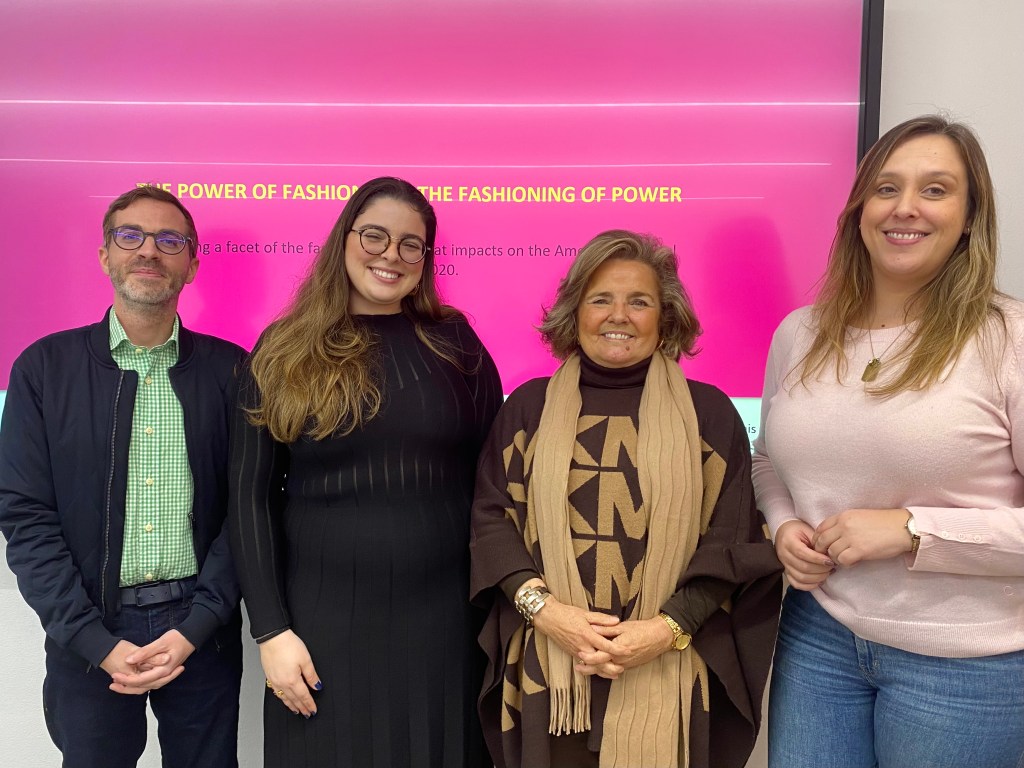
Leonor Loureiro successfully defended the MA dissertation “The Power of Fashion and the Fashioning of Power” on March 1, 2024.
-

Congratulations, Samuel!
Samuel Miller successfully defended the MA dissertation “Ordinary Language and the Spirit of Criticism: Reading after Postcritique” on February 23, 2024.
-

Congratulations, Beatriz!
Beatriz Varrecoso successfully defended the MA internship report “Immersiveness in Classical Concerts in Historical Sites: The Case of Palácio Nacional de Queluz” on February 9, 2024.
-

2024-2025 Applications are open!
The applications for masters and doctoral programs are now open.
Early Bird: January 15 to February 26
1st phase: February 27 to April 8
2nd phase: April 9 to May 30
More information available here. -
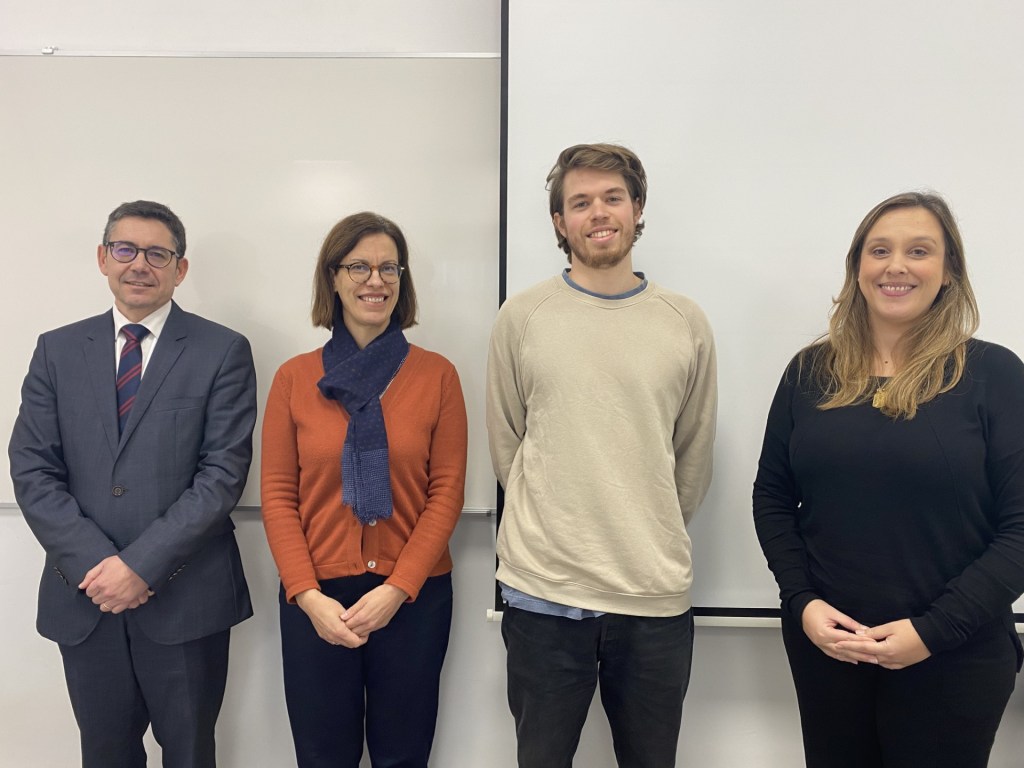
Congratulations, Fabian!
Fabian Schmid successfully defended the PhD thesis “Sustainability in the Music Festival Industry – The Power of Music to Change Politics?” on January 19, 2024.
-
Cfp: XIV Lisbon Summer School for the Study of Culture – Culture at War
CULTURE AT WAR
Lisbon, June 24 – 29, 2024
Deadline for submissions: February 29, 2024
We are living in times of war. Now, more than ever, war occupies a central role in both national and international affairs and pervades various spheres of our societies and cultures.
The 21st century has been marked by violence of different varieties and levels. Having started with a massive terrorist event, the attacks of September 11, 2001, the last two decades have witnessed many examples of aggression that have come to dominate both the media and public discussion. Acts of terrorism of various kinds, revolutions and wars, with the conflicts in Ukraine and the Middle East among the most recent, are illustrative of contemporary warfare, its characteristics, and challenges. While new military technology such as high-tech weapons and attack drones promote more remote, noncontact operations, the ever-present media strive for immediacy and proximity and thus contribute to a new and distinctive experience of war. Their continuous, play-by-play coverage promotes the illusion of a 360º view and allows audiences to follow the events in near-real time. However, their omnipresence has also turned them into desirable instruments of warfare. They not only inform about the war but also have the ability to mobilize for/against it. Furthermore, the rise of social media and its pivotal role in both documenting conflicts and generating and disseminating misinformation cannot be disregarded. As military conflicts unfold, a parallel war is also fought between communication mechanisms. It can even be argued, with Paul Virilio (War and Cinema, 1989), that war, or its experience, is becoming increasingly a product of visual media construction.
Wars are not circumscribed to military conflicts, though. Contention has become an intrinsic part of everyday life, leading to social and cultural movements that call out misguided practices, injustices, and violations of basic laws and rights. On the one hand, bottom-up mobilizations such as #MeToo, the gilets jaunes, or Fridays for Future, reveal a world in crisis, responding to systemic violence with dissent. On the other hand, the dismantling of structures of oppression by means of decolonizing processes clashes with the incapacity to effectively deal with past wrongdoings and the tendency to forget or avoid uncomfortable discussions. These movements may, at times, also represent a dynamic of destruction based on the collective readiness to criticize, denounce, hold accountable, and ultimately cancel what or who is considered to have behaved in an unacceptable way.
This culture of war, of diverging opinions and interests, extends also to the relationship between man and nature, and more specifically the ongoing environmental emergency. One rhetorical device used to stress the escalating effects of climate change is precisely the war metaphor (employed also in the context of the COVID-19 pandemic). The use of military language and the idea of a war against climate change, widely used in public speeches and in the media, is meant to spark a fighting spirit and incite action. There is, however, the risk of having the opposite effect if the enemy remains abstract, the message is not made understandable, and governments and individuals fail to take responsibility for the current situation.
The XIV Lisbon Summer School for the Study of Culture is dedicated to the study of the relationship between culture and war. Papers are welcome on the following topics, amongst others:
- Culture and conflict
- Ancient and modern warfare
- Culture in modern warfare
- War and the creation of modernity
- The cultural construction of terror/terrorism
- Rules of war and humanitarian law
- The ethics of war
- The forensics of war
- Rituals of the fallen
- Battlefields and landscapes of war
- Media and war, media at war: (mis)communication, (mis)information, and fake news
- Representations of war
- Art and artists at war
- Art and reparations
- (De)Colonizing discourses and practices/asymmetric conflict
- Conflict escalation and conflict resolution
- Cultural wars and language
- Dialogue and tolerance/Soliloquy and intolerance
- Culture of violence
- Warrior culture: between heroes and villains
- War as metaphor
- Environmental emergency and war against climate change
- War-induced uncertainty and instability
- Epistemologies at war/theories at war
We encourage proposals coming from the fields of culture studies, film and the visual arts, literary and translation studies, history, anthropology, media, and psychology, among others.
Paper proposals
Proposals should be sent to lxsummerschool@gmail.com no later than February 29, 2024, and include paper title, abstract in English (max. 200 words), name, e-mail address, institutional affiliation, and a brief bio (max. 100 words) mentioning ongoing research.
Applicants will be informed of the results of their submissions by March 29, 2024.
Full papers submission
Presenters are required to send in full papers no later than May 31, 2024.
The papers will then be circulated amongst the participants. In the slot allotted to each participant (30’), only 10’ may be used for a brief summary of the research piece. The Summer School is a place for networked exchange of ideas, and organizers wish to have as much time as possible for a structured discussion between participants. Therefore, in each slot, 10’ will be used for presentation, and 20’ for discussion.
Registration fees
Participants with paper – 300€ for the entire week (includes lectures, master classes, doctoral sessions, lunches and closing dinner)
Participants without paper – 60€ per day (lunches and closing dinner not included)
Fee waivers
For The Lisbon Consortium students and CECC researchers, there is no registration fee.
For other UCP students, students from institutions affiliated with the European Summer School in Cultural Studies (ESSCS), members of the European PhD-Net in Literary and Cultural Studies, and members of the Critical Humanities Network the registration fee is 80€.
This edition of the Lisbon Summer School for the Study of Culture will function as the 2024 Critical Humanities Network Summer School.
Organizing Committee
- Isabel Capeloa Gil
- Peter Hanenberg
- Alexandra Lopes
- Adriana Martins
- Diana Gonçalves
- Paulo de Campos Pinto
- Rita Faria
- Annimari Juvonen
Assessment Committee
- Peter Hanenberg
- Alexandra Lopes
- Adriana Martins
- Diana Gonçalves
- Paulo de Campos Pinto
- Rita Faria
- Ana Margarida Abrantes
- Luísa Leal de Faria
- Joana Moura
- Rita Bueno Maia
- Verena Lindemann Lino
- Sofia Pinto
- Luísa Santos
-

Congratulations, Fredy!
Fredy Hernando Viracacha Lopez defended successfully the MA thesis “Towards Sustainability in Cultural Programming: An Analysis of a Cultural Institution in the Covid-19 Pandemic” on December 7, 2023.
-

Congratulations, Julia!
Julia Flamingo successfully defended the MA thesis “Journalism and Plain Language as Tools to Bring Audiences Closer to Contemporary Art” on 28 November, 2023.
-
José Carlos Teixeira at Lisbon Consortium
Last thursday, November 9, José Carlos Teixeira met the Lisbon Consortium students for an informal meeting. The visual artist, who also teaches at University of Wisconsin-Madison, talked about his background and the current exhibition at MAAT, “On Exhile”, tackling subjects like migration, displacement and identity.


 ????????????????????????????????????

-
The LxC in O Jornal Económico
Today, 21st April, in Jornal Económico, an article about the Lisbon Consortium, with statements by the Rector of UCP Isabel Capeloa Gil, professors and students.


-

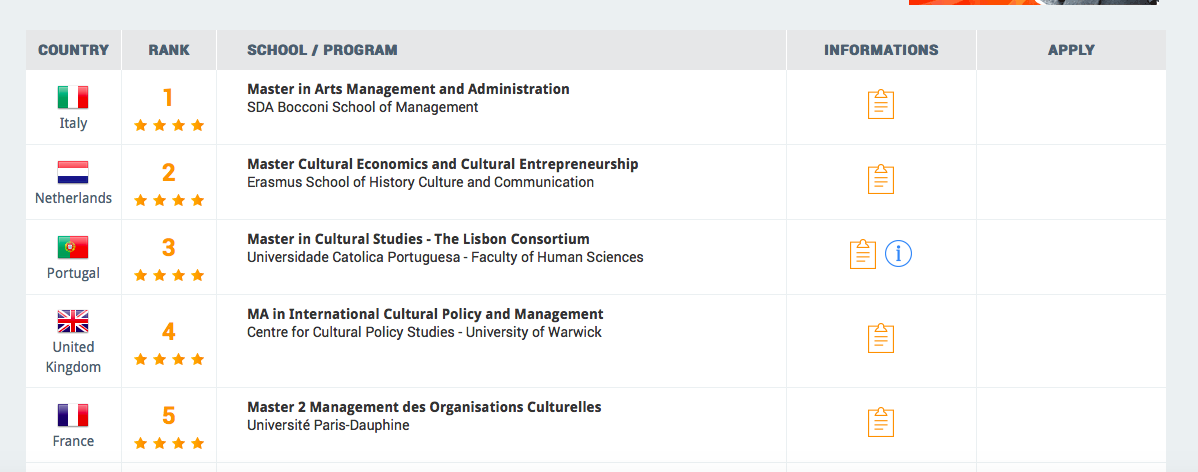
MA in Culture Studies ranked #3
For the third year in a row, the Lisbon Consortium MA in Culture Studies was ranked #3 by Eduniversal Worldwide Best Masters Ranking in Arts and Cultural Management.
-

Study trip to Porto and Guimarães
Last weekend, February 11- 12 2017, some students and teachers of The Lisbon Consortium went on a study trip to Porto and Guimarães. The program included a Talk at Porto City Hall by Guilherme Blanc about the cultural politics of the city, a visit to Serralves Foundation to see Philippe Parreno’s exhibition “A Time Coloured Space”, Joan Miró’s “Materiality and Metamorphosis”, Novo Banco Revelation 2016- Andreia Santana, a choreography at Centro Cultural Vila Flor, in the context of GUIdance Festival – Speak Low if you Speak Love (Wim Vandekeybus) and a visit to José de Guimarães International Arts Centre.


Check some photos of the weekend!
-
5/5: 5 artists, 5 project rooms: students, artists and curatorship
The project ‘5/5: 5 artists, 5 project rooms places together the students’ final projects for the Curatorship Lab’s first edition, inline with the international MA and PhD frameworks in Cultural Studies, under the signature of The Lisbon Consortium programme.
The project will exhibit Portuguese artists such as Miguel Palma, Luísa Jacinto, Teresa Braula Reis, João Biscainho and Paula Prates from the 3rd to the 18th of March. The exhibitions will take place at Carpe Diem Arte e Pesquisa and at Faculdade de Ciências Humanas – Universidade Católica Portuguesa, Lisbon.
For more information, please check the following links:
-
Grant recipients. Congratulations!
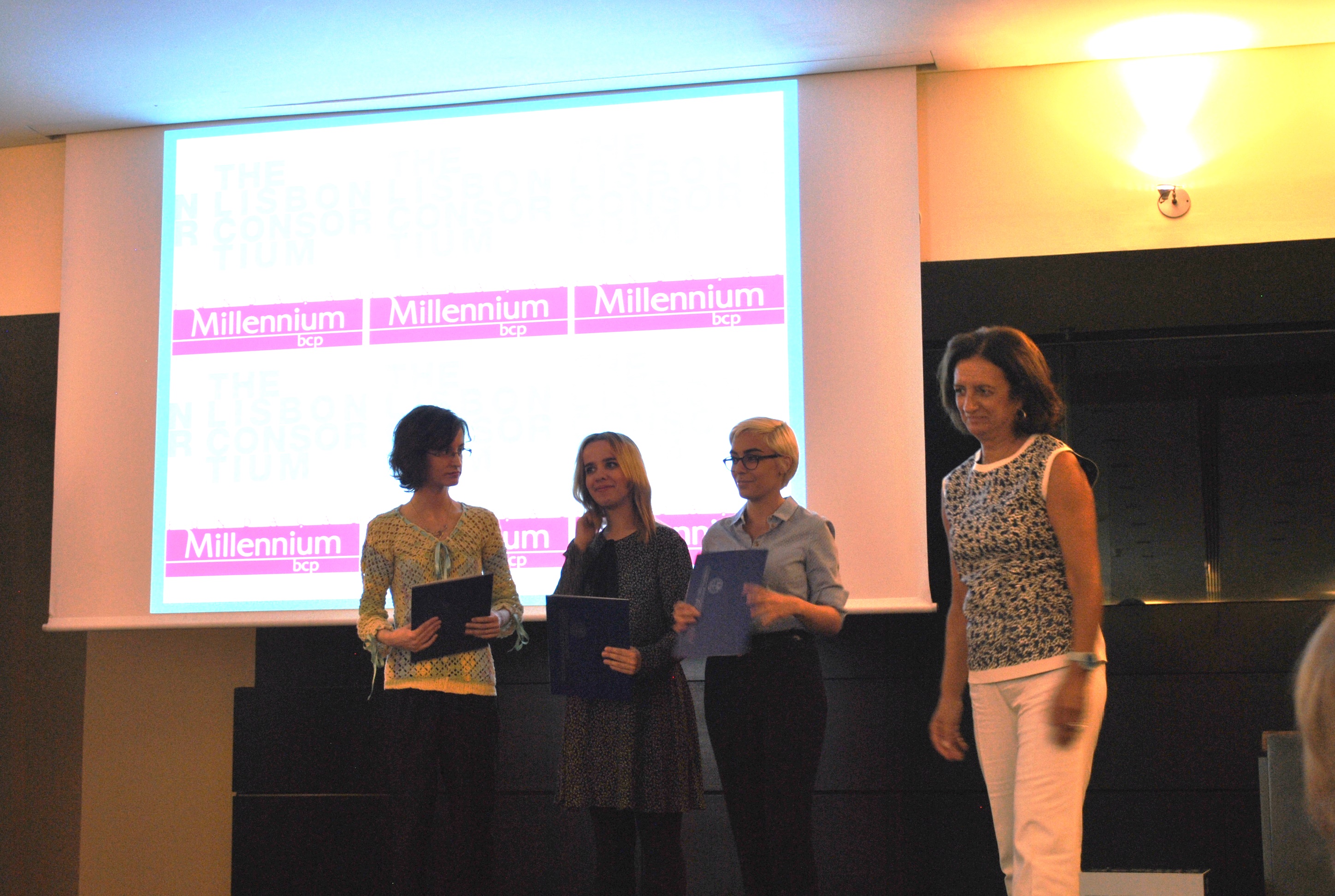
This year’s winners of the Millennium BCP Foundation Scholarship and EDP Foundation International Grant were announced on September 30 at the Opening Session of the Lisbon Consortium academic year.
The Millennium BCP Foundation Grant was awarded by Fátima Dias, representative of the Millennium BCP Foundation at the Curators Council of the Lisbon Consortium
The Millennium BCP Foundation Scholarship for the Lisbon Consortium aims at funding Portuguese students in the Culture Studies program through 3 scholarships. These scholarships consist in a reduction of full-tuition in the first two semesters, amounting to 1.750€.
This year’s winners of the Millennium BCP Foundation Scholarships are:
- Mafalda Barrela – first-year student of the Master’s Program in Culture Studies.
- Diana Oliveira – first-year student of the Master’s Program in Culture Studies.
- Diana Ferreira – first-year student of the Master’s Program in Culture Studies
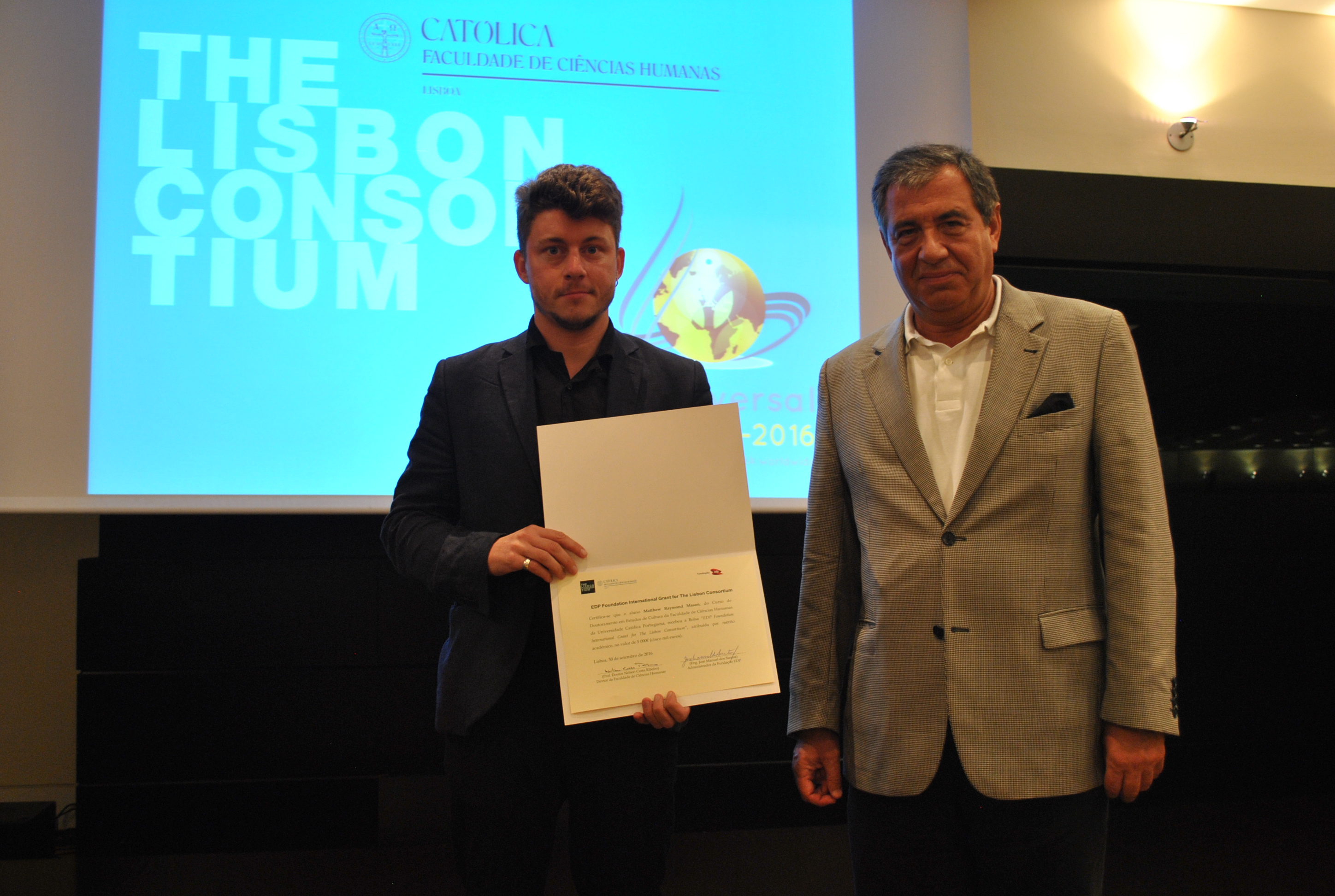
The EDP Foundation International Grant will be awarded by José Manuel dos Santos, Member of the Board of Directors and Cultural Director of the EDP Foundation and Member of the Curators Council of the Lisbon Consortium.
The EDP Foundation International Grant for the Lisbon Consortium aims at funding research conducted by an international PhD student in the Culture Studies program. The scholarship, in the amount of 5.000€, is destined to the payment of tuition fees.
This year’s winner of the EDP Foundation International Grant is:
- Matthew Mason – first-year student of the Doctoral Program in Culture Studies.
CONGRATULATIONS!
-

Opening session of the Lisbon Consortium
The open session of the academic year of the Lisbon Consortium was held last friday, September 30, at Centro Cultural de Belém, with the faculty, the old and the new students, the partners and Bill Fontana.
Welcome to the Lisbon Consortium!
-
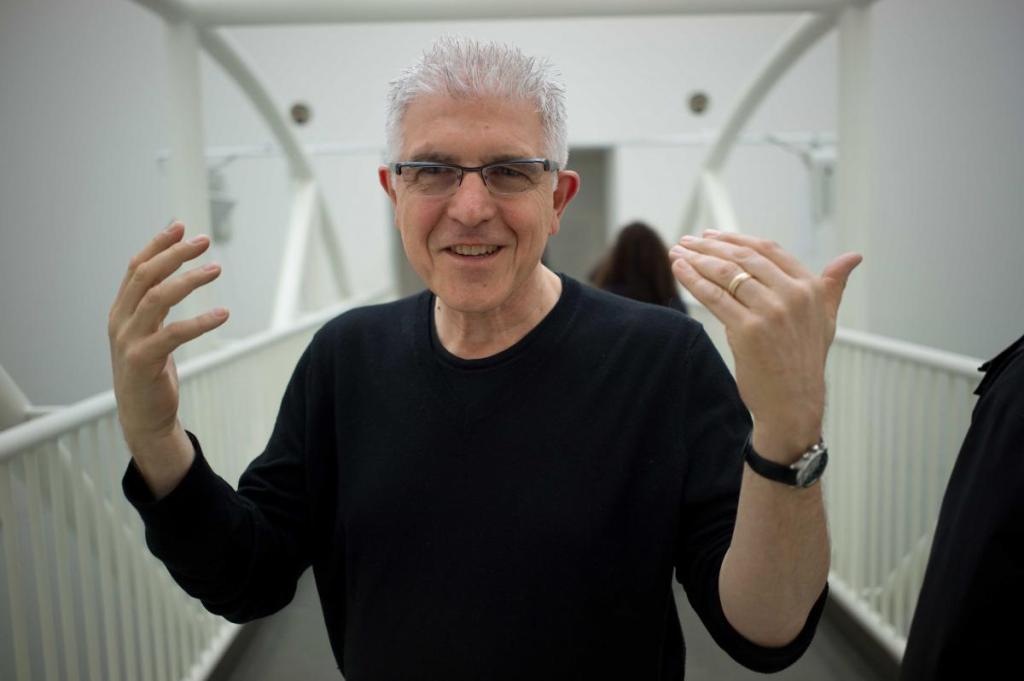
Bill Fontana at the Lisbon Consortium
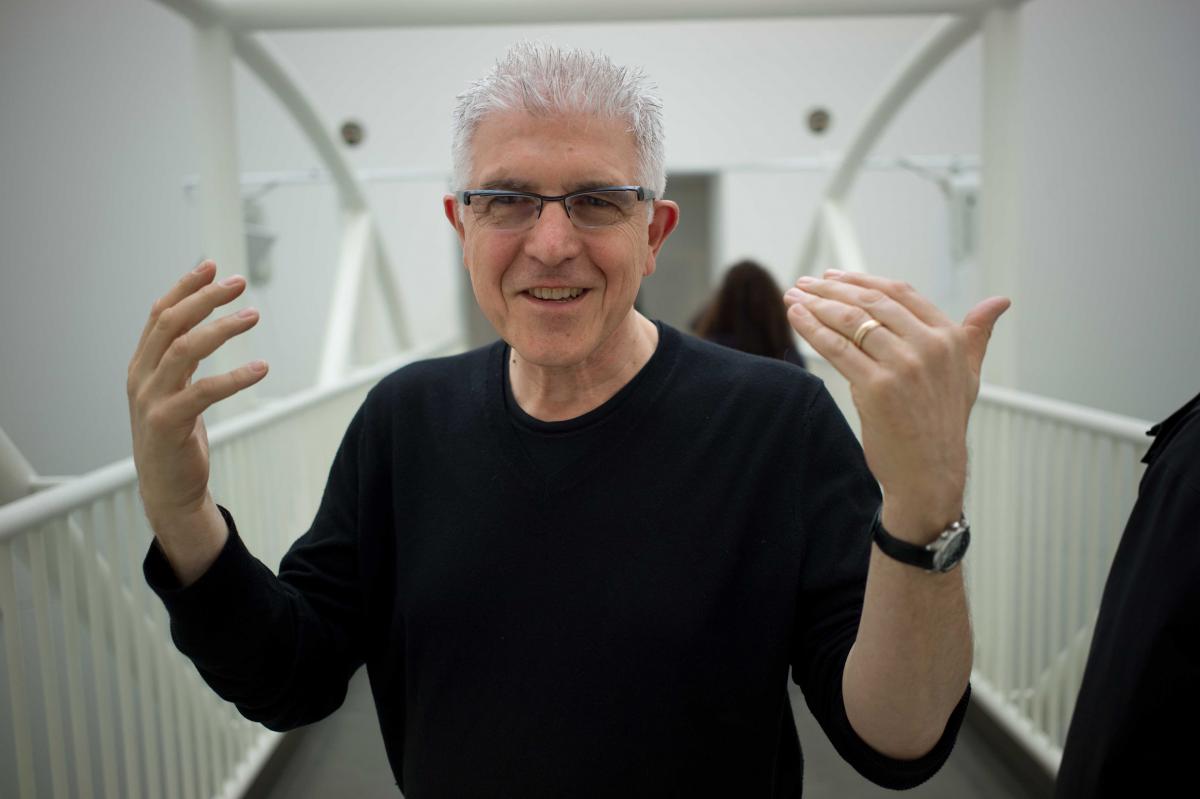
Photo: Stuart Davidson
The sound artist Bill Fontana is the special guest of the Lisbon Consortium opening session, due to take place on September 30, at 18h, Centro Cultural de Belém (Sala Almada Negreiros)
Bill Fontana (born USA 1947) is an American composer and artist who developed an international reputation for his pioneering experiments in sound. Since the early 70’s Fontana has used sound as a sculptural medium to interact with and transform our perceptions of visual and architectural spaces. He has realized sound sculptures and radio projects for museums and broadcast organizations around the world. His work has been exhibited at the Whitney Museum of American Art, the San Francisco Museum of Modern Art, the Museum Ludwig, Cologne, the Post Museum in Frankfurt, the Art History and Natural History Museums in Vienna, both Tate Modern and Tate Britain in London, the 48th Venice Biennale, the National Gallery of Victoria in Melbourne, the Art Gallery of NSE in Sydney and the new Kolumba Museum in Cologne. He has done major radio sound art projects for the BBC, the European Broadcast Union, the Australian Broadcasting Corporation, National Public Radio, West German Radio (WDR), Swedish Radio, Radio France and the Austrian State Radio.
Here, you can know more about his life and work: