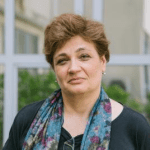
Adriana Martins is Associate Professor with aggregation at the Faculty of Human Sciences, Universidade Católica Portuguesa (UCP). She holds a PhD in Comparative Literature from Universidade Católica Portuguesa, where she also obtained her Habilitation in Culture Studies. She coordinates the scientific area of Culture Studies since 2019. Between 2011 and 2019 she was the FCH International Relations Coordinator. She has taught in the Universities of Utrecht (The Netherlands), LUMSA (Italy) and Pázmány Péter Catholic (Hungary). She is a Senior Member of CECC, integrating the team of the research line on Culture, Art and Conflict. She has published widely on Culture Studies with a focus on Film Studies and on Comparative Literature.
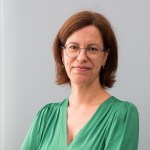
Ana Margarida Abrantes studied English and German at the Universities of Aveiro, Essen and Innsbruck. She holds a Masters Degree in Cognitive Linguistics and a PhD in German Language and Literature, which she completed in 2008 at the Catholic University of Portugal. Between 2006 and 2009 she was visiting scholar at the Center for Semiotics of Aarhus University and at the Department of Cognitive Science at Case Western Reserve University, in Cleveland, USA. Since 2016 she is a member of the Scientific Board for German Studies of DAAD – Deutscher Akademischer Austauschdienst.
Researcher in the line Culture, Translation and Cognition of CECC, her areas of interest are Culture and Cognition, Language and Cognition, Cognitive Poetics and German Studies.
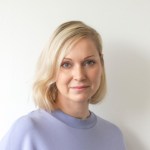
Annimari Juvonen holds a PhD in Culture Studies from Universidade Católica Portuguesa. She Invited Assistant Professor at Universidade Católica Portuguesa and the Executive Coordinator of the Lisbon Consortium, a network between the Master and Doctoral Programs in Culture Studies at UCP and prominent cultural and art institutions in Lisbon. She holds Master’s Degrees in Social and Cultural Anthropology from the University of Helsinki and in Anthropology of Human Rights and Social Movements from Universidade Nova de Lisboa. She continues the research on visual culture and the society within the research group “Critique, Conflict and Culture” at the Research Centre for Communication and Culture (CECC) at Universidade Católica Portuguesa. Her recent publications include the co-edited book Negotiations of Migration: reexamining the past and present in contemporary Europe (De Gruyter 2021). The main research interests are visual studies and questions relating to visual and social practices: discursive practices in culture and the arts, particularly in the context of migration, as well as contemporary precarity.
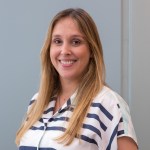
Diana Gonçalves holds a PhD in Culture Studies (2013) from Universidade Católica Portuguesa and Justus-Liebig University of Giessen (double degree). She is currently an Assistant Professor at FCH-UCP, Academic Director of the Lisbon Consortium and Coordinator of the Master’s program in Culture Studies. She is also a researcher at the Research Centre for Communication and Culture (CECC), where she is a member of the research group “Culture, Art and Conflict”. She was Executive Coordinator of the Lisbon Consortium (2016-2017) and co-editor of the online journal Diffractions – Graduate Journal for the Study of Culture (2013-2017). Her main areas of investigation are culture studies, visual culture, American culture and literature, conflict and violence, environment and catastrophes. She is the author of 9/11: Culture, Catastrophe and the Critique of Singularity (de Gruyter, 2016).

Isabel Capeloa Gil is Full Professor of Culture Studies and the current Rector of UCP – Catholic University of Portugal. She holds a B.A. in Modern Languages and Literatures from the University of Lisbon (1987), and an M.A. in German Studies from the same university (1992), as well as a PhD in German Language and Culture from UCP (2001). She was Guest Professor in Germany (Saarbruecken, Munich), United Kingdom, Ireland (National University of Ireland), Italy (Univ. Ca Foscari, Venice), in Brasil (PUC-Rio) and in the USA (U. Pennsilvania and U. Stanford). She is furthermore an Honorary Fellow at the School of Advanced Studies of the University of London. From 2005 to 2012 she was the Dean of the Faculty of Human Sciences at the UCP. She has held numerous visiting professorships at universities in the U.S., Germany, Brazil, Italy, Ireland and Wales. She was a founder of The Lisbon Consortium network and leads the International Doctoral Degree Program in Culture Studies. She is also a senior researcher and founder of the Research Centre for Communication and Culture.
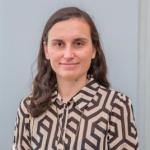
Joana Moura holds Doctoral degree in Comparative Literature from the State University of New York at Stony Brook (2017) and is currently (since 2018) Invited Assistant Professor at FCH, where she teaches languages and translation (English/German). She is a member of the Research Centre for Communication and Culture, working in the Literature and The Global Contemporary project. She also collaborates with the MOV. Moving Bodies: Circulations, Narratives and Archives in Translation at the Centre for Comparative Studies, University of Lisbon. Her main reserach interests lie in the areas of German culture and literature and in translation studies, focusing on genetic translation studies and fictional representations of translator and translation figures in literature and film.
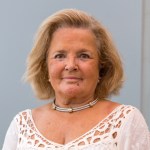
Luísa Leal de Faria is Full Professor in the FCH – Faculty of Human Sciences, UCP – the Catholic University of Portugal, where she served as Vice-Rector between 2004 and 2012. She graduated in Germanic Philology from the Faculty of Letters, University of Lisbon, where she was also awarded the degree of Doctor with the Aggregate title status. She remained with the Faculty of Letters where she developed her academic career through to 2004. She served as General Higher Education Subdirector, National Coordinator of the European Língua and Sócrates Programs, Vice-President of the Scientific Board of the Faculty of Letters, Director of the Department of English Studies, Faculty of Letters, among other academic positions. She currently lectures various curricular units on the Undergraduate, Master’s and Doctoral Degree programs at the FCH, UCP and undertakes research primarily within the field of Culture Studies.
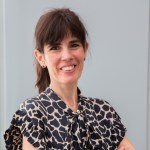
Luísa Santos – Ph.D in Culture Studies by the Humboldt & Viadrina School of Governance, in Berlin, and M.A. in Curating Contemporary Art by the Royal College of Art, in London, Luísa Santos is an Assistant Researcher, in Culture Studies / Artistic Studies, since 2016 at the Faculty of Human Sciences of the Universidade Católica Portuguesa. She is an associate curator of the Listening Biennial (headquarters in Berlin) since 2022 and a member of the advisory board of the HANGAR, in Lisbon.
An independent curator since 2009, she conducted research in curatorial practices at the Konstfack, in Stockholm, in 2013; since 2019, she is a research fellow at The European School of Governance (EUSG), in Berlin; and, since 2023, she is a teaching fellow at the Europaeum, in Oxford. She is the artistic director of the 4Cs: from Conflict to Conviviality through Creativity and Culture, the Arctic Routes, Southern Ways, and the Institution(ing)s. These experiences enabled her to collaborate with the European Commission as an expert evaluator in 2024.
She has collaborated with various institutions such as Tensta Konsthall, SAVVY Contemporary – Laboratory of Form-Ideas, Fundació Antoni Tápies, Museet for Samtidskunst, P28, Gulbenkian Museum, Carpe Diem Arte & Pesquisa, Anozero Biennial, Frankfurter Kunstvrein, and OK-Centrum. Having authored various publications in the domains of art and society, Luísa Santos is, since 2021, editing a book series on the politics of immaterial cultures with the Routledge.
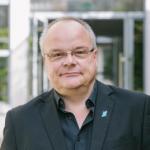
Peter Hanenberg is the Vice-Rector for Research and Innovation, Director of Católica Doctoral School (CADOS). PhD in Modern Languages and Literatures from the University of Bamberg, Germany, in 1993, since 2006 Associate Professor at FCH. From 1988 to 1995 assistant professor at the University of Bamberg and between 1995 and 2006 coordinator of German Studies at the Faculty of Letters of UCP in Viseu. President of the Portuguese German Studies Association (APEG) 2006-2010. Member of the Research Centre for Communication and Culture (CECC) which he coordinates since 2012. 2016-2019 Vice-dean of FCH. His research is dedicated to European literature and culture since the 16th century, the idea of Europe and its representation as well as the intersection of Cognitive Sciences and Culture Studies.
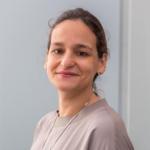
Rita Bueno Maia holds a PhD in Translation History. Following her PhD, she was a postdoctoral fellow at the University of Lisbon Centre for English Studies between 2014 and 2016. Her postdoctoral project The Moveable Feast: Literature in Portuguese Exile deals with popular novels, translated and non-translated, published in Portuguese in Paris by the mid-19th century She has a B.A. in Modern Languages and Literatures and a taught-MA in Comparative Literature from the University of Lisbon. She has been teaching Spanish as a foreign language since 2011 and has taught modules on research methodology in Translation History. She is a freelance translator working in the tourism industry and has also published literary translations. Regarding future publications, she is currently co-editing a special issue of Translation Studies (Taylor and Francis Group) entitled Indirect Translation: Theoretical, Methodological and Terminological Issues and the volume Los límites del Hispanismo: nuevos métodos, nuevas fronteras, nuevos géneros (Peter Lang).
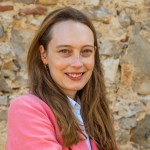
Sara Eckerson is Invited Assistant Professor at FCH-UCP. She received her PhD in Literary and Cultural Studies, with a specialization in Literary Theory, from the University of Lisbon (2016), an MA from the same institution (2009), and a BA from New York University (2006). Her main areas of research are in aesthetics and literary studies, specifically musical hermeneutics, the philosophy of music, and connections between music and literature; her research focuses on the music of Beethoven and Handel, as well as on the literary works of John Milton and Herman Melville. She is the author of numerous publications in this area, including on the philosophy of music (Teorema), Handel and Milton (Yale Journal of Music and Religion), Beethoven (Manchester Beethoven Studies, published by the Manchester University Press), and has collaborated with the editorial board of Eighteenth-Century Studies (Johns Hopkins University Press).
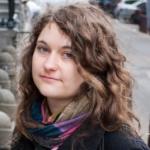
Verena Lindemann Lino holds a PhD in Culture Studies form Universidade Católica Portuguesa and University of Giessen (double degree). Since 2022 she is invited assistant professor at the Faculty of Human Sciences at the Universidade Católica Portuguesa. She is a researcher at the Research Centre for Communication and Culture where she is currently developing the projects Archives of (In)hospitality. She is a member of the editorial board of Diffractions – Graduate Journal for the Study of Culture. Her main research areas include transculturality, (trans)cultural memory, translation theory and comparative literature. She edited, among others, Negotiations of Migration (De Gruyter 2021) and is the author of Remembering World War II Refugees in Contemporary Portugal (De Gruyter 2021) as well as several articles on transcultural phenomena, memory and translation.
Visiting Professors
2025/2026
Ansgar Nünning & Vera Nünning (Heidelberg University)
Maura Marvão (Phillips Auction House/ UCP Porto)
Susana Graça (EGEAC)
2024/2025
Richard Grusin (University of Milwaukee)
Sandra Bermann (Princeton University)
Maura Marvão (Phillips Auction House/ UCP Porto)
Susana Graça (EGEAC)
2023/2024
Ilios Willemars (University of Leiden)
Ipshita Chanda (Foreign Languages University, Hyderabad)
Maura Marvão (Phillips Auction House/ UCP Porto)
2022/2023
Anders Michelsen (University of Copenhagen)
Laura Erber (Leiden University)
Lucia Boldrini (Goldsmiths, University of London)
Maura Marvão (Phillips Auction House/ UCP Porto)
Susanne Weber-Mosdorf (Specialist and consultant for public administration and management)
Benjamin Weil (CAM, Fundação Calouste Gulbenkian)
2021/2022
Laura Erber (University of Copenhagen)
Maura Marvão (Phillips Auction House/ UCP Porto)
Niall Martin (University of Amsterdam)
Susanne Weber-Mosdorf (Specialist and consultant for public administration and management)
2020/2021
Carles Guerra (Pompeu Fabra University)
João Cezar de Castro Rocha (Universidade do Estado do Rio de Janeiro)
Laura Erber (University of Copenhagen)
Susanne Weber-Mosdorf (Specialist and consultant for public administration and management)
2019/2020
Carles Guerra (Pompeu Fabra University)
Daniel Blaufuks (artist)
Hans Ulrich Gumbrecht (Stanford University)
Nuno Crespo (Universidade Católica Portuguesa – Porto)
2018/2019
Álvaro Barbosa (University of Saint Joseph)
Ana Bernstein (Federal University of the State of Rio de Janeiro – UNIRIO)
Daniel Blaufuks (artist)
Uwe Wirth (Justus Liebig University of Giessen)
Paulo Soeiro de Carvalho (ISEG – Lisbon School of Economics and Management)
2017/2018
Álvaro Barbosa (University of Saint Joseph)
Angela Locatelli (University of Bergamo)
Frederik Tygstrup (University of Copenhagen)
Laura Mulvey (Birkbeck College – University of London)
Paulo de Medeiros (University of Warwick)
2016/2017
Álvaro Barbosa (University of Saint Joseph)
Esther Peeren (University of Amsterdam)
Andrea Póczik (Pázmány Péter Catholic University)
Christoph Wulf (Free University of Berlin)
2015/2016
Karl Erik Schøllhammer (Puc-Rio)
Knut Ove Eliassen (Norwegian University of Science and Technology)
2014/2015
Kai van Eikels (Free University of Berlin)
2013/2014
Octavian Saiu (University of Bucharest)
2012/2013
Frank Stern (University of Wien)
Kai Sicks and Martin Zierold (Justus Liebig University of Giessen)
2011/2012
Frederik Tygstrup (University of Copenhagen)
Joyce Goggin (University of Amsterdam)
2010/2011
Ansgar Nünning & Vera Nünning (Justus Liebig University of Giessen; University of Heidelberg)
Monroe Price (University of Pennsylvania)
2009/2010
Lawrence Grossberg (University of North Carolina)
Wolfgang Müller-Funk (University of Wien)
2008/2009
Biagio d’Angelo (PUC – S. Paulo)
Elisabeth Bronfen (Universität Zürich/New York University)
2007/2008
Barbie Zelizer (University of Pennsylvania)
Gabriele Brandstetter (Freie Universität Berlin)
Invited speakers
Aleida Assmann (Universität Konstanz)
Alexandre Castro Caldas (Universidade Católica Portuguesa)
Alexis Tadié (University of Paris-Sorbonne)
Alison Ribeiro de Menezes (University of Warwick)
Álvaro Barbosa (University of Saint Joseph, Macau)
Aamir Mufti (University of California, Los Angeles)
Amira Hanafi (artist)
Amit Pinchevski (The Hebrew University of Jerusalem)
Ana Gabriela Macedo (Universidade do Minho)
André Lepecki (New York University)
Andreas Huyssen (Columbia University)
Anne Tomiche (Sorbonne University)
Ansgar Nünning (University of Giessen)
Anton Kaes (UC Berkeley)
Antonio Monegal (Universitat Pompeu Fabra)
António Sousa Ribeiro (Universidade de Coimbra)
Ariel Salleh (University of Sydney/Nelson Mandela University)
Ariella Azoulay (Brown University)
Arjun Appadurai (New York University)
Asko Lehmuskallio (Tampere University)
Barbara Coutinho (MUDE – Design Museum)
Barbara Vinken (Ludwig-Maximilians-Universität Munich)
Ben Anderson (Durham University)
Bill Fontana (sound artist)
Brooke Harrington (Dartmouth College)
Carles Guerra (MACBA, Barcelona)
Catherine Perret (Nanterre University, Paris X)
Christiane Schoenfeld (U. Galway)
Christiane Solte-Gresser (Saarland University)
Christoph Lindner (Amsterdam School of Cultural Analysis)
Claudia Benthien (University of Hamburg)
Claudia Salamanca (Pontifícia Universidad Javeriana)
Corinne Mellul (Institute Catholique du Paris)
Daniel Blaufuks (artist)
David Slocum (New York University)
David Wellbery (University of Chicago)
Désiré Feuerle (Art collector, curator and consultant)
Djamila Ribeiro (Pontifícia Universidade Católica de São Paulo)
Doris Bachmann-Medick (University of Giessen)
Edward Soja (UCLA)
Elena Esposito (Università di Modena e Reggio Emilia)
Ellen Sapega (University Madison)
Eric Rentschler (Harvard University)
Esther Peeren (Amsterdam School for Cultural Analysis)
Frederik Tygstrup (University of Copenhagen)
Filipa Lowndes Vicente (Universidade de Lisboa)
Frank Stern (Univ. Wien)
Fritz Breithaupt (Indiana University Bloomington)
George Yúdice (University of Miami)
Gonzalo de Polavieja (Champalimaud Foundation)
Gustavo Cardoso (ISCTE)
Guta Moura Guedes (curator)
Hanif Kureishi (writer)
Hans Bertens (University of Utrecht)
Hans-Joachim Backe (IT University of Copenhagen)
Hans Ulrich Gumbrecht (Stanford University)
Haun Saussy (University of Chicago)
Henry Jenkins (UCSD)
Hubert Zapf (University of Augsburg)
Igor Štiks (University of Edinburgh)
Irit Rogoff (Goldsmiths College)
Jean-François Chougnet (curator)
Jennifer Wenzel (Columbia University)
Jeremy Gilbert (University of East London)
Jess Auerbach (African Leadership University)
João Falcato (Oceanário de Lisboa)
João Ferreira Duarte (Universidade de Lisboa)
John Durham Peters (Yale University)
John Sundholm (Stockholm University)
Jonathan Hart (University Alberta, Canada)
Joseph Heathcott (New School for Social Research, NY)
Karl Erik Schøllhammer (PUC-RIO)
Katarzyna Murawska-Muthesus (Birkbeck College, University of London)
Kathrin Sartingen (University of Vienna)
Kathy-Ann Tan (independent curator and scholar)
Kitty Millet (San Francisco State University)
Knut Ove Eliassen (Norwegian University of Science and Technology)
Krzysztof Nawratek (University of Sheffield)
Laura Mulvey (Birkbeck College)
Lawrence Buell (Harvard University)
Lawrence Venuti (Temple University)
Leo Spitzer (University Dartmouth)
Leticia Sabsay (London School of Economics and Political Science)
Liedeke Plate (Radboud University)
Liliane Weissberg (University of Pennsylvania)
Loredana Polezzi (Cardiff University)
Lúcia Boldrini (Goldsmiths, University of London)
Luís Gustavo Martins (School of the Arts – Universidade Católica Portuguesa)
Malcom Miles (writer and researcher)
Manfred Schmeling (Univ. des Saarlandes)
Manuel Portela (Universidade de Coimbra)
Marc Augé
Marcelo Brodsky (artist)
Márcio Seligmann Silva (Unicamp, Brasil)
Margarida Calafate Ribeiro (Universidade de Coimbra)
Margherita Laera (University of Kent)
Maria do Rosário Lupi Bello (Open University, Portugal)
Maria José Lobo Antunes (Universidade de Lisboa)
Maria Josep Balsach (Universidad de Girona)
Maria Luísa Berwanger da Silva (UFRGS – Brasil)
Marianne Hirsch (Columbia University)
Marie-Laure Ryan (Independent Scholar)
Marita Sturken (New York University)
Mark Turner (Case Western Reserve University)
Martha Rosler (Artist)
Martin Zierold (Karlshochschule International University)
Marvin Carlson (City University of New York)
Maura Marvão (Phillips Auction House)
Maureen Freely (English Pen, University of Warwick)
Maurizio Lazzarato (Matisse / CNRS University Paris I)
Michael Cronin (Dublin City University)
Michael delli Carpini (University of Pennsylvania)
Michael Schudson (Columbia University)
Michele Cometa (University of Palermo)
Mieke Bal (University of Amsterdam)
Monika Schmitz-Emans (Univ. Bochum)
Nanna Bonde Thylstrup (University of Copenhagen)
Naomi Segal (Birkbeck College – University of London)
Nav Haq (Museum of Contemporary Art Antwerp)
Niall Martin (University of Amsterdam)
Nicholas Mirzoeff (New York University)
Nina Berman (photographer)
Nuno Ferrand (Universidade do Porto/CIBIO-INBIO)
Nuno Maulide (University of Vienna)
Paola Mildonian (Univ. Ca Foscari, Venice)
Paulo de Medeiros (University of Utrecht; University of Warwick)
Paulo Soeiro Carvalho (General Director for Economy and Innovation at Lisbon City Council)
Pepita Hesselberth (University of Leiden)
Per Aaage Brandt (Case Western University)
Péter Forgács (media artist and filmmaker)
Peter Greenaway (filmmaker)
Philip Auslander (Georgia Institute of Technology)
Pirjo Lyytikainen (University of Helsinki)
Renato Rizzi (Instituto Universitario di Architettura – Venice)
Richard Grusin (U. Madison, Wisconsin-Milwaukee)
Richard J. Williams (University of Edinburgh)
Robert Wilson (Director, Watermill Foundation)
Roberto Vecchi (U. Bologna)
Robert Adams (Heriot-Watt University, Edinburgh)
Rosângela Rennó (artist)
Rui Carvalho Homem (Universidade do Porto)
Rui Catalão (Performer)
Ruth Rosengarten (curator)
Samuel Weber (Northwestern University)
Sandra Bermann (Princeton University)
Semir Zeki (University College London)
Sophia Rosenfeld (University of Pennsylvania)
Stefan Kaegi (Rimini Protokoll)
Susanne Weber-Mosdorf
Terence Wright (Ulster University)
Timothy Garton Ash (University of Oxford)
Thomas Elsaesser (University of Amsterdam)
Tony Bennett (Centre for Cultural Research – University of Western Sydney)
Tonya Lewis Lee (filmmaker)
Uwe Wirth (University of Giessen)
Venuturupalli Rao (City College of New York)
Vera Mantero (choreographer)
Vera Nünning (Heidelberg University)
Viriato Soromenho-Marques (Universidade de Lisboa)
Xavier Antich (U. Girona; Fundación Tapiés)
Xiaomei Chen (UC Davis)
 The Lisbon Consortium