
Francisco Henriques Santos Gomes successfully defended the MA internship report “The pedagogical dimension of film festivals: The L.A. rebellion movement in LEFFEST 22” on January 23, 2025.
Author: lisbonconsortium
-

Congratulations, Diana!
Diana Fulvia Maria Danielli successfully defended the MA internship report “‘New’ museums of contemporary art in Lisbon: Crossing borders between art and politics through internationalization” on January 22, 2025.
-
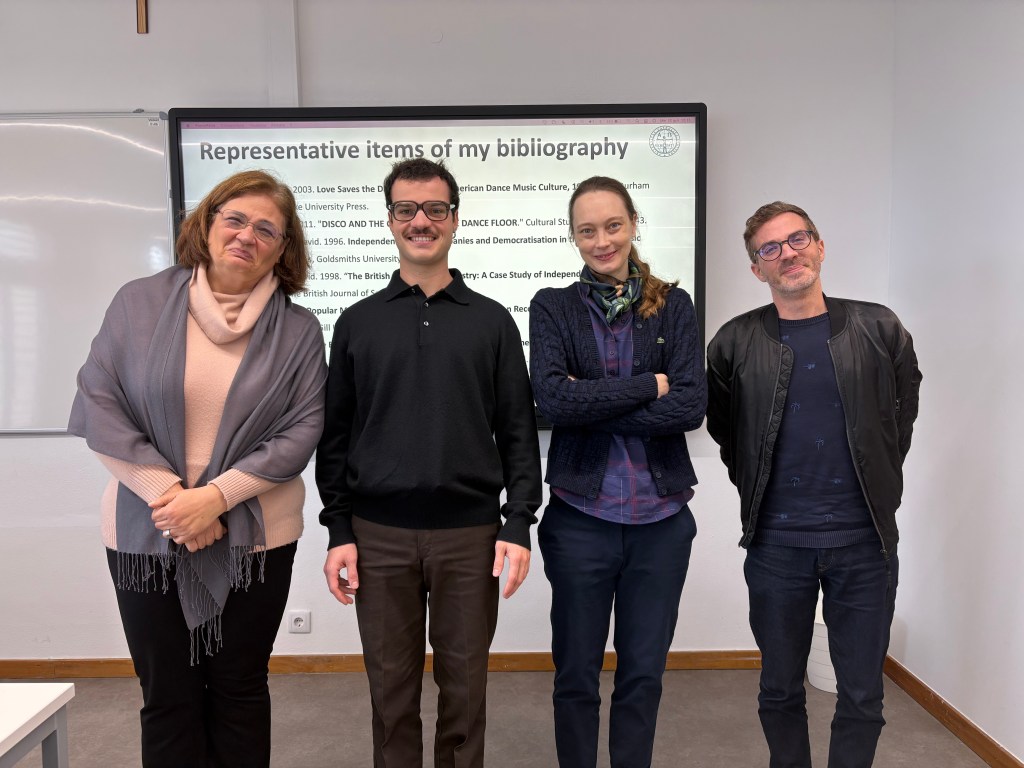
Congratulations, Andrea!
Andrea Delle Monache successfully defended the MA internship report “Exploring the synergy between the electronic music industry and dance music culture: The example of Lisbon” on January 22, 2025.
-
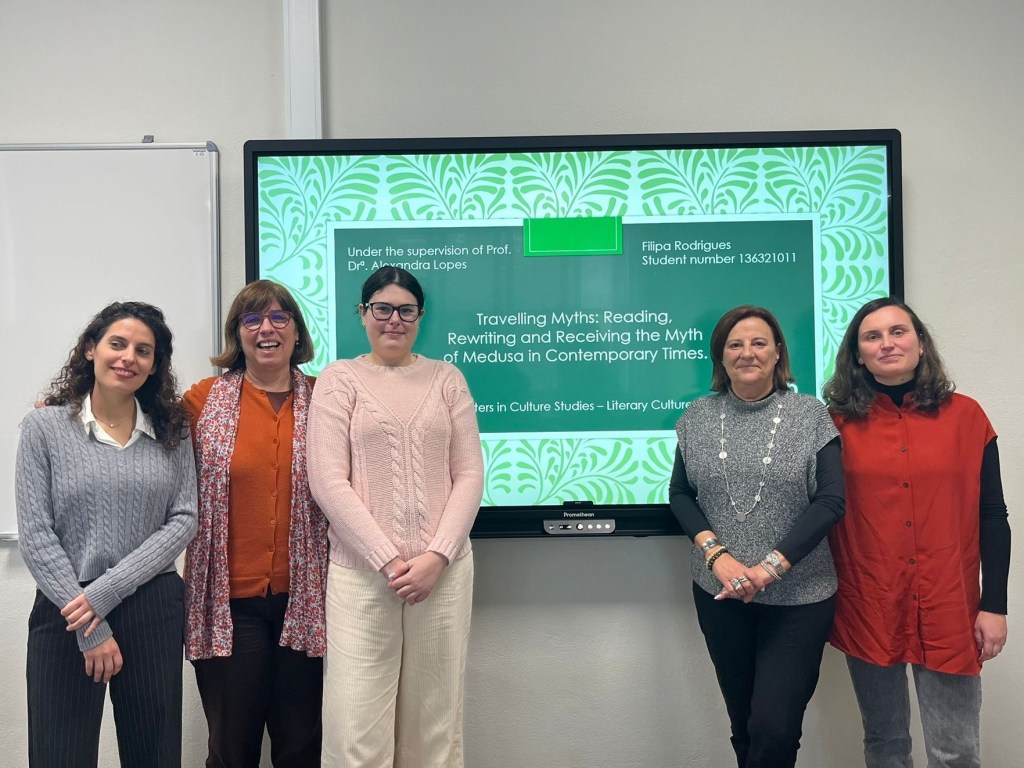
Congratulations, Filipa!
Filipa Rodrigues successfully defended the MA dissertation “Traveling myths: Reading, rewriting, and receiving the myth of Medusa in contemporary times” on January 21, 2025.
-

Congratulations, João!
João Oliveira successfully defended the PhD dissertation “The Retellings of the Rāmāyaṇa and the Idea of India: Culture and Society (2010-2020)” on January 21, 2025.
-

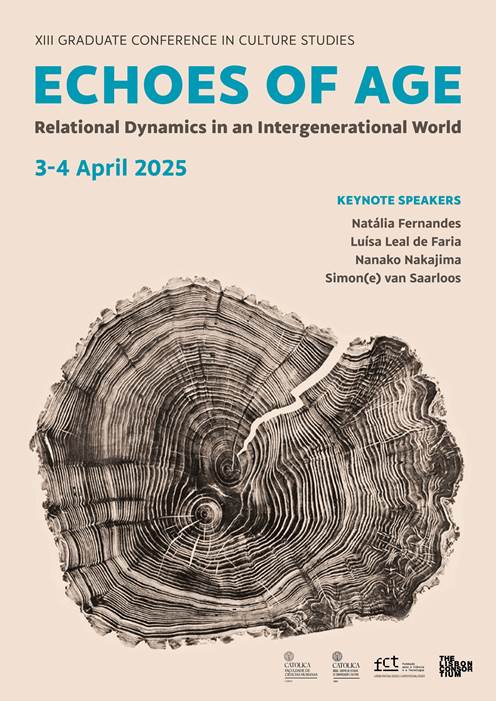
Extended deadline: Echoes of Age – XIII Graduate Conference in Culture Studies 3–4 April 2025
Proposals for the “Echoes of Age” graduate conference can still be submitted until Wednesday 15 January, 2025.
The XIII Graduate Conference in Culture Studies, “Echoes of Age” will take place on 3-4 April 2025. This conference aims to address what Simone de Beauvoir termed the “conspiracy of silence surrounding ageing,” examining biases and strategies to overcome intergenerational disparities. How can we foster respect and understanding among generations? How can we overcome generational gaps to promote social innovation and resilience? In what ways do generational differences present both challenges and opportunities for societal cohesion?
You can find the full CfP here.
-
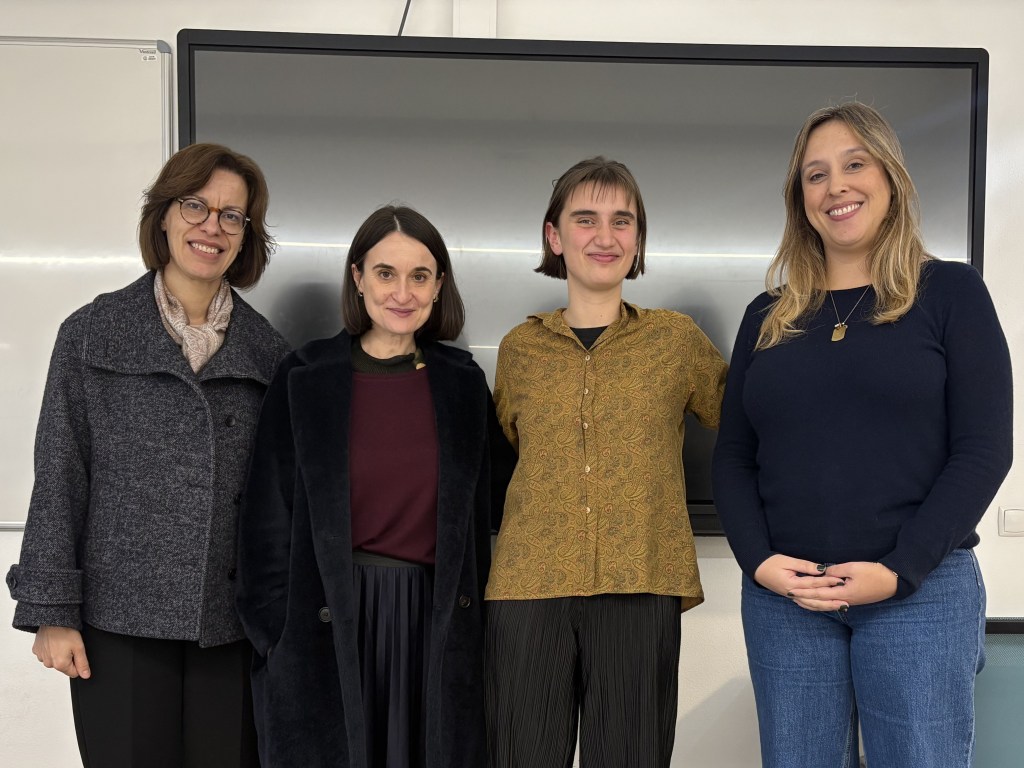
Congratulations, Emma!
Emma Hallemans successfully defended the MA dissertation “Thinking in, about and through atmospheres: A research on the atmosphere of the camino de Santiago de Compostela” on January 8, 2025.
-
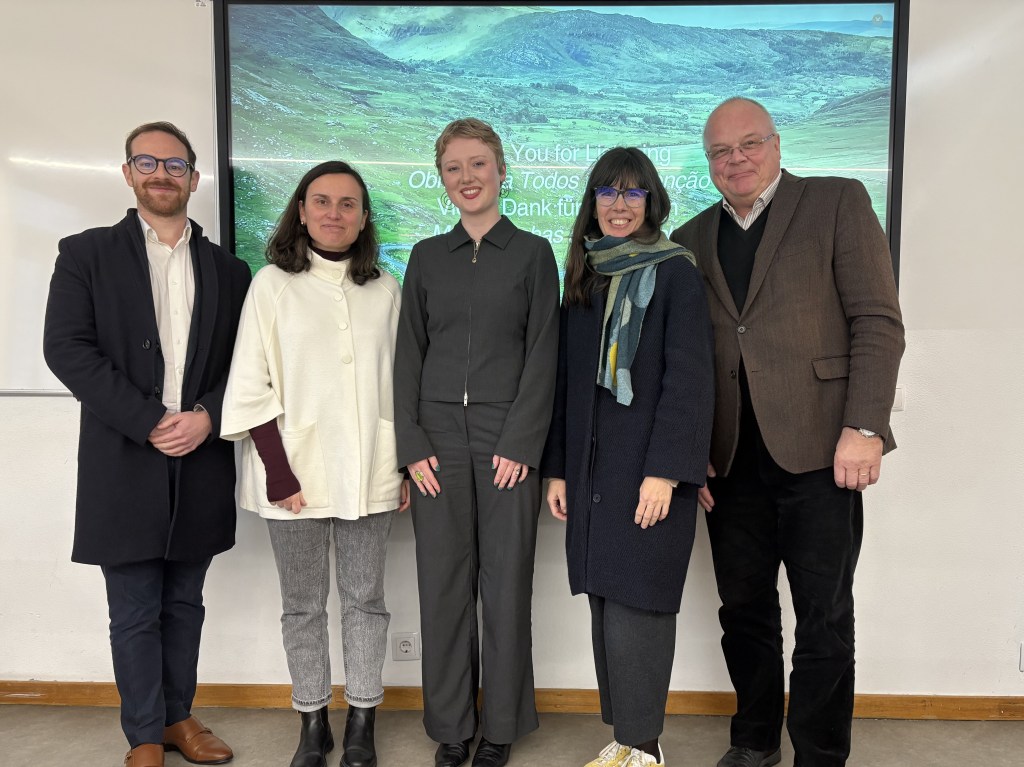
Congratulations, Rhian!
Rhian O’Sullivan successfully defended the MA dissertation “Cartographic culture: Mapping relations between the Irish state and it’s ‘Culturescape’ from empire to e-commerce” on January 6, 2025.
-

Book Club | Book #1: Ficciones (1944) by Jorge Luis Borges
The first book chosen for the reading of the Lisbon Consortium Book Club is Ficciones (1944) by Jorge Luis Borges (trans. Anthony Kerrigan, Anthony Bonner). The reading period is January 6-16, 2025.
If you are interested in the Book Club, please contact lisbonconsortiumbookclub@gmail.com or join the Goodreads discussion group!
-

Congratulations, Leonor!
Leonor Terenas successfully defended the MA dissertation “Fiction writing amidst today’s demand for representation: ‘Authenticity’ in young adult (YA) literature” on December 18, 2024.
-

LxC Talks | Derval Tubridy (Goldsmiths) at UCP
Derval Tubridy, Emeritus Professor in Literature and Visual Culture in Goldsmiths (University of London), gave a talk on December 9, 2024, about Samuel Beckett’s role within video art, discussing Beckett’s Not I (1973) in a dialogue with Bruce Nauman, Lip Synch (1969), Vito Acconci, Open Book (1974), Stan Douglas, Deux Devises, Part 2 (1983), and Mona Hatoum, So Much I Want to Say (1983).
Derval Tubridy is Professor in Literature and Visual Culture and Chair of the British Association for Irish Studies.
Author of Thomas Kinsella: The Peppercanister Poems (UCD Press 2001) and Samuel Beckett and the Language of Subjectivity (Cambridge University Press, 2018) she has published extensively on Modernism and Irish Studies with a focus on literature, the visual arts, and performance at the intersection between language, materiality and process. Her creative practice includes poetry, printmaking and painting.
A former Dean of the Graduate School she has served on Council and Academic Board, and the management boards of AHRC and ESRC funded DTPs. Her research has been funded by the Fulbright Commission, the British Council, and the Arts and Humanities Research Council.
She is co-convener of the London Beckett Seminar at the Centre for Comparative Literature at Goldsmiths and the Institute of English Studies at the School of Advanced Study, University of London.
-
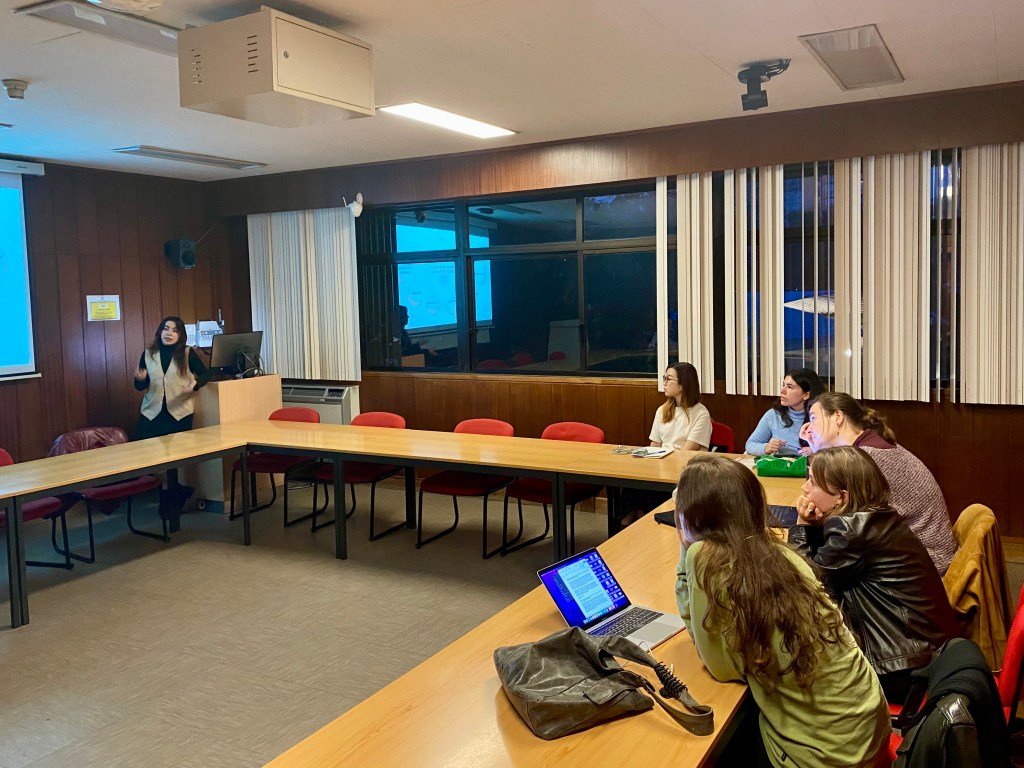
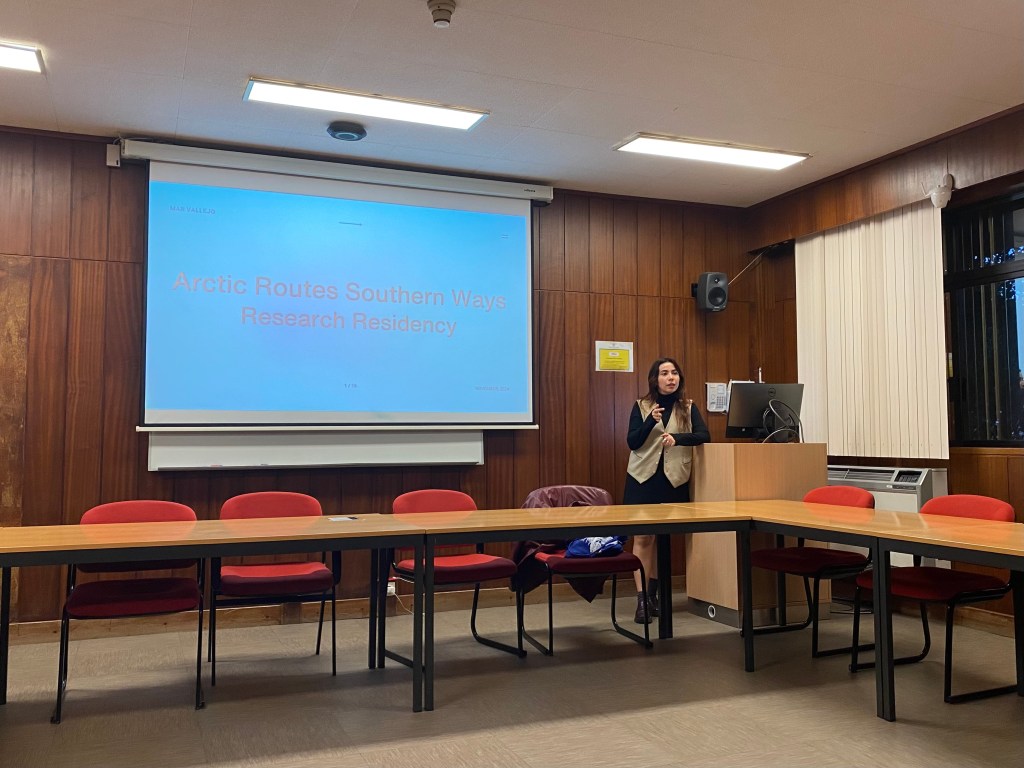
InterCECCtions | Maria Valentina Vallejo (MA in Culture Studies): Arctic Routes, Southern Ways
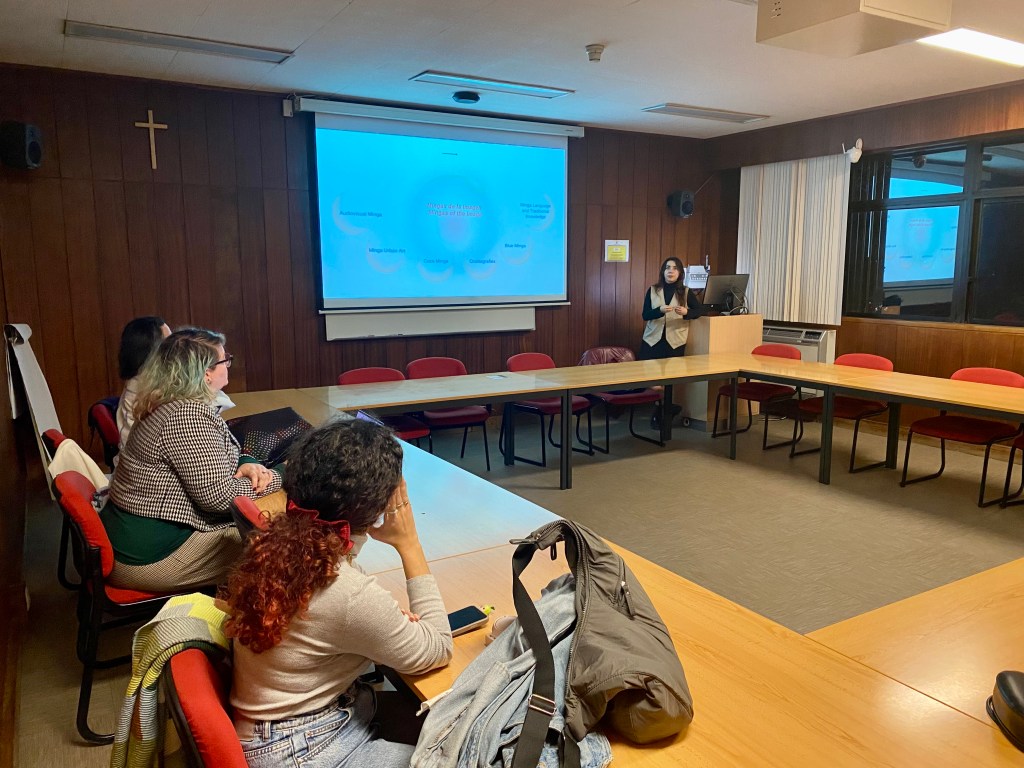
Maria Valentina Vallejo, MA student in Culture Studies, talked about the research residency of the project Arctic Routes, Southern Ways in the last InterCECCtions of 2024.
Arctic Routes, Southern Ways is a joint initiative that will compare/contrast 2 different colonial legacies to create alternative narratives and methods of knowledge production in art institutions and academia. Portugal established an overseas empire that lasted from the 15th century until recently and spread over 5 continents. In Norway, the Sámi minority has lost rights over the Sámi territory, and they have been exposed to a fierce Norwegianization. Hegemonic narratives of the search for national unity in Norway, or the view of a “good” colonialism or “lusotropicalism”, in Portugal, bring these otherwise distant countries close in the way that such experiences have prevailed in many instances of public discourse, policies in institutional practices, in academia and in art institutions. Departing from 3 interconnected threads: 1) decoloniality: spaces of inclusion & diversity; 2) environmental sustainability; 3) local (vs) global practices, the project will review invisibilities and tendencies of art institutions and academia. The main objectives are: 1) question tacit colonial practices in higher education and in art institutions and to analyse the mechanisms by which they are perpetuated; 2) bring together the experiences of both Norway and Portugal and describe how the fantasy of cultural homogeneity affects the full acknowledgment of marginalized communities and their knowledge(s): the Sámi in Norway, “Afropeans” in Portugal; 3) challenge long-prevailing colonialism by exploring ways to create alternative narratives towards more inclusive and sustainable forms of knowledge production and artistic practice.
The project brings together two academic institutions (CECC-Universidade Católica Portuguesa and UiT-The Arctic University of Norway) and two contemporary art centres (HANGAR, from Portugal, and Bergen Kunsthall, from Norway), and will organize several scientific activities throughout its lifetime.
Artic routes was officially launched in 16 January 2024, is coordinated by CECC, financed by an EEA grant and supported by a Globus OpStart grant from the Nordisk Kulturfond. -

Congratulations, Teresa!
Maria Teresa Conceição da Costa successfully defended the PhD thesis Para uma cultura visual do farol: Uma abordagem semiótica a partir do bilhete-postal ilustrado on November 29, 2024.
-
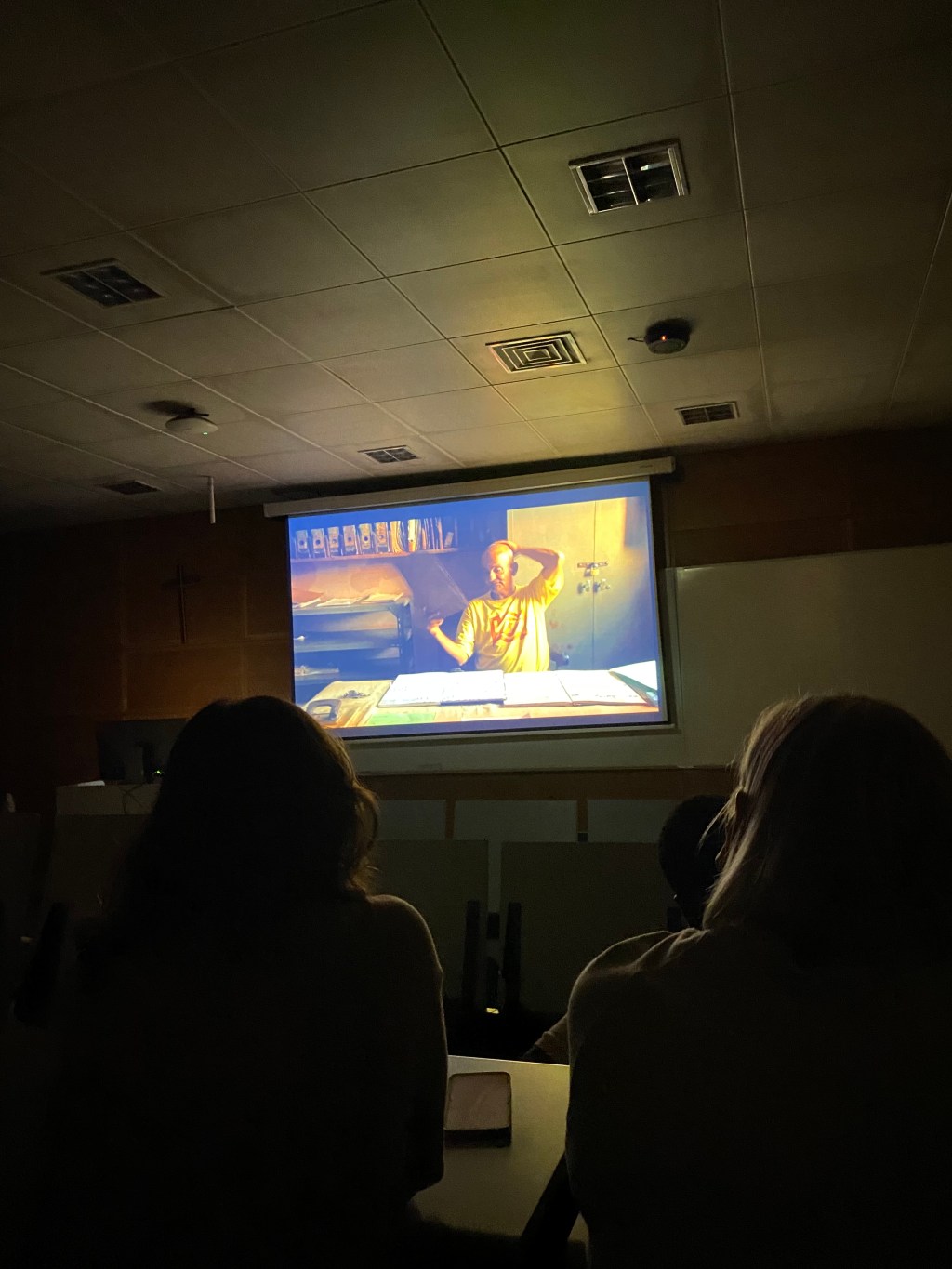
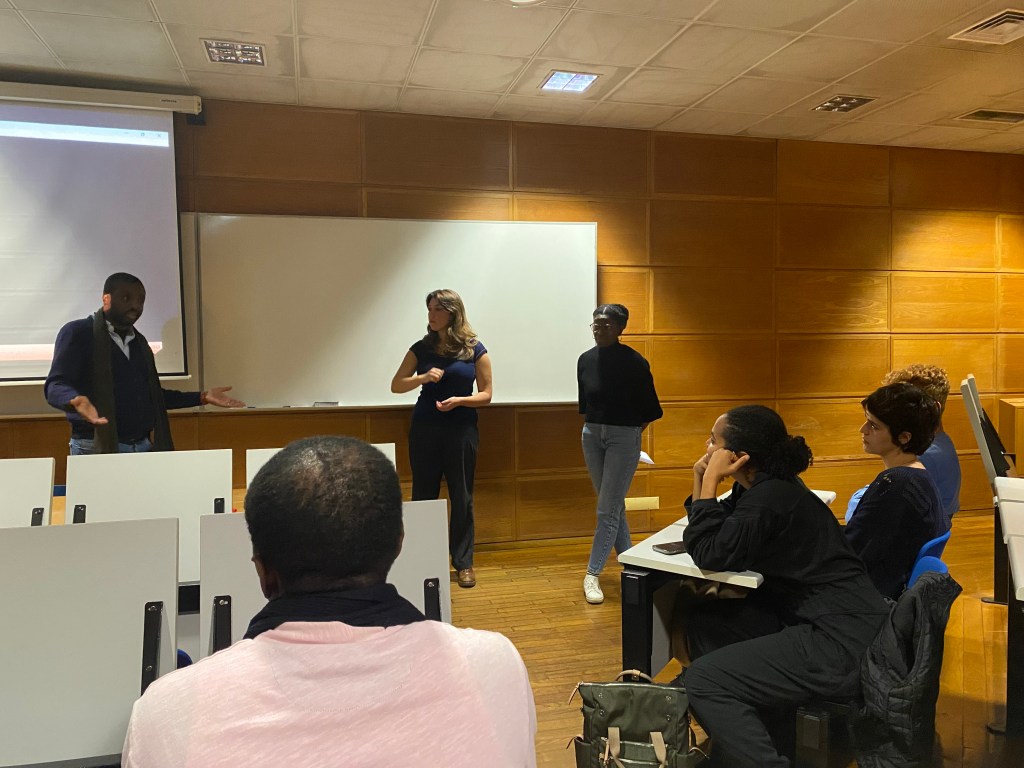
CineMar | Screening recap: Bafatá Filme Clube (2012) and Q&A with director Silas Tiny
In November, CineMar, the new Lisbon Consortium Film Club, held its second screening: Bafatá Filme Clube, directed by Silas Tiny in 2012. The selection of this film was in partnership with the production company Real Ficção with a focus on the narratives of cinema.
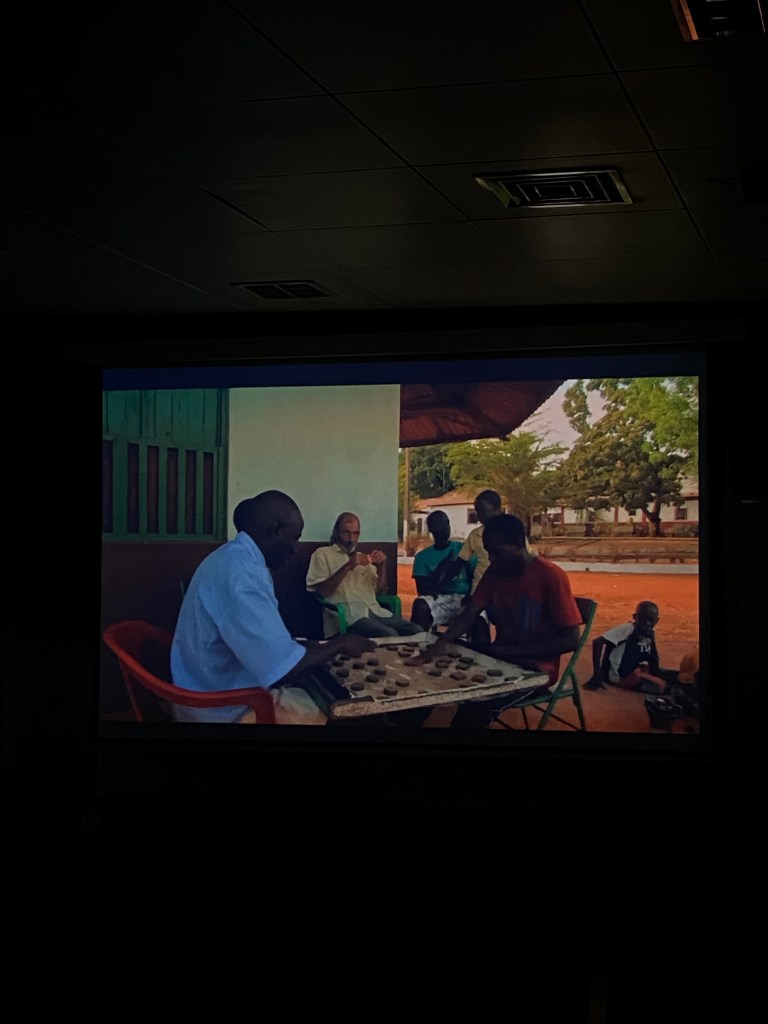
Set in Bafatá, Guiné-Bissau, the film tells the story of a city club that was once a landmark that served as a gathering place for the local community. Canjajá Mane, an elderly cinema operator reminisces about the days when the cinema was full of people. This is Silas Tiny’s first feature-length documentary, a product of his final project at the Lisbon School of Theatre and Cinema.
During the Q&A, the filmmaker Silas stated, one must reflect on the current economic and social conditions of Bafatá, and its effects of the independence in a postcolonialist era. Bafatá Filme Clube was filmed in one of the biggest cities in Guiné-Bissau, which is also the place where the revolutionary and anti-colonial leader Amílcar Cabral was born. As Canjajá Mane walks in the streets of Bafatá, the film invites the audience to digest the current conditions of a place that was once in constant movement.
Silas approach to storytelling engages the audience in paying close attention to the way the film depicts the day-to-day life of the local community. The once-grand cinema, now in a state of decay, is characterized by a profound stillness. As time continues to move forward, people find comfort in reminiscing the memories of the traditional cinema that was once a landmark in the city.
Interestingly enough, the decaying and the abandonment of traditional cinemas is a common issue shared by other countries around the world. A similar example of this can also be seen in the documentary Cinema, Mon Amour directed by Alexandru Belc in 2015. Set in Romania Cinema, Mon Amour, the film shares a common ground with Bafatá Filme Clube on the preservation of place and memory, and it serves as an invitation for the audience to reflect on how one can keep a memory alive.
The next screening of CineMar will be on the 11th of December.
Follow @CINEMAR.LXC for more information.
Mirian Vanda and Vera Fanizza
-

CfP | The Age of Excess – XV Lisbon Summer School for the Study of Culture
XV Lisbon Summer School for the Study of Culture
THE AGE OF EXCESS
Lisbon, June 30 – July 5, 2025
Deadline for submissions: February 9, 2025
After years of financial crisis and politics of austerity, as well as a pandemic that brought ordinary life to a halt, culture today is laden with excess. This excess can take many different shapes and foster diverse readings, some of them positive, focusing on excess as an opportunity, while others reflect on its pernicious effects.
On the one hand, excess can be viewed both as a result from and a driver to a better life. Economic stability – i.e. having more than enough money – can be equated with peace, happiness, education, health, and healthier human relationships. It helps turn plans and dreams into reality, while making worrying about day-to-day circumstances futile. Excess can also lead to a wider range of choices and possibilities: from more career options to broader access to goods and services. It is also worth mentioning the recent technological advances that have made resources and knowledge more readily available. As a result, many processes and decisions, powered by digital transformation and ubiquitous connectivity, have become much easier and quicker, as well as more collaborative, open, and democratic.
On the other hand, excess is also a “problem” (Abbott 2014) and is at the core of some of the most important and urgent contemporary issues: overpopulation, the overexploitation of natural resources, overconsumption, information overflow and information overload, etc. All these phenomena have in common the prefix “over-”, which indicates superfluity. As explained by J.R. Slosar, “we take in more than we need, or engage in behavior without thinking it through” (2009, xviii). Everything becomes overwhelming or “too much”– in volume, quantity, and reach – but also more extreme: more wealth is counterbalanced by more poverty; more accounts of eating disorders are accompanied by bigger obesity rates; more movements and calls for peace and solidarity are offset by more and bigger wars fueled by more and deadlier weapons; more necessary and useful products encourage the creation and commercialization of redundant and wasteful objects and systems.
Things in excess, many of which are initially conceived to improve people’s lives and generate more free time, end up, conversely, greatly reducing time and attention. Mobile devices are a great example. Constant access to the internet and social media, for instance, may trigger a sense of temporal dissociation and addictive behaviors that cause anxiety and social detachment. Moreover, the copious amount of content to post, watch, and comment on functions as a source of distraction and, simultaneously, shortens the user’s attention span to make everything more manageable.
The fear of missing out pushes people to spend more time in touch, “tethered to our ‘always-on/always-on-us’ communication devices and the people and things we reach through them” (Turkle 2023, 122). Being pressured to work longer and faster is the other side of the coin to always being “on”. Recent discussions within academia are challenging this “culture of speed” and stressing the importance of taking control back and slowing down (Berg and Seeber 2016).
In the fast pace of our contemporary times, things are usually short-lived. They are deemed unwanted and discarded more rapidly. Falling victim to the alluring idea of shiny and new, once valuable items are quickly turned into waste. A Leavisian interpretation of the mass production and consumption of things can propel us to think about things produced in excessive quantities as lacking in quality. In this case, the original and unique are deeply compromised by repeatability, which replaces the rare with the ordinary, the expensive with the cheap, the durable with the flimsy, the tasteful with the gaudy and kitsch – the substitute almost always painted in a bad light.
The repeatability, or the proliferation of things, generated by excess is also evident in the multiple and varied events and activities that demand our attention and participation. A proven formula – be it a show, a genre, a festival concept, among others – is copied ad nauseum. The novelty dissipates and excess becomes constricting: instead of variability, it promotes alikeness. We see the same things over and over again and what stands out in the desert of similitude is, usually, what offers something “extra” or exceeds the norm(al).
The XV Lisbon Summer School for the Study of Culture is dedicated to the study of the notion of excess in contemporary culture. Papers are welcome on the following topics, amongst others:
- Culture and excess
- Excess across the ages
- The aesthetics of excess
- Representations of excess
- The rhetoric of excess in literature, arts and politics
- Excessive styles and fashion
- Kitsch
- Discourses of spectacle and excess
- Minimalism and simplicity
- Abundance and/or scarcity
- Usefulness and/or redundancy
- Excess of meanings and interpretations
- Overabundance of communication and translation
- Translatability and excess
- Saturated readings and (re)writings
- Social and cultural overreaction
- Causes and symptoms of excessive behavior
- Decadence and self-indulgence
- Immediacy and impulsivity
- The culture of waste
- Loss in a culture of excess
- Inequality in times of excess
- Theory in times of excess
- Mental health and excess
- Alienation, fascination, and other responses to excess
We encourage proposals coming from the fields of culture studies, film and the visual arts, literary and translation studies, history, anthropology, media, and psychology, among others.
Paper proposals
Proposals should be sent to lxsummerschool@gmail.com no later than February 9, 2025, and include paper title, abstract in English (max. 200 words), name, e-mail address, institutional affiliation, and a brief bio (max. 100 words) mentioning ongoing research.
Applicants will be informed of the results of their submissions by February 28, 2025.
Full papers submission
Presenters are required to send in full papers no later than April 30, 2025.
The papers will then be circulated amongst the participants. In the slot allotted to each participant (30’), only 10’ may be used for a brief summary of the research piece. The Summer School is a place for networked exchange of ideas, and organizers wish to have as much time as possible for a structured discussion between participants. Therefore, in each slot, 10’ will be used for presentation, and 20’ for discussion.
Registration fees
Participants with paper [for the entire week – includes lectures, master classes, doctoral sessions, lunches and closing meal]
Early bird [March 1-31] – 350€
Regular [April 1-June 1] – 450€Participants without paper [per day – closing meal not included]
Early bird [March 1-31] – 60€
Regular [April 1-June 1] – 80€Fee waivers
For The Lisbon Consortium students and CECC researchers, there is no registration fee.
For other UCP students, students from institutions affiliated with the European Summer School in Cultural Studies (ESSCS), members of the European PhD-Net in Literary and Cultural Studies, and members of the Critical Theory Network the registration fee is 120€ [early bird – March 1-30]; 200€ [regular – April 1-June1].
Organizing Committee
- Isabel Capeloa Gil
- Peter Hanenberg
- Alexandra Lopes
- Adriana Martins
- Diana Gonçalves
- Paulo de Campos Pinto
- Rita Faria
- Annimari Juvonen
Assessment Committee
- Ana Margarida Abrantes
- Rita Bueno Maia
- Paulo de Campos Pinto
- Sara Eckerson
- Rita Faria
- Diana Gonçalves
- Peter Hanenberg
- Annimari Juvonen
- Luísa Leal de Faria
- Verena Lindemann Lino
- Alexandra Lopes
- Adriana Martins
- Joana Moura
- Sofia Pinto
- Luísa Santos
-

Closing of Rita Ravasco’s Tempo Sentido: Creative Writing Workshop and Open Mic at Casa do Comum (Dec. 8)
Nostalgia is a “temporal paradox” (Ravasco 2024) that blurs the lines between past and present, between imagination and remembrance. It can be cathartic, alchemical, dull, inspiring or painful. It can be consciously provoked or accidentally triggered by a vision, a sound, a smell.
For the closing of Rita Ravasco’s installation Tempo Sentido (Casa do Comum, Nov. 13 – Dec. 8) we invite you to participate in our Creative Writing Workshop and/or our Open Mic Session, and share what makes you nostalgic!
Bring an object or photograph, personal or found, and look into how and why it triggers a nostalgic longing in you.

Creative Writing Workshop (Bilingual EN/PT)
Dec. 8, 15h-16h
Through a series of generative writing prompts anchored in the photo or object you decide to bring, we will explore different dimensions of nostalgia and the way it interacts with emotions, public and private life.
The workshop prompts will be offered in English and Portuguese. You are free to write in any language.
Workshop participants have the option to share the outcome of this creative writing session in the Open Mic Session that follows after.
Workshop led by: Emily Marie Passos Duffy (Lisbon-based poet, performer and researcher)
Workshop spaces are limited, if you are interested, please register under: info.diffractions@gmail.comOpen Mic (Bilingual EN/PT)
Dec. 8, 16:30h-18h
In our Open Mic Session, we invite participants to share with us their thoughts, stories, poems, etc. about a nostalgic object or photograph they choose to bring (ca. 5 mins/participant). Photographs can be brought in analogue or digital form. Feel free to speak in Portuguese or English.
-

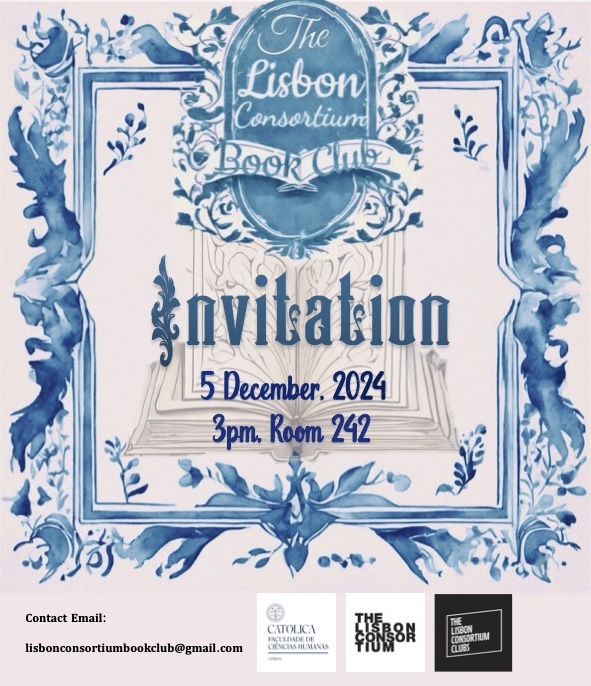
First meeting: The Lisbon Consortium Book Club, December 5 2024, 3pm
The Lisbon Consortium gains another student-led club, dedicated to reading!
The book club meets for the first time on December 5, 2024, at 3pm in room 242.
The organizer of the Book Club, Alyse Fan, plans the first meeting to be “a moment to share personal reflections on a book that feels like home to you”. The format is free: “It can be a stanza of poetry that inspired you, lines from a novel that anchored you in light through darkness, or a book that travelled with you to turn a new page in life.” These reflections will be followed by choosing the first book together.
The Book Club will have monthly meetings and also has a group on the Goodreads platform that will be used to discuss books and book choices. Suggestions for the reading list are always welcome!For more information, please contact lisbonconsortiumbookclub@gmail.com.
-

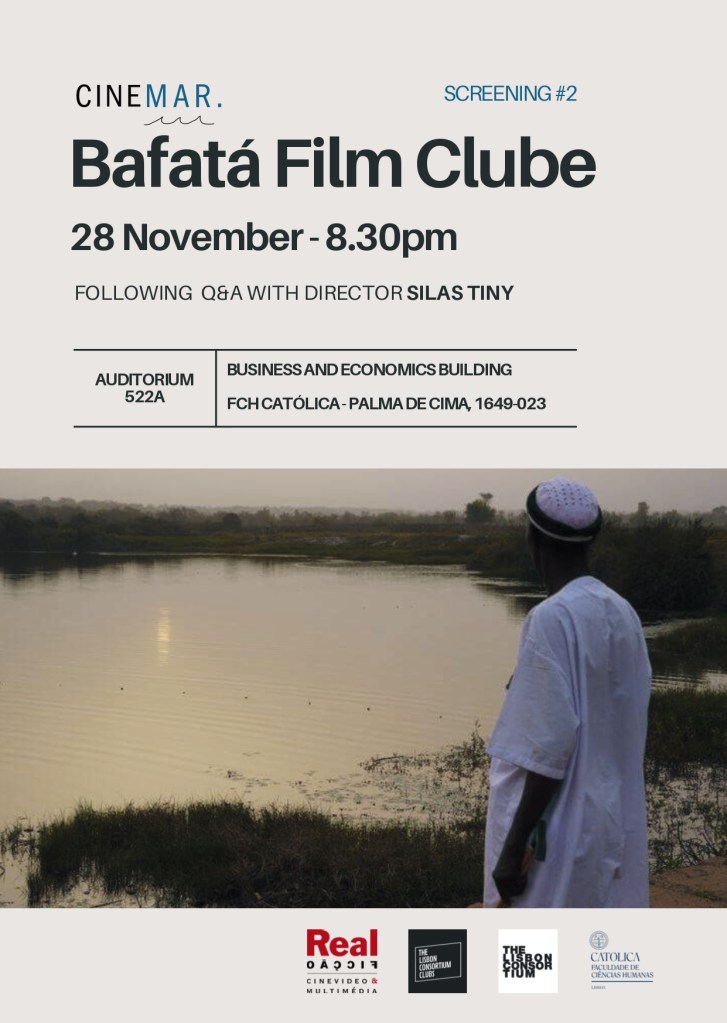
CineMar #2 | Bafatá Filme Clube (2012) and Q&A with the filmmaker Silas Tiny, November 28 2024, 8:30pm
The next screening of CineMar will be Bafatá Filme Clube (2012) directed by Silas Tiny.
Set in Bafatá, Guiné-Bissau, the film tells the story of a city club that was once a cinema. Canjajá Mane, an old cinema operator and guard reminisces the time when the cinema club was full of people. Bafatá also serves as a poignant reflection of the economic, and social conditions of a place that continues to be home to many.
Join us on November 28 at 8:30PM at 522A for the screening of this thought-provoking film, followed by a Q&A with the filmmaker Silas Tiny. Silas Tiny is a filmmaker from São Tomé and founder of the production company OSSOBO Filmes. Bafatá Filme Clube (2012) is his first feature-length documentary, in which he reflects on the effect of post-colonialism in the town of Bafatá in Guiné Bissau and the result of the passage of time in this place, through an old deactivated cinema, guarded by a former projectionist (2023).
This screening is in partnership with the production company Real Ficção.
Follow us on Instagram for upcoming film screenings @CINEMAR.LXC.
-

CineMar | Screening recap: Ar Condicionado (2020) and Q&A with producer Jorge Cohen
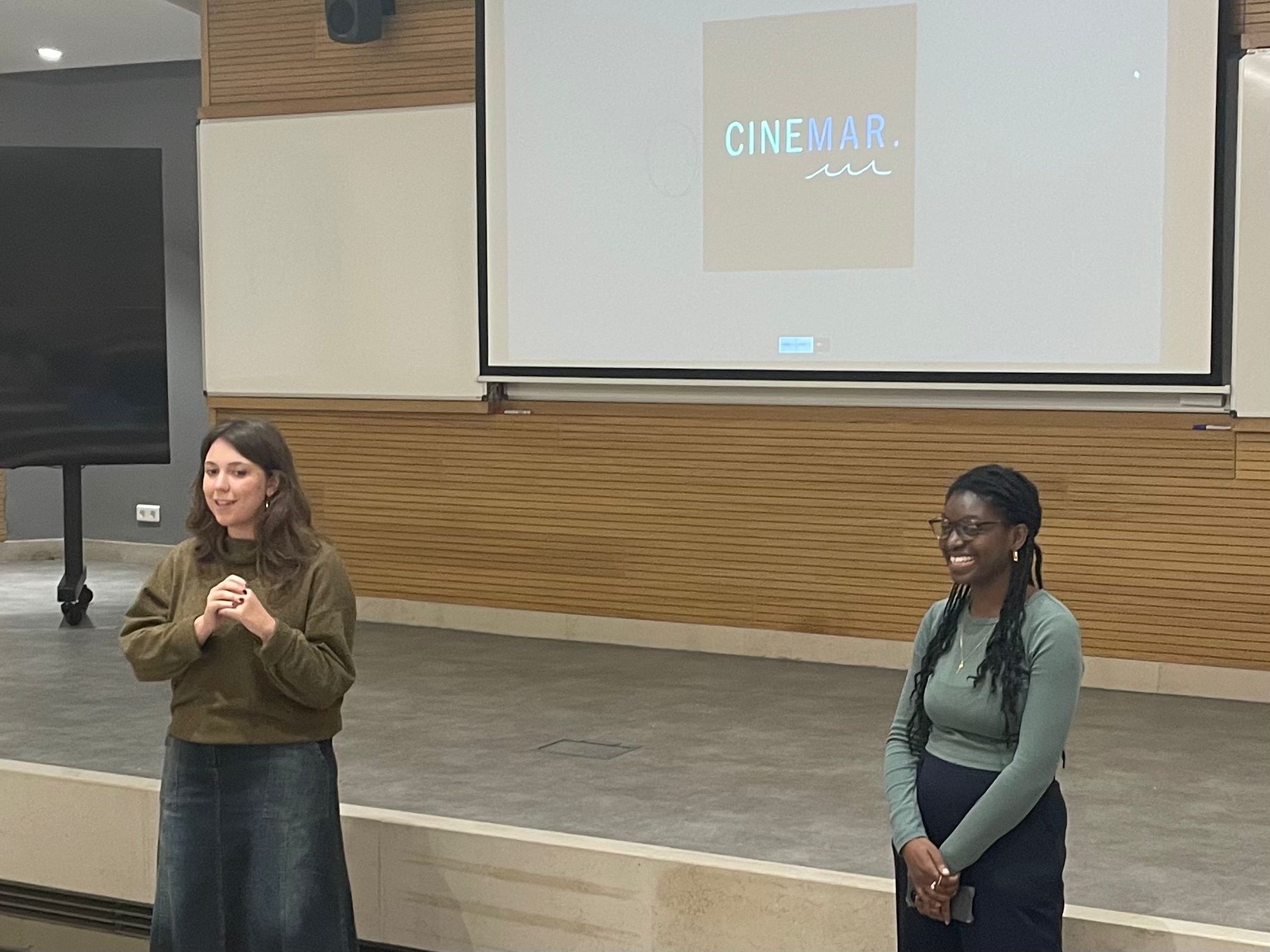
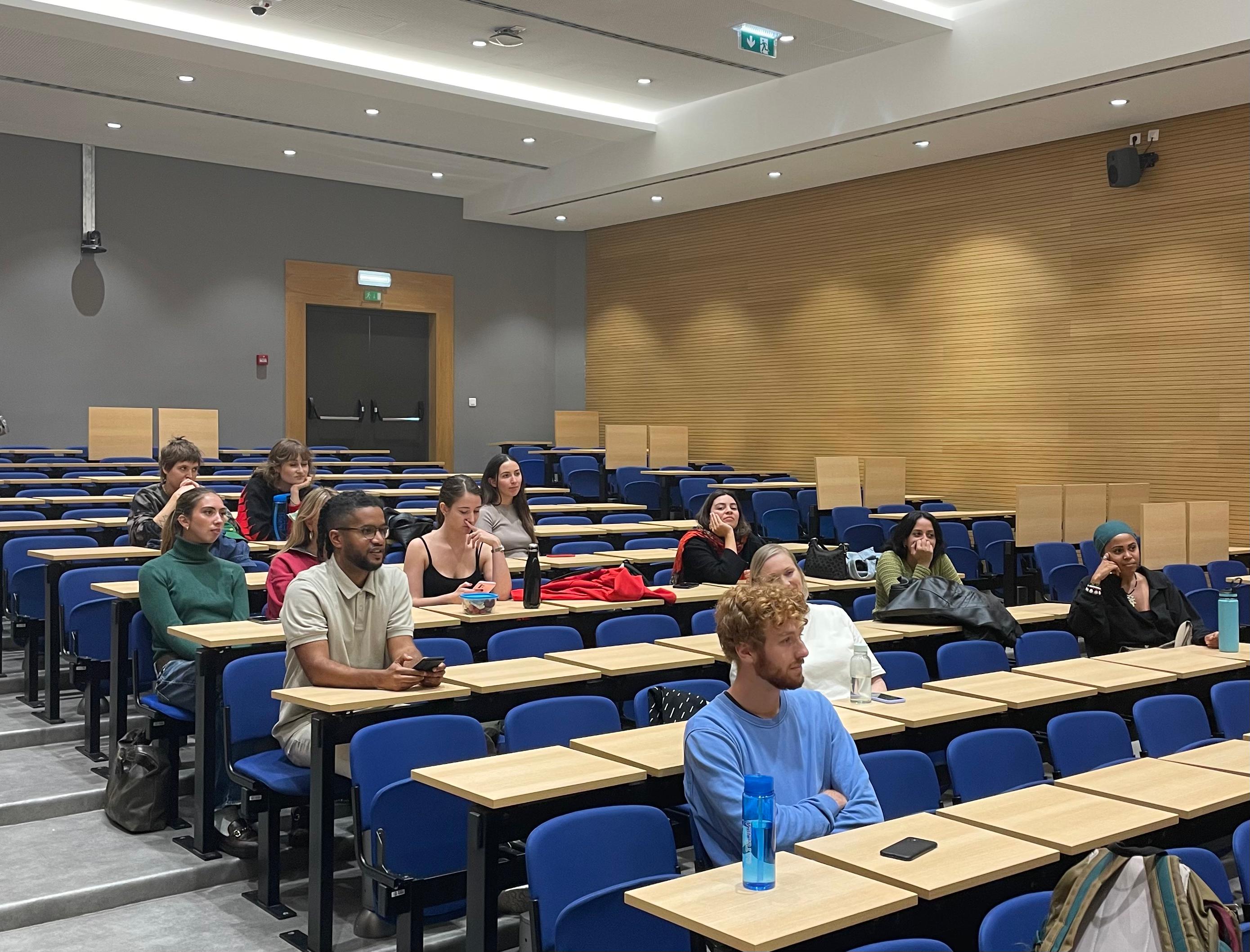
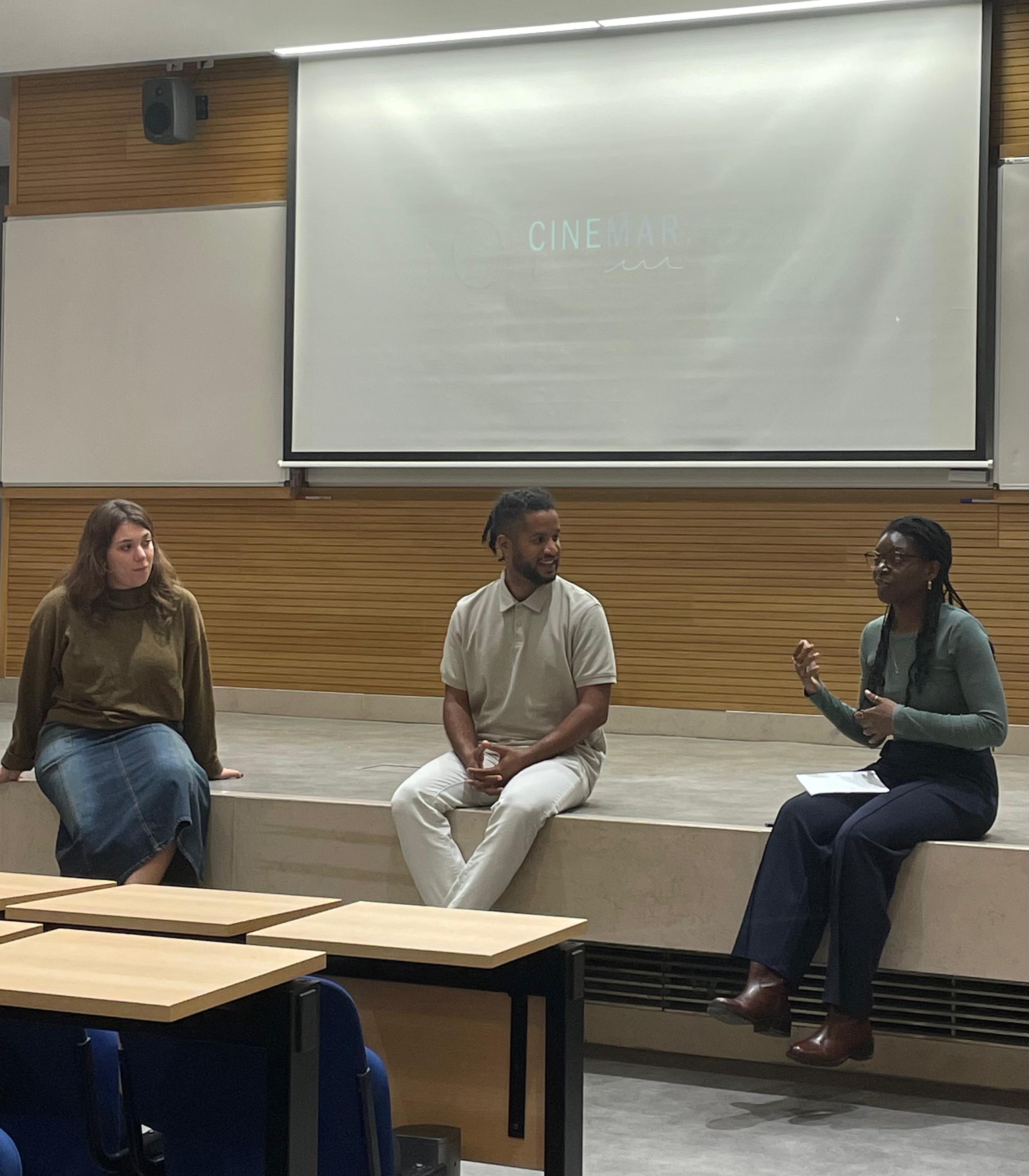
In October, CineMar, the new Lisbon Consortium Film Club, had its first ever screening: Ar Condicionado, a groundbreaking Angolan film directed by Fradique in 2020. The screening was held at the Auditorium D. António Ribeiro (A3), followed by a conversation with the producer and co-founder of Geração 80 Jorge Cohen.
Ar Condicionado, produced by Geração 80, is a mesmerizing exploration of Luanda, Angola’s capital city, seen through the eyes of Matacedo, a security guard. Starring José Kiteculo, Filomena Manuel, and David Caracol, the film weaves together threads of the past, present and future of Angola in a socially and politically conscious narrative, as air conditioners mysteriously fall from the buildings.
During the Q&A, the producer and co-founder of Geração 80, Jorge Cohen stated that films are a good invitation to get to know a country better. Additionally, he highlighted the significance of Matacedo’s everyday life in shaping his relationship with the building he works at and the people living in it.
The film’s unique perspective offers a glimpse into the ordinary lives of the citizens in Luanda, delving into themes of urban decay, social inequality, and the impact of globalization in urban spaces. The film’s core, composed by Aline Frazão, naturally blends into the story, allowing the audience to also appreciate at the complementary characters of the film, such as the buildings and the city of Luanda.
You can follow @CINEMAR.LXC for upcoming film screenings.
Mirian Vanda and Vera Fanizza


-
CfP| Echoes of Age: Relational Dynamics in an Intergenerational World (3-4 April 2025)
The Call for Papers for the next Graduate Conference in Culture Studies is out!
Organized by students from the PhD program in Culture Studies, the XIII Graduate Conference in Culture Studies – Echoes of Age: Relational Dynamics in an Intergenerational World will take place 3-4 April 2025.
Abstracts for individual or joint papers and presentations as well as alternative interventions including artistic interventions, co-creative workshops, reading groups are welcome!
https://echoesofage.wordpress.com/
echoesofage.conference@gmail.com
-

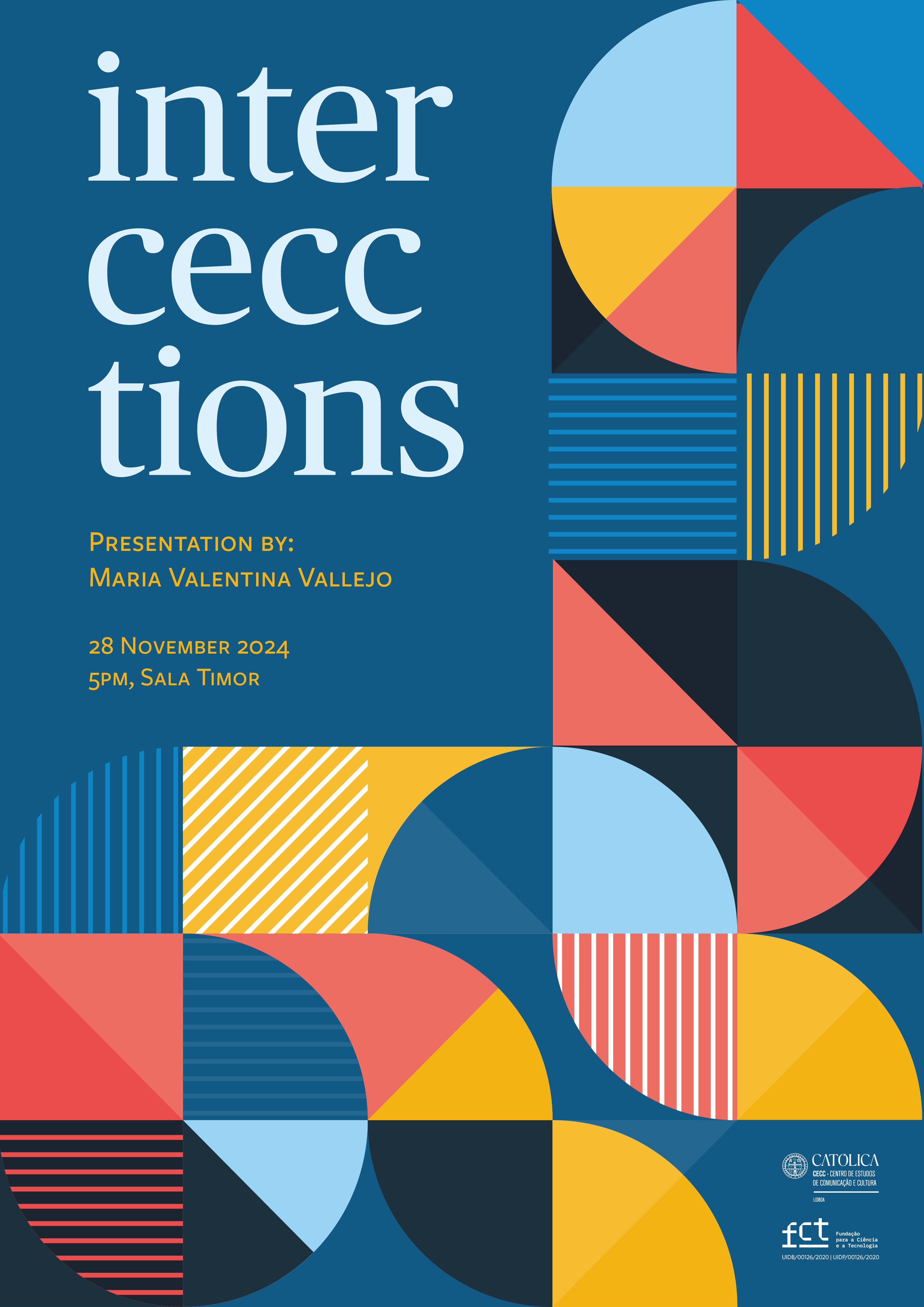
InterCECCtions | Maria Valentina Vallejo (MA) presents Arctic Routes, Southern Ways (28 November 2024, 5pm, Timor)
This month’s InterCECCtions will feature Maria Valentina Vallejo, MA student in Culture Studies, who will be discussing her study conducted as part of CECC‘s research project Arctic Routes, Southern Ways.
Arctic Routes, Southern Ways is a joint research project implemented by CECC members which seeks to compare/contrast two different colonial legacies – the Portuguese and the Norwegian – and create alternative narratives and methods of knowledge production in art institutions and academia.
Hegemonic narratives of the search for national unity in Norway, or the view of a “good” colonialism or “lusotropicalism”, in Portugal, bring these otherwise distant countries close in the way that such experiences have prevailed in many instances of public discourse, policies in institutional practices, in academia and in art institutions. The project will include online meetings, listening sessions in Lisbon and in Bergen, and research visits to Portugal and Norway.
The project puts together two academic institutions (CECC-Universidade Católica Portuguesa and UiT-The Arctic University of Norway) and two contemporary art centres (HANGAR, from Portugal, and Bergen Kunsthall, from Norway), and will organize several scientific activities throughout its lifetime.
Arctic routes was officially launched in 16 January 2024, is coordinated by CECC, financed by an EEA grant and supported by a Globus OpStart grant from the Nordisk Kulturfond.

-

Marta Alves Silva (MA) receives Honorary Mention of “Estudar a Dança” Award
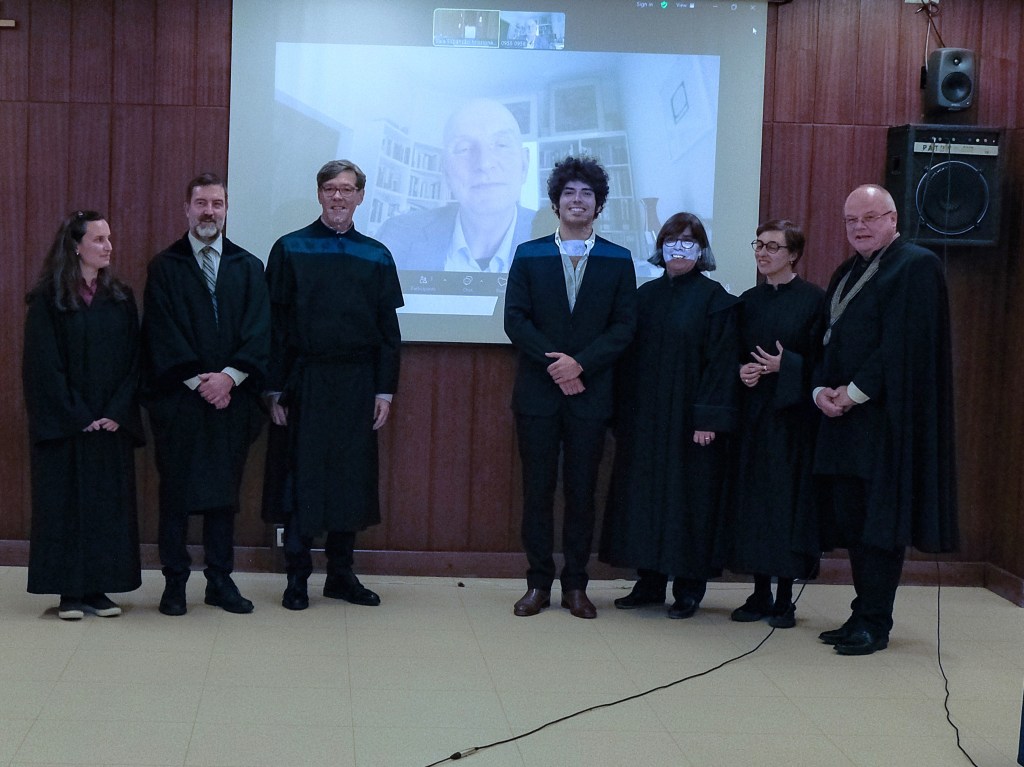
We would like to congratulate Marta Alves Silva (MA in Culture Studies) who received the Honorary Mention of the Estudar a Dança Award with the dissertation Emotional contagion: the transformative potential of performance art.
At the time of the ceremony, Marta Alves Silva was in an artistic residence and could not be present in person, but accepted the Honorary Mention via videoconference.
The Estudar a Dança Award is an initiative of the National Museum of Theatre and Dance (MNTD) and Museus e Monumentos de Portugal. It celebrates the extraordinary collection of the MNTD and aims to reward academic work of exceptional quality that contributes to the knowledge of this art and stimulates the development of this less studied disciplinary area in our country. The prize is sponsored by the Millenium BCP Foundation, which is associated with the recognition and promotion of academic research in the performing arts, especially in the field of theatrical dance.
The jury is composed of Nuno Costa Moura, José Carlos Alvarez, Luísa Taveira and Rui Vieira Nery. According to the jury, Silva’s work proposes “an original theoretical reflection on the inclusion of the public in performative practices, through strategies of emotional stimulation that enhance collective creativity, based on the case study of Silent Disco (2019), a performance by Alfredo Martins”.
The Estudar a Dança Award was attributed to Laura Rozas Letelier for the thesis Formas Coreográficas de Reflexão Histórica: Para uma Timeline a Haver. Genealogias de Dança enquanto prática artística em Portugal.Congratulations to the winners!
-
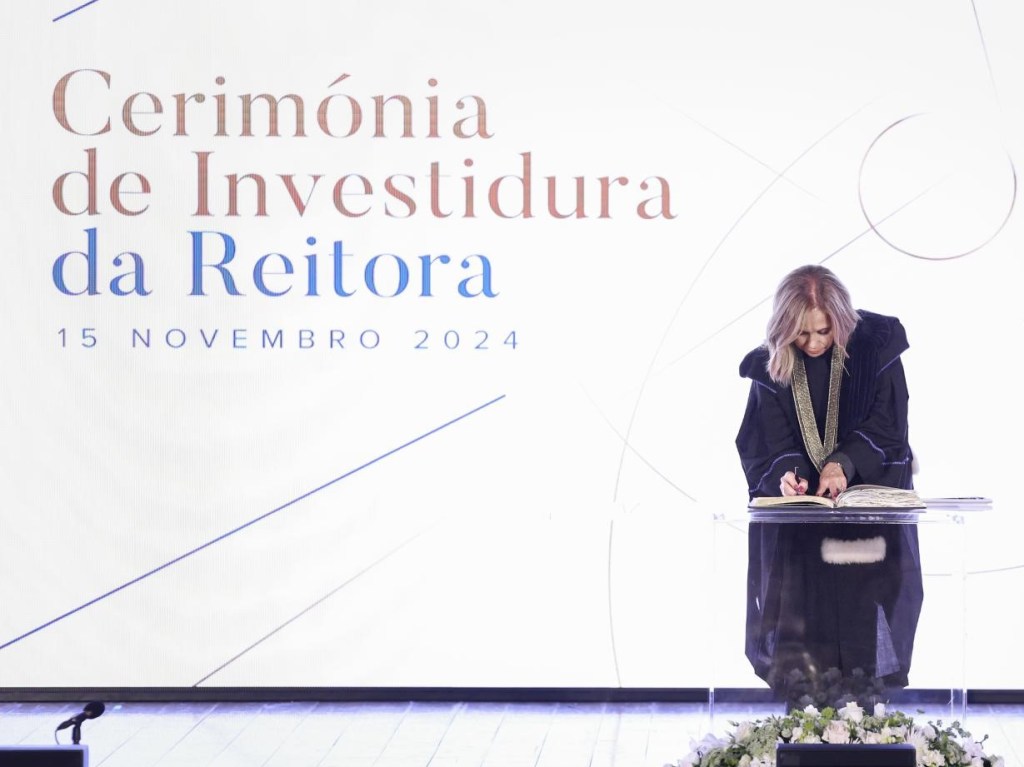
LXC Program Director Isabel Capeloa Gil renews mandate as President of Universidade Católica Portuguesa
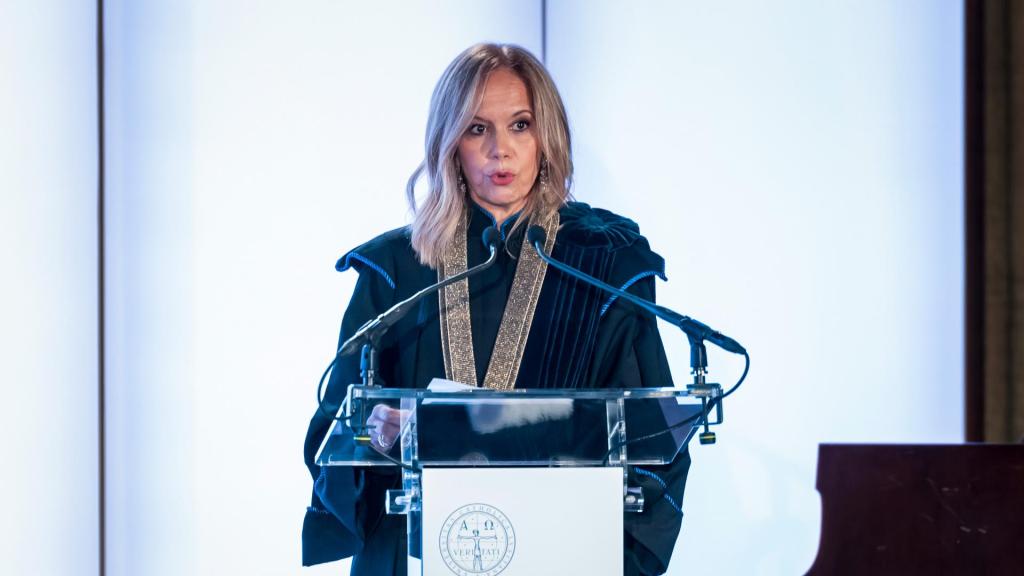
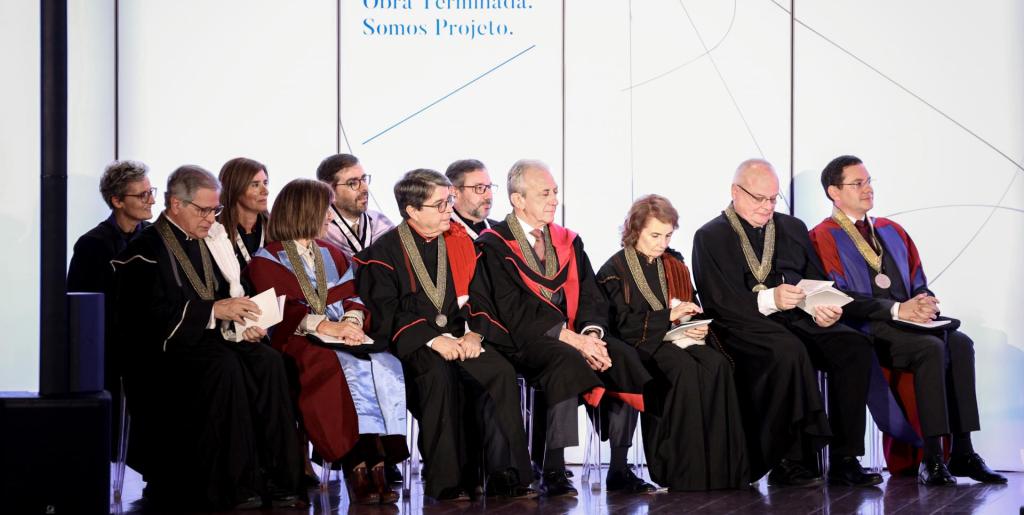
The Program Director of the Lisbon Consortium, Isabel Capeloa Gil, renewed her mandate as the Rector of Universidade Católica Portuguesa on November 15, 2024. Peter Hanenberg, Member of the Steering Committee of the Lisbon Consortium, will also continue as Vice-Rector in the area of Research and Doctoral Education. We congratulate the President and the Rectoral Team, wishing all the best for the coming years!
Photographs: UCP
-
Congratulations, Hugo!
Hugo Simões successfully defended the PhD dissertation A solid mass of humanity, all on velvet: Humour, comedy and life in P.G. Wodehouse’s Jeeves Saga on October 11, 2024.
-
Diffractions | Vernissage at Casa do Comum, November 13, 5pm
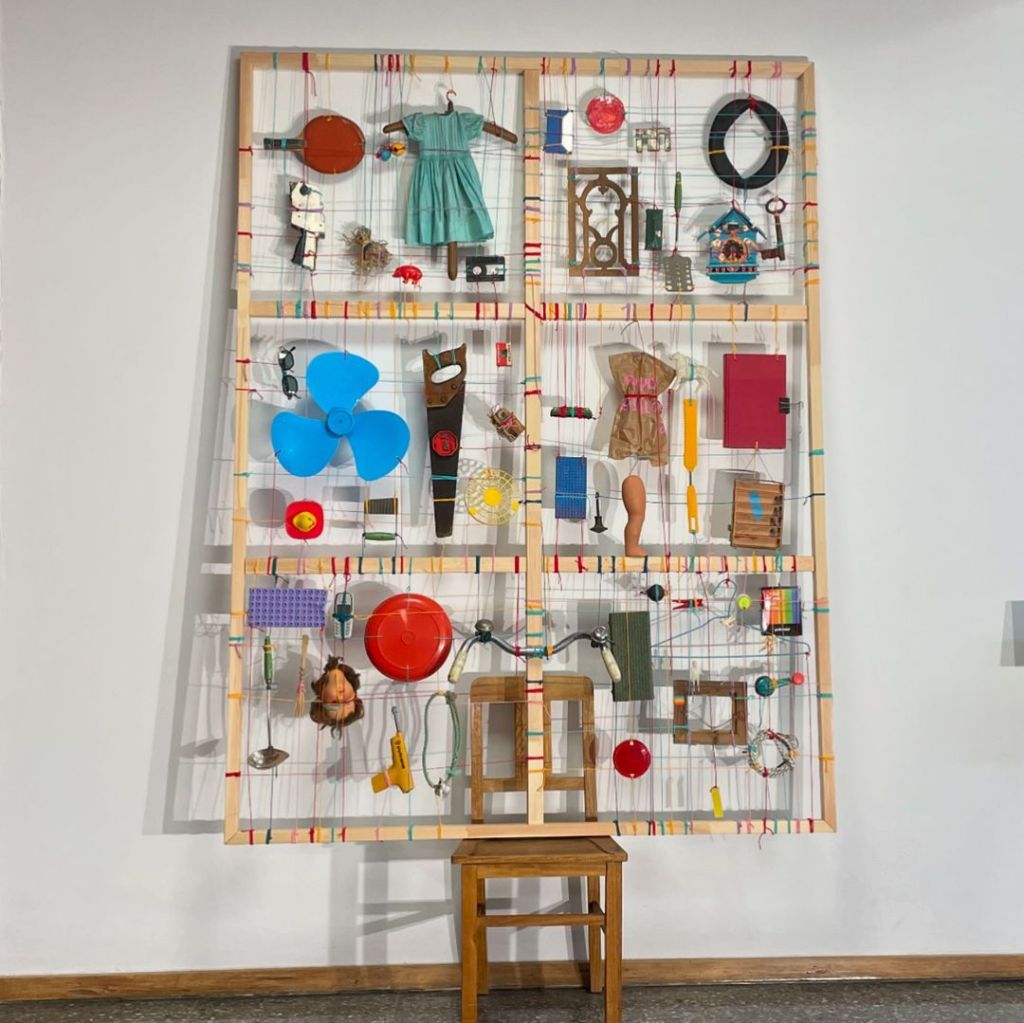
Rita Ravasco’s Tempo Sentido is moving to Casa do Comum from 13 November – 8 December.
Tempo Sentido [Time Sensed] is Ravasco’s multimedia digital and on-site installation, originally developed for the Nostalgia exhibition (Universidade Católica Portuguesa, 2024) as part of the current Diffractions issue 8 on the topic of nostalgia. The work consists of three parts: the digital issue cover in conversation with a video-animation, both accessible online, and the material piece.
In this piece Ravasco figuratively represents the human mind as a sensory archive through a web of interconnected objects, representing the way memory and nostalgia can be triggered by sensory experience, creating an endless network of memory, longing and affect across time and space. The close communication between the digital and the physical mirrors the extension of our own lives and memories into digital space and evokes a myriad of questions connected to the functioning of nostalgia as a felt experience fusing diverse memories, times and spaces in the human mind as it is triggered by the physical and the digital.
The piece has been funded by CECC – The Research Centre for Communication and Culture.
You can find the issue of Diffractions about Nostalgia here: https://revistas.ucp.pt/index.php/diffractions/Curators: Amadea Kovič, Emily Passos Duffy, Miriam Thaler
We hope to see you there!

-

T(h)eses | Julian F. Massa: Muses and Management — Corporate Cultural Responsibility in Germany
The new publication of the series T(h)eses that celebrates the best dissertations of The Lisbon Consortium is Julian F. Massa’s “Muses and Management — Corporate Cultural Responsibility in Germany”.
This dissertation analyses the concept of Corporate Cultural Responsibility in Germany, considering key aspects of corporate responsibility. As public finances tighten, corporate social engagement, including in the arts and culture, is becoming increasingly important. However, the discourse remains largely national. Hence, two case studies illustrate best practice examples from Germany. Ultimately, the question remains whether business supports culture or vice versa.
Available at:
https://www.uceditora.ucp.pt/pt/the-lisbon-consortium-theses/3382-muses-and-management.html
Indice:
Table of Contents
List of AbbreviationsCHAPTER I
Introduction
1.1 Does it pay to be good?
1.2 Research Methodology
1.3 StructureCHAPTER II
A Tribute to Virtue: Corporate Responsibility
2.1 Manifestations of Corporate Responsibility
2.1.1 Corporate Social Responsibility
2.1.1.1 Corporate Sustainability
2.1.1.2 Corporate Social Responsibility in Germany
2.1.2 Corporate Citizenship
2.1.2.1 Corporations and Citizenship
2.1.2.2 Corporate Philanthropy
2.1.2.3 Modes and Motives for Corporate Citizenship
2.1.2.4 Corporate Citizenship in Germany
2.1.3 Corporate Governance
2.1.3.1 Corporate Governance in Germany
2.1.3.2 The ‘German Corporate Governance Code’
2.2 Corporate Cultural Responsibility
2.2.1 Beyond Cultural Sponsoring
2.2.2 Measures
2.2.3 Benefits
2.2.3.1 Culture & Confidence
2.2.3.2 Strategic DimensionsCHAPTER III
Corporate Cultural Responsibility in Germany
3.1 A Short History of Private Cultural Funding
3.2 Political Framework Conditions
3.3 Quantifying Corporate Cultural Responsibility
3.3.1 The 2010 Kulturkreis Survey
3.3.2 Corporate Cultural Sponsoring
3.3.3 Corporate Foundations
3.4 Kulturkreis der deutschen Wirtschaft im BDI e. V.
3.4.1 Funding Areas
3.4.2 Working Groups
3.5 The Chemistry of Societal Commitment – BASF SE
3.5.1 “Creating Chemistry for a Sustainable Future”
3.5.2 BASF’s Cultural Engagement
3.5.2.1 Commitment to the Region
3.5.2.2 Best Practice ExamplesCHAPTER IV
Conclusion
Bibliography
-

Late Afternoon Talk with Ebru Yetiskin
On October 28th 2024, Ebru Yetiskin was invited for CECC’s Late Afternoon Talk by PhD student Aishwarya Kumar, to share with us her work in the field of Art-Science, “The Future is Now: Critical Curating in Art, Science, and Technology”. Having met during Yetiskin’s residency at Ecotopia, their work relates to complimentary elements of cognition, perception and action. While Kumar is focusing on the relationship between Curiosity through gestures of non-extraction and Performance, Yetiskin has been delving into notions of Ignorance through Response-ability, and Political Staging, philosophical topics which have gained notorious currency in the technological condition.
Yetiskin recently concluded her participation in Art and Science Residency Program of Ectopia Experimental Art Lab in Lisbon which had the opening of a collective exhibition titled ‘Metamorphosis’ on October 18. The exhibition is currently open to the public until the 8th of December, on Monday’s and Wednesday’s from 9am – 4pm.– Aishwarya Kumar

Reading suggestion: Ebru Yetiskin: “Invisible motion: Paratactical curation of bio art and performative political imaginaries”
-
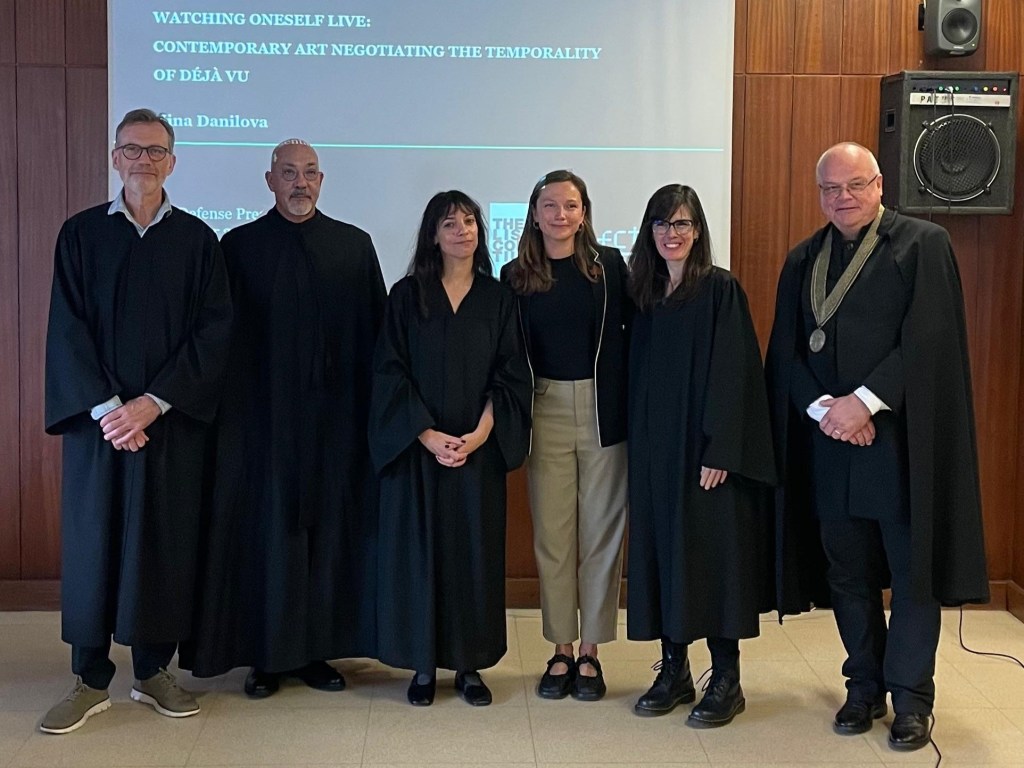
Congratulations, Nina!
Nina Danilova successfully defended the PhD dissertation Watching Oneself Live: Contemporary Art Negotiating The Temporality Of Déjà Vu on October 29, 2024.
-
CineMar – The Lisbon Consortium gains a new film club
CineMar, the new film club organized by Mirian Vanda and Vera Fanizza (MA in Culture Studies), aims to build a community around watching films and having conversations together. Each academic semester, there is a cycle organized by monthly themes and two screenings per month.
In the organizers’ words, “Just like the sea, CineMar aims to create waves of connection through the universal language of cinema. In today’s world of individual streaming, we’re bringing back the magic of the collective experience by watching and discussing films together.”
The first gathering will be on October 29th at 7pm at the Auditorium D. Antònio Ribeiro (A3). The film to be shown is Ar Condicionado (2020) by Fradique, and there will be a special guest present at the screening.
The session will be held in English and the film has English subtitles.
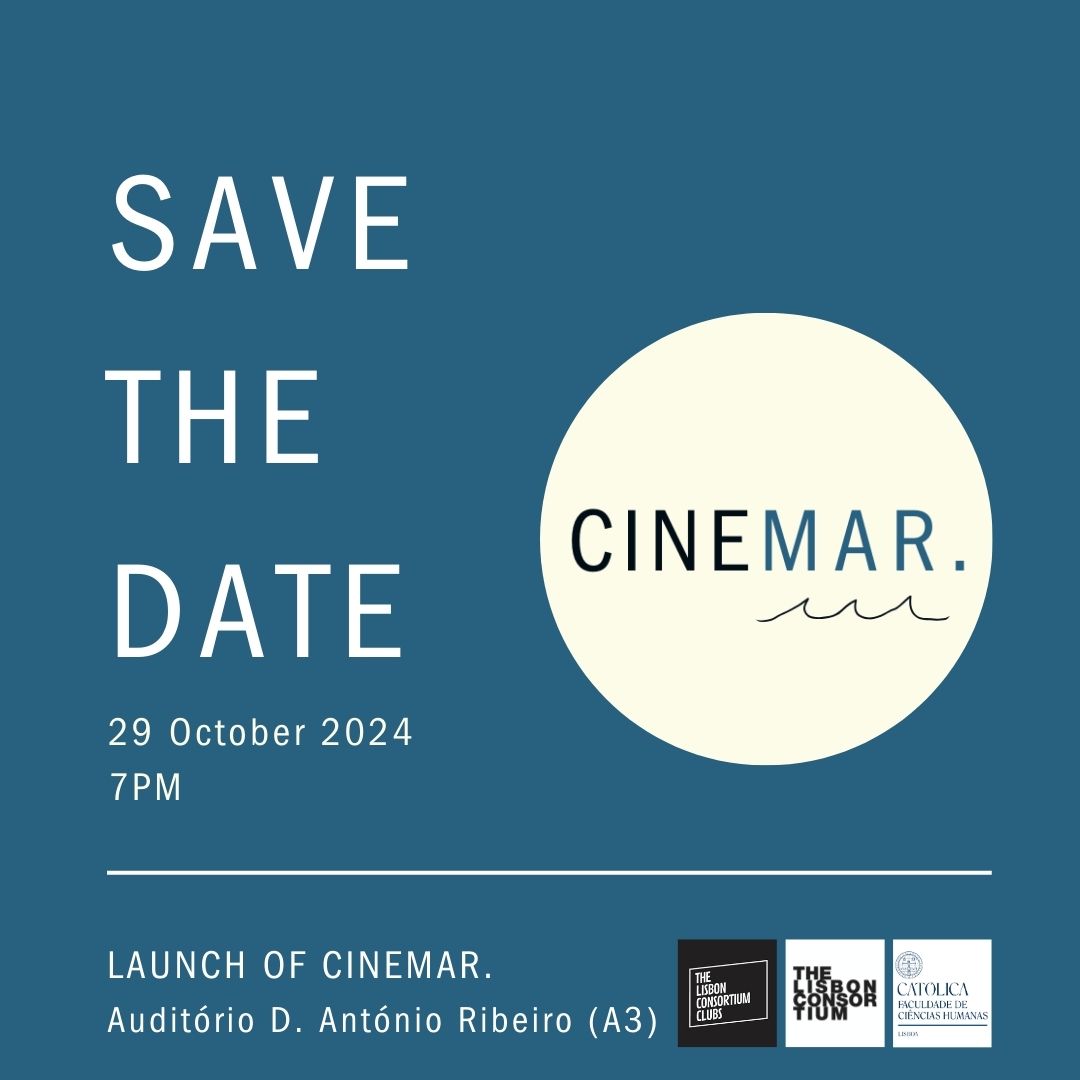
One day, air conditioners in the Angolan capital Luanda start to mysteriously fall from the buildings. When security guard Matacedo is told to get his overheating boss an airco unit by end of day, he embarks on a mission that brings him into contact with the eccentric owner of an electronics store.
Duration: 72’ | Production: Geração 80
Language: Portuguese speaking with English subtitles -

Culture and Artificial Intelligence | October 22
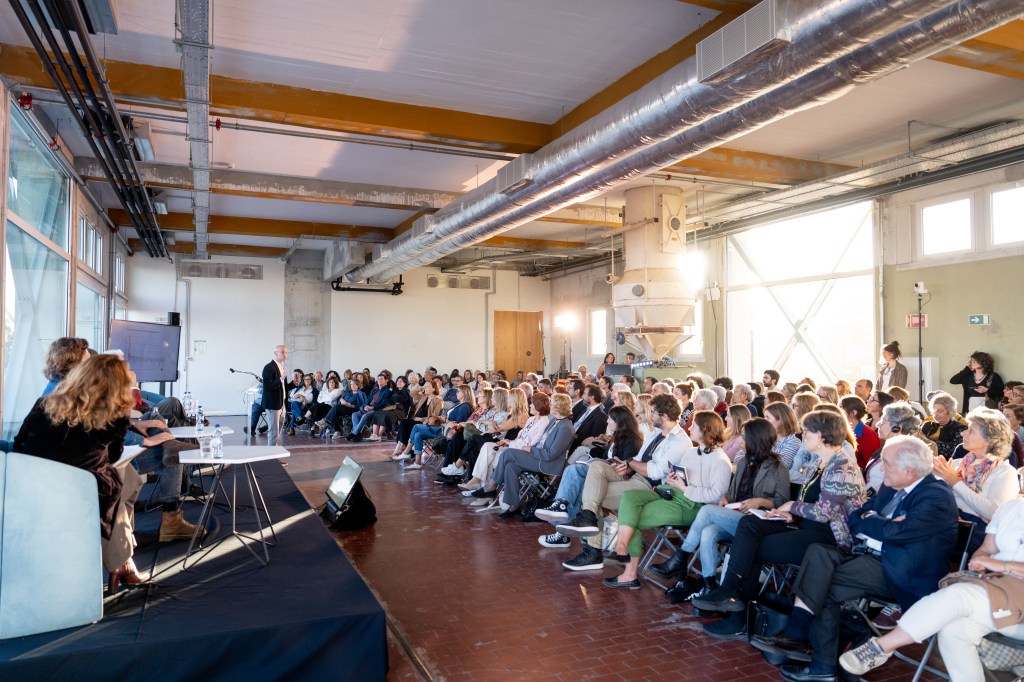
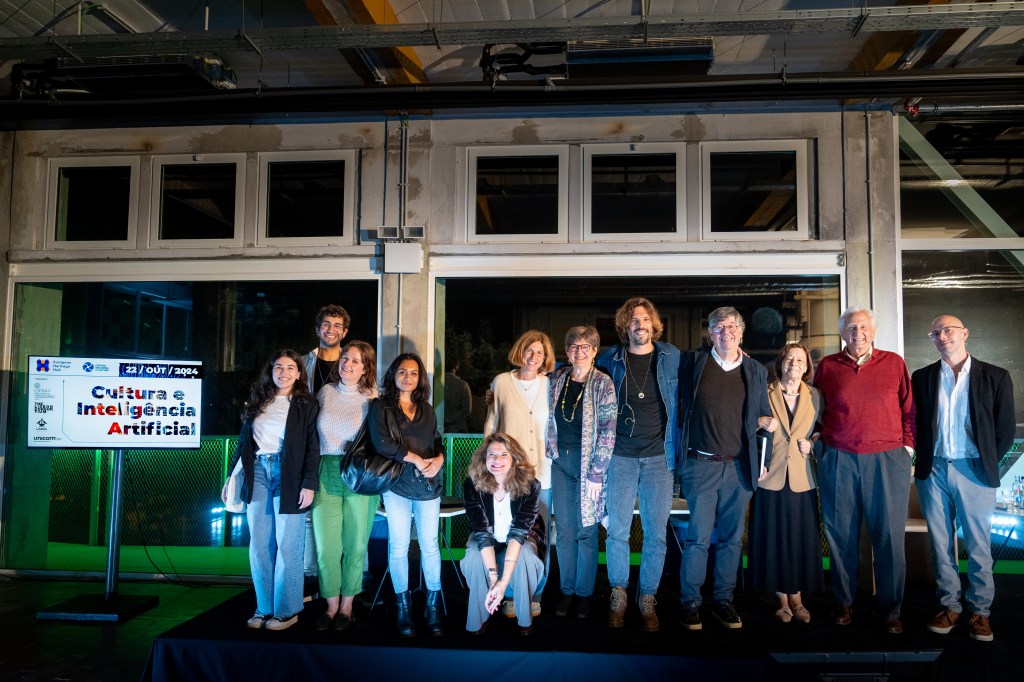
PhD candidates in Culture Studies Aishwarya Kumar Iyer, Amadea Kovič, Teresa Weinholtz and Thales Alecrim took part in a conversation about culture and artificial intelligence with Alexandre Quintanilha (Biophysics researcher), Carlos Fiolhais (Professor of Physics), William Hasselberger (Director of the Digital Ethics Laboratory @ UCP) and Rudolfo Quintas (artist).
Other speakers at the event were Maria Calado (President of Centro Nacional de Cultura), Guilherme d’Oliveira Martins (Executive Trustee of Fundação Calouste Gulbenkian) , Sneska Quaedvlieg – Mihailovic (Secretary General of Europa Nostra).The event was organized by Centro Nacional de Cultura in partnership with the Lisbon City Hall, The Lisbon Consortium FCH-UCP at Beato Innovation District. Copyright of the photos @ Enric Vives-Rubio.





 The Lisbon Consortium