Author: lisbonconsortium
-

Congratulations, Samuel!
Samuel Miller successfully defended the MA dissertation “Ordinary Language and the Spirit of Criticism: Reading after Postcritique” on February 23, 2024.
-

Book Launch | Sarah Nagaty — The Collective Dream: Egyptians Longing for a Better Life 26.02. 18h30
The launch of Sarah Nagaty’s book The Collective Dream: Egyptians Longing for a Better Life will take place on the 26th of February at 18h30 in Sala Brasil (Library building, UCP).
There will also be a roundtable discussion on revolutionary dreams in Latin America and Pan-Arabism with Prof. Peter Hanenberg (CECC), Dima Mohamed (IFILNOVA) and Iyari Martinez (CECC).
Congratulations, Sarah! -
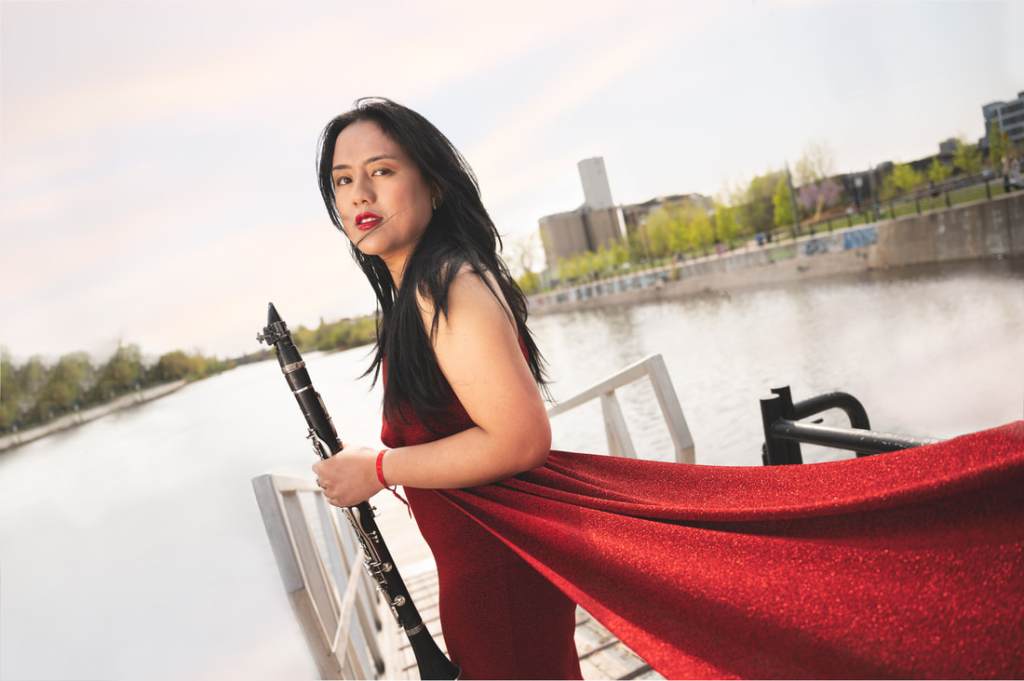
Kristine Dizon wins the Banting Postdoctoral Fellowship grant
We would like to congratulate our PhD alumna Kristine Dizon for obtaining the Banting Postdoctoral Fellowship grant for the research project “Situated Resonances: Poetic-Musical Performances in Critical Contexts and Creative Compositions” at Concordia University. Congratulations, Kristine!
-

AYNI | LANDRA: Fundo na Paisagem (Deep into the Landscape) 15.2. 2024 Antecâmara
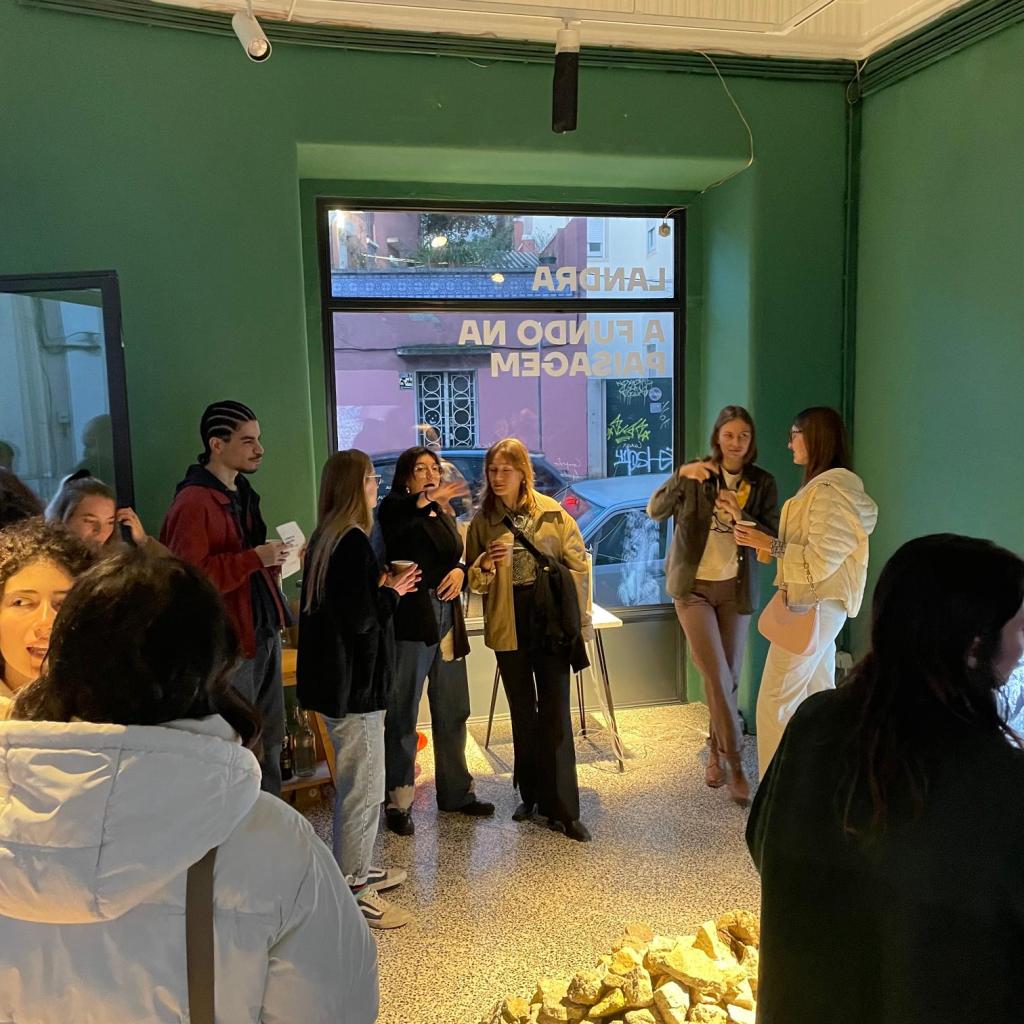
We’re thrilled to invite you to join us on February 15 at 18:00, in Galeria Antecâmara, for the opening of the A Fundo na Paisagem exhibition, by LANDRA, running till March 1.
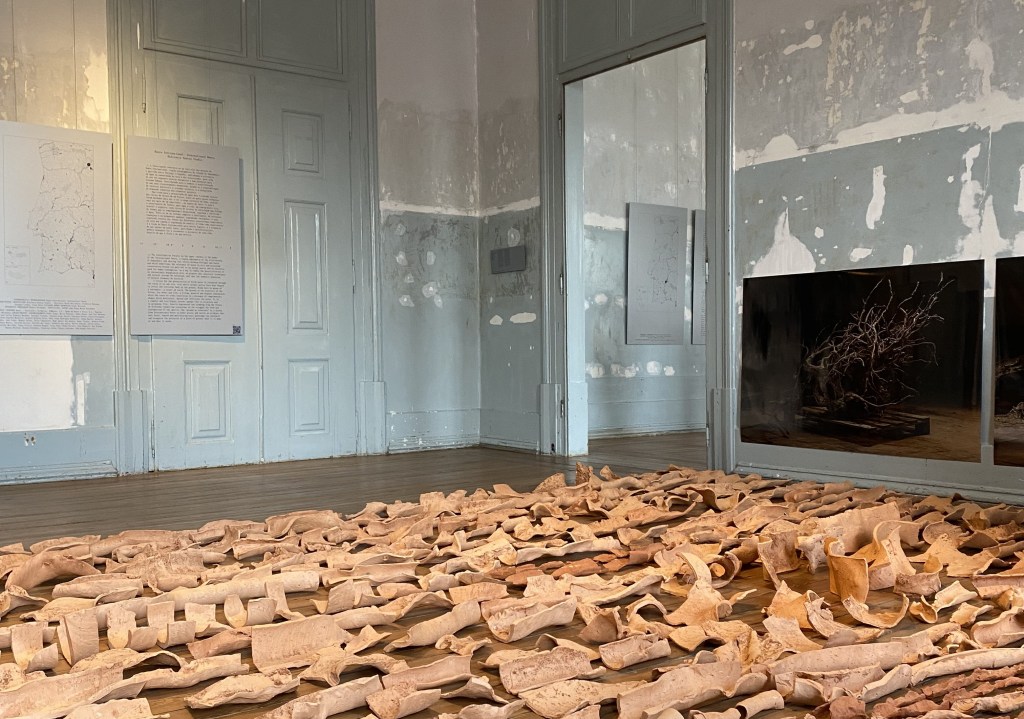
A Fundo na Paisagem – Deep into the Landscape is a project about life’s unapologetic resilience. In Porto, nestled in the patio of the CCOP, an extraordinary transformation began in August 2022. The artist duo poses a riddle steeped in wonderment: how can a cold cement patio become a vibrant agroforest? In Antecâmara, we will be able to see the different processes behind this transformation, as well as different elements that made the destruction/construction possible.
We hope you can join us for the afternoon filled with creativity and conversation. LANDRA, known for their innovative artistic expressions, will be showing the work at the gallery. Galeria Antecâmara, with its captivating ambiance, serves as the perfect meeting place for this unique gathering.
Should you have any questions or require further information, please do not hesitate to contact us in reply or on instagram. You can also find more information on our website.
-

Congratulations, Beatriz!
Beatriz Varrecoso successfully defended the MA internship report “Immersiveness in Classical Concerts in Historical Sites: The Case of Palácio Nacional de Queluz” on February 9, 2024.
-

2024-2025 Applications are open!
The applications for masters and doctoral programs are now open.
Early Bird: January 15 to February 26
1st phase: February 27 to April 8
2nd phase: April 9 to May 30
More information available here. -
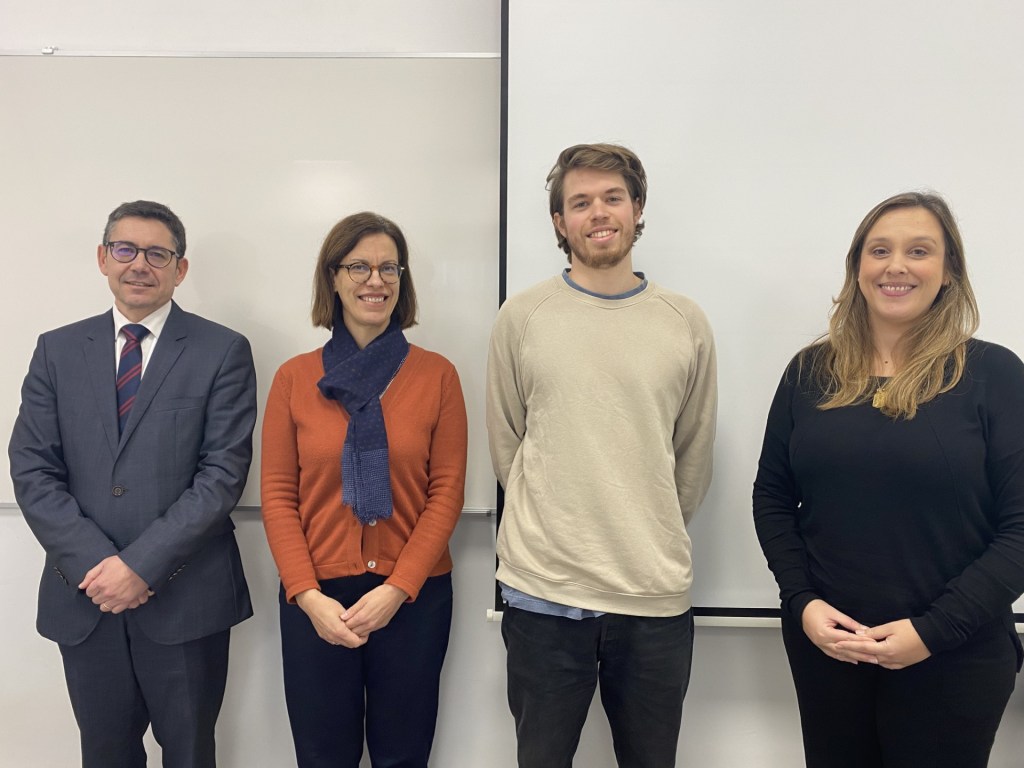
Congratulations, Fabian!
Fabian Schmid successfully defended the PhD thesis “Sustainability in the Music Festival Industry – The Power of Music to Change Politics?” on January 19, 2024.
-

AYNI | Jabulani Maseko: Goals 18.1. 2024 Hangar

We would like to invite you to the second installation of Ayni: Theorems of Reciprocity, the projection of “Goals”, a video performance piece by Jabulani Maseko, followed by a roundtable talk with the artist and the curators. It will take place at Hangar on the 18th of January 2024, from 7 p.m.
The event will be the second installation of the Ayni: Theorems of Reciprocity project, which is a set of five project rooms at Brotéria, HANGAR, Antecâmara, and Universidade Católica Portuguesa that will feature works by Rita Ferreira, Jabulani Maseko, LANDRA – Sara Rodrigues and Rodrigo Camacho, The Third Thing – Nithya Iyer and Vlad Mizikov, and Igor Jesus.
Presented at Hangar, in January 2024, Maseko’s video installation Goals (2018) takes center stage. This ten-minute piece unfolds against a winter-landscape in Switzerland, capturing Maseko’s struggle as he pushes a goalpost from one side of the frame to the other. The video cleverly plays with the idiomatic expression “moving the goalpost”, embodying a physical and metaphorical push, reflecting the artist’s journey to redefine boundaries and test the limits of the body. This work also reaffirms the artist’s way of working, which often reflects where he is geographically at any given moment. Following the screening of Goals, the evening transitions into an interactive conversation with Maseko. The talk delves into the overarching theme of the body in his work, exploring its recurrence and significance in his broader artistic portfolio. A unique exploration of the body as a site of contradictory emotions and states is promised, threading the narratives of both personal and collective memory, and offering visitors an engaging and reflective experience.
Jabulani Maseko, born in Apartheid South Africa in 1977, was the first black student at Redhill, a private school for white children at the time. He left the country at 18, coinciding with the collapse of the regime. His pursuit of higher education led him to the UK, where he earned a master’s degree at the Slade School of Fine Art in London. Maseko’s works have graced group and solo exhibitions across the United States, Europe, and Africa. Maseko’s creative arsenal, which spans sculpture, drawing, painting, installation, and performance, often gravitates towards materials rich with meaning from his childhood in Apartheid South Africa. His works delve into the collective black experience throughout history- a history based on the black body in conflict with society and ultimately in conflict with itself.
Curated by students of the MA and PhD programmes in Cultural Studies, The Lisbon Consortium, Universidade Católica Portuguesa, in the framework of the seminar in Curatorship, coordinated by Luísa Santos. Support: República Portuguesa – Cultura | DGARTES – Direção-Geral das Artes.
Learn more about the project on our website, and our Instagram @ayni_theoremsofreciprocity.
-
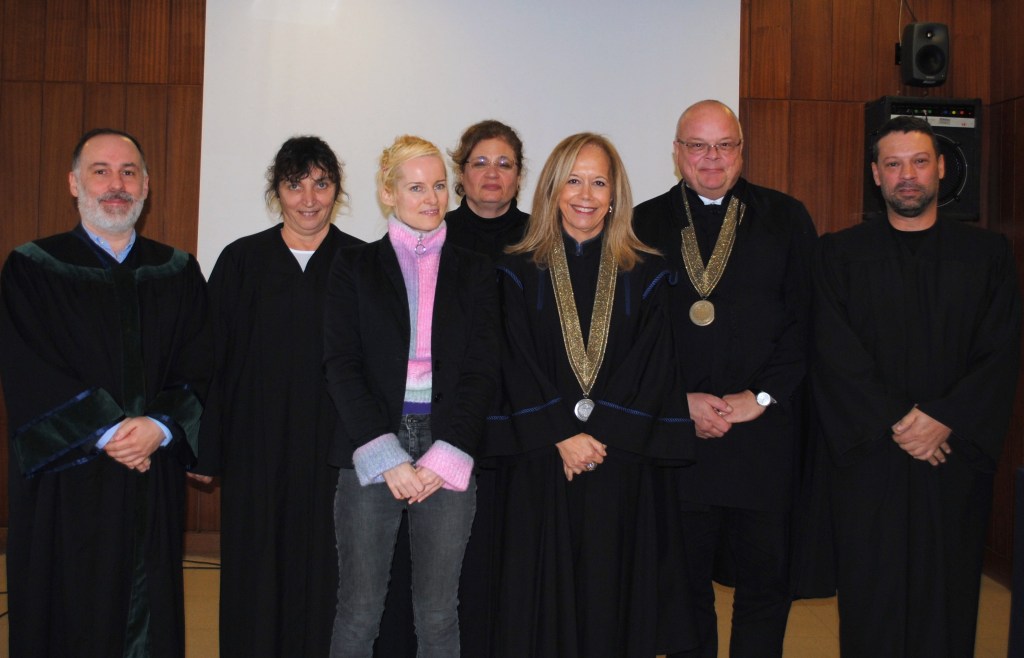
Congratulations, Linda!
Linda Koncz successfully defended the PhD thesis “Languages of Imagination: Films and Dreams” on January 10, 2024.
-
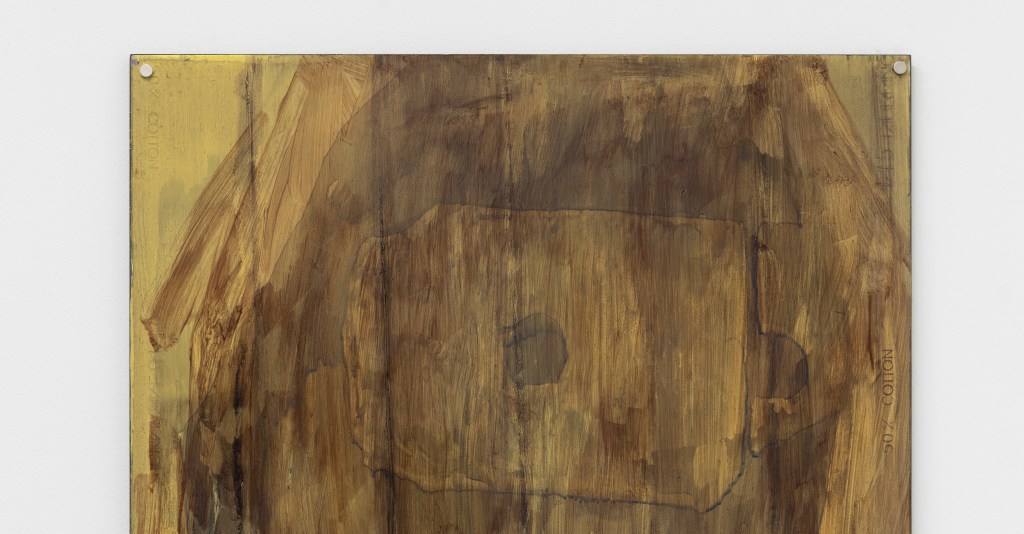
AYNI | Rita Ferreira: Casa de Chá (Tea House) 11.-27.1. 2024 Brotéria

The opening of Ayni: Casa de Chá | Tea House exhibition will take place at Brotéria on the 11th January, 2024, from 6 p.m. to 8:30 p.m.
The exhibition which can be visited during the working hours of Brotéria from 11th to 27th of January, 2024, inaugurates the Ayni, theorems of reciprocity project, which is a set of five project rooms at Brotéria, Antecâmara, HANGAR and Universidade Católica Portuguesa that will feature works by Rita Ferreira, Igor Jesus, LANDRA – Sara Rodrigues and Rodrigo Camacho, The Third Thing – Nithya Iyer and Vlad Mizikov, and Jabulani Maseko.
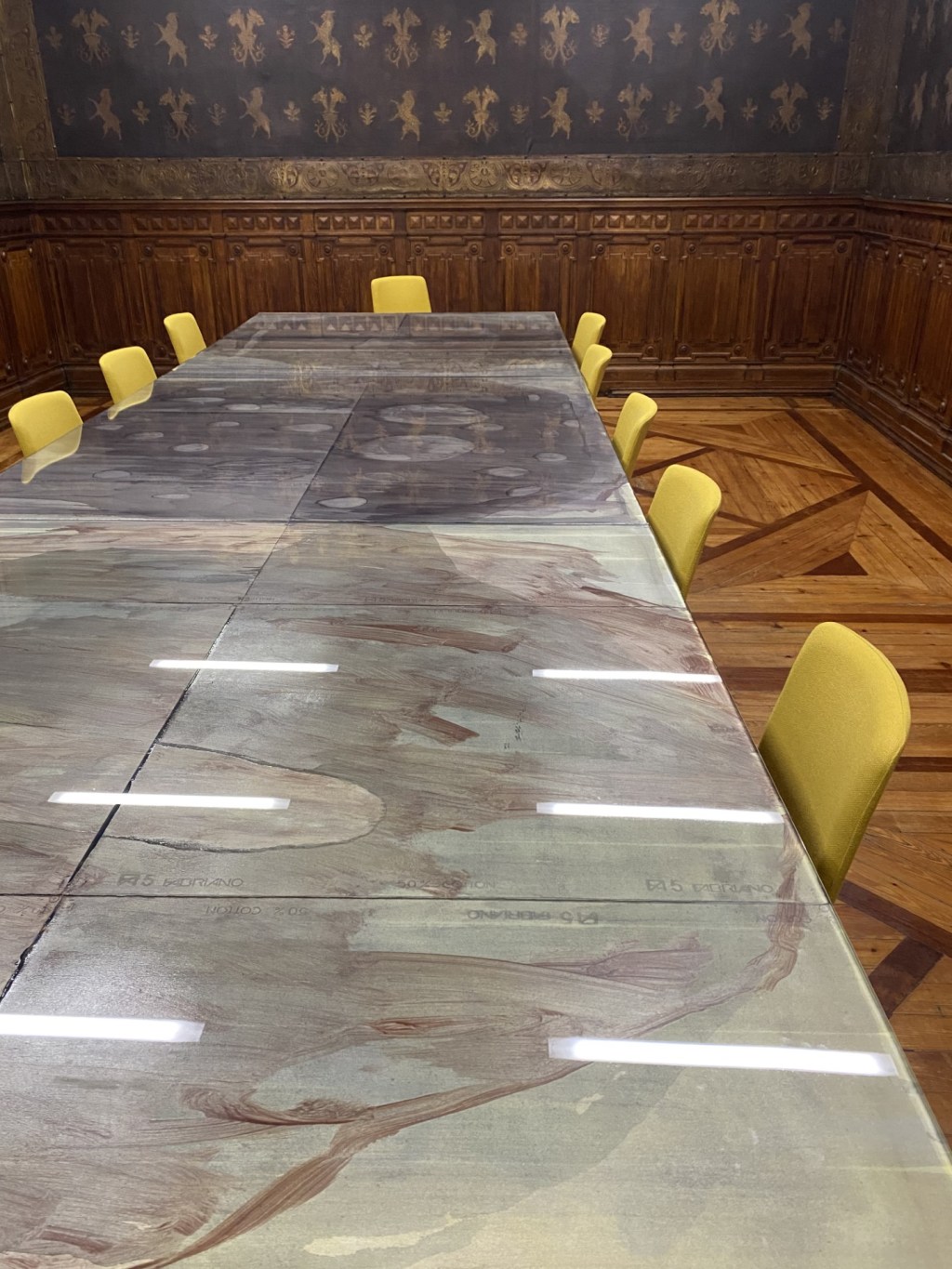
In Ayni: Casa de Chá | Tea House, artist Rita Ferreira proposes to engage with the aesthetic and functional dimensions of Broteria’s Reading Room, as well as explore the tension between the notions of originality and reproduction. The artist’s painting lies on the surface of a large table, beneath a layer of protective glass. This translucent horizontal surface opens a window into the past and functions as a mirror of the present, inviting the inhabitants of the space to take notice and act upon the artwork. Here, Ferreira’s archive – meaningful or trivial forms and objects collected over time – undergoes a process of abstraction that seeks to fixate the fluid and destabilize the still.
Rita Ferreira was born in Obidos in 1991 and is currently residing and working in Lisbon. She obtained a BA in Painting at the Lisbon School of Fine Arts (University of Lisbon). In 2023, Rita Ferreira was one of the finalists of the Amadeo Souza-Cardoso Prize and was also one of the finalists in 2022 of the EDP New Artists Prize.
Curated by students of the MA and PhD programmes in Cultural Studies, The Lisbon Consortium, Universidade Católica Portuguesa, in the framework of the seminar in Curatorship, coordinated by Luísa Santos. Support: República Portuguesa – Cultura | DGARTES – Direção-Geral das Artes.
Learn more about the project on our website, and our instagram @ayni_theoremsofreciprocity.
-
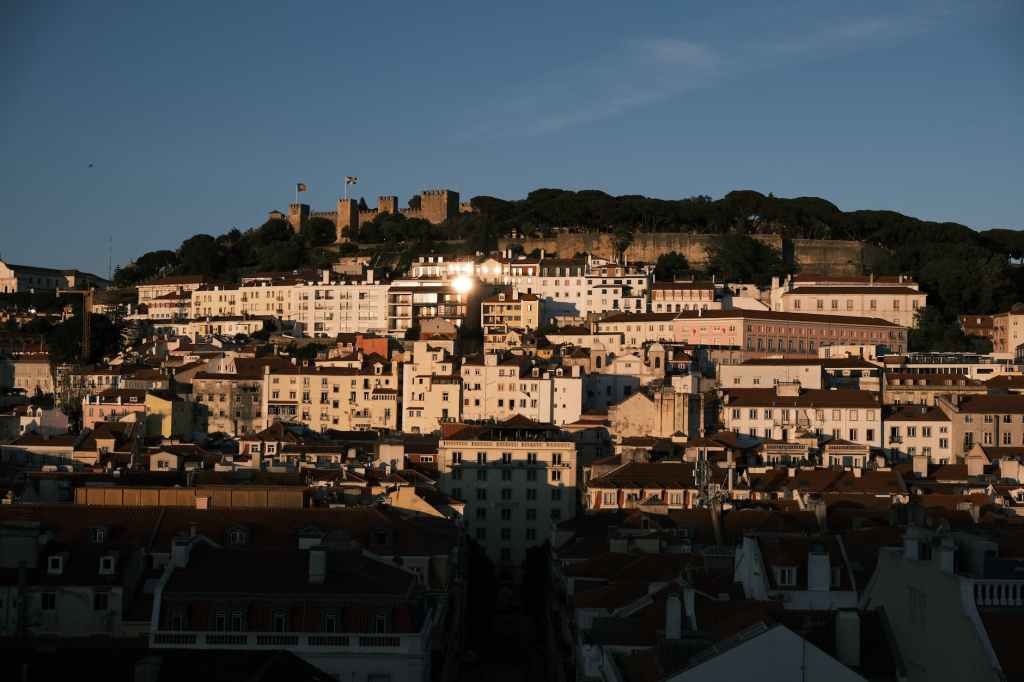
Cfp: XIV Lisbon Summer School for the Study of Culture – Culture at War
CULTURE AT WAR
Lisbon, June 24 – 29, 2024
Deadline for submissions: February 29, 2024
We are living in times of war. Now, more than ever, war occupies a central role in both national and international affairs and pervades various spheres of our societies and cultures.
The 21st century has been marked by violence of different varieties and levels. Having started with a massive terrorist event, the attacks of September 11, 2001, the last two decades have witnessed many examples of aggression that have come to dominate both the media and public discussion. Acts of terrorism of various kinds, revolutions and wars, with the conflicts in Ukraine and the Middle East among the most recent, are illustrative of contemporary warfare, its characteristics, and challenges. While new military technology such as high-tech weapons and attack drones promote more remote, noncontact operations, the ever-present media strive for immediacy and proximity and thus contribute to a new and distinctive experience of war. Their continuous, play-by-play coverage promotes the illusion of a 360º view and allows audiences to follow the events in near-real time. However, their omnipresence has also turned them into desirable instruments of warfare. They not only inform about the war but also have the ability to mobilize for/against it. Furthermore, the rise of social media and its pivotal role in both documenting conflicts and generating and disseminating misinformation cannot be disregarded. As military conflicts unfold, a parallel war is also fought between communication mechanisms. It can even be argued, with Paul Virilio (War and Cinema, 1989), that war, or its experience, is becoming increasingly a product of visual media construction.
Wars are not circumscribed to military conflicts, though. Contention has become an intrinsic part of everyday life, leading to social and cultural movements that call out misguided practices, injustices, and violations of basic laws and rights. On the one hand, bottom-up mobilizations such as #MeToo, the gilets jaunes, or Fridays for Future, reveal a world in crisis, responding to systemic violence with dissent. On the other hand, the dismantling of structures of oppression by means of decolonizing processes clashes with the incapacity to effectively deal with past wrongdoings and the tendency to forget or avoid uncomfortable discussions. These movements may, at times, also represent a dynamic of destruction based on the collective readiness to criticize, denounce, hold accountable, and ultimately cancel what or who is considered to have behaved in an unacceptable way.
This culture of war, of diverging opinions and interests, extends also to the relationship between man and nature, and more specifically the ongoing environmental emergency. One rhetorical device used to stress the escalating effects of climate change is precisely the war metaphor (employed also in the context of the COVID-19 pandemic). The use of military language and the idea of a war against climate change, widely used in public speeches and in the media, is meant to spark a fighting spirit and incite action. There is, however, the risk of having the opposite effect if the enemy remains abstract, the message is not made understandable, and governments and individuals fail to take responsibility for the current situation.
The XIV Lisbon Summer School for the Study of Culture is dedicated to the study of the relationship between culture and war. Papers are welcome on the following topics, amongst others:
- Culture and conflict
- Ancient and modern warfare
- Culture in modern warfare
- War and the creation of modernity
- The cultural construction of terror/terrorism
- Rules of war and humanitarian law
- The ethics of war
- The forensics of war
- Rituals of the fallen
- Battlefields and landscapes of war
- Media and war, media at war: (mis)communication, (mis)information, and fake news
- Representations of war
- Art and artists at war
- Art and reparations
- (De)Colonizing discourses and practices/asymmetric conflict
- Conflict escalation and conflict resolution
- Cultural wars and language
- Dialogue and tolerance/Soliloquy and intolerance
- Culture of violence
- Warrior culture: between heroes and villains
- War as metaphor
- Environmental emergency and war against climate change
- War-induced uncertainty and instability
- Epistemologies at war/theories at war
We encourage proposals coming from the fields of culture studies, film and the visual arts, literary and translation studies, history, anthropology, media, and psychology, among others.
Paper proposals
Proposals should be sent to lxsummerschool@gmail.com no later than February 29, 2024, and include paper title, abstract in English (max. 200 words), name, e-mail address, institutional affiliation, and a brief bio (max. 100 words) mentioning ongoing research.
Applicants will be informed of the results of their submissions by March 29, 2024.
Full papers submission
Presenters are required to send in full papers no later than May 31, 2024.
The papers will then be circulated amongst the participants. In the slot allotted to each participant (30’), only 10’ may be used for a brief summary of the research piece. The Summer School is a place for networked exchange of ideas, and organizers wish to have as much time as possible for a structured discussion between participants. Therefore, in each slot, 10’ will be used for presentation, and 20’ for discussion.
Registration fees
Participants with paper – 300€ for the entire week (includes lectures, master classes, doctoral sessions, lunches and closing dinner)
Participants without paper – 60€ per day (lunches and closing dinner not included)
Fee waivers
For The Lisbon Consortium students and CECC researchers, there is no registration fee.
For other UCP students, students from institutions affiliated with the European Summer School in Cultural Studies (ESSCS), members of the European PhD-Net in Literary and Cultural Studies, and members of the Critical Humanities Network the registration fee is 80€.
This edition of the Lisbon Summer School for the Study of Culture will function as the 2024 Critical Humanities Network Summer School.
Organizing Committee
- Isabel Capeloa Gil
- Peter Hanenberg
- Alexandra Lopes
- Adriana Martins
- Diana Gonçalves
- Paulo de Campos Pinto
- Rita Faria
- Annimari Juvonen
Assessment Committee
- Peter Hanenberg
- Alexandra Lopes
- Adriana Martins
- Diana Gonçalves
- Paulo de Campos Pinto
- Rita Faria
- Ana Margarida Abrantes
- Luísa Leal de Faria
- Joana Moura
- Rita Bueno Maia
- Verena Lindemann Lino
- Sofia Pinto
- Luísa Santos
-

Congratulations, Leonie!
Leonie Davidson successfully defended the MA dissertation “Cultural Representation and Digital Reproduction: A Critical Analysis of Post Conflict Reproductions of Heritage” on December 14, 2023.
-

Congratulations, Fredy!
Fredy Hernando Viracacha Lopez defended successfully the MA thesis “Towards Sustainability in Cultural Programming: An Analysis of a Cultural Institution in the Covid-19 Pandemic” on December 7, 2023.
-

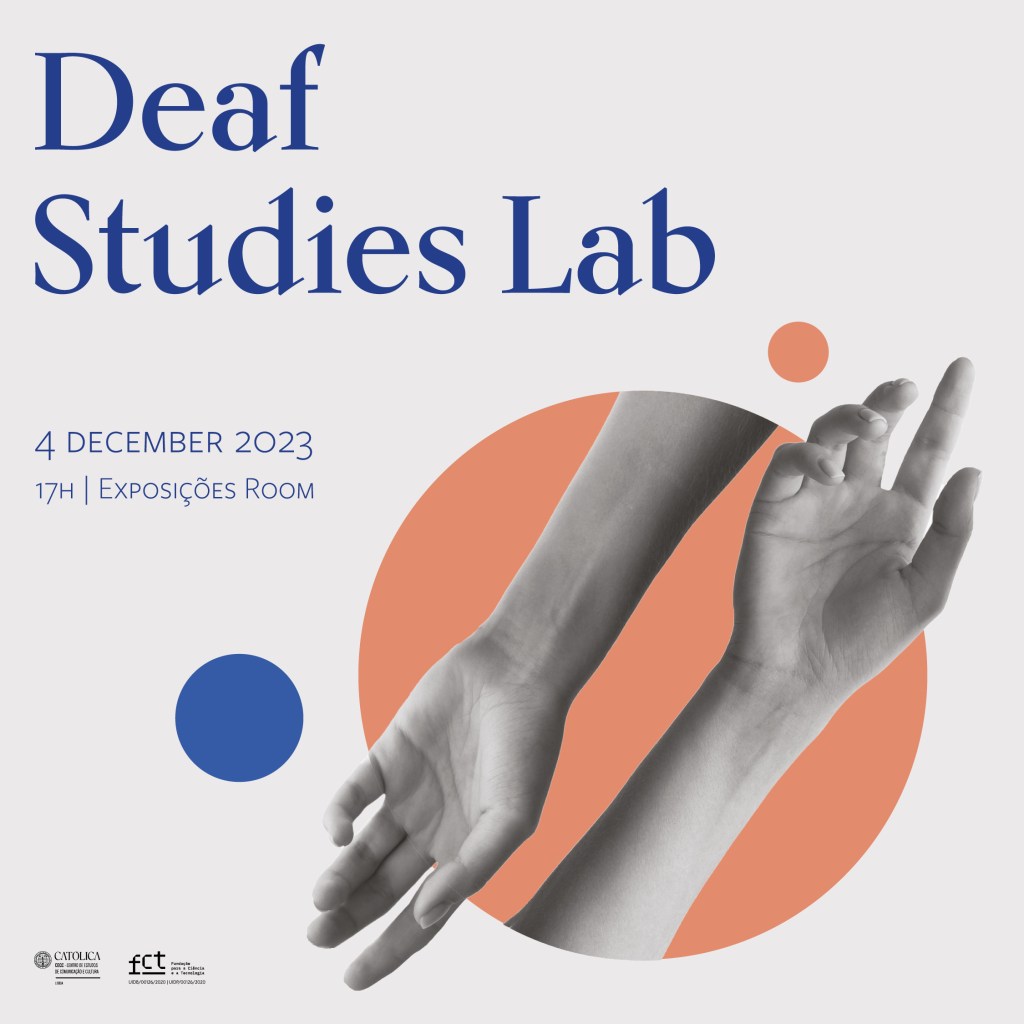
The Inauguration of Deaf Studies Lab and the launch of Diffractions on Deaf Culture
In 4 December, 2023, the CECC organized an informative meeting on its new Deaf Studies Lab that is being developed by The Lisbon Consortium alumna Cristina Gil (CECC-UCP), Joana Pereira (CECC-UCP), Helena Carmo (CIIS-UCP) and Paulo Vaz de Carvalho (CIIS-UCP).
The Deaf Studies Lab results from the work that has been pursued by the first Portuguese researchers with specific, graduated academic training in the field of Deaf Culture, and is transversal to the several research groups and scientific areas to which CECC, the Research Centre for Communication and Culture from Universidade Católica Portuguesa, is dedicated to.
At the same occasion, the latest issue of Diffractions, Deaf Culture, was launched.
Congratulations to the whole team for the the pioneering work in Portugal! -

Protocol signed between The Lisbon Consortium and Brotéria
We are happy to announce that on November 28, 2023, a new protocol was signed between The Lisbon Consortium and Brotéria by Director of the Lisbon Consortium and Rector of Universidade Católica Portuguesa, Prof. Isabel Capeloa Gil, member of the Steering Committee of the Lisbon Consortium and Vice-Dean of the faculty of Human Sciences, Prof. Alexandra Lopes, and Director of Brotéria, Father Francisco Mota. We are very excited about this new partnership!

-

Launch: Diffractions Issue 7: DEAF CULTURE
The launch of Diffractions #7: DEAF CULTURE, edited by Guest Editors Cristina Gil, Genie Gertz, Joana M. Pereira, and Tom Humphries, will take place on Monday, December 4th, at 7 pm.
The launch will occur as part of the launch of CECC’s new Deaf Studies Lab, which will take place in Sala de Exposições at 5 pm (UCP library building, 2nd floor).
-

LX Consortium Visit to Culturgest
The Lisbon Consortium organized a visit to the reserves of the Caixa Geral de Depósitos art collection and a guided tour to the exhibition “Fantasma Gaiata” / “Playful Ghost” @culturgest on 24 November, 2023.
Conceived as part of the celebration of Culturgest’s thirtieth anniversary, the exhibition Fantasma Gaiata proposes two distinct approaches to Caixa Geral de Depósitos’ contemporary art collection. Like the two hemispheres of a brain, each approach specialises in certain functions and skills. Fantasma (Ghost) is dedicated to one of sculpture’s great ambitions: to erect bodies that signify and endure, that defy time, death and oblivion. If the artist’s body is permanently invoked as author, manufacturer, mirror or spectre, the visitor’s is summoned as measure, vehicle, witness – the place of all meaning. For its part, Gaiata (Playful) is an amusement park, a playground inhabited by fleeting conversations, alliances and challenges. Some groups of works gather around common interests, while others provoke and react to each other, deeply invested in the game but unaware of the results.
-

Congratulations, Julia!
Julia Flamingo successfully defended the MA thesis “Journalism and Plain Language as Tools to Bring Audiences Closer to Contemporary Art” on 28 November, 2023.
-
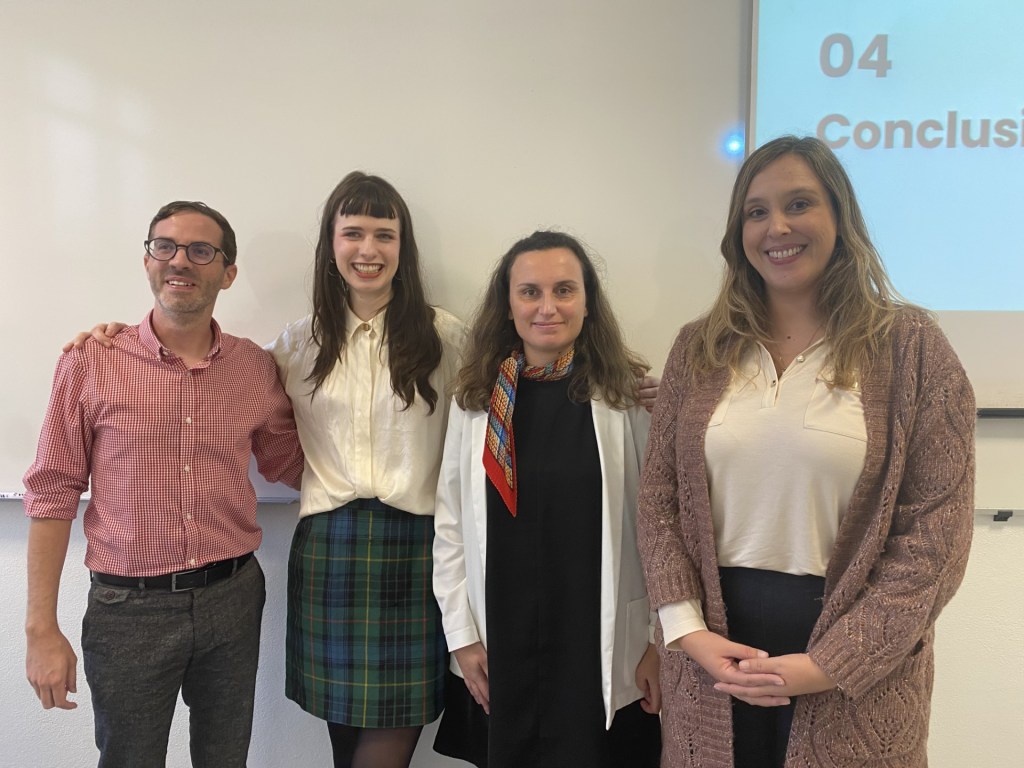
Congratulations, Tiphaine!
Tiphaine Duchateau successfully defended the MA thesis “Culturgest: Managing Audience(s) in a Multidisciplinary Space” on 24 October, 2023.
-

Congratulations, Anaïs!
Anaïs Jung successfully defended the MA thesis “The City’s Skin: Metaphor’s Potential in Understanding Urban Spaces. A Case Study on Lisbon’s Surfaces” on 20 October, 2023.
-

Visit to Casa Carlucci
The students of the Lisbon Consortium were offered the opportunity to visit the exhibition “Celebrating Diversity” in Casa Carlucci, An Art in Embassies Exhibition by U.S. Ambassador to Portugal, Randi Charno Levine. The exhibition showcases many works by women, Black and LGBTQ+ artists, such as Nan Goldin “Fatima Candles” (1998), Helena Almeida “Desenho” (1999), Kehinde Wiley “Entry into Paris of the Dauphin” (2005), Délio Jasse “Untitled” (from the series “A última barreira”) (2021), Hank Willis Thomas “Ain’t I a Woman” (2009), Amy Sherald “Hope is the thing with feathers (The little bird)” (2021), Keith Haring “USA 19-82” (1982), Christopher Myers “Bocanegra” (2019), and many more.
We would like to thank the Ambassador Levine and the staff of Casa Carlucci for this kind invitation. -

Diffractions: Call for papers
Diffractions, Issue 9 | Beyond the Object: Immaterial Pasts, Immaterial Futures
Deadline for Abstracts: December 15th 2023
Deadline for Papers: March 31st 2024Guest Editors: Federico Rudari, Teresa Pinheiro
See full call for papers: https://revistas.ucp.pt/index.php/diffractions/announcement/view/76
-

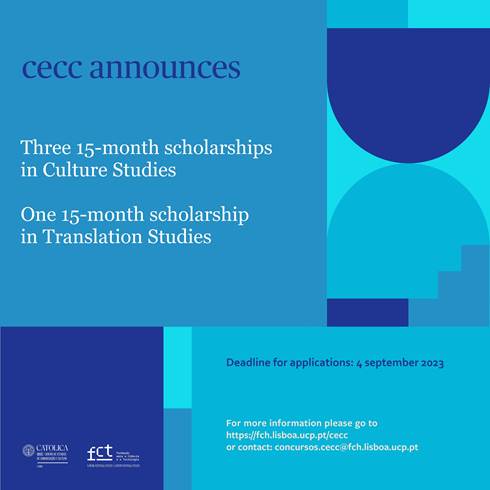
CECC announces: Three PhD scholarships in Culture Studies
CECC announces the opening of a call for applications for three PhD (FCT) research scholarships in Culture Studies. The deadline for submissions is 4 September 2023.




 The Lisbon Consortium