
Author: lisbonconsortium

  • Congratulations, Fredy!

    Congratulations, Fredy!

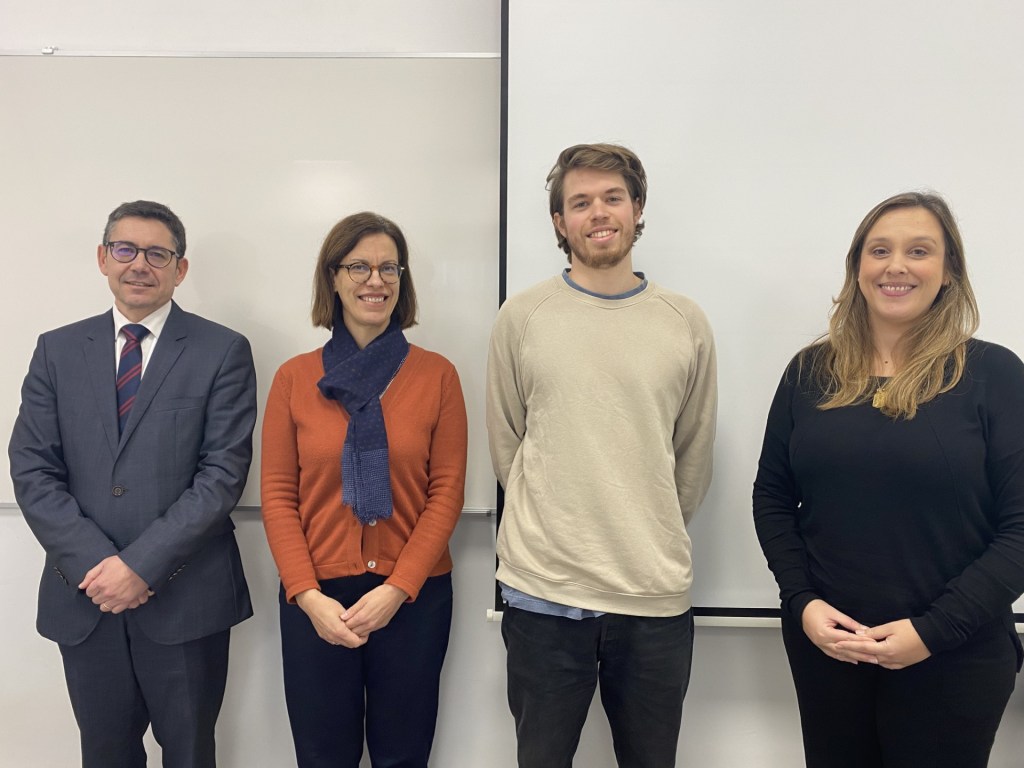
    Fredy Hernando Viracacha Lopez defended successfully the MA thesis “Towards Sustainability in Cultural Programming: An Analysis of a Cultural Institution in the Covid-19 Pandemic” on December 7, 2023.

  • The Inauguration of Deaf Studies Lab and the launch of Diffractions on Deaf Culture

    The Inauguration of Deaf Studies Lab and the launch of Diffractions on Deaf Culture

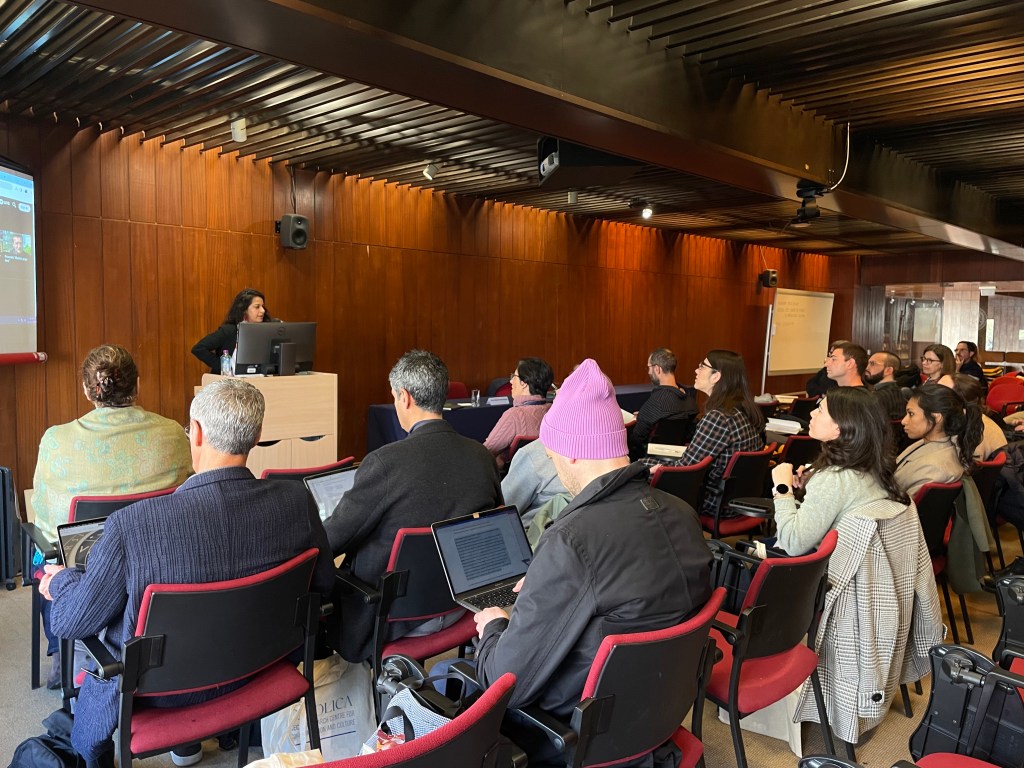
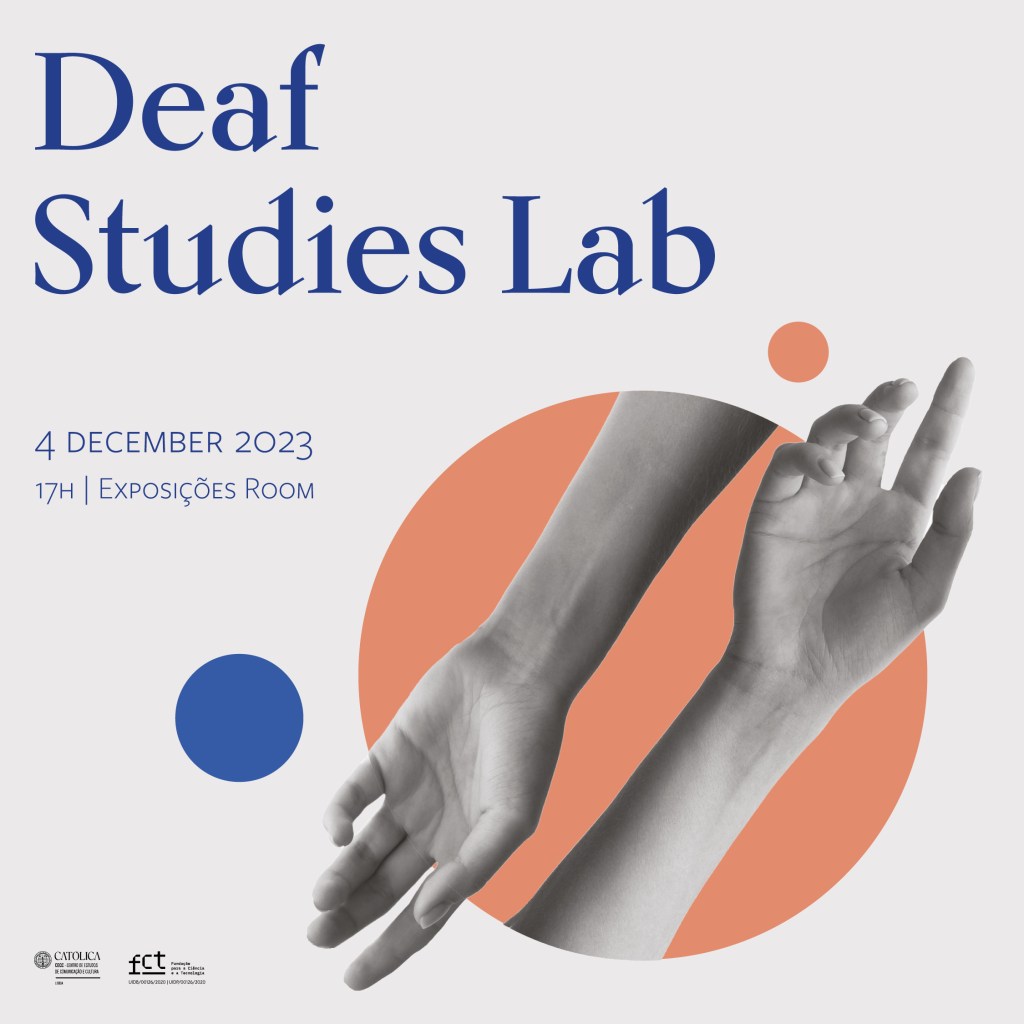
    In 4 December, 2023, the CECC organized an informative meeting on its new Deaf Studies Lab that is being developed by The Lisbon Consortium alumna Cristina Gil (CECC-UCP), Joana Pereira (CECC-UCP), Helena Carmo (CIIS-UCP) and Paulo Vaz de Carvalho (CIIS-UCP).

    The Deaf Studies Lab results from the work that has been pursued by the first Portuguese researchers with specific, graduated academic training in the field of Deaf Culture, and is transversal to the several research groups and scientific areas to which CECC, the Research Centre for Communication and Culture from Universidade Católica Portuguesa, is dedicated to.

    At the same occasion, the latest issue of Diffractions, Deaf Culture, was launched.

    Congratulations to the whole team for the the pioneering work in Portugal!

  • Protocol signed between The Lisbon Consortium and Brotéria

    Protocol signed between The Lisbon Consortium and Brotéria

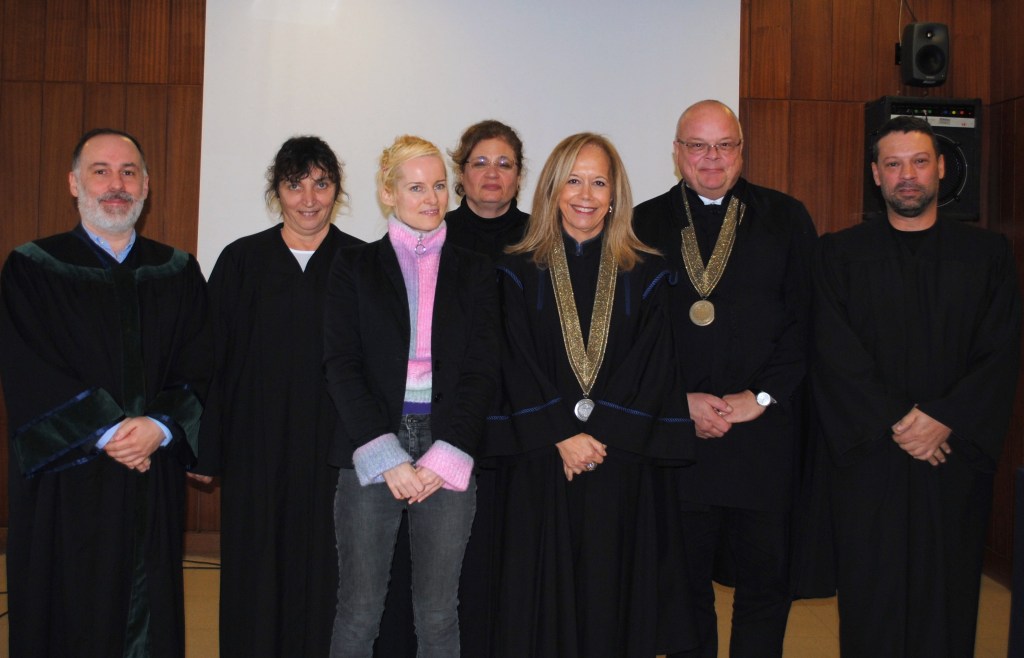
    We are happy to announce that on November 28, 2023, a new protocol was signed between The Lisbon Consortium and Brotéria by Director of the Lisbon Consortium and Rector of Universidade Católica Portuguesa, Prof. Isabel Capeloa Gil, member of the Steering Committee of the Lisbon Consortium and Vice-Dean of the faculty of Human Sciences, Prof. Alexandra Lopes, and Director of Brotéria, Father Francisco Mota. We are very excited about this new partnership!

  • Launch: Diffractions Issue 7: DEAF CULTURE

    Launch: Diffractions Issue 7: DEAF CULTURE

    The launch of Diffractions #7: DEAF CULTURE, edited by Guest Editors Cristina Gil, Genie Gertz, Joana M. Pereira, and Tom Humphries, will take place on Monday, December 4th, at 7 pm

    The launch will occur as part of the launch of CECC’s new Deaf Studies Lab, which will take place in Sala de Exposições at 5 pm (UCP library building, 2nd floor). 
  • LX Consortium Visit to Culturgest

    LX Consortium Visit to Culturgest

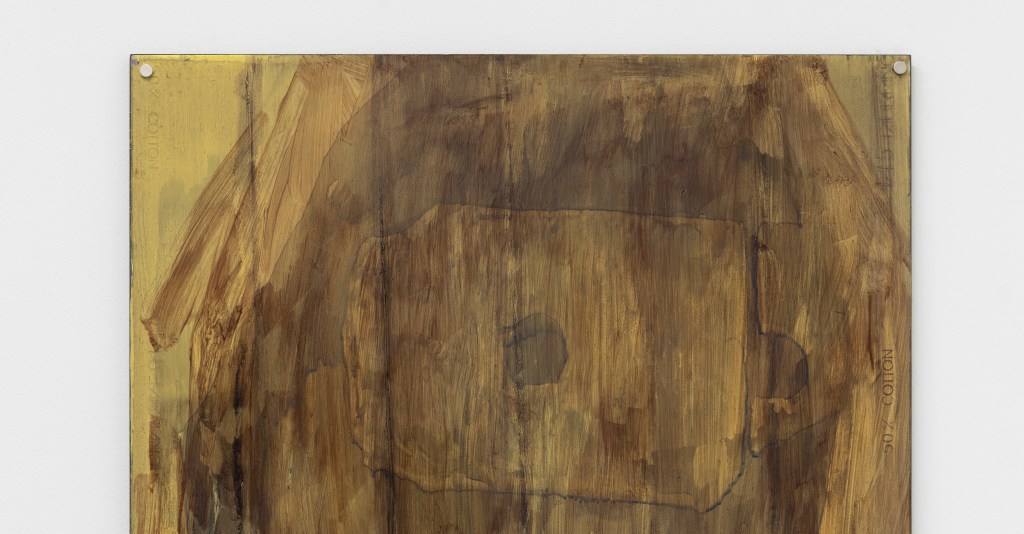
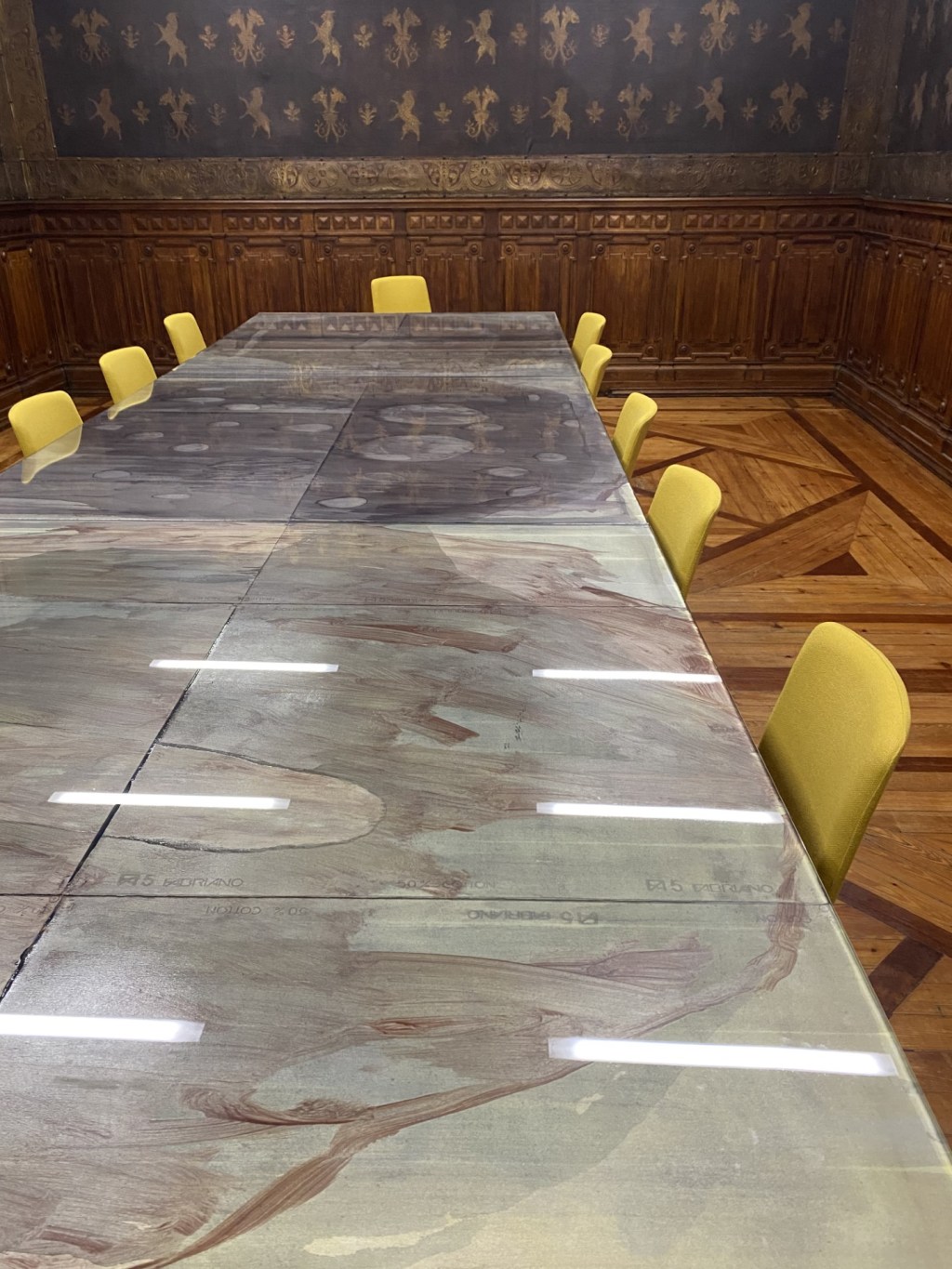
    The Lisbon Consortium organized a visit to the reserves of the Caixa Geral de Depósitos art collection and a guided tour to the exhibition “Fantasma Gaiata” / “Playful Ghost” @culturgest on 24 November, 2023.

    Conceived as part of the celebration of Culturgest’s thirtieth anniversary, the exhibition Fantasma Gaiata proposes two distinct approaches to Caixa Geral de Depósitos’ contemporary art collection. Like the two hemispheres of a brain, each approach specialises in certain functions and skills. Fantasma (Ghost) is dedicated to one of sculpture’s great ambitions: to erect bodies that signify and endure, that defy time, death and oblivion. If the artist’s body is permanently invoked as author, manufacturer, mirror or spectre, the visitor’s is summoned as measure, vehicle, witness – the place of all meaning. For its part, Gaiata (Playful) is an amusement park, a playground inhabited by fleeting conversations, alliances and challenges. Some groups of works gather around common interests, while others provoke and react to each other, deeply invested in the game but unaware of the results.

  • Congratulations, Julia!

    Congratulations, Julia!

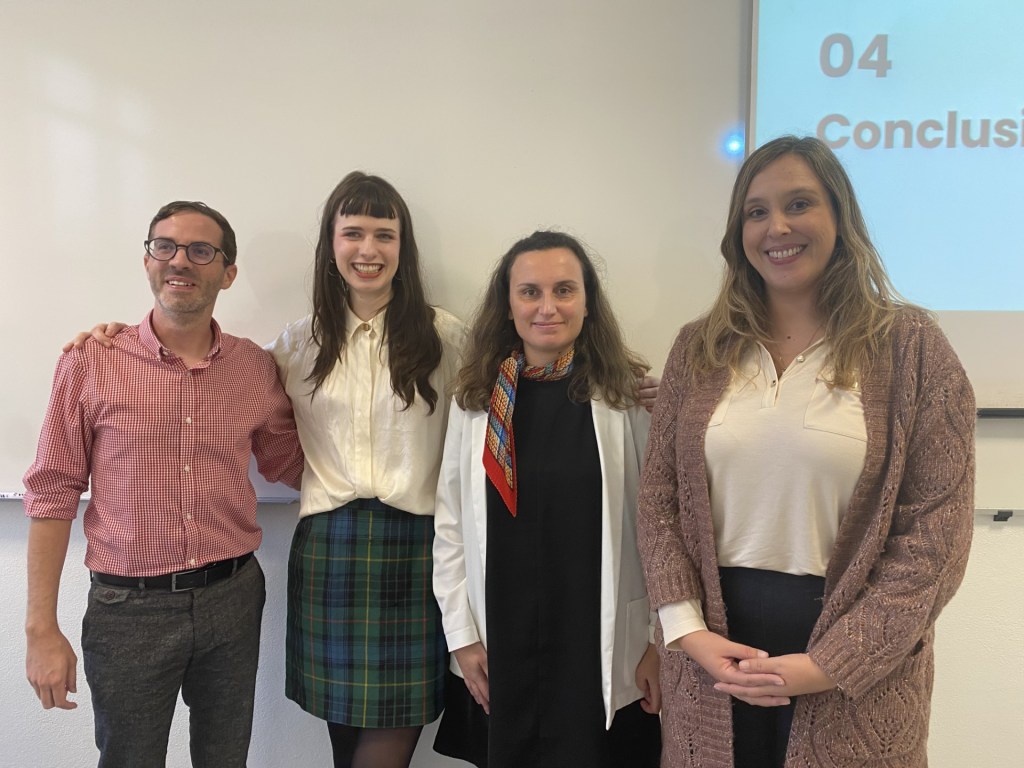
    Julia Flamingo successfully defended the MA thesis “Journalism and Plain Language as Tools to Bring Audiences Closer to Contemporary Art” on 28 November, 2023.

  • Space Oddity – On Spatial Narratives

    Space Oddity – On Spatial Narratives

    XII Graduate Conference in Culture Studies
    25-27 January 2024

  • Congratulations, Tiphaine!

    Congratulations, Tiphaine!

    Tiphaine Duchateau successfully defended the MA thesis “Culturgest: Managing Audience(s) in a Multidisciplinary Space” on 24 October, 2023.

  • Congratulations, Anaïs!

    Congratulations, Anaïs!

    Anaïs Jung successfully defended the MA thesis “The City’s Skin: Metaphor’s Potential in Understanding Urban Spaces. A Case Study on Lisbon’s Surfaces” on 20 October, 2023.

  • Visit to Casa Carlucci

    Visit to Casa Carlucci

    The students of the Lisbon Consortium were offered the opportunity to visit the exhibition “Celebrating Diversity” in Casa Carlucci, An Art in Embassies Exhibition by U.S. Ambassador to Portugal, Randi Charno Levine. The exhibition showcases many works by women, Black and LGBTQ+ artists, such as Nan Goldin “Fatima Candles” (1998), Helena Almeida “Desenho” (1999), Kehinde Wiley “Entry into Paris of the Dauphin” (2005), Délio Jasse “Untitled” (from the series “A última barreira”) (2021), Hank Willis Thomas “Ain’t I a Woman” (2009), Amy Sherald “Hope is the thing with feathers (The little bird)” (2021), Keith Haring “USA 19-82” (1982), Christopher Myers “Bocanegra” (2019), and many more.

    We would like to thank the Ambassador Levine and the staff of Casa Carlucci for this kind invitation.

  • Diffractions: Call for papers

    Diffractions: Call for papers

    Diffractions, Issue 9 | Beyond the Object: Immaterial Pasts, Immaterial Futures 

    Deadline for Abstracts: December 15th 2023
    Deadline for Papers: March 31st 2024

    Guest Editors: Federico Rudari, Teresa Pinheiro

    See full call for papers: https://revistas.ucp.pt/index.php/diffractions/announcement/view/76

  • CECC announces: Three PhD scholarships in Culture Studies

    CECC announces: Three PhD scholarships in Culture Studies

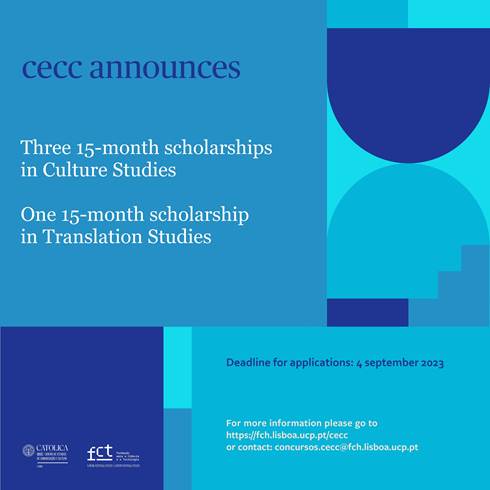
    CECC announces the opening of a call for applications for three PhD (FCT) research scholarships in Culture Studies. The deadline for submissions is 4 September 2023.
    More information here

  • Podcast “Somebody Call a Doctor! PhDs & What They Do”

    Podcast “Somebody Call a Doctor! PhDs & What They Do”

    #12 Violence in Media with Eduardo

    In episode #12 of the podcast, Eduardo Prado Cardoso discusses how news and visual storytelling create narratives of crimes, especially of a violent kind, and how they can become sensationalized. Eduardo is a PhD candidate at the Lisbon Consortium, with a background in cinema studies and scriptwriting.
  • OpenSession in Culture Studies (online)

    OpenSession in Culture Studies (online)

    On April 18, at 5:30 pm (WET), the FCH OpenSession in Culture Studies will take place online.

    The OpenSession consists of a session in which theMaster’s and PhD programs in the area of Culture Studies, starting in September 2023, will be presented.Those interested should register for this session where they can clarify all their doubts about the following programs: 

    • Master in Culture Studies
    • Master in Translation Studies
    • Master in Portuguese as a Foreign Language / Second Language
    • PhD in Culture Studies
    • Inter-University Doctoral Program in Translation Studies

     Applications for 2023/2024 Master’s and PhD Programs are open.

  • Call for Papers

    Call for Papers

    DIFFRACTIONS is an online, peer reviewed and open access graduate journal for the study of culture. The journal is published bi-annually under the editorial direction of graduate students in the doctoral program in Culture Studies of the Lisbon Consortium, at Universidade Católica Portuguesa.

    Check the call for papers for the upcoming issue, Nostalgia here.

  • XIII Lisbon Summer School for the Study of Culture – FUTURE/FUTURES – extended deadline

    XIII Lisbon Summer School for the Study of Culture – FUTURE/FUTURES – extended deadline

    XIII Lisbon Summer School for the Study of Culture 

    FUTURE/FUTURES

    Lisbon, July 3 – July 8, 2023

    [extended] Deadline for submissions: February 28 March 17, 2023

    For centuries thinking about the future was basically an optimist and progress driven endeavor, aimed at advancing towards the best of possible worlds through the improvement of science and technology. 

    Throughout the 20th century, euphoria about progress slowly but steadily turned into discomfort, due to the growing awareness about scientific development’s immense capability to cause pain and infortune. The shortcomings and aporias of the present have strangely produced a new retrotopia, focused on reinventing the past and less on clearly conceiving of the future-to-be. This is caused by the globalization of indifference, the crisis of democratic states, the deepening of cultural and religious wars and the rising visibility of extreme violence, linked to terrorism and war. We are likewise faced with a resource crisis and an obvious planetary exhaustion, just as the fourth technological revolution forces us to question the future of work and hence of the very definition of the human as a homo laborans. 

    In view of the different rhythms, contexts and directions of our global communities, given the clear difference of access to basic commodities and even to the social and political right to have rights, given the uneven capability of individuals throughout the globe to shape the future to come, it is clear that future must be graphed in the plural, as futures that are culturally situated in distinct global realities. In addition, ‘futures’ has become a sort of a floating signifier swaying from prospective to finance, from science fiction to organizational theory, from anthropology to psychoanalysis.

    The XIII Lisbon Summer School for the Study of Culture is dedicated to the study of the representation of the future(s) as trope and idea. Papers are welcome on the following topics, amongst others:

    • Future or futures
    • Culture(s) of the future; culture(s) in the future
    • Imagining the future: representations in literature, cinema and the arts
    • Space and/in time
    • Science and technology: potential and risks for life in the future
    • Innovative tools, materials, systems and techniques
    • Cyberfutures
    • Memory and trauma: between past and future
    • (De)Colonizing the future
    • The future(s) of the Other
    • Speculation, prediction, anticipation and the production of possible futures
    • Futurist thought: ‘new’/’neo’, ‘re’
    • Dance of prefixes: from u- and dys-topia to retro-topia
    • The protractive or transformative quality of the future
    • The future of woke culture
    • Fear of the future and the fear of no future
    • Crisis, disaster, conflict, and the disruption of the future
    • Nostalgia, hope, and the promise of a brighter future
    • A more than human future: human, posthuman, nonhuman and other possibilities

    We encourage proposals coming from the fields of culture studies, film and the visual arts, literary and translation studies, history, anthropology, media and psychology, among others.

    Paper proposals

    Proposals should be sent to lxsummerschool@gmail.com no later than February 28 March 17, 2023 and include paper title, abstract in English (max. 200 words), name, e-mail address, institutional affiliation and a brief bio (max. 100 words) mentioning ongoing research.

    Applicants will be informed of the result of their submissions by March 31, 2023.

    Rules for presentation

    The organizing committee shall place presenters in small groups according to the research focus of their papers. They are advised to stay in these groups for the duration of the Summer School, so a structured exchange of ideas may be developed to its full potential.

    Full papers submission

    Presenters are required to send in full papers no later than May 31, 2023.

    The papers will then be circulated amongst the members of each research group.  In the slot allotted to each participant (30’), only 10’ may be used for a brief summary of the research piece. The Summer School is a place for networked exchange of ideas, and organizers wish to have as much time as possible for a structured discussion between participants. Therefore, in each slot, 10’ will be used for presentation, and 20’ for discussion.

    Registration fees

    Participants with paper – 300€ for the entire week (includes lectures, master classes, doctoral sessions, lunches and closing dinner)

    Participants without paper – 60€ per day (lunches and closing dinner not included)

    Fee waivers

    For The Lisbon Consortium students and CECC researchers, there is no registration fee.

    For students from institutions affiliated with the European Summer School in Cultural Studies (ESSCS), members of the Excellence Network in Cultural Studies and members of the Critical Humanities Network the registration fee is 80€.

    This Summer School is devised in close collaboration with the 2023 ESSCS on the topic “Bouncing Forward”. The ESSCS 2023 and the XIII Lisbon Summer School for the Study of Culture are intended as complementary Summer Schools investigating disparate elements of a common concern. Applicants, who wish to attend both Summer Schools, should indicate this in their application. A reduced participation fee will be available for those attending both events.

    Confirmed Speakers

    • Sandra Bermann (Princeton University)
    • Lucia Boldrini (Goldsmiths, University of London)
    • Marcelo Brodsky (Visual Artist)
    • Timothy Garton Ash (University of Oxford)
    • Richard Grusin (University of Wisconsin-Milwaukee)
    • William Hasselberger (Universidade Católica Portuguesa)
    • Daniel Innerarity (University of the Basque Country)
    • Adriana Martins (Universidade Católica Portuguesa)
    • Nuno Maulide (University of Vienna)
    • Kitty Millet (San Francisco State University)
    • Liedeke Plate (Radboud University)
    • Tiago Pitta e Cunha (Fundação Oceano Azul)
    • Anne Tomiche (Université Paris-Sorbonne)

    Organizing Committee

    • Isabel Capeloa Gil
    • Peter Hanenberg
    • Alexandra Lopes
    • Adriana Martins
    • Diana Gonçalves
    • Paulo de Campos Pinto
    • Rita Faria
    • Ana Margarida Abrantes
    • Joana Moura
    • Rita Bueno Maia
    • Sofia Pinto
    • Verena Lindemann Lino
  • OpenSession in Culture Studies (online)

    OpenSession in Culture Studies (online)

    On February 28, at 5:30 pm (WET), the FCH OpenSession in Culture Studies will take place online.

    The OpenSession consists of a session in which the Master’s and PhD programs in the area of Culture Studies, starting in September 2023, will be presented. Those interested should register for this session where they can clarify all their doubts.

     Applications for 2023/2024 Master’s and PhD Programs are already open.

  • CfP: Digital Citizenship and Contemporary Cultures

    CfP: Digital Citizenship and Contemporary Cultures

    April 27 and 28, 2023 | University of Algarve

    (deadline for proposals: January 30, 2023)

    The II congress of the Rede Nacional de Estudos Culturais invites the Portuguese and the international scientific community to submit papers on Digital Citizenship and Contemporary Cultures.

    Mediated by technology, contemporary society offers an unprecedented environment for people to express themselves, to come together and to participate, opening up new opportunities to improve access and inclusion, which underpin the culture of democracy. The digital environment facilitates democratic processes and practices, including the dissemination and mediation of information, and it constitutes an important platform for intercultural dialogue through social networks. However, in addition to these new opportunities, citizens also must face many challenges resulting from the exercise of their rights and duties of social, cultural, economic and political participation.

    Digital citizenship thus represents a new dimension related to the knowledge, values, attitudes and skills that citizens need in order to exercise and stand up for their democratic rights and responsibilities, and to promote and protect human rights, democracy and the rule of law.

    In this context, different cultures cross, intersect and are fostered in the contemporary world, which we intend to discuss in this congress.

    Papers on the following topics are welcomed:

    • Cultural resistance
    • Cancel culture
    • Human rights
    • Minority and majority cultures
    • Fan culture
    • Art, culture and creation processes
    • Creation and education processes
    • Racism and discrimination
    • Migrations, diasporas and xenophobia
    • Participatory culture, disinformation and hate speech
    • Media and information literacy
    • Gender relations
    • Surveillance culture and algorithms
    • Health, wellness and sustainability
    • Artivism

    GUIDELINES FOR COMMUNICATION PROPOSALS

    • We invite submissions in Portuguese, Spanish and English, authored by teachers, undergraduate, masters and doctoral students, education professionals, and professionals from sectors such as communication, arts and culture.
    • Expanded abstracts must have 3,000 to 4,000 characters with spaces (including keywords and references) and must be sent in the following template.
    • Expanded abstracts are due on January 30th, 2023.
    • The notification of abstract acceptance will be announced by March 6th, 2023.
    • The registration payment will be made after the publication of the approved submissions, according to the calendar.
    • If a contribution is approved, each co-author must register.
    • Full papers must have 20,000 to 25,000 characters with spaces.
    • Full papers are due on August 30th, 2023. They will be published with a DOI number in a book with all the texts selected by peer review.
    • The notification of paper acceptance will be announced by October 15th, 2023.

    SUBMISSION OF THEMATIC PANELS (NEW)

    Proposals for thematic panels with up to 4 proponents will be accepted.

    An abstract of up to 1,000 characters must be sent together with the panel’s thematic proposal and the communication proposals, including the name, affiliation and email of each of the participants using the following template.

    For more information, please go to: https://rnec2023.ciac.pt/en/call-for-papers

  • Cfp: XIII Lisbon Summer School for the Study of Culture

    Cfp: XIII Lisbon Summer School for the Study of Culture

    FUTURE/FUTURES

    Lisbon, July 3 – July 8, 2023

    Deadline for submissions: February 28, 2023

    For centuries thinking about the future was basically an optimist and progress driven endeavor, aimed at advancing towards the best of possible worlds through the improvement of science and technology.

    Throughout the 20th century, euphoria about progress slowly but steadily turned into discomfort, due to the growing awareness about scientific development’s immense capability to cause pain and infortune. The shortcomings and aporias of the present have strangely produced a new retrotopia, focused on reinventing the past and less on clearly conceiving of the future-to-be. This is caused by the globalization of indifference, the crisis of democratic states, the deepening of cultural and religious wars and the rising visibility of extreme violence, linked to terrorism and war. We are likewise faced with a resource crisis and an obvious planetary exhaustion, just as the fourth technological revolution forces us to question the future of work and hence of the very definition of the human as a homo laborans. 

    In view of the different rhythms, contexts and directions of our global communities, given the clear difference of access to basic commodities and even to the social and political right to have rights, given the uneven capability of individuals throughout the globe to shape the future to come, it is clear that future must be graphed in the plural, as futures that are culturally situated in distinct global realities. In addition, ‘futures’ has become a sort of a floating signifier swaying from prospective to finance, from science fiction to organizational theory, from anthropology to psychoanalysis.

    The XIII Lisbon Summer School for the Study of Culture is dedicated to the study of the representation of the future(s) as trope and idea. Papers are welcome on the following topics, amongst others:

    • Future or futures
    • Culture(s) of the future; culture(s) in the future
    • Imagining the future: representations in literature, cinema and the arts
    • Space and/in time
    • Science and technology: potential and risks for life in the future
    • Innovative tools, materials, systems and techniques
    • Cyberfutures
    • Memory and trauma: between past and future
    • (De)Colonizing the future
    • The future(s) of the Other
    • Speculation, prediction, anticipation and the production of possible futures
    • Futurist thought: ‘new’/’neo’, ‘re’
    • Dance of prefixes: from u- and dys-topia to retro-topia
    • The protractive or transformative quality of the future
    • The future of woke culture
    • Fear of the future and the fear of no future
    • Crisis, disaster, conflict, and the disruption of the future
    • Nostalgia, hope, and the promise of a brighter future
    • A more than human future: human, posthuman, nonhuman and other possibilities

    We encourage proposals coming from the fields of culture studies, film and the visual arts, literary and translation studies, history, anthropology, media and psychology, among others.

    Paper proposals

    Proposals should be sent to lxsummerschool@gmail.com no later than February 28, 2023 and include paper title, abstract in English (max. 200 words), name, e-mail address, institutional affiliation and a brief bio (max. 100 words) mentioning ongoing research.

    Applicants will be informed of the result of their submissions by March 31, 2023.

    Rules for presentation

    The organizing committee shall place presenters in small groups according to the research focus of their papers. They are advised to stay in these groups for the duration of the Summer School, so a structured exchange of ideas may be developed to its full potential.

    Full papers submission

    Presenters are required to send in full papers no later than May 31, 2023.

    The papers will then be circulated amongst the members of each research group.  In the slot allotted to each participant (30’), only 10’ may be used for a brief summary of the research piece. The Summer School is a place for networked exchange of ideas, and organizers wish to have as much time as possible for a structured discussion between participants. Therefore, in each slot, 10’ will be used for presentation, and 20’ for discussion.

    Registration fees

    Participants with paper – 300€ for the entire week (includes lectures, master classes, doctoral sessions, lunches and closing dinner)

    Participants without paper – 60€ per day (lunches and closing dinner not included)

    Fee waivers

    For The Lisbon Consortium students and CECC researchers, there is no registration fee.

    For students from institutions affiliated with the European Summer School in Cultural Studies (ESSCS), members of the Excellence Network in Cultural Studies and members of the Critical Humanities Network the registration fee is 80€.

    This Summer School is devised in close collaboration with the 2023 ESSCS on the topic “Bouncing Forward”. The ESSCS 2023 and the XIII Lisbon Summer School for the Study of Culture are intended as complementary Summer Schools investigating disparate elements of a common concern. Applicants, who wish to attend both Summer Schools, should indicate this in their application. A reduced participation fee will be available for those attending both events.

    Organizing Committee

    • Isabel Capeloa Gil
    • Peter Hanenberg
    • Alexandra Lopes
    • Adriana Martins
    • Diana Gonçalves
    • Paulo de Campos Pinto
    • Rita Faria
    • Ana Margarida Abrantes
    • Joana Moura
    • Rita Bueno Maia
    • Sofia Pinto
    • Verena Lindemann Lino
  • Opening of Tenders | MA & PhD Research Grants

    Opening of Tenders | MA & PhD Research Grants

    Tenders for Research Grants (MA and PhD) funded by Fundação Amélia de Mello.

    Deadline for applications: July 15, 2022 (5pm Lisbon time).

    For further information, eligibility, requirements and application, go to: https://cados.ucp.pt/news/novas-bolsas-cados-fundacao-amelia-de-mello-2022-23-6701

  • LxC Talk – João Falcato

    LxC Talk – João Falcato

    Tuesday | May 10 | 5.00pm | Room 133

    João Falcato is CEO of Oceanário de Lisboa and member of the Board of Fundação Oceano Azul. 
  • FCH Open Week – Culture Studies

    FCH Open Week – Culture Studies

    Thursday, April 21 | 5.00pm | Online

    Get to know the Lisbon Consortium and the MA & PhD Programs in Culture Studies (in English).

    Register here https://fch.lisboa.ucp.pt/openweek-2022.

  • XII Lisbon Summer School for the Study of Culture – MASQUERADES – Deadline extension

    XII Lisbon Summer School for the Study of Culture – MASQUERADES – Deadline extension

    XII Lisbon Summer School for the Study of Culture

    MASQUERADES

    Lisbon, June 27 – July 2, 2022
    Deadline for submissions: February 28, 2022 March 22, 2022

    Masks connote an ontology linked to identity and the possibility of being. But they are also shaped by human to human interaction, i.e. they are socially driven and shaped by politics. Masks enact a foundational performance. They draw attention to the masquerade structuring identity.

    Masquerades have always been a relevant cultural element, assuming diverse meanings and functions along the history of humanity. Common to season and religious festivals, ceremonies and rituals of initiation or death, carnival festivals and balls, masquerades have always inspired the production of meaning in human societies. From theater to dance, literature and the visual arts, the masquerade and its representation connote at once exposure and (dis)simulation. They are arguably cultural mechanisms that structure the becoming of a subject.

    Under current conditions, we live at a time of masks, tapping simultaneously into obfuscation, secrecy and protection. Masks suggest a reflection on cultural experience as a masquerade. The XII Lisbon Summer School for the Study of Culture proposes to discuss, on the one hand, processes of masking and unmasking, the collective models of the masquerade as a cultural, literary and artistic genre, as well as a translational mode. On the other, the masquerade, following the inspiration of Joan de Riviere, reflects as well on the process of performative engendering. The Summer School shall equally discuss the masquerade as a strategy of gender performativity and gender as a performance, mirrored in new identities. Drawing from Judith Butler’s seminal theory of performativity (1988, 1990, 2011), and “playing” with the transformative character of masquerades, participants are invited to reflect on why and how bodies and language matter when subversive body formations are under threat, and on the very nature of the relation between subversion and the normal. Simultaneously, we invite intersectional work articulating cultural forms of the masquerade with modes of identity formation, including race, gender, age and class.

    The XII Summer School for the Study of Culture invites proposals that address, though may not be strictly limited to, the topics below:

    • The masquerade as a cultural form
    • Masks and power
    • Engendering/masking/performing
    • Masks as protection, conformity and resistance
    • Femininity and masculinity as masquerades
    • Queering
    • Passing
    • The theatricality of the masquerade
    • Masks in literature, cinema and art
    • From drag to vogue
    • The postcolonial and the decolonial masquerade
    • Identity and the mask
    • Masquerades as translational acts
    • Pandemic masks

    We encourage proposals coming from the fields of culture studies, film and the visual arts, literary and translation studies, history, anthropology, media and psychology.

    If the evolution of the pandemic allows it, the Summer School will take place at several cultural institutions in Lisbon and will gather outstanding doctoral students and post-doctoral researchers from around the world. In the morning there will be lectures and master classes by invited keynote speakers. In the afternoon there will be paper presentations by doctoral students.

    Paper proposals
    Proposals should be sent to lxsummerschool@gmail.com no later than February 28 March 22, 2022 and include paper title, abstract in English (max. 200 words), name, e-mail address, institutional affiliation and a brief bio (max. 100 words) mentioning ongoing research.
    Applicants will be informed of the result of their submissions by March 30 April 22, 2022.

    Rules for presentation
    The organizing committee shall place presenters in small groups according to the research focus of their papers. They are advised to stay in these groups for the duration of the Summer School, so a structured exchange of ideas may be developed to its full potential.

    Full papers submission
    Presenters are required to send in full papers no later than May 30, 2022.
    The papers will then be circulated amongst the members of each research group. In the slot allotted to each participant (30’), only 10’ may be used for a brief summary of the research piece. The Summer School is a place for networked exchange of ideas, and organizers wish to have as much time as possible for a structured discussion between participants. Therefore, in each slot, 10’ will be used for presentation, and 20’ for discussion.

    Registration fees
    Participants with paper – 290€ for the entire week (includes lectures, master classes, doctoral sessions, lunches and closing dinner)
    Participants without paper – 60€ per session/day | 190€ for the entire week

    Fee waivers
    For The Lisbon Consortium students and CECC researchers, there is no registration fee.
    For students from universities affiliated with the European Summer School in Cultural Studies, members of the Excellence Network in Cultural Studies and members of the Critical Humanities Network the registration fee is 60€.

    Confirmed Keynote Speakers (more TBA)
    • Liliane Weissberg (University of Pennsylvania)
    • Liedeke Plate (Radboud University Nijmegen)
    • Isabel Capeloa Gil (Universidade Católica Portuguesa)

    Organizing Committee
    • Isabel Capeloa Gil
    • Peter Hanenberg
    • Alexandra Lopes
    • Adriana Martins
    • Diana Gonçalves
    • Paulo de Campos Pinto
    • Rita Faria

  • Call for Papers | ESSCS 2022

    Call for Papers | ESSCS 2022

    ESSCS ‘Thinking (with) Care’

    Call for Papers: European Summer School for Cultural Studies (ESSCS) – ‘Thinking (with) Care’
    Location: University of Amsterdam / Leiden University
    Dates: 
    5-8 July 2022
    Organizers: Pepita Hesselberth (LUCAS/ NICA), Esther Peeren (UvA/ ASCA), Kim Sommer (ResMA, UU/ NICA), and Ilios Willemars (LUCAS). 
    Deadline – EXTENDED: February 14th, 2022 (nica@hum.leidenuniv.nl)

    NICA-CfP

    In many practices, care practices included, time is not an arrow and entities are not brought into being just once, but keep on changing.Rather than fitting fantasies of control, such processes depend on endless tinkering. Such tinkering, if done well, is care. Annemarie Mol

    María Puig de la Bellacasa notes in Matters of Care (2017) that “care is omnipresent, even through the effects of its absence” (1). This raises the question of what care is. Is care primarily an affective attitude, a moral concern, a specific kind of labor, a sensibility, a form of responsibility, a type of guardianship, a feeling or occasion for anxiety or terror, or all of these things and more at once? Thinking with care is a pressing matter, especially in the face of the ongoing global COVID-19 pandemic that has put a spotlight on the “care crisis” (Dowling) caused by financialization and austerity politics. The pandemic shows the limits of, and the inequalities engrained in, systems not just of healthcare, but also of childcare, eldercare, and environmental care. It illustrates the work and risk that care-giving entails and the exhaustion it can cause. And it reveals profound relationships—at the individual and collective level, especially that of the nation—between self-care and care for others, while raising biopolitical questions about the governing of populations and the role of self-care in the context of public health concerns (Foucault Society Must be DefendedHermeneutics of the Subject).

    Yet, the pandemic has also given rise to new forms and practices of care, offline as well as online, small- and large-scale, prompting in many a renewed awareness of shared vulnerability within our more-than-human-world. The notion of care has thus been central to current debates on climate change, both those informed by third wave neoliberalism (with phenomena like green and care washing), and those that attempt to rethink care ethics whilst decentering the human and the global North. These developments fit a more general trend that we can observe across the humanities and the social and medical sciences, where care has been rethought from a “somehow wholesome or unpolluted pleasant ethical realm” (Puig 8) to something much more ambivalent. Care becomes re-conceptualized as not just an ethics but a practice; a work of maintenance (Berlant) with positive and negative affective dimensions for both the carer and the cared for. It needs to be recognized as gendered and racialized, and should be thought of as more than human. Indeed, in debates on decolonialism and black feminism, for example, care ethics are increasingly positioned as “a radical mode of engagement and refusal—one that is firmly aligned with, rather than antithetical to, claims for justice and liberation” (Bonde Thylstrup et al. 20).

    For ESSCS 2022 we welcome papers dealing with matters of care from cultural, environmental, decolonial, gender, literary, cinematic, material, affective, technological, and other perspectives, including meta-perspectives reflecting on what it means to think (with) care, not just in pandemic times but in times of climate crisis, in times of increasingly widespread precarity (Butler) induced by regimes of brutalism (Mbembe), where ever more people suffer from chronic (mental) health conditions, and where ubiquitous, often careless, digitization and datafication produce new forms of surveillance capitalism (Zuboff).

    Questions we want to explore include, but are not limited to:

    • Who and what is cared for, by whom or what, under what circumstances (historically and in the present)? And who and what are or have been left without care, uncared for? If care is not always enabling, what different implications can being (un)cared for have?
    • What does it mean to care for what is no longer there? How does care relate to grief and mourning? And what repercussions does care for what is no longer there have for what is still there and for how we think being alive?
    • What might it mean – and what agency can be derived from – adopting a stance of not caring or of being careless or carefree (and who can and cannot afford this)? 
    • How does care relate to attention and attending, to cure and reparation, and to notions of the commons?
    • What tensions exist between self-care and care for others? Can self-care be thought as anything else than “a pervasive order of individualized biopolitical morality” (Puig 9) that is part of a regime of what the Care Collective calls “care-washing” (9)? And how can we heed Sylvia Federici’s call to “pave the way to a world where care for others can become a creative task” (184)? 
    • How do we think with (more) care? Is thinking with care the same as thinking carefully? Can care be an alternative to thinking? Can caring be thought not just in terms of an ethics or ontology but also an epistemology?
    • How is care related, not only to Michel Foucault’s notion of biopolitics, but to the more general emergence of a “politics of health” (Foucault Society Must be Defended; ‘The Politics of Health’)? What does it mean to concern oneself with oneself, both historically and today, and how does the meaning of concerning oneself with oneself shift in relation to different epistemic moments (Foucault Hermeneutics of the Subject)?
    • How can care help us rethink the institution of the university and its future?
    • How might creativity and creative production (literature, film, television, art) become ‘caring art’? How is it able to open up new perspectives on care, to (re)configure the ethics and politics of care, and to help position it, across different scales, as “an enduring social capacity and practice involving the nurturing of all that is necessary for the welfare and flourishing of human and non-human life” (The Care Collective 5)? What forms of (self-)care are involved in acts of reading and viewing?
    • How can care take shape in the online world in a way that goes beyond platform capitalism and embraces platform co-operativism or the notion of the digital commons (Kopitz)? And how can digital archives, including colonial ones, adopt a care ethics (Agostinho ‘Care’)?  

    The Summer School will feature keynote lectures and master-classes by senior scholars, as well as paper sessions in which PhD candidates and other young scholars address the issue of care in relation to their own research. Abstracts (max. 300 words) with a short bio (max. 150 words) should be submitted to nica@hum.leidenuniv.nl by 31 January 2022 (EXTENDED deadline: 14 February 2022). You will be informed whether your contribution has been accepted by 1 March 2022. Papers will be circulated before the conference and have to be submitted, in full (max. 4,000 words), by 1 May 2022.

    For PhD-students and RMA-students at Dutch universities (affiliated to NICA or one of the other Dutch research schools), there is a possibility to earn 3 ECTS through NICA if certain requirements are met. For more information, please contact nica@hum.leidenuniv.nl.

    Organisation

    The ESSCS is an annual network-based event offering interdisciplinary research training in the fields of art and culture. The network comprises the University of Amsterdam, Leiden University, the University of Copenhagen, the University of Giessen, Goldsmiths University, the Université de Paris VIII, the Lisbon Consortium and the University of Trondheim.

    Organizers: Pepita Hesselberth (LUCAS/ NICA), Esther Peeren (UvA/ ASCA), Kim Sommer (ResMA, UU/ NICA), and Ilios Willemars (LUCAS).

    Confirmed Keynotes

    • Silje Haugen Warberg, Associate Professor of Scandinavian Language and Literature, Norwegian University of Science and Technology (NTNU) – leader of the interdisciplinary research project on Caregiving and Literature as Remedium (CaReLit), exploring care and the caregiving role in Scandinavian contemporary literature
    • Daniela Agostinho, Assistant Professor of Digital Design and Information Studies, Aarhus University – co-editor and author of a chapter on care ethics and digitization/datafication in Uncertain Archives: Critical Keywords for Big Data (2021).

    References

    Agostinho, Daniela. ‘Care.’ Uncertain Archives: Critical Keywords for Big Data. Edited by Nanna Bonde Thylstrup et al. The MIT Press, 2021, pp. 75-85.

    Berlant, Laurent. Cruel Optimism. Duke University Press, 2011.

    Bonde Thylstrup, Nanna, et al. Uncertain Archives: Critical Keywords for Big Data. The MIT Press, 2020.

    Butler, Judith. Precarious Life: The Powers of Mourning and Violence. Verso, 2020.

    Dowling, Emma. The Care Crisis*. What Caused It and How Can We End It? Verso, 2021.

    Federici, Sylvia. Re-Enchanting the World: Feminism and the Politics of the Commons. PM Press, 2019.

    Foucault, Michel. The Hermeneutics of the Subject: Lectures at the Collège de France, 1981-1982. Edited by Frédéric Gros et al., translated by Graham Burchell, Picador, 2006.

    —. Society Must Be Defended: Lectures at the Collège de France, 1975-76. Edited by Mauro Bertani et al., translated by David Macey, Picador, 2003.

    —. ‘The Politics of Health in the Eighteenth Century.’ Foucault studies, no. 18, 2014. pp. 113–127.

    Kopitz, Linda. ‘The Interdependence of Care: A Conversation With The Care Collective.’ NECSUS_European Journal of Media Studies. Vol. 10, Nr. 1, 2020. pp. 243–251

    Mbembe, Achille. Brutalisme. La Découverte, 2020.

    Puig de la Bellacasa, María. Matters of Care: Speculative Ethics in More Than Human Worlds. University of Minnesota Press, 2017.  

    The Care Collective. The Care Manifesto: The Politics of Interdependence. Verso, 2020.

    Zuboff, Shoshana. The Age of Surveillance Capitalism: The Fight for a Human Future at the New Frontier of Power. Profile Books Ltd, 2019.  

  • CfP XII Lisbon Summer School for the Study of Culture

    CfP XII Lisbon Summer School for the Study of Culture

    XII Lisbon Summer School for the Study of Culture


    MASQUERADES


    Lisbon, June 27 – July 2, 2022

    Deadline for submissions: February 28, 2022


    Masks connote an ontology linked to identity and the possibility of being. But they are also shaped by human to human interaction, i.e. they are socially driven and shaped by politics. Masks enact a foundational performance. They draw attention to the masquerade structuring identity. 


    Masquerades have always been a relevant cultural element, assuming diverse meanings and functions along the history of humanity. Common to season and religious festivals, ceremonies and rituals of initiation or death, carnival festivals and balls, masquerades have always inspired the production of meaning in human societies. From theater to dance, literature and the visual arts, the masquerade and its representation connote at once exposure and (dis)simulation. They are arguably cultural mechanisms that structure the becoming of a subject. 


    Under current conditions, we live at a time of masks, tapping simultaneously into obfuscation, secrecy and protection. Masks suggest a reflection on cultural experience as a masquerade. The XII Lisbon Summer School for the Study of Culture proposes to discuss, on the one hand, processes of masking and unmasking, the collective models of the masquerade as a cultural, literary and artistic genre, as well as a translational mode. On the other, the masquerade, following the inspiration of Joan de Riviere, reflects as well on the process of performative engendering. The Summer School shall equally discuss the masquerade as a strategy of gender performativity and gender as a performance, mirrored in new identities. Drawing from Judith Butler’s seminal theory of performativity (1988, 1990, 2011), and “playing” with the transformative character of masquerades, participants are invited to reflect on why and how bodies and language matter when subversive body formations are under threat, and on the very nature of the relation between subversion and the normal. Simultaneously, we invite intersectional work articulating cultural forms of the masquerade with modes of identity formation, including race, gender, age and class.


    The XII Summer School for the Study of Culture invites proposals that address, though may not be strictly limited to, the topics below:


    • The masquerade as a cultural form 
    • Masks and power
    • Engendering/masking/performing
    • Masks as protection, conformity and resistance
    • Femininity and masculinity as masquerades
    • Queering
    • Passing
    • The theatricality of the masquerade
    • Masks in literature, cinema and art
    • From drag to vogue
    • The postcolonial and the decolonial masquerade
    • Identity and the mask
    • Masquerades as translational acts
    • Pandemic masks

    We encourage proposals coming from the fields of culture studies, film and the visual arts, literary and translation studies, history, anthropology, media and psychology.

    If the evolution of the pandemic allows it, the Summer School will take place at several cultural institutions in Lisbon and will gather outstanding doctoral students and post-doctoral researchers from around the world. In the morning there will be lectures and master classes by invited keynote speakers. In the afternoon there will be paper presentations by doctoral students.

    Paper proposals

    Proposals should be sent to lxsummerschool@gmail.com no later than February 28, 2022 and include paper title, abstract in English (max. 200 words), name, e-mail address, institutional affiliation and a brief bio (max. 100 words) mentioning ongoing research.

    Applicants will be informed of the result of their submissions by March 30, 2022.

    Rules for presentation

    The organizing committee shall place presenters in small groups according to the research focus of their papers. They are advised to stay in these groups for the duration of the Summer School, so a structured exchange of ideas may be developed to its full potential.

    Full papers submission

    Presenters are required to send in full papers no later than May 30, 2022.

    The papers will then be circulated amongst the members of each research group.  In the slot allotted to each participant (30’), only 10’ may be used for a brief summary of the research piece. The Summer School is a place for networked exchange of ideas, and organizers wish to have as much time as possible for a structured discussion between participants. Therefore, in each slot, 10’ will be used for presentation, and 20’ for discussion.

    Registration fees

    Participants with paper – 290€ for the entire week (includes lectures, master classes, doctoral sessions, lunches and closing dinner)

    Participants without paper – 60€ per session/day | 190€ for the entire week

    Fee waivers

    For The Lisbon Consortium students and CECC researchers, there is no registration fee.

    For students from universities affiliated with the European Summer School in Cultural Studies, members of the Excellence Network in Cultural Studies and members of the Critical Humanities Network the registration fee is 60€.

    Organizing Committee

    • Isabel Capeloa Gil
    • Peter Hanenberg
    • Alexandra Lopes
    • Adriana Martins
    • Diana Gonçalves
    • Paulo de Campos Pinto
    • Rita Faria
    • Gisela Canelhas
  • Call for Applications – PhD Scholarship

    Call for Applications – PhD Scholarship

    One 3-year PhD Scholarship in Culture Studies

    Open applications.

    July 12-23, at 5 p.m.

    For further information:https://fch.lisboa.ucp.pt/cecc

    See the full text of the call here (1st in Portuguese; 2nd in English): https://fch.lisboa.ucp.pt/asset/18696/file