

Author: lisbonconsortium
-

Podcast “Somebody Call a Doctor! PhDs & What They Do”
#12 Violence in Media with Eduardo
In episode #12 of the podcast, Eduardo Prado Cardoso discusses how news and visual storytelling create narratives of crimes, especially of a violent kind, and how they can become sensationalized. Eduardo is a PhD candidate at the Lisbon Consortium, with a background in cinema studies and scriptwriting.
-

OpenSession in Culture Studies (online)
On April 18, at 5:30 pm (WET), the FCH OpenSession in Culture Studies will take place online.
The OpenSession consists of a session in which theMaster’s and PhD programs in the area of Culture Studies, starting in September 2023, will be presented.Those interested should register for this session where they can clarify all their doubts about the following programs:
- Master in Culture Studies
- Master in Translation Studies
- Master in Portuguese as a Foreign Language / Second Language
- PhD in Culture Studies
- Inter-University Doctoral Program in Translation Studies
Applications for 2023/2024 Master’s and PhD Programs are open.

-

Call for Papers
DIFFRACTIONS is an online, peer reviewed and open access graduate journal for the study of culture. The journal is published bi-annually under the editorial direction of graduate students in the doctoral program in Culture Studies of the Lisbon Consortium, at Universidade Católica Portuguesa.
Check the call for papers for the upcoming issue, Nostalgia here.
-

XIII Lisbon Summer School for the Study of Culture – FUTURE/FUTURES – extended deadline
XIII Lisbon Summer School for the Study of Culture
FUTURE/FUTURES
Lisbon, July 3 – July 8, 2023
[extended] Deadline for submissions:
February 28March 17, 2023For centuries thinking about the future was basically an optimist and progress driven endeavor, aimed at advancing towards the best of possible worlds through the improvement of science and technology.
Throughout the 20th century, euphoria about progress slowly but steadily turned into discomfort, due to the growing awareness about scientific development’s immense capability to cause pain and infortune. The shortcomings and aporias of the present have strangely produced a new retrotopia, focused on reinventing the past and less on clearly conceiving of the future-to-be. This is caused by the globalization of indifference, the crisis of democratic states, the deepening of cultural and religious wars and the rising visibility of extreme violence, linked to terrorism and war. We are likewise faced with a resource crisis and an obvious planetary exhaustion, just as the fourth technological revolution forces us to question the future of work and hence of the very definition of the human as a homo laborans.
In view of the different rhythms, contexts and directions of our global communities, given the clear difference of access to basic commodities and even to the social and political right to have rights, given the uneven capability of individuals throughout the globe to shape the future to come, it is clear that future must be graphed in the plural, as futures that are culturally situated in distinct global realities. In addition, ‘futures’ has become a sort of a floating signifier swaying from prospective to finance, from science fiction to organizational theory, from anthropology to psychoanalysis.
The XIII Lisbon Summer School for the Study of Culture is dedicated to the study of the representation of the future(s) as trope and idea. Papers are welcome on the following topics, amongst others:
- Future or futures
- Culture(s) of the future; culture(s) in the future
- Imagining the future: representations in literature, cinema and the arts
- Space and/in time
- Science and technology: potential and risks for life in the future
- Innovative tools, materials, systems and techniques
- Cyberfutures
- Memory and trauma: between past and future
- (De)Colonizing the future
- The future(s) of the Other
- Speculation, prediction, anticipation and the production of possible futures
- Futurist thought: ‘new’/’neo’, ‘re’
- Dance of prefixes: from u- and dys-topia to retro-topia
- The protractive or transformative quality of the future
- The future of woke culture
- Fear of the future and the fear of no future
- Crisis, disaster, conflict, and the disruption of the future
- Nostalgia, hope, and the promise of a brighter future
- A more than human future: human, posthuman, nonhuman and other possibilities
We encourage proposals coming from the fields of culture studies, film and the visual arts, literary and translation studies, history, anthropology, media and psychology, among others.
Paper proposals
Proposals should be sent to lxsummerschool@gmail.com no later than
February 28March 17, 2023 and include paper title, abstract in English (max. 200 words), name, e-mail address, institutional affiliation and a brief bio (max. 100 words) mentioning ongoing research.Applicants will be informed of the result of their submissions by March 31, 2023.
Rules for presentation
The organizing committee shall place presenters in small groups according to the research focus of their papers. They are advised to stay in these groups for the duration of the Summer School, so a structured exchange of ideas may be developed to its full potential.
Full papers submission
Presenters are required to send in full papers no later than May 31, 2023.
The papers will then be circulated amongst the members of each research group. In the slot allotted to each participant (30’), only 10’ may be used for a brief summary of the research piece. The Summer School is a place for networked exchange of ideas, and organizers wish to have as much time as possible for a structured discussion between participants. Therefore, in each slot, 10’ will be used for presentation, and 20’ for discussion.
Registration fees
Participants with paper – 300€ for the entire week (includes lectures, master classes, doctoral sessions, lunches and closing dinner)
Participants without paper – 60€ per day (lunches and closing dinner not included)
Fee waivers
For The Lisbon Consortium students and CECC researchers, there is no registration fee.
For students from institutions affiliated with the European Summer School in Cultural Studies (ESSCS), members of the Excellence Network in Cultural Studies and members of the Critical Humanities Network the registration fee is 80€.
This Summer School is devised in close collaboration with the 2023 ESSCS on the topic “Bouncing Forward”. The ESSCS 2023 and the XIII Lisbon Summer School for the Study of Culture are intended as complementary Summer Schools investigating disparate elements of a common concern. Applicants, who wish to attend both Summer Schools, should indicate this in their application. A reduced participation fee will be available for those attending both events.
Confirmed Speakers
- Sandra Bermann (Princeton University)
- Lucia Boldrini (Goldsmiths, University of London)
- Marcelo Brodsky (Visual Artist)
- Timothy Garton Ash (University of Oxford)
- Richard Grusin (University of Wisconsin-Milwaukee)
- William Hasselberger (Universidade Católica Portuguesa)
- Daniel Innerarity (University of the Basque Country)
- Adriana Martins (Universidade Católica Portuguesa)
- Nuno Maulide (University of Vienna)
- Kitty Millet (San Francisco State University)
- Liedeke Plate (Radboud University)
- Tiago Pitta e Cunha (Fundação Oceano Azul)
- Anne Tomiche (Université Paris-Sorbonne)
Organizing Committee
- Isabel Capeloa Gil
- Peter Hanenberg
- Alexandra Lopes
- Adriana Martins
- Diana Gonçalves
- Paulo de Campos Pinto
- Rita Faria
- Ana Margarida Abrantes
- Joana Moura
- Rita Bueno Maia
- Sofia Pinto
- Verena Lindemann Lino
-
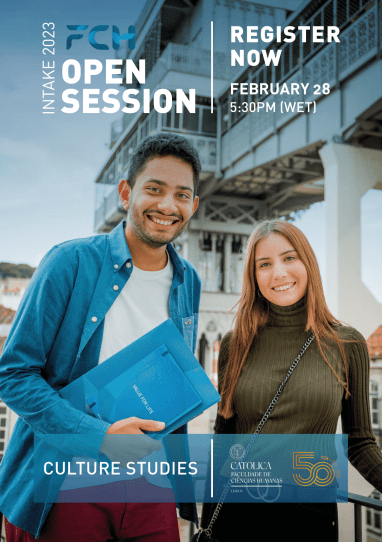
OpenSession in Culture Studies (online)
On February 28, at 5:30 pm (WET), the FCH OpenSession in Culture Studies will take place online.
The OpenSession consists of a session in which the Master’s and PhD programs in the area of Culture Studies, starting in September 2023, will be presented. Those interested should register for this session where they can clarify all their doubts.
Applications for 2023/2024 Master’s and PhD Programs are already open.
-

CfP: Digital Citizenship and Contemporary Cultures
April 27 and 28, 2023 | University of Algarve
(deadline for proposals: January 30, 2023)
The II congress of the Rede Nacional de Estudos Culturais invites the Portuguese and the international scientific community to submit papers on Digital Citizenship and Contemporary Cultures.
Mediated by technology, contemporary society offers an unprecedented environment for people to express themselves, to come together and to participate, opening up new opportunities to improve access and inclusion, which underpin the culture of democracy. The digital environment facilitates democratic processes and practices, including the dissemination and mediation of information, and it constitutes an important platform for intercultural dialogue through social networks. However, in addition to these new opportunities, citizens also must face many challenges resulting from the exercise of their rights and duties of social, cultural, economic and political participation.
Digital citizenship thus represents a new dimension related to the knowledge, values, attitudes and skills that citizens need in order to exercise and stand up for their democratic rights and responsibilities, and to promote and protect human rights, democracy and the rule of law.
In this context, different cultures cross, intersect and are fostered in the contemporary world, which we intend to discuss in this congress.
Papers on the following topics are welcomed:
- Cultural resistance
- Cancel culture
- Human rights
- Minority and majority cultures
- Fan culture
- Art, culture and creation processes
- Creation and education processes
- Racism and discrimination
- Migrations, diasporas and xenophobia
- Participatory culture, disinformation and hate speech
- Media and information literacy
- Gender relations
- Surveillance culture and algorithms
- Health, wellness and sustainability
- Artivism
GUIDELINES FOR COMMUNICATION PROPOSALS
- We invite submissions in Portuguese, Spanish and English, authored by teachers, undergraduate, masters and doctoral students, education professionals, and professionals from sectors such as communication, arts and culture.
- Expanded abstracts must have 3,000 to 4,000 characters with spaces (including keywords and references) and must be sent in the following template.
- Expanded abstracts are due on January 30th, 2023.
- The notification of abstract acceptance will be announced by March 6th, 2023.
- The registration payment will be made after the publication of the approved submissions, according to the calendar.
- If a contribution is approved, each co-author must register.
- Full papers must have 20,000 to 25,000 characters with spaces.
- Full papers are due on August 30th, 2023. They will be published with a DOI number in a book with all the texts selected by peer review.
- The notification of paper acceptance will be announced by October 15th, 2023.
SUBMISSION OF THEMATIC PANELS (NEW)
Proposals for thematic panels with up to 4 proponents will be accepted.
An abstract of up to 1,000 characters must be sent together with the panel’s thematic proposal and the communication proposals, including the name, affiliation and email of each of the participants using the following template.
For more information, please go to: https://rnec2023.ciac.pt/en/call-for-papers
-

Cfp: XIII Lisbon Summer School for the Study of Culture
FUTURE/FUTURES
Lisbon, July 3 – July 8, 2023
Deadline for submissions: February 28, 2023
For centuries thinking about the future was basically an optimist and progress driven endeavor, aimed at advancing towards the best of possible worlds through the improvement of science and technology.
Throughout the 20th century, euphoria about progress slowly but steadily turned into discomfort, due to the growing awareness about scientific development’s immense capability to cause pain and infortune. The shortcomings and aporias of the present have strangely produced a new retrotopia, focused on reinventing the past and less on clearly conceiving of the future-to-be. This is caused by the globalization of indifference, the crisis of democratic states, the deepening of cultural and religious wars and the rising visibility of extreme violence, linked to terrorism and war. We are likewise faced with a resource crisis and an obvious planetary exhaustion, just as the fourth technological revolution forces us to question the future of work and hence of the very definition of the human as a homo laborans.
In view of the different rhythms, contexts and directions of our global communities, given the clear difference of access to basic commodities and even to the social and political right to have rights, given the uneven capability of individuals throughout the globe to shape the future to come, it is clear that future must be graphed in the plural, as futures that are culturally situated in distinct global realities. In addition, ‘futures’ has become a sort of a floating signifier swaying from prospective to finance, from science fiction to organizational theory, from anthropology to psychoanalysis.
The XIII Lisbon Summer School for the Study of Culture is dedicated to the study of the representation of the future(s) as trope and idea. Papers are welcome on the following topics, amongst others:
- Future or futures
- Culture(s) of the future; culture(s) in the future
- Imagining the future: representations in literature, cinema and the arts
- Space and/in time
- Science and technology: potential and risks for life in the future
- Innovative tools, materials, systems and techniques
- Cyberfutures
- Memory and trauma: between past and future
- (De)Colonizing the future
- The future(s) of the Other
- Speculation, prediction, anticipation and the production of possible futures
- Futurist thought: ‘new’/’neo’, ‘re’
- Dance of prefixes: from u- and dys-topia to retro-topia
- The protractive or transformative quality of the future
- The future of woke culture
- Fear of the future and the fear of no future
- Crisis, disaster, conflict, and the disruption of the future
- Nostalgia, hope, and the promise of a brighter future
- A more than human future: human, posthuman, nonhuman and other possibilities
We encourage proposals coming from the fields of culture studies, film and the visual arts, literary and translation studies, history, anthropology, media and psychology, among others.
Paper proposals
Proposals should be sent to lxsummerschool@gmail.com no later than February 28, 2023 and include paper title, abstract in English (max. 200 words), name, e-mail address, institutional affiliation and a brief bio (max. 100 words) mentioning ongoing research.
Applicants will be informed of the result of their submissions by March 31, 2023.
Rules for presentation
The organizing committee shall place presenters in small groups according to the research focus of their papers. They are advised to stay in these groups for the duration of the Summer School, so a structured exchange of ideas may be developed to its full potential.
Full papers submission
Presenters are required to send in full papers no later than May 31, 2023.
The papers will then be circulated amongst the members of each research group. In the slot allotted to each participant (30’), only 10’ may be used for a brief summary of the research piece. The Summer School is a place for networked exchange of ideas, and organizers wish to have as much time as possible for a structured discussion between participants. Therefore, in each slot, 10’ will be used for presentation, and 20’ for discussion.
Registration fees
Participants with paper – 300€ for the entire week (includes lectures, master classes, doctoral sessions, lunches and closing dinner)
Participants without paper – 60€ per day (lunches and closing dinner not included)
Fee waivers
For The Lisbon Consortium students and CECC researchers, there is no registration fee.
For students from institutions affiliated with the European Summer School in Cultural Studies (ESSCS), members of the Excellence Network in Cultural Studies and members of the Critical Humanities Network the registration fee is 80€.
This Summer School is devised in close collaboration with the 2023 ESSCS on the topic “Bouncing Forward”. The ESSCS 2023 and the XIII Lisbon Summer School for the Study of Culture are intended as complementary Summer Schools investigating disparate elements of a common concern. Applicants, who wish to attend both Summer Schools, should indicate this in their application. A reduced participation fee will be available for those attending both events.
Organizing Committee
- Isabel Capeloa Gil
- Peter Hanenberg
- Alexandra Lopes
- Adriana Martins
- Diana Gonçalves
- Paulo de Campos Pinto
- Rita Faria
- Ana Margarida Abrantes
- Joana Moura
- Rita Bueno Maia
- Sofia Pinto
- Verena Lindemann Lino
-
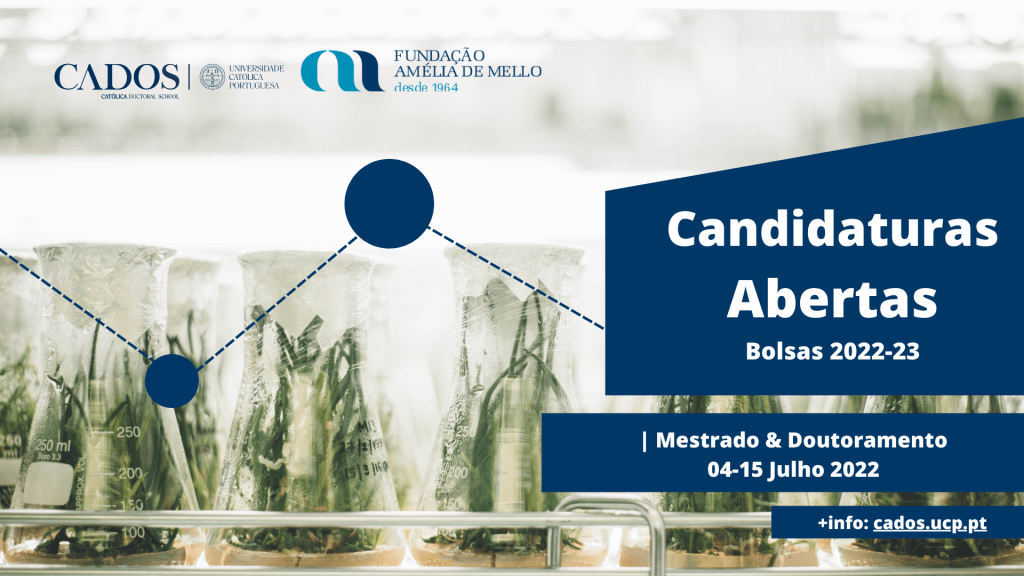
Opening of Tenders | MA & PhD Research Grants
Tenders for Research Grants (MA and PhD) funded by Fundação Amélia de Mello.
Deadline for applications: July 15, 2022 (5pm Lisbon time).
For further information, eligibility, requirements and application, go to: https://cados.ucp.pt/news/novas-bolsas-cados-fundacao-amelia-de-mello-2022-23-6701
-

LxC Talk – João Falcato
Tuesday | May 10 | 5.00pm | Room 133
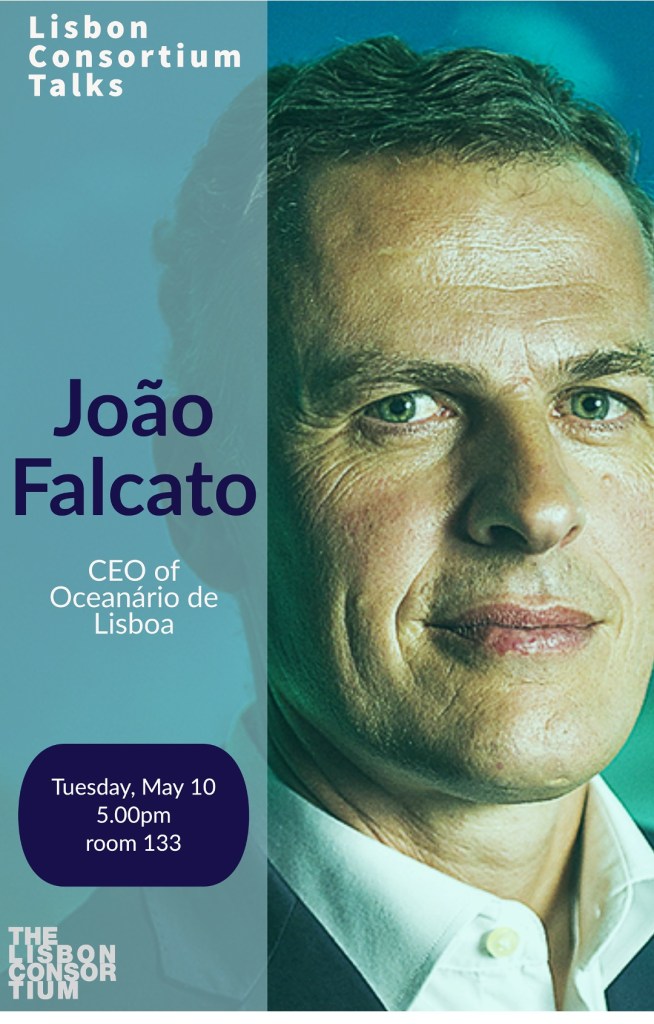
João Falcato is CEO of Oceanário de Lisboa and member of the Board of Fundação Oceano Azul. -

FCH Open Week – Culture Studies
Thursday, April 21 | 5.00pm | Online
Get to know the Lisbon Consortium and the MA & PhD Programs in Culture Studies (in English).
Register here https://fch.lisboa.ucp.pt/openweek-2022.

-

XII Lisbon Summer School for the Study of Culture – MASQUERADES – Deadline extension
XII Lisbon Summer School for the Study of Culture
MASQUERADES
Lisbon, June 27 – July 2, 2022
Deadline for submissions:February 28, 2022March 22, 2022Masks connote an ontology linked to identity and the possibility of being. But they are also shaped by human to human interaction, i.e. they are socially driven and shaped by politics. Masks enact a foundational performance. They draw attention to the masquerade structuring identity.
Masquerades have always been a relevant cultural element, assuming diverse meanings and functions along the history of humanity. Common to season and religious festivals, ceremonies and rituals of initiation or death, carnival festivals and balls, masquerades have always inspired the production of meaning in human societies. From theater to dance, literature and the visual arts, the masquerade and its representation connote at once exposure and (dis)simulation. They are arguably cultural mechanisms that structure the becoming of a subject.
Under current conditions, we live at a time of masks, tapping simultaneously into obfuscation, secrecy and protection. Masks suggest a reflection on cultural experience as a masquerade. The XII Lisbon Summer School for the Study of Culture proposes to discuss, on the one hand, processes of masking and unmasking, the collective models of the masquerade as a cultural, literary and artistic genre, as well as a translational mode. On the other, the masquerade, following the inspiration of Joan de Riviere, reflects as well on the process of performative engendering. The Summer School shall equally discuss the masquerade as a strategy of gender performativity and gender as a performance, mirrored in new identities. Drawing from Judith Butler’s seminal theory of performativity (1988, 1990, 2011), and “playing” with the transformative character of masquerades, participants are invited to reflect on why and how bodies and language matter when subversive body formations are under threat, and on the very nature of the relation between subversion and the normal. Simultaneously, we invite intersectional work articulating cultural forms of the masquerade with modes of identity formation, including race, gender, age and class.
The XII Summer School for the Study of Culture invites proposals that address, though may not be strictly limited to, the topics below:
• The masquerade as a cultural form
• Masks and power
• Engendering/masking/performing
• Masks as protection, conformity and resistance
• Femininity and masculinity as masquerades
• Queering
• Passing
• The theatricality of the masquerade
• Masks in literature, cinema and art
• From drag to vogue
• The postcolonial and the decolonial masquerade
• Identity and the mask
• Masquerades as translational acts
• Pandemic masksWe encourage proposals coming from the fields of culture studies, film and the visual arts, literary and translation studies, history, anthropology, media and psychology.
If the evolution of the pandemic allows it, the Summer School will take place at several cultural institutions in Lisbon and will gather outstanding doctoral students and post-doctoral researchers from around the world. In the morning there will be lectures and master classes by invited keynote speakers. In the afternoon there will be paper presentations by doctoral students.
Paper proposals
Proposals should be sent to lxsummerschool@gmail.com no later thanFebruary 28March 22, 2022 and include paper title, abstract in English (max. 200 words), name, e-mail address, institutional affiliation and a brief bio (max. 100 words) mentioning ongoing research.
Applicants will be informed of the result of their submissions byMarch 30April 22, 2022.Rules for presentation
The organizing committee shall place presenters in small groups according to the research focus of their papers. They are advised to stay in these groups for the duration of the Summer School, so a structured exchange of ideas may be developed to its full potential.Full papers submission
Presenters are required to send in full papers no later than May 30, 2022.
The papers will then be circulated amongst the members of each research group. In the slot allotted to each participant (30’), only 10’ may be used for a brief summary of the research piece. The Summer School is a place for networked exchange of ideas, and organizers wish to have as much time as possible for a structured discussion between participants. Therefore, in each slot, 10’ will be used for presentation, and 20’ for discussion.Registration fees
Participants with paper – 290€ for the entire week (includes lectures, master classes, doctoral sessions, lunches and closing dinner)
Participants without paper – 60€ per session/day | 190€ for the entire weekFee waivers
For The Lisbon Consortium students and CECC researchers, there is no registration fee.
For students from universities affiliated with the European Summer School in Cultural Studies, members of the Excellence Network in Cultural Studies and members of the Critical Humanities Network the registration fee is 60€.Confirmed Keynote Speakers (more TBA)
• Liliane Weissberg (University of Pennsylvania)
• Liedeke Plate (Radboud University Nijmegen)
• Isabel Capeloa Gil (Universidade Católica Portuguesa)Organizing Committee
• Isabel Capeloa Gil
• Peter Hanenberg
• Alexandra Lopes
• Adriana Martins
• Diana Gonçalves
• Paulo de Campos Pinto
• Rita Faria -

Call for Papers | ESSCS 2022
ESSCS ‘Thinking (with) Care’
Call for Papers: European Summer School for Cultural Studies (ESSCS) – ‘Thinking (with) Care’
Location: University of Amsterdam / Leiden University
Dates: 5-8 July 2022
Organizers: Pepita Hesselberth (LUCAS/ NICA), Esther Peeren (UvA/ ASCA), Kim Sommer (ResMA, UU/ NICA), and Ilios Willemars (LUCAS).
Deadline – EXTENDED: February 14th, 2022 (nica@hum.leidenuniv.nl)NICA-CfP
In many practices, care practices included, time is not an arrow and entities are not brought into being just once, but keep on changing.Rather than fitting fantasies of control, such processes depend on endless tinkering. Such tinkering, if done well, is care. Annemarie Mol
María Puig de la Bellacasa notes in Matters of Care (2017) that “care is omnipresent, even through the effects of its absence” (1). This raises the question of what care is. Is care primarily an affective attitude, a moral concern, a specific kind of labor, a sensibility, a form of responsibility, a type of guardianship, a feeling or occasion for anxiety or terror, or all of these things and more at once? Thinking with care is a pressing matter, especially in the face of the ongoing global COVID-19 pandemic that has put a spotlight on the “care crisis” (Dowling) caused by financialization and austerity politics. The pandemic shows the limits of, and the inequalities engrained in, systems not just of healthcare, but also of childcare, eldercare, and environmental care. It illustrates the work and risk that care-giving entails and the exhaustion it can cause. And it reveals profound relationships—at the individual and collective level, especially that of the nation—between self-care and care for others, while raising biopolitical questions about the governing of populations and the role of self-care in the context of public health concerns (Foucault Society Must be Defended; Hermeneutics of the Subject).
Yet, the pandemic has also given rise to new forms and practices of care, offline as well as online, small- and large-scale, prompting in many a renewed awareness of shared vulnerability within our more-than-human-world. The notion of care has thus been central to current debates on climate change, both those informed by third wave neoliberalism (with phenomena like green and care washing), and those that attempt to rethink care ethics whilst decentering the human and the global North. These developments fit a more general trend that we can observe across the humanities and the social and medical sciences, where care has been rethought from a “somehow wholesome or unpolluted pleasant ethical realm” (Puig 8) to something much more ambivalent. Care becomes re-conceptualized as not just an ethics but a practice; a work of maintenance (Berlant) with positive and negative affective dimensions for both the carer and the cared for. It needs to be recognized as gendered and racialized, and should be thought of as more than human. Indeed, in debates on decolonialism and black feminism, for example, care ethics are increasingly positioned as “a radical mode of engagement and refusal—one that is firmly aligned with, rather than antithetical to, claims for justice and liberation” (Bonde Thylstrup et al. 20).
For ESSCS 2022 we welcome papers dealing with matters of care from cultural, environmental, decolonial, gender, literary, cinematic, material, affective, technological, and other perspectives, including meta-perspectives reflecting on what it means to think (with) care, not just in pandemic times but in times of climate crisis, in times of increasingly widespread precarity (Butler) induced by regimes of brutalism (Mbembe), where ever more people suffer from chronic (mental) health conditions, and where ubiquitous, often careless, digitization and datafication produce new forms of surveillance capitalism (Zuboff).
Questions we want to explore include, but are not limited to:
- Who and what is cared for, by whom or what, under what circumstances (historically and in the present)? And who and what are or have been left without care, uncared for? If care is not always enabling, what different implications can being (un)cared for have?
- What does it mean to care for what is no longer there? How does care relate to grief and mourning? And what repercussions does care for what is no longer there have for what is still there and for how we think being alive?
- What might it mean – and what agency can be derived from – adopting a stance of not caring or of being careless or carefree (and who can and cannot afford this)?
- How does care relate to attention and attending, to cure and reparation, and to notions of the commons?
- What tensions exist between self-care and care for others? Can self-care be thought as anything else than “a pervasive order of individualized biopolitical morality” (Puig 9) that is part of a regime of what the Care Collective calls “care-washing” (9)? And how can we heed Sylvia Federici’s call to “pave the way to a world where care for others can become a creative task” (184)?
- How do we think with (more) care? Is thinking with care the same as thinking carefully? Can care be an alternative to thinking? Can caring be thought not just in terms of an ethics or ontology but also an epistemology?
- How is care related, not only to Michel Foucault’s notion of biopolitics, but to the more general emergence of a “politics of health” (Foucault Society Must be Defended; ‘The Politics of Health’)? What does it mean to concern oneself with oneself, both historically and today, and how does the meaning of concerning oneself with oneself shift in relation to different epistemic moments (Foucault Hermeneutics of the Subject)?
- How can care help us rethink the institution of the university and its future?
- How might creativity and creative production (literature, film, television, art) become ‘caring art’? How is it able to open up new perspectives on care, to (re)configure the ethics and politics of care, and to help position it, across different scales, as “an enduring social capacity and practice involving the nurturing of all that is necessary for the welfare and flourishing of human and non-human life” (The Care Collective 5)? What forms of (self-)care are involved in acts of reading and viewing?
- How can care take shape in the online world in a way that goes beyond platform capitalism and embraces platform co-operativism or the notion of the digital commons (Kopitz)? And how can digital archives, including colonial ones, adopt a care ethics (Agostinho ‘Care’)?
The Summer School will feature keynote lectures and master-classes by senior scholars, as well as paper sessions in which PhD candidates and other young scholars address the issue of care in relation to their own research. Abstracts (max. 300 words) with a short bio (max. 150 words) should be submitted to nica@hum.leidenuniv.nl by 31 January 2022 (EXTENDED deadline: 14 February 2022). You will be informed whether your contribution has been accepted by 1 March 2022. Papers will be circulated before the conference and have to be submitted, in full (max. 4,000 words), by 1 May 2022.
For PhD-students and RMA-students at Dutch universities (affiliated to NICA or one of the other Dutch research schools), there is a possibility to earn 3 ECTS through NICA if certain requirements are met. For more information, please contact nica@hum.leidenuniv.nl.
Organisation
The ESSCS is an annual network-based event offering interdisciplinary research training in the fields of art and culture. The network comprises the University of Amsterdam, Leiden University, the University of Copenhagen, the University of Giessen, Goldsmiths University, the Université de Paris VIII, the Lisbon Consortium and the University of Trondheim.
Organizers: Pepita Hesselberth (LUCAS/ NICA), Esther Peeren (UvA/ ASCA), Kim Sommer (ResMA, UU/ NICA), and Ilios Willemars (LUCAS).
Confirmed Keynotes
- Silje Haugen Warberg, Associate Professor of Scandinavian Language and Literature, Norwegian University of Science and Technology (NTNU) – leader of the interdisciplinary research project on Caregiving and Literature as Remedium (CaReLit), exploring care and the caregiving role in Scandinavian contemporary literature
- Daniela Agostinho, Assistant Professor of Digital Design and Information Studies, Aarhus University – co-editor and author of a chapter on care ethics and digitization/datafication in Uncertain Archives: Critical Keywords for Big Data (2021).
References
Agostinho, Daniela. ‘Care.’ Uncertain Archives: Critical Keywords for Big Data. Edited by Nanna Bonde Thylstrup et al. The MIT Press, 2021, pp. 75-85.
Berlant, Laurent. Cruel Optimism. Duke University Press, 2011.
Bonde Thylstrup, Nanna, et al. Uncertain Archives: Critical Keywords for Big Data. The MIT Press, 2020.
Butler, Judith. Precarious Life: The Powers of Mourning and Violence. Verso, 2020.
Dowling, Emma. The Care Crisis*. What Caused It and How Can We End It? Verso, 2021.
Federici, Sylvia. Re-Enchanting the World: Feminism and the Politics of the Commons. PM Press, 2019.
Foucault, Michel. The Hermeneutics of the Subject: Lectures at the Collège de France, 1981-1982. Edited by Frédéric Gros et al., translated by Graham Burchell, Picador, 2006.
—. Society Must Be Defended: Lectures at the Collège de France, 1975-76. Edited by Mauro Bertani et al., translated by David Macey, Picador, 2003.
—. ‘The Politics of Health in the Eighteenth Century.’ Foucault studies, no. 18, 2014. pp. 113–127.
Kopitz, Linda. ‘The Interdependence of Care: A Conversation With The Care Collective.’ NECSUS_European Journal of Media Studies. Vol. 10, Nr. 1, 2020. pp. 243–251
Mbembe, Achille. Brutalisme. La Découverte, 2020.
Puig de la Bellacasa, María. Matters of Care: Speculative Ethics in More Than Human Worlds. University of Minnesota Press, 2017.
The Care Collective. The Care Manifesto: The Politics of Interdependence. Verso, 2020.
Zuboff, Shoshana. The Age of Surveillance Capitalism: The Fight for a Human Future at the New Frontier of Power. Profile Books Ltd, 2019.
-

CfP XII Lisbon Summer School for the Study of Culture
XII Lisbon Summer School for the Study of Culture
MASQUERADES
Lisbon, June 27 – July 2, 2022
Deadline for submissions: February 28, 2022
Masks connote an ontology linked to identity and the possibility of being. But they are also shaped by human to human interaction, i.e. they are socially driven and shaped by politics. Masks enact a foundational performance. They draw attention to the masquerade structuring identity.
Masquerades have always been a relevant cultural element, assuming diverse meanings and functions along the history of humanity. Common to season and religious festivals, ceremonies and rituals of initiation or death, carnival festivals and balls, masquerades have always inspired the production of meaning in human societies. From theater to dance, literature and the visual arts, the masquerade and its representation connote at once exposure and (dis)simulation. They are arguably cultural mechanisms that structure the becoming of a subject.
Under current conditions, we live at a time of masks, tapping simultaneously into obfuscation, secrecy and protection. Masks suggest a reflection on cultural experience as a masquerade. The XII Lisbon Summer School for the Study of Culture proposes to discuss, on the one hand, processes of masking and unmasking, the collective models of the masquerade as a cultural, literary and artistic genre, as well as a translational mode. On the other, the masquerade, following the inspiration of Joan de Riviere, reflects as well on the process of performative engendering. The Summer School shall equally discuss the masquerade as a strategy of gender performativity and gender as a performance, mirrored in new identities. Drawing from Judith Butler’s seminal theory of performativity (1988, 1990, 2011), and “playing” with the transformative character of masquerades, participants are invited to reflect on why and how bodies and language matter when subversive body formations are under threat, and on the very nature of the relation between subversion and the normal. Simultaneously, we invite intersectional work articulating cultural forms of the masquerade with modes of identity formation, including race, gender, age and class.
The XII Summer School for the Study of Culture invites proposals that address, though may not be strictly limited to, the topics below:
- The masquerade as a cultural form
- Masks and power
- Engendering/masking/performing
- Masks as protection, conformity and resistance
- Femininity and masculinity as masquerades
- Queering
- Passing
- The theatricality of the masquerade
- Masks in literature, cinema and art
- From drag to vogue
- The postcolonial and the decolonial masquerade
- Identity and the mask
- Masquerades as translational acts
- Pandemic masks
We encourage proposals coming from the fields of culture studies, film and the visual arts, literary and translation studies, history, anthropology, media and psychology.
If the evolution of the pandemic allows it, the Summer School will take place at several cultural institutions in Lisbon and will gather outstanding doctoral students and post-doctoral researchers from around the world. In the morning there will be lectures and master classes by invited keynote speakers. In the afternoon there will be paper presentations by doctoral students.
Paper proposals
Proposals should be sent to lxsummerschool@gmail.com no later than February 28, 2022 and include paper title, abstract in English (max. 200 words), name, e-mail address, institutional affiliation and a brief bio (max. 100 words) mentioning ongoing research.
Applicants will be informed of the result of their submissions by March 30, 2022.
Rules for presentation
The organizing committee shall place presenters in small groups according to the research focus of their papers. They are advised to stay in these groups for the duration of the Summer School, so a structured exchange of ideas may be developed to its full potential.
Full papers submission
Presenters are required to send in full papers no later than May 30, 2022.
The papers will then be circulated amongst the members of each research group. In the slot allotted to each participant (30’), only 10’ may be used for a brief summary of the research piece. The Summer School is a place for networked exchange of ideas, and organizers wish to have as much time as possible for a structured discussion between participants. Therefore, in each slot, 10’ will be used for presentation, and 20’ for discussion.
Registration fees
Participants with paper – 290€ for the entire week (includes lectures, master classes, doctoral sessions, lunches and closing dinner)
Participants without paper – 60€ per session/day | 190€ for the entire week
Fee waivers
For The Lisbon Consortium students and CECC researchers, there is no registration fee.
For students from universities affiliated with the European Summer School in Cultural Studies, members of the Excellence Network in Cultural Studies and members of the Critical Humanities Network the registration fee is 60€.
Organizing Committee
- Isabel Capeloa Gil
- Peter Hanenberg
- Alexandra Lopes
- Adriana Martins
- Diana Gonçalves
- Paulo de Campos Pinto
- Rita Faria
- Gisela Canelhas
-

Call for Applications – PhD Scholarship
One 3-year PhD Scholarship in Culture Studies
Open applications.
July 12-23, at 5 p.m.
For further information:https://fch.lisboa.ucp.pt/cecc
See the full text of the call here (1st in Portuguese; 2nd in English): https://fch.lisboa.ucp.pt/asset/18696/file
-

Call for Applications – FCT Scholarships


Notice of the Opening of a Tender for the Award of Doctoral Research Scholarships
Universidade Católica Portuguesa (UCP hereafter) hereby opens a tender for the award of two research scholarships, hereafter referred to as Doctoral Research Scholarships, in the area of Culture Studies, under the FCT Research Grant Regulations and the Research Grant Holder Statute (RBI and EBI respectively hereafter).
These scholarships are financed by the Fundação para a Ciência e Tecnologia (FCT) under the Collaboration Protocol for the Pluriannual Financing Plan for Doctoral Student Degree Research Student Grants, signed between FCT and CECC – the Centro de Estudos de Comunicação e Cultura (UIDB2021.2/00126/2020).
1. SUBMISSION OF APPLICATIONS
The tender shall be open from 16 to 29 June 2021, at 5pm (Lisbon time).
Applications and their respective supporting documentation, stipulated in the present Notice of the Opening of a Tender, must be submitted via email to concursos.cecc@fch.lisboa.ucp.pt.
Candidates may submit one application only. The submission of more than one application will result in the annulment of all applications.
False statements or plagiarism on the part of candidate are grounds for annulment of the application, without prejudice to any other punitive measures.
2. TYPE AND DURATION OF SCHOLARSHIPS
Doctoral Research Scholarships are intended to finance students’ PhD research in Portuguese universities.
The research leading to a PhD shall take place at Centro de Estudos de Comunicação e Cultura – CECC (UIDB2021.2/00126/2020), which shall thus be the scholarship recipient’s host institution, without prejudice to any other work undertaken in collaboration with one or more institutions.
The research leading to a PhD by the scholarship recipients must fall within the framework of CECC’s (UIDB2021.2/00126/2020) strategic activities plan and must be developed under the auspices of the Doctoral Degree Programme in Culture Studies of UCP’s Faculdade de Ciências Humanas (FCH hereafter).
The work plan should take place entirely or partially in a national institution (national scholarship or mixed scholarship, respectively). One national and one mixed scholarship will be awarded.
These are, as a rule, annual scholarships, renewable for a maximum period of four years (48 months). Scholarships cannot be awarded for periods of less than three consecutive months.
In the case of mixed scholarships, the period stipulated by the work plan to be hosted by a non-national institution cannot be greater than 24 months.
3. SCHOLARSHIP RECIPIENTS
Doctoral Research Scholarships are awarded to candidates who are either enrolled or who meet the requirements to enrol in the Doctoral Programme in Culture Studies at FCH/UCP and who seek to develop research leading to a doctoral degree at the Centro de Estudos de Comunicação e Cultura – CECC (UIDB2021.2/00126/2020) – or in its associated host institutions.
4. ELIGIBILITY
4.1 Candidate eligibility requirementsThe following are eligible to apply:
- Portuguese citizens or citizens of other European Union member states;
- Citizens from other states;
- Stateless persons;
- Citizens holding political refugee status.
In order to apply for a Doctoral Research Scholarship, applicants must:
• hold an undergraduate or Master’s degree in the fields of Culture Studies, Literature Studies or in other areas deemed relevant both to the programme and to the project development;
• reside in Portugal on a permanent and regular basis, whenever the work plan associated with the scholarship takes place partially or in totality in international institutions (mixed or abroad scholarships), a requirement applicable to both national and international candidates.
• not have previously been the recipient of a doctoral scholarship or an in-company doctoral degree financed by FCT, irrespective of its length.
• not hold a PhD degree.
4.2 Application Eligibility Requirements
The following documents, without exception, must be included in the application, on penalty of exclusion from the tender:
- The details stated on the identity card, citizen’s card or passport;
- The candidate’s CV;
- Certificates for each academic qualification held, which must specify the final classification and, whenever possible, the marks received in each subject studied or, alternatively, a declaration upon honour that the candidate completed their undergraduate or Master’s degree studies prior to the application deadline;
- Records of the awarding of academic titles by international higher education institutions alongside a record of the conversion of the respective final classification to the scale applied in the Portuguese classification system or, alternatively, a declaration upon honour that the candidate completed the respective international equivalent to a Master’s degree prior to the application deadline;
- Letter of motivation;
- Preliminary PhD project within the scope of one of the following research groups at CECC: a) Culture, Art and Conflict, b) Literature and the Global Contemporary, c) Cognition and Translatability or d) Media Narratives and Cultural Change (max. 2,000 words).
As regards the aforementioned eligibility requirements, the following should be noted:
- In the case of academic qualifications awarded by non-national higher education institutions, and in order to ensure the principle of equal treatment of candidates with national and non-national academic degrees, the recognition of all academic qualifications and the conversion of their final classification grades to the Portuguese classification scale is mandatory.
The recognition of non-national academic titles and diplomas as well as the conversion of final classifications to the Portuguese classification scale may be requested at any public higher education institution or from DGES – the General Directorate of Higher Education (only for cases of automatic recognition). On this matter, we would suggest consulting the DGES website at the following address: http://www.dges.gov.pt.
- Candidates will only be considered if they have completed the cycle of studies leading to undergraduate or Master’s degrees by the deadline of the tender. Should they not have the certificates testifying to attaining the necessary qualifications for the submission of their applications by the tender deadline, then a declaration upon honour shall be provisionally accepted. However, the awarding of the scholarship shall remain contingent on the submission of the certificates attesting to the attainment of the academic qualifications necessary for the awarding of the scholarship.
5. WORK PLANS AND SCIENTIFIC SUPERVISION OF SCHOLARSHIP HOLDERS
• The scholarship holder’s work plan must be developed within the framework of one of the following Centro de Estudos de Comunicação e Cultura (CECC) research groups: a) Culture, Art and Conflict, b) Literature and the Global Contemporary, c) Cognition and Translatability or d) Media Narratives and Cultural Change.
6. ASSESSMENT CRITERIA AND METHODS
The assessment takes into account the academic merit and the potential of each candidate (as expressed in the letter of motivation, the preliminary PhD project and the interview).
Candidates deemed eligible are assessed on a scale of 1 to 20 in each of the following assessment criteria:
• Criterion A – Candidate merit, with a weighting of 55%;
o Sub-criterion A1 – Relevance and quality of academic training, with a weighting of 40% o Sub-criterion A2 – Other relevant experience, with a weighting of 15%• Criterion B – Candidate potential, with a weighting of 45%;
o Sub-criterion B1 – Letter of motivation, with a weighting of 10%
o Sub-criterion B2 – Preliminary PhD project, with a weighting of 20% o Sub-criterion B3 – Interview, with a weighting of 15%For the purposes of the scholarship awarding decision, candidates are ranked based on the weighted classification obtained in each of the two criteria (and the respective five sub-criteria), as set out in the following formula:
𝑭𝒊𝒏𝒂𝒍 𝑪𝒍𝒂𝒔𝒔𝒊𝒇𝒊𝒄𝒂𝒕𝒊𝒐𝒏 = (𝟎. 𝟓𝟓 × 𝑨) + (𝟎. 𝟒𝟓 × 𝑩)
In the case of a tie, the ranking of candidates will be made based on the classifications awarded in each assessment sub-criterion, in the following order: sub-criterion A1, sub-criterion B2, sub-criterion B3, sub- criterion A2 and sub-criterion B1.
Important advice for candidates holding diplomas issued by non-national higher education institutions:
- Candidates holding diplomas issued by non-national higher education institutions may apply and be subject to the same assessment criteria as candidates holding diplomas issued by Portuguese institutions whenever their respective applications contain duly recognized academic title(s) as well as the conversion of the final classification to the Portuguese classification scale, in accordance with the terms of the applicable legislation.
- Candidates with non-national diplomas who fail to submit evidence of conversion of their final classification to the Portuguese classification scale shall be awarded the minimum classification (10 points) in sub-criterion A1.
- In all cases, scholarship contracts with candidates holding diplomas issued by non-national higher education institutions shall only be signed after submission of the evidence of their academic titles and the conversion of their final classification as detailed above.
7. ASSESSMENT
The candidate assessment panel is composed of the following members:
- Isabel Capeloa Gil, CECC, UCP (Chair)
- Peter Hanenberg, CECC, UCP
- Alexandra Lopes, CECC, UCP
- Diana Gonçalves, CECC, UCP (stand-in)
- Nelson Costa Ribeiro, CECC, UCP (stand-in)
The assessment panel shall evaluate each application in accordance with the assessment criteria set out in the present Notice of Tender Opening, taking into consideration the respective assessment elements.
Every panel member, including the Chair, shall commit to respecting a set of core responsibilities in this assessment process, such as the duties of impartiality, the disclosure of any potential conflicts of interest, and confidentiality. In every stage of the assessment process, confidentiality is entirely protected and ensured so as to guarantee the independence of all determinations issued.
Members of the panel, including the Chair, may not act as supervisors or co-supervisors to candidates applying within the scope of this tender.
For each candidate, the panel shall produce a final assessment file that clearly, coherently and consistently sets out the arguments leading to the classifications awarded across each of the assessment criteria and sub-criteria.
The assessment panel meetings shall be recorded in minutes that must be signed off by every serving member. The minutes and their annexes must include the following information:
- Name and affiliation of all assessment panel members;
- Identification of all excluded applications alongside the respective reasons;
- Methodology adopted by the panel for any special cases;
- Final Assessment Files for each of the applications accepted;
- Provisional list with the classification and ranking of candidates, in descending order of final classifications, for all applications assessed by the panel;
- COI Statements from every panel member;
- Any cases of vote or assignment of roles by proxy on grounds of the justified absence of panel members.
8. PUBLICATION OF RESULTS
The assessment results shall be released via e-mail, and sent to the address disclosed by the candidate on their scholarship application.
9. DEADLINES AND PROCEDURES FOR PRIOR AUDIENCES, COMPLAINTS AND APPEALS
Following the release of the provisional assessment results list, candidates have a period of ten working days in which, should they wish it, they may express their response at a prior audience of interested parties under the terms of Articles 121 and subsequent of the Code of Administrative Procedures.
The final decision shall be issued following analysis of the responses submitted under the auspices of the prior audience of interested parties. The final decision may be subject to a complaint within a period of 15 working days or, alternatively, of an appeal within a period of thirty working days, with both durations beginning on the date of the initial notification. Candidates who opt to submit a complaint or an appeal should address this to the Rector’s Office (Reitoria) of Universidade Católica Portuguesa.
10. SCHOLARSHIP AWARD REQUIREMENTS
The research scholarship contracts are signed directly with FCT.
The following documentation must be submitted should a scholarship be awarded, for the purposes of signing the respective contract:
a) Copy of each civil and fiscal identification document and, whenever applicable, of social security1;
b) Copy of certificates for each of the academic degrees held;
c) Submission of records of non-national academic qualifications and conversion of the respective final classifications to the Portuguese classification scale whenever applicable;
d) Document attesting to enrolment and registration for the Doctoral Degree Program in Culture Studies at FCH/UCP;
e) Declaration from supervisor(s) expressing their acceptance of responsibility for the supervision of the work plan under the terms of Article 5-A of the Research Grant Statute (term of declaration to be provided by FCT);
f) Document attesting to the acceptance of the candidate by the institution hosting the respective research, guaranteeing the conditions necessary for their efficient development, as well as complying with the obligations stipulated under Article 13 of the Research Grant Statute;
g) An updated document demonstrating compliance with the exclusive dedication regime.
The awarding of the scholarship is also contingent on:
- compliance with the requirements stipulated by the present Tender Notice;
- the results of the scientific evaluation;
- the non-existence of any unjustified non-compliance with the duties of scholarship holders within the framework of any prior awarding of a financial grant contract, whether directly or indirectly, by FCT;
- FCT’s budgetary capacity.
Failure to submit any of the documentation necessary to comply with the scholarship contractual process within a period of six months beginning on the date of communication of the conditional award of the scholarship shall result in the annulment of the aforementioned award and the closure of the respective file.
11. FINANCING
The disbursement of the scholarship shall begin after the candidate has returned the duly signed research scholarship contract, which must take place within a maximum period of 15 working days beginning on the date of its receipt.
Scholarships awarded under the auspices of the current tender shall be financed by FCT with funding from the State Budget and, whenever eligible, with funding from the European Social Fund provided within the framework of PORTUGAL2020, namely through the Operational Program for the Norte Region (NORTE 2020), the Operational Program for the Centro Region (Centro 2020) and the Operational Program for the Alentejo Region (Alentejo 2020), in accordance with the regulatory stipulations defined to this end.
12. SCHOLARSHIP COMPONENTS
Scholarship holders are awarded a monthly maintenance stipend in accordance with the terms of the table in RBI Annex I.
The scholarship may also include other components in pursuant to Article 18 of the RBI and the values established in its Annex II.
All scholarship recipients benefit from researcher’s personal accident insurance, whose cost shall be covered by FCT.
All scholarship recipients who are not otherwise covered by any social protection regime may take up the right to social security by registering with the social security voluntary regime, under the terms of the Contributory Regimes Code for the Social Security Welfare System, with CECC meeting any costs resulting from the respective contributions, in accordance with the terms and limits stipulated in Article 10 of the EBI.
13. SCHOLARSHIP COMPONENT PAYMENTS
Disbursements to scholarship holders are made via bank transfer to the account number they have provided. The monthly maintenance stipend is paid on the first working day of each month.
Payment of registration, enrolment or other fees are made directly by FCT to the respective national institution where the scholarship holder is registered/enrolled in a PhD program.
14. TERMS AND CONDITIONS FOR THE RENEWAL OF SCHOLARSHIPS
Scholarship renewal is invariably contingent on the submission of a request by the scholarship holder within sixty working days prior to the date of renewal, accompanied by the following documents:
a) opinions issued by the candidate’s supervisor(s) and by their host institution(s) resulting from the monitoring of the scholarship holder’s work and assessing their activity;
b) anupdateddocumentdemonstratingcompliancewiththeexclusivededicationregime; c) a document demonstrating renewal of enrolment in the PhD study cycle.
15. INFORMATION AND DISSEMINATION OF THE SCHOLARSHIP
In all R&D activities, whether directly or indirectly financed by the scholarship, namely conference participations, publications and any scientific output, as well as the resulting theses, carried out with scholarship-related support, scholarship holders must explicitly mention the financial support received from FCT and the European Social Fund (ESF), namely through the Operational Program for the Norte Region (NORTE 2020), the Operational Program for the Centro Region (Centro 2020) and the Operational Program for the Alentejo Region (Alentejo 2020). To this end, any relevant documents must include references to the acronyms of FCT, MCTES, of ESF and the EU according to the norms in effect for each operational program.
The dissemination of research results financed under the auspices of the RBI must follow all the norms for open access to data, publications and other research results in effect at FCT.
Every scholarship, in particular in the case of projects receiving EU support, specifically from the ESF, may be subject to monitoring and control undertaken on behalf of national and European organs in accordance with the legislation applicable. Scholarship holders in receipt of support must cooperate and provide the information requested, which shall include the completion of evaluation surveys and studies in this area, including after the expiry of the scholarship.
16. NON-DISCRIMINATION AND EQUAL ACCESS POLICY
UCP promotes a policy of non-discrimination and equal access. Accordingly, no candidate may be favoured, advantaged, disadvantaged or deprived of any right or exempted from any duty, namely as a result of their parentage, age, gender, sexual orientation, civil status, family situation, economic situation, education, social origin or condition, genetic heritage, reduced working capacity, disability, chronic illness, nationality, ethnic or racial background, territory of origin, language, religion, political or ideological beliefs and trade union membership.
17. APPLICABLE LEGISLATION AND REGULATIONS
The Tender falls under the auspices of the regulations of the current Notice of Tender Opening, the Regulations for FCT Research Grants, as approved by Regulation no. 950/2019, published in the 2nd Series of Diário da República on 16 December 2019, the Research Grant Holder Statute approved by Law no. 40/2004, of 18 August, in accordance with the version in effect, as well as any further applicable national and EU legislation.
1 The submission of these documents may be replaced, should the candidate so wish, by their in-person appearance at the financing entity, which shall then record the documentation details required for the validity and execution of the contract, including the civil, fiscal and social security identification numbers, as well as the expiry date of the respective documents.

-

XI LISBON SUMMER SCHOOL FOR THE STUDY OF CULTURE – Registration
XI Lisbon Summer School for the Study of Culture
June 28-July 3, 2021
The 11th Lisbon Summer School for the Study of Culture “Convivial Cultures” will be held by The Lisbon Consortium and the European Cooperation Project 4Cs – From Conflict to Conviviality through Creativity and Culture, between June 28th and July 3rd, 2021.
The Summer School will be a hybrid event, broadcast online in full as well as partly held onsite, at the Universidade Católica Portuguesa and at the Trienal de Arquitectura de Lisboa.
The 11th LSSSC will gather invited speakers, artists, curators, cultural stakeholders and thinkers, M.A. and Ph.D. students from all over the world to discuss the topic of “Convivial Cultures” and how cultural and artistic institutions and practices can contribute to conviviality.
You may access the program HERE.
If you wish to attend the Summer School online and/or onsite, please register HERE. Deadline for registration: June 23rd.
The 11th LSSSC is part of the 4Cs Project’s programme, co-financed by the Creative Europe Programme of the European Union. As such, this year (2021), exceptionally, registration to participate in the LSSSC is free.
Further information may be found HERE.
-

MA in Culture Studies #3 worldwide
The quality of Master’s Program in Culture Studies (Lisbon Consortium/Faculty of Human Sciences) was recognized once again by the prestigious Eduniversal ranking.
The Master in Culture Studies now ranks #3 in the “Cultural Management / Creative Industries Management” category.
The international agency Eduniversal, which annually evaluates thousands of programs in 30 fields of knowledge, prepares the ranking based on the reputation of the courses, the level of employability and the degree of student satisfaction.
The Master’s Program in Culture Studies is aimed at students interested in a structured discussion of cultural phenomena in the global world. The program is divided into three different specializations: Management of the Arts and Culture, Performance and Creativity, and Literary Cultures.
Applications are open!
-

The Fold(s) – Curatorial Project
The Fold(s)
Adopting the Deleuzian idea of the fold as a desire of change (1993), The Fold(s) is a curatorial project composed of four books operating as four individual exhibitions by Carolina Grilo Santos, Joana Patrão, Mónica de Miranda, and Rouzbeh Akhbari. Under the artistic direction of Luísa Santos, The Fold(s) was developed in the context of the Seminar in Curatorship by the MA and PhD students in Culture Studies of The Lisbon Consortium, Faculty of Human Sciences, Universidade Católica Portuguesa.
The first public presentation will take place on April 22nd at Hangar.
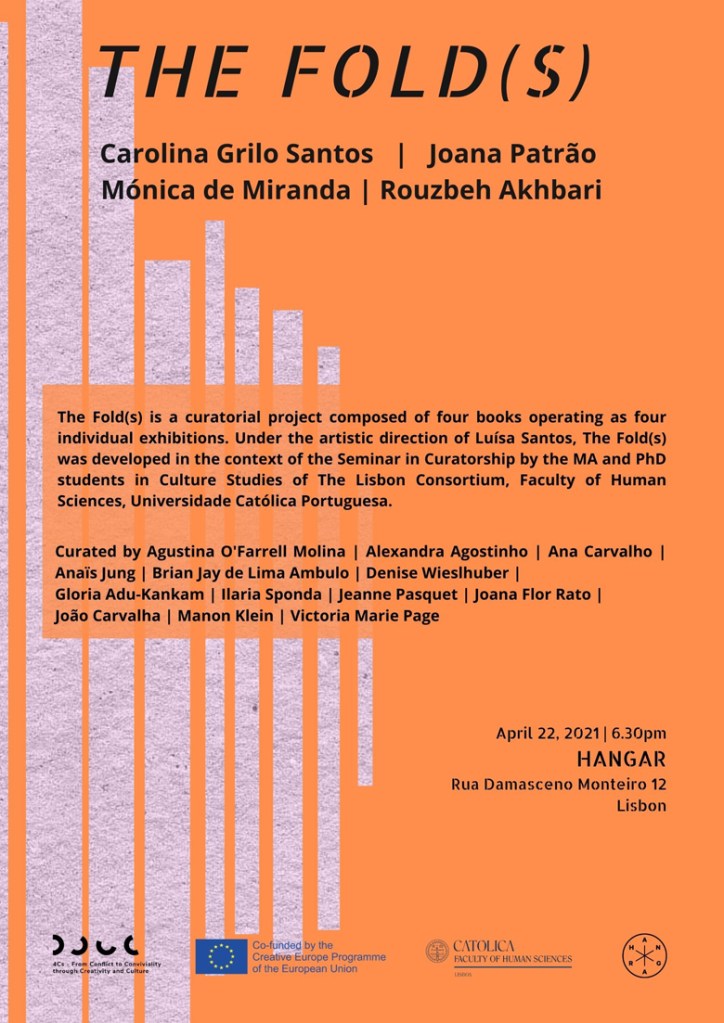
Project produced in the frame of the European cooperation project 4Cs – From Conflict to Conviviality through Creativity and Culture, co-financed by the Creative Europe programme of the European Union.
-

CfP XI Graduate Conference in Culture Studies
THE CULTURAL POLITICS OF HOPE
December 2-4, 2021
Call for Papers
The 11th Graduate Conference in Culture Studies will focus on the concept of hope, its politics, poetics, and temporalities, and how it emerges, impinges and circulates. The conference will take place in Lisbon on the 2nd, 3rd of December and the morning of the 4th of December, 2021. The conference is organized by PhD students and researchers of the Research Centre for Communication and Culture (CECC) at the Lisbon Consortium, Universidade Católica Portuguesa – Lisbon.
The concept of hope has recently been re-emerging in philosophical and political discussions, as well as in literary criticism. However, how does hope relate to the present moment, when we are faced with worldwide climate and health emergencies, economic crises, increasing poverty, failed leaderships, and the rise of both old and new forms of authoritarianism? The future of democracies and equal rights are at stake, as is our own survival as individuals and as a species, prompting fear and hopelessness. Does critical thought forfeit the possibility of hope or can it produce a hope that is able to bring about change?
Often pitted as the opposite of each other, fear and hope share the assumption that the future is neither knowable nor based on knowledge and probabilities (Rorty, 1999). Unlike the certainty of a positive or negative outcome that underpins confidence and despair, fear and hope are expectant emotions grounded in doubt and therefore always part of each other (Spinoza, 2000 [1677]). Bloch’s ‘political hope’ is what, at any given moment, we are able to consciously wish for beyond a disappointing present and the pragmatic determinism of predictions. Hope can therefore rise from desperation, grief, indignation, or anger and then “result in a specific type of mutuality based on a trust for life” (Bloch, 1996 [1959]; Anderson, 2006). Is the act of hoping positive, or is it an uncomfortable assemblage of emotions that can overlap and interact with optimism and resilience, but also with fear, suspicion, and a permanent sense of precariousness? Is hope always only projected towards the future, or can hopeful memories be a form of counter-historical practice (Rigney, 2018) that questions its linear futurity? And does not hope always-already imply eternal postponement and unattainability (Berlant, 2011), despite its ability to fuel cultural work as well as activism and resistance?
During the conference, we want to discuss how culture interacts with the concept and the taking place of hope. How can cultural works claiming or responding to political and societal change be hopeful? To what extent can the recent positive turn in the humanities contribute to the emergence of hope, as well as to different concepts of hope? How does hope emerge during crises and times of socio-political disenchantment and to what extent does it challenge power and hegemony? What can happen when hope not only points towards a better future but changes and improves the now or the ways we remember and celebrate the past? How does hope affect groups and movements, and how does it circulate in times of fear, depression, revolt, and pandemic?
We welcome paper proposals from all research areas that address, but are not limited to, the following topics:
● Social hope
● The temporalities of hope
● Hope – affect, feeling, emotion, attitude
● The poetics of hope
● Hope and simulacrum/phantasm
● Hopeful memories and memories of hope
● Hope, science and technology
● Hope, spirituality and transcendence
● Digitalities of hope
● Hope and resilience
● Hope as a critical disposition
● Objects of hope
● Vulnerability and resistance in hope
● Hope and its neighboring concepts
● Hope and disappointment
● Queer hope – queer futurity
● Hope and imagination
● The translatability of hope
● Artistic representations of hope
● Literature and hope
● Hopeful bodies
● Hope and (post)colonialism
● Decolonial hopeReferences
Ahmed, Sara. 2010. The Promise Of Happiness. Durham [NC]: Duke University Press.
Anderson, Ben. “Becoming and Being Hopeful: Towards a Theory of Affect.” Environment and Planning D: Society and Space 24, no. 5 (October 2006): 733–52. https://doi.org/10.1068/d393t.
Benjamin, Andrew E. 1997. Present Hope: Philosophy, Architecture, Judaism. London: Routledge.
Bloch, Ernst. 1995. The Principle Of Hope. Cambridge, Mass: MIT Press.
Castiglia, Christopher. 2017. The Practices Of Hope: Literary Criticism In Disenchanted Times. New York: NYU Press.
Lear, Jonathan. 2006. Radical Hope: Ethics In The Face Of Cultural Devastation. Cambridge: Harvard University Press.
Rorty, Richard. 1999. Philosophy And Social Hope. New York: Penguin Books.
Sedgwick, Eve Kosofsky. 2003. Touching Feeling: Affect, Pedagogy, Performativity. Durham: Duke University Press.
Spinoza, Benedictus de, R. H. M Elwes, and Benedictus de Spinoza. 1989. Ethics. Buffalo, N.Y.: Prometheus Books.
Zournazi, Mary. 2003. Hope: New Philosophies For Change. New York: Routledge.
Keynote Speakers
Ben Anderson, Durham University, UK
Jennifer Wenzel, Columbia University, USA
Leticia Sabsay, London School of Economics and Political Science, UK
Mónica Dias, Universidade Católica Portuguesa, Portugal
Scientific Committee
Adriana Martins (Universidade Católica Portuguesa)
Alex Jania (The University of Chicago)
Ana Margarida Abrantes (Universidade Católica Portuguesa)
Annimari Juvonen (Universidade Católica Portuguesa)
Daria Steiner (Justus-Liebig Universität)
Fátima Vieira (Universidade do Porto)
Fredrik Tygstrup (University of Copenhagen)
Ilios Willemars (University of Amsterdam, Universidade Católica Portuguesa, University of Copenhagen)
Luísa Santos (Universidade Católica Portuguesa)
Matthew Mason (Universidade Católica Portuguesa)
Nina Danilova (Universidade Católica Portuguesa)
Paulo de Medeiros (University of Warwick)
Practicalities
We invite abstracts for individual or joint presentations using hope as a lens for the analysis of cultural objects or conceptualizing/problematizing hope.
We also welcome abstracts for presentations and interventions that disrupt the formal academic ways of thinking and doing including but not limited to artistic interventions, co-creative workshops, reading groups and more.
Abstracts should be approximately 250 words long and be sent by email to hopeconference2021@gmail.com not later than 17th of May 2021. Notification of acceptance will be sent until the 31st of July at the latest.
After having been accepted, you will be asked to register at the conference and provide some personal details to that purpose. You will be able to do so on our website www.culturalpoliticsofhope.wordpress.com, which is under construction.
The conference will take place on site on the 2nd, 3rd and the morning of the 4th of December 2021 at Universidade Católica Portuguesa. Online hosting of the conference will be considered as a supplement or alternative, should any sanitary restrictions be enforced at the time of the conference.
Costs
Registration fee: 70€ – includes coffee breaks on all days and conference materials.
The Organizing Committee considers reducing or waiving a limited number of registration fees in cases of documented financial difficulties. Students of the Lisbon Consortium and FCH-PhD and CECC researchers are exempted from the registration fee.
Organizing Committee
Vera Herold (Universidade Católica Portuguesa)
Sarah Nagaty (Universidade Católica Portuguesa)
Victoria Page (Universidade Católica Portuguesa)
Contact
For more information please email: hopeconference2021@gmail.com
-
CfP – Diffractions – Graduate Journal for the Study of Culture
Series 2 – Issue 5
CALL FOR PAPERS
Latin American Digitalities
Main Editors: Patrícia Anzini & Eduardo Prado Cardoso
The next issue of Diffractions pursues an interdisciplinary reflection on the relationship(s) between digitalized identities, arts, and politics in Latin America. Digitalities became famous with Nicholas Negroponte’s 1995 bestseller Being Digital. Used to refer to the condition of living in a digital culture, the concept has since been broadly framed within techno-(dis)utopian contexts and revolves around the idea that everything can be rendered in numeric, encoded, and computable form, including the notion of identity. The fingerprint (digital in Portuguese, huella in Spanish) would, in this context, emerge at the intersection of computer graphics, human communications, and interactive media.
Going beyond the techy ridges and loops of the fingerprint, we read digitalities as modes of social intervention and cultural transformation that impact the conceptualization, translation, materialization, and performance of identities of Latin American countries. The notion of identity in those formerly colonized territories has been up for fruitful debate in and out of academia, much as it has become the main subject in the arts, mass communication, and popular culture. These young democracies have always had to negotiate their cartographies, singularities, and the very idea of Latin America itself (Walter Mignolo) with Europe and USA, thereby facing the challenges proper to a certain cultural periphery (Nelly Richard). Particularly after the 1980s, they likewise gave way to modes of consumption and urbanization that blend in what Beatriz Sarlo aptly describes as “abundance and poverty”. In this sense, technology and the performative potential behind the use of computers have made inequalities in those countries even more visible while helping to spur, subvert, spread, and claim back discussions concerning the fingerprint.
Considering how globalization has challenged Latin American nation states in the way they translate cultural identities (Renato Ortiz), one could think of the horizon of possibilities (Ronaldo Munck) that new media and digital practices have brought to the cultural, social, political and “fingerprint” realms. Have they facilitated a sort of autonomy (Ana Cecilia Dinerstein)? How are the several concepts of identity changing in late modernity, particularly in regard to the use of digital technology and/or interactive media? Are digitalities widening the cultural and political gaps among many Latin American cities? Are they working as alternatives to these ever more difficult times?
We welcome articles that investigate cultural practices of/in Latin American regions and/or have strong connections to Latin American individuals, artists, and collectives. We are interested in assessing how the use or impact of technologies in artistic, informational, political and/or social spheres articulate notions of identity, geographies, hybridizations (Néstor García Canclini), gender, ethnicity, globalization, authoritarianism, etc., particularly from the 1980s on. We value contributions that reflect the linguistic and political disparities encountered in the Latin American space, as well as reflections that might shape the consolidation of a literature and further debates around the idea of digitalities we are proposing here.
We look forward to receiving contributions addressing these or related questions. Topics include but are not limited to:
● Digitalities as theory, method, and concept;
● Globalization and modernity in Latin America;
● Performing digitalities;
● Digitalities in conflict, violence, and peace negotiations in Latin America;
● Digital technology, virtual reality, and computational practices in Latin America;
● Mass media and social media in Latin America;
● Digitalities in Latin American art – literature, film, music, fine arts, video-games, graffiti and street art, photography, graphic novels;
● Exile and migration in a digitalized Latin America;
● Digitalized fingerprints: genders, ethnicities, and races in Latin America;
● Digitalized queerness and transgender;
● Digitalities in folklore and indigenous studies and/or practices;
● Life-writing digitalities;
● The digitalities of translation;
● Digitalized religions, spirituality, and Afro-Latin American ritual practices;
● Education in a digitalized Latin America: pedagogies, methodologies, philosophies.
Submissions and review process
Abstracts will be received and reviewed by the Diffractions editorial board who will decide on the pertinence of proposals for the upcoming issue. After submission, we will get in touch with the authors of accepted abstracts in order to invite them to submit a full article. However, this does not imply that these papers will be automatically published. Rather, they will go through a peer-review process that will determine whether papers are publishable with minor or major changes, or they do not fulfill the criteria for publication.
Please send abstracts of 150 to 200 words, and 5-8 keywords by MAY 31st, 2021 to info.diffractions@gmail.com with the subject “Diffractions 5”, followed by your last name.
The full papers should be submitted by SEPTEMBER 15th, 2021, through the journal’s platform: https://revistas.ucp.pt/index.php/diffractions/about/submissions.
Every issue of Diffractions has a thematic focus but also contains special sections for non-thematic articles. If you are interested in submitting an article that is not related to the topic of this particular issue, please consult the general guidelines available at the Diffractions website at https://revistas.ucp.pt/index.php/diffractions/about/submissions. The submission and review process for non-thematic articles is the same as for the general thematic issue. All research areas of the humanities are welcome.
References
Canclini, Néstor García. Culturas híbridas. Debolsillo, 2012.
Dinerstein, Ana. The politics of autonomy in Latin America: The art of organising hope. Springer, 2014
Mignolo, Walter. The idea of latin america. John Wiley & Sons, 2009.
Munck, Ronaldo. “Afterword: Postmodernism, politics and culture in Latin America.” Cultural Politics in Latin America. Palgrave Macmillan, London, 2000. 185-205.
Ortiz, Renato. “A problemática cultural no mundo contemporâneo.” Política & Sociedade 16.35 (2017): 17-66.
Richard, Nelly. La insubordinación de los signos: cambio político, transformaciones culturales y poéticas de la crisis. Editorial Cuarto Propio, 1994.
Sarlo, Beatriz. Escenas de la vida posmoderna: intelectuales, arte y videocultura en la Argentina. Siglo XXI Editores, 2019.
-
XI Lisbon Summer School for the Study of Culture – CONVIVIAL CULTURES – Deadline extension
XI Lisbon Summer School for the Study of Culture
CONVIVIAL CULTURES
June 28-July 3, 2021
Deadline for submissions:
February 21st, 2021March 21, 2021The XI Lisbon Summer School for the Study of Culture, under the topic “Convivial Cultures”, is the final public activity of the 4Cs: From Conflict to Conviviality through Creativity and Culture. The 4Cs is a European Cooperation Project co-funded by the Creative Europe Programme of the European Union. Founded in 2017 and ending in 2021, the 4Cs aims at responding to a series of emerging social and cultural challenges such as migration, securitization, and freedom of expression by raising awareness about the role of creative and cultural work in the strengthening of European responsibility and European citizenship in a project of peace and conviviality.
Based on the Latin roots for “with” and “living”, the term “conviviality” has long been associated with sociable and festive forms of coexistence. Across numerous disciplines, conviviality conveys a concern with the conditions for human togetherness in times of multicultural difference, inequality and conflict. At the very moment that this call for papers is being written, the term “conviviality” gains a whole new relevance. The current pandemic reality of the Covid-19, and its divergent effects, rewires the challenge of living together in a multicultural and transnational present under the threat of viral contamination, uneven exposure to risk and consequent vulnerability to illness and death. In face of such a challenge, the presence of others is simultaneously feared and longed for. As the novelist Arundhati Roy has pointed out, the widespread lockdowns “worked like a chemical experiment that suddenly illuminated hidden things” (Roy, 2020), laying bare the social disparities that have existed all along. While some are asked to shelter in place, others face the risk of daily exposure in order to keep societies afloat through their labour. For those who can afford to shelter, the imposed confinement has also exacerbated the vulnerabilities and inequalities inherent to the household (Grewal, 2020). Meanwhile, borders all over the world are being closed to contain the spread of the virus, strengthening already problematic border regimes. At the same time, people all over the planet are finding different ways of being together and to cultivate social proximity while keeping with “physical distancing”, often through digital technologies that are not exempt from risks (Chun 2020). Conviviality – as a concept and as lived experience – is then undergoing a major transformation.
Under these conditions, we also witness numerous forms of collective solidarity – people pledge for unity, for solidarity with the elderly, the chronically ill, independent workers, health professionals, underpaid service workers, migrants, refugees and asylum seekers With the establishment of new networks of relief, fear is navigated through care and creativity. Arundhati Roy further suggests that pandemics can be a “gateway between one world and the next”, forcing humans to break with the past and imagine the world anew (Roy, 2020). Cultural agents and scholars across the planet claim that this is a time for artistic, cultural, and educational institutions to reassess the ways in which they operate within and contribute to social disparities, as well as a chance to rethink the ways their activities constitute a space for generative public encounters. Such transformations are systemic and entail a collective endeavour of pushing and pulling in many different directions at once. They imply, therefore, a balancing of forces that can speed things up, slow things down or make things change direction or change shape, i.e., they imply the creation of new dynamics and articulations. In other words, these transformations will require new cultures of conviviality.
Conviviality fosters everyday processes of coming together, mutual recognition, negotiation of difference, and shared transformation for the development of a new cosmopolitan dimension to European culture, namely one of “radical openness” to its colonial past and postcolonial present (Gilroy 2004). For Gilroy, recognising conviviality does not do away with inequality and conflict; rather, understanding how these tensions are lived out in everyday encounters calls for writing “counter-histories of cultural relations”. In her writings on disability, Jasbir Puar sees conviviality as a modest but also radical ethico-political project, emphasizing how the self is destabilized through openness towards the other, seeing their difference not as a threat but as a cause to question one’s own position in the world (Puar 2009). Initially introduced into the humanities’ vocabulary by Ivan Illich in his book Tools for Conviviality (1973), the term conviviality demonstrates that these processes of “radical openness” unfold not only between humans but also between humans and “their environment; and this in contrast with the conditioned response of persons to the demands made upon them by others, and by a man-made environment” (Illich, 1973:11). Nowadays, the interdependence between living beings is brought to the forefront in a particular way, under the current global pandemic, but also within the long and worrying planetary environmental crisis. At these levels, the stakes of interdependence are quite high and intricate: in a planetary network where all members and each individual member rely on one another, responsibilities are simultaneously objectively shared and subjectively tossed aside back and forth. Within this framework, tension and conflict are integral parts of the convivial relations between all members of the network (human and non-human), on which depend the existence and healthy maintenance of the multileveled interdependencies in existence, be it in nature, be it within urban scapes. In urban geography, the concept of living cities asserts that cities are multispecies entanglements (Houston et al., 2018), shared by human and non-human living beings, which live interdependently.
One of the key goals of the XI Lisbon Summer School for the Study of Culture is to track the notions of conviviality in terms of the narratives of their theoretical productions as well as the conditions of their applications in multiple art forms and across different creative and cultural contexts. Such tracking aims at, on the one hand, reflecting upon the different notions and how they have been used to address the same idea of “living-with-difference”. On the other hand, it serves as a reminder of how ideas across different disciplinary fields move and interact across time and contexts.
In literature, the works of several contemporary authors show attempts towards the redefinition of convivial spaces. Examples include Bernardine Evaristo’s novel Soul Tourists (2005), a journey revealing the intricate historical links between Europe and Africa; Donato Ndongo-Bidyogo’s El metro (2007), a realistic portrait of an illegal Black African immigrant in Spain; and Au pays (2009), in which Ben Jelloun explores the Muslim identities through the complex familiar struggles of a Moroccan-French retiree. Miriam Makeba’s memoir Makeba, My Story (1988), written during her stay in Guinea, is an interesting example in the ways it looks at the links between conviviality and music. Makeba’s life story shows her strategies as a black South African performer in exile embedded in the conviviality that shaped jazz performance culture during its emergence in urban South Africa.
Examples of the mutual dependences and struggles between living beings are also found in the field of visual culture(s) and performance where there has been a multiplicity of translations of convivial relations in art history since the 1960s, with the main aim of testing art’s capacity for resistance within the social field as a whole (Bourriaud, 1998). In exploring the socio-professional aspect of conviviality, many artists develop their practices in the context of a culture of literal partaking (for example with artist Rirkrit Tiravanija transforming the main exhibition space of the 303 Gallery in New York into a restaurant, cooking curries for visitors), and of friendship (as in the parties organised by Philippe Parreno, or in Franz West’s Passtücke, which would only become activated as artworks when physically or cognitively engaged by a human), while others reflect upon the inherent conflict of conviviality within species (an example would be Cai Guo-Qiang with his ephemeral performative explosions exploring humanity’s place in the universe and our responsibilities on Earth), and others ask for cultures of solidarity (such as Artists at Risk, an organization offering temporary safe haven residencies for artists who face persecution or imprisonment for exercising their right to freedom of expression), remindful of Durkheim’s (1933/1964) work on the division of labour which focused on the nature of “positive solidarity” in different social forms.
Welcoming contributions from the fields of Cultural, Literary, Translation, Visual Arts, Music, and Performance Studies, the 11th edition of the Summer School intends to reflect on the interrelation between different notions and applications of conviviality, to examine the growing awareness of the need for new cultures of conviviality, and to discuss the necessity to rethink, reconceptualize, and redefine the relationship between humans and between humans and the world they live in.
The Lisbon Summer School invites proposals by doctoral students and post-docs that address, though may not be strictly limited to, the topics below:
- Creativity and conflict/conviviality
- Conviviality/conflict in/and the arts
- Representations of conviviality
- Conviviality/Friendship/Solidarity/Commons
- Social change and planetarity
- Multispecies entanglements
- Multi- / Inter- / Trans- Culturalities
- Participatory and relational practices
- Conviviality and digitally-mediated networks
- Cultures of conviviality and interdependence
- Translation and Conviviality
- Artistic and cultural convivial practices
The Summer School will take place at several cultural institutions in Lisbon and will gather outstanding doctoral students and post-doctoral researchers from around the world. In the morning there will be lectures and master classes by invited keynote speakers. In the afternoon there will be paper presentations by doctoral and post-doctoral researchers.
Paper proposals
Proposals should be sent to lxsummerschool@gmail.com no later than
February 21st 2021March 21st, 2021 and include paper title, abstract in English (max. 200 words), name, e-mail address, institutional affiliation, and a brief bio (max. 100 words) mentioning ongoing research.Applicants will be informed of the result of their submissions by
March 21st, 2021April 21st, 2021.Rules for presentation
The organizing committee shall place presenters in small groups according to the research focus of their papers. They are advised to stay in these groups for the duration of the Summer School, so a structured exchange of ideas may be developed to its full potential.
Full papers submission
Presenters are required to send in full papers by May 30th, 2021.
The papers will then be circulated amongst the members of each research group, and in the slot allotted to each participant (30’) only 10’ may be used for a brief summary of the research piece. The Summer School is a place of networked exchange of ideas and organizers wish to have as much time as possible for a structured discussion between participants. Ideally, in each slot, 10’ will be used for presentation, and 20’ for discussion.
Registration fees
Participants with paper – 290€ for the entire week (includes lectures, master classes, doctoral sessions, lunches, and closing dinner)
Participants without paper – 60€ per session/day | 190€ for the entire week
Fee waivers
For The Lisbon Consortium students, there is no registration fee.
For students from Universidade Católica Portuguesa, Universities affiliated with the European Summer School in Cultural Studies and members of the PhD Net in Literary and Cultural Studies the registration fee is 60€.
Organizing Committee
- Isabel Capeloa Gil
- Peter Hanenberg
- Alexandra Lopes
- Diana Gonçalves
- Paulo de Campos Pinto
- Ana Fabíola Maurício
- Luísa Santos
- Adriana Martins
- Rita Faria
4Cs Lisbon Team
- Isabel Capeloa Gil
- Luísa Santos
- Peter Hanenberg
- Ana Fabíola Maurício
- Inês Espada Vieira
- Adriana Martins
- Ana Cristina Cachola
- Daniela Agostinho
- Maria Eduarda Duarte
4Cs Steering Committee
- Isabel Capeloa Gil – Universidade Católica Portuguesa (PT)
- Luísa Santos – Universidade Católica Portuguesa (PT)
- Cecilia Widenheim – Tensta Konsthall (SE)
- Bonaventure Ndikung – Savvy Contemporary (DE)
- Michaela Crimmin – Royal College of Art (UK)
- Anna Saurí – Fundació Antoni Tàpies (ES)
- Egija Inzule– Vilnius Academy of Arts (LT)
- Birgitte Kirkhoff Eriksen – Museet for Samtidskunst (DK)
- Anna Bernagozzi – ENSAD (FR)
-

CfP XI Lisbon Summer School for the Study of Culture
XI Lisbon Summer School for the Study of Culture
CONVIVIAL CULTURES
June 28-July 3, 2021
Deadline for submissions: February 21st, 2021
The XI Lisbon Summer School for the Study of Culture, under the topic “Convivial Cultures”, is the final public activity of the 4Cs: From Conflict to Conviviality through Creativity and Culture. The 4Cs is a European Cooperation Project co-funded by the Creative Europe Programme of the European Union. Founded in 2017 and ending in 2021, the 4Cs aims at responding to a series of emerging social and cultural challenges such as migration, securitization, and freedom of expression by raising awareness about the role of creative and cultural work in the strengthening of European responsibility and European citizenship in a project of peace and conviviality.
Based on the Latin roots for “with” and “living”, the term “conviviality” has long been associated with sociable and festive forms of coexistence. Across numerous disciplines, conviviality conveys a concern with the conditions for human togetherness in times of multicultural difference, inequality and conflict. At the very moment that this call for papers is being written, the term “conviviality” gains a whole new relevance. The current pandemic reality of the Covid-19, and its divergent effects, rewires the challenge of living together in a multicultural and transnational present under the threat of viral contamination, uneven exposure to risk and consequent vulnerability to illness and death. In face of such a challenge, the presence of others is simultaneously feared and longed for. As the novelist Arundhati Roy has pointed out, the widespread lockdowns “worked like a chemical experiment that suddenly illuminated hidden things” (Roy, 2020), laying bare the social disparities that have existed all along. While some are asked to shelter in place, others face the risk of daily exposure in order to keep societies afloat through their labour. For those who can afford to shelter, the imposed confinement has also exacerbated the vulnerabilities and inequalities inherent to the household (Grewal, 2020). Meanwhile, borders all over the world are being closed to contain the spread of the virus, strengthening already problematic border regimes. At the same time, people all over the planet are finding different ways of being together and to cultivate social proximity while keeping with “physical distancing”, often through digital technologies that are not exempt from risks (Chun 2020). Conviviality – as a concept and as lived experience – is then undergoing a major transformation.
Under these conditions, we also witness numerous forms of collective solidarity – people pledge for unity, for solidarity with the elderly, the chronically ill, independent workers, health professionals, underpaid service workers, migrants, refugees and asylum seekers With the establishment of new networks of relief, fear is navigated through care and creativity. Arundhati Roy further suggests that pandemics can be a “gateway between one world and the next”, forcing humans to break with the past and imagine the world anew (Roy, 2020). Cultural agents and scholars across the planet claim that this is a time for artistic, cultural, and educational institutions to reassess the ways in which they operate within and contribute to social disparities, as well as a chance to rethink the ways their activities constitute a space for generative public encounters. Such transformations are systemic and entail a collective endeavour of pushing and pulling in many different directions at once. They imply, therefore, a balancing of forces that can speed things up, slow things down or make things change direction or change shape, i.e., they imply the creation of new dynamics and articulations. In other words, these transformations will require new cultures of conviviality.
Conviviality fosters everyday processes of coming together, mutual recognition, negotiation of difference, and shared transformation for the development of a new cosmopolitan dimension to European culture, namely one of “radical openness” to its colonial past and postcolonial present (Gilroy 2004). For Gilroy, recognising conviviality does not do away with inequality and conflict; rather, understanding how these tensions are lived out in everyday encounters calls for writing “counter-histories of cultural relations”. In her writings on disability, Jasbir Puar sees conviviality as a modest but also radical ethico-political project, emphasizing how the self is destabilized through openness towards the other, seeing their difference not as a threat but as a cause to question one’s own position in the world (Puar 2009). Initially introduced into the humanities’ vocabulary by Ivan Illich in his book Tools for Conviviality (1973), the term conviviality demonstrates that these processes of “radical openness” unfold not only between humans but also between humans and “their environment; and this in contrast with the conditioned response of persons to the demands made upon them by others, and by a man-made environment” (Illich, 1973:11). Nowadays, the interdependence between living beings is brought to the forefront in a particular way, under the current global pandemic, but also within the long and worrying planetary environmental crisis. At these levels, the stakes of interdependence are quite high and intricate: in a planetary network where all members and each individual member rely on one another, responsibilities are simultaneously objectively shared and subjectively tossed aside back and forth. Within this framework, tension and conflict are integral parts of the convivial relations between all members of the network (human and non-human), on which depend the existence and healthy maintenance of the multileveled interdependencies in existence, be it in nature, be it within urban scapes. In urban geography, the concept of living cities asserts that cities are multispecies entanglements (Houston et al., 2018), shared by human and non-human living beings, which live interdependently.
One of the key goals of the XI Lisbon Summer School for the Study of Culture is to track the notions of conviviality in terms of the narratives of their theoretical productions as well as the conditions of their applications in multiple art forms and across different creative and cultural contexts. Such tracking aims at, on the one hand, reflecting upon the different notions and how they have been used to address the same idea of “living-with-difference”. On the other hand, it serves as a reminder of how ideas across different disciplinary fields move and interact across time and contexts.
In literature, the works of several contemporary authors show attempts towards the redefinition of convivial spaces. Examples include Bernardine Evaristo’s novel Soul Tourists (2005), a journey revealing the intricate historical links between Europe and Africa; Donato Ndongo-Bidyogo’s El metro (2007), a realistic portrait of an illegal Black African immigrant in Spain; and Au pays (2009), in which Ben Jelloun explores the Muslim identities through the complex familiar struggles of a Moroccan-French retiree. Miriam Makeba’s memoir Makeba, My Story (1988), written during her stay in Guinea, is an interesting example in the ways it looks at the links between conviviality and music. Makeba’s life story shows her strategies as a black South African performer in exile embedded in the conviviality that shaped jazz performance culture during its emergence in urban South Africa.
Examples of the mutual dependences and struggles between living beings are also found in the field of visual culture(s) and performance where there has been a multiplicity of translations of convivial relations in art history since the 1960s, with the main aim of testing art’s capacity for resistance within the social field as a whole (Bourriaud, 1998). In exploring the socio-professional aspect of conviviality, many artists develop their practices in the context of a culture of literal partaking (for example with artist Rirkrit Tiravanija transforming the main exhibition space of the 303 Gallery in New York into a restaurant, cooking curries for visitors), and of friendship (as in the parties organised by Philippe Parreno, or in Franz West’s Passtücke, which would only become activated as artworks when physically or cognitively engaged by a human), while others reflect upon the inherent conflict of conviviality within species (an example would be Cai Guo-Qiang with his ephemeral performative explosions exploring humanity’s place in the universe and our responsibilities on Earth), and others ask for cultures of solidarity (such as Artists at Risk, an organization offering temporary safe haven residencies for artists who face persecution or imprisonment for exercising their right to freedom of expression), remindful of Durkheim’s (1933/1964) work on the division of labour which focused on the nature of “positive solidarity” in different social forms.
Welcoming contributions from the fields of Cultural, Literary, Translation, Visual Arts, Music, and Performance Studies, the 11th edition of the Summer School intends to reflect on the interrelation between different notions and applications of conviviality, to examine the growing awareness of the need for new cultures of conviviality, and to discuss the necessity to rethink, reconceptualize, and redefine the relationship between humans and between humans and the world they live in.
The Lisbon Summer School invites proposals by doctoral students and post-docs that address, though may not be strictly limited to, the topics below:
- Creativity and conflict/conviviality
- Conviviality/conflict in/and the arts
- Representations of conviviality
- Conviviality/Friendship/Solidarity/Commons
- Social change and planetarity
- Multispecies entanglements
- Multi- / Inter- / Trans- Culturalities
- Participatory and relational practices
- Conviviality and digitally-mediated networks
- Cultures of conviviality and interdependence
- Translation and Conviviality
- Artistic and cultural convivial practices
The Summer School will take place at several cultural institutions in Lisbon and will gather outstanding doctoral students and post-doctoral researchers from around the world. In the morning there will be lectures and master classes by invited keynote speakers. In the afternoon there will be paper presentations by doctoral and post-doctoral researchers.
Paper proposals
Proposals should be sent to lxsummerschool@gmail.com no later than February 21st 2021 and include paper title, abstract in English (max. 200 words), name, e-mail address, institutional affiliation, and a brief bio (max. 100 words) mentioning ongoing research.
Applicants will be informed of the result of their submissions by March 21st, 2021.
Rules for presentation
The organizing committee shall place presenters in small groups according to the research focus of their papers. They are advised to stay in these groups for the duration of the Summer School, so a structured exchange of ideas may be developed to its full potential.
Full papers submission
Presenters are required to send in full papers by May 30th, 2021.
The papers will then be circulated amongst the members of each research group, and in the slot allotted to each participant (30’) only 10’ may be used for a brief summary of the research piece. The Summer School is a place of networked exchange of ideas and organizers wish to have as much time as possible for a structured discussion between participants. Ideally, in each slot, 10’ will be used for presentation, and 20’ for discussion.
Registration fees
Participants with paper – 290€ for the entire week (includes lectures, master classes, doctoral sessions, lunches, and closing dinner)
Participants without paper – 60€ per session/day | 190€ for the entire week
Fee waivers
For The Lisbon Consortium students, there is no registration fee.
For students from Universidade Católica Portuguesa, Universities affiliated with the European Summer School in Cultural Studies and members of the PhD Net in Literary and Cultural Studies the registration fee is 60€.
Organizing Committee
- Isabel Capeloa Gil
- Peter Hanenberg
- Alexandra Lopes
- Diana Gonçalves
- Paulo de Campos Pinto
- Ana Fabíola Maurício
- Luísa Santos
- Adriana Martins
- Rita Faria
4Cs Lisbon Team
- Isabel Capeloa Gil
- Luísa Santos
- Peter Hanenberg
- Ana Fabíola Maurício
- Inês Espada Vieira
- Adriana Martins
- Ana Cristina Cachola
- Daniela Agostinho
- Maria Eduarda Duarte
4Cs Steering Committee
- Isabel Capeloa Gil – Universidade Católica Portuguesa (PT)
- Luísa Santos – Universidade Católica Portuguesa (PT)
- Cecilia Widenheim – Tensta Konsthall (SE)
- Bonaventure Ndikung – Savvy Contemporary (DE)
- Michaela Crimmin – Royal College of Art (UK)
- Anna Saurí – Fundació Antoni Tàpies (ES)
- Egija Inzule– Vilnius Academy of Arts (LT)
- Birgitte Kirkhoff Eriksen – Museet for Samtidskunst (DK)
- Anna Bernagozzi – ENSAD (FR)
-
Call for Applications – PhD Scholarship
Universidade Católica Portuguesa (UCP hereafter) hereby opens a tender for the awarding of 1 (one) research grant, subsequently referred to as Doctoral Research Grant, in the field of Culture Studies, under the auspices of the FCT Research Grant Regulation and the Research Grant Holder Statute (RBI and EBI respectively hereafter). These grants are financed by CECC – the Centro de Estudos de Comunicação e Cultura within the framework of FCT financing reference no. UIDB/00126/2020.
1. SUBMISSION OF APPLICATIONS
The tender remains open from the 1st of September 2020 to 5pm (Lisbon time) September 15th 2020. The applications and the candidate’s support documents stipulated in this current Tender Opening Notification are to be submitted via email and sent to concursos.cecc@fch.lisboa.ucp.pt. Each candidate may submit only one application or face having every application annulled. The submission of false declarations or undertaking acts of plagiarism on behalf of the candidates represents the grounds for annulment of the application irrespective of any other punitive type measures.
2. TYPE AND DURATION OF GRANTS
This doctoral research grant is provided to finance the research activities of the holder within the scope of obtaining the doctoral degree academic qualification in the Doctoral Program in Culture Studies at Universidade Católica Portuguesa. The research activities leading to the obtaining of the doctoral degree title are to take place at CECC (UIDB/00126/2020), which thus becomes the host institution of the grant holder irrespective of any other works that may be undertaken with more than one institution. The research activities leading to the obtaining of the doctoral degree academic title by the grant holder selected fall within CECC’S strategy framework and activities plan (UIDB/00126/2020) and undergo development under the auspices of the Doctoral Degree Program in Culture Studies at the Faculdade de Ciências Humanas (FCH), of the UCP. The duration of the grant is, as a rule, annual and renewable for a maximum period of four years (48 months) with grants not being eligible for periods of less than three consecutive months.
3. GRANT RECIPIENTS
The Doctoral Degree Research Grant is awarded to candidates who are enrolled in the Doctoral Program in Culture Studies at the FCH/UCP and who are seeking to develop research activities leading to the obtaining of the doctoral degree academic title in CECC – (UIDB/00126/2020).
4. ELIGIBILITY
4.1 Candidate eligibility requirements
Eligible to submit applications to this tender are: Portuguese citizens or citizens of other European Union member states; Citizens from other states; Stateless persons; Citizens holding political refugee status. In order to apply for a Doctoral Degree Research Grant, applicants need to: Hold a master’s degree in the field of Culture Studies, Literary Studies or other areas relevant to the program and for the development of the project; Reside in Portugal on a permanent and regular basis, a requirement applicable both to national and to international candidates. Be enrolled in in the Doctoral Program in Culture Studies at the FCH/UCP. Not to have already benefitted from a doctoral degree grant or an in-company doctoral degree financed by the FCT irrespective of the respective duration of time.
4.2 Application Eligibility Requirements
The following documents are all to be annexed to any respective application on penalty of exclusion from the tender: The details stated on an identity or citizen’s card or a passport; The candidate’s curriculum vitae; Certificates for each academic qualification held, necessarily specifying the final classification and, whenever possible, the classifications received in each subject studied or, alternatively, a declaration of honour by the candidate as to having completed their master’s degree studies prior to the closure of the applications period; Records of the awarding of academic titles by international higher education institutions alongside a record of the conversion of the respective final classification to the scale applied to the Portuguese classification system or, alternatively, a declaration of honour by the candidate as to having completed the respective international equivalent to that of the Portuguese undergraduate or master’s degrees prior to the closure of the applications period; Letter of motivation; Doctoral degree pre-project within the scope of one of the following research group at CECC: a) Culture, Art and Conflict, b) Literature and the Global Contemporary or c) Cognition and Translatabilty (max. 2,000 words).
There are the following notes as regards the aforementioned eligibility requirements: In the case of academic qualifications awarded by non-national higher education institutions, and in order to ensure the principle of equality in evaluating candidates with national and non-national academic degrees, the recognition of all academic qualifications and the conversion of their final classification grades to the Portuguese classification scale are both obligatory. The recognition of non-national academic titles and diplomas as well as the conversion of their final classification to the Portuguese classification scale may be requested in any public higher education institution or from the DGES – the General Directorate of Higher Education (only for cases of automatic recognition). Further to this issue, we would suggest consulting the DGES website at the following address: http://www.dges.gov.pt. Candidate applications are only accepted on having completed the cycle of studies leading to undergraduate or master’s degree titles through to the end of the tender period. Should they not yet have the certificates testifying to attaining the necessary qualifications for the submission of their applications through to the end of the tender period, then a declaration of honour is accepted in the meanwhile. However, the receipt of the grant shall always remain dependent on presenting the certificates demonstrating the awarding of the academic qualifications necessary to taking receipt of the grant.
5. WORKING PLANS AND SCIENTIFIC SUPERVISION OF THE GRANT HOLDERS
The working plan of the grant holder is to be developed within the framework of one of the following CECC research groups: a) Culture, Art and Conflict, b) Literature and the Global Contemporary or c) Cognition and Translatabilty.
6. CRITERIA AND METHODS OF EVALUATION
The evaluation takes into account the merit of the respective candidate (as expressed in the letter of motivation, the doctoral degree pre-project and the interview). Candidates deemed eligible are evaluated according to a scale of 1-20 across each of the following evaluation criteria:
Criterion A – Candidate merit, with a weighting of 50%;
Sub-criterion A1 – Academic relevance and excellence, with a weighting of 35%
Sub-criterion A2 – Other relevant experiences, with a weighting of 15%Criterion B – Candidate potential, with a weighting of 50%;
Sub-criterion B1 – Letter of motivation, with a weighting of 10%
Sub-criterion B2 – Doctoral degree pre-project, with a weighting of 25%
Sub-criterion B3 – Interviews, with a weighting of 15%For the purposes of the decision on awarding the grants, the candidates are ranked according to the weighted classification grade obtained in each of the two criteria (and the respective five sub-criteria), as set out in the following formula: + Final Classification =(0.50×A)+(0.50×B)
In the case of ties, the ranking of candidates takes place according to the classifications awarded in each evaluation sub-criterion in keeping with the following order of preference: sub-criterion A1, sub-criterion B2, sub-criterion B3, sub-criterion A2, sub-criterion B1.
Important advice for candidates holding diplomas issued by non-national higher education institutions: Candidates holding diplomas issued by non-national higher education institutions may apply and be subject to the same evaluation criteria as candidates holding diplomas issued by Portuguese institutions whenever their respective applications duly contain recognition of the academic title(s) and the conversion of the final classification to the Portuguese classification scale in accordance with the applicable terms of legislation. Candidates with non-national diplomas who fail to submit this proof of conversion of their final classification to the Portuguese classification scale are awarded a minimum classification (10 points) in sub-criterion A1. In whatever the case, the grant contracts are only signed with candidates after having duly presented the proof of recognition of their academic titles and the conversion of their final classification as detailed above.
7. EVALUATION
The candidate evaluation panel contains the following members: Isabel Capeloa Gil, CECC, UCP (panel chair) Peter Hanenberg, CECC, UCP Maria Alexandra Lopes, CECC, UCP Diana Gonçalves, CECC, UCP (alternate)
The evaluation panel is to undertake its work in accordance with the evaluation criteria set out in this present Notification of Tender Opening, weighting the respective contents of candidate applications. Every panel member, including the chair, commits to respecting a set of core responsibilities in this evaluation process, such as the duties of impartiality, the declaration of any potential conflicts of interest and due confidentiality. In every stage of the evaluation process, confidentiality is entirely protected and ensured to guarantee the independence of all opinions/evaluations issued. For each candidate, the panel produces a final evaluation file that clearly, coherently and consistently sets out the arguments that led to the classifications awarded across each one of the evaluation criteria and sub-criteria. The evaluation panel meetings result in the writing of minutes that are signed off by every serving member. The minutes and their annexes are to necessarily include the following information: Name and affiliation of all evaluation panel members; Identification of all excluded applications alongside the respective justification; Methodology adopted by the panel for cases holding particular characteristics; Final Evaluation Files for each of the applications accepted; Provisional list of the classification and ranking of the candidates in the descending order of the final classifications attributed to all applications evaluated by the panel; CDI Declarations from every panel member; Eventual delegation of voting and other competences on the grounds of the justified absence of panel members.
8. PUBLICATION OF RESULTS
The evaluation results are released via e-mail sent to the respective address used by the candidate on the occasion of submitting their application to the tender.
9. DEADLINES AND PROCEDURES FOR PRIOR AUDIENCES, COMPLAINTS AND APPEALS
Following communication of the provisional list of evaluation results, the candidates have available a period of ten working days so that, should they wish, they may express their respective position at a prior audience of interested parties under the terms of articles 121 and subsequent in the Code of Administrative Procedures. The final decision is handed down following analysis of the positions submitted under the auspices of the prior audience of interested parties. The final decision may be subject to complaint throughout a period of fifteen working days or, alternatively, submitting an appeal within a thirty working day period, with both durations beginning on the date of the respective notification. Candidates who opt to submit complaints or appeals are to address them to the Rectory’s Office of Universidade Católica Portuguesa.
10. GRANT CONCESSION REQUIREMENTS
The research grant contract is signed directly with Universidade Católica Portuguesa The following documents are necessary to the process of any eventual awarding of a grant and the respective contract signing: Copy of each civil and fiscal identification document and, whenever applicable, that for social security ; Copy of the certificates received for the academic titles held; Presentation of the registration of recognition for non-national academic qualifications and the conversion of their respective final classifications to the Portuguese classification scale whenever so applicable; Document demonstrating enrolment and registration for the Doctoral Degree Program in Culture Studies at the Faculdade de Ciências Humanas, Universidade Católica Portuguesa; Declaration from the supervisor(s) expressing their acceptance of responsibility for the supervision of the working plan in accordance with the terms stipulated by article 5-A of the Research Grant Statute (term of declaration provided by the FCT< this document may be replaced by a statement by the program director as long as no advisor has been assigned); Document demonstrating the acceptance of the candidate by the institution hosting the respective research activities and guaranteeing the terms and conditions necessary for their smooth development while duly complying with that stipulated under article 13 of the Research Grant Statute; An updated document demonstrating compliance with the exclusive dedication regime. The awarding of the grant also remains dependent on: compliance with the requirements stipulated by this present Tender Notification; the results of the scientific evaluation; the non-existence of any unjustified non-compliance in terms of the duties of grant holders within the framework of any prior awarding of a financial grant contract, whether directly or indirectly, by the FCT; the budgetary capacity of CECC. The failure to deliver any of the documents necessary to complying with the grant contractual process within a period of six months beginning on the data of communicating the conditional awarding of the grant implies the expiry of the aforementioned concession and the closure of the respective process.
11. FINANCING
The payment of the grants begins following the candidate returning the duly signed research grant contract, which is to take place within a maximum period of fifteen working days beginning on the date of its receipt. The grants awarded under the auspices of the current tender are financed by CECC through recourse to funding provided by the FCT.
12. GRANT COMPONENTS
Grant holder is awarded a monthly living allowance according to the terms of the table to be found in RBI Annex I. All grant holders who are not otherwise covered by any social protection regime may take up the right to social security through means of registering with the social security voluntary regime, under the terms of the Contributory Regimes Codes for the Social Security Welfare System, with the FCT meeting any charges resulting from the respective contributions made in accordance with the terms and limits stipulated in EBI article 10.
13. GRANT COMPONENT PAYMENTS
The payments due to grant holder are made via bank transfer to the account number provided.
14. TERMS AND CONDITIONS FOR RENEWING GRANTS
The renewing of the grant always depends on the submission of a request by the grant holder with a period of not less than sixty working days prior to the date of renewal and accompanied by the following documents: opinions issued by their supervisor(s) and by their host institution(s) resulting from the monitoring of the grant holder’s works and evaluating their activities; an updated document demonstrating compliance with the exclusive dedication regime; a document demonstrating renewal of the registration in the doctoral degree study cycle.
15. INFORMING AND HIGHLIGHTING THE FINANCING GRANTED
In all of its R&D activities, whether directly or indirectly grant financed, specifically in every communication, publication and scientific output, as well as the resulting theses, carried out with grant related support, grant holders are to explicitly mention the financial support received from CECC and the FCT. To this end, such documents are to include references to these actions and the acronyms of FCT, MCTES and CECC. The publication of research results financed under the auspices of the RBI is to follow all the norms for open data access, publication and other research results in effect at the FCT.
16. POLICY OF NON-DISCRIMINATION AND EQUALITY OF ACCESS
UCP implements a policy of non-discrimination and equality of access and correspondingly no candidate may be favoured, benefitted, harmed or deprived of any right or exempted from any duty especially as a result of their ascendancy, age, gender, sexual orientation, civil status, family situation, economic position, social origins or conditions, genetic heritage, reduced working capacity, disability, chronic illness, nationality, ethnic or racial origin, territory of origin, language, religion, political or ideological convictions and/or trade union membership.
17. APPLICABLE LEGISLATION AND REGULATIONS
This Tender falls under the auspices of the regulations of this current Opening Notification, the Regulations for FCT Research Grants, as approved by Regulation no. 950/2019, published in the 2nd DR Series on 16 December 2019, the Research Grant Holder Statute approved by Law no. 40/2004, of 18 August, according to the version in effect in conjunction with any other applicable national and community legislation.
Organization/institute: Centro de Estudos de Comunicação e Cultura, Universidade Católica Portuguesa – Faculdade de Ciências Humanas Address:
Palma de Cima
Lisboa – 1649-023
PortugalEmail: cecc@fch.lisboa.ucp.pt Website: http://cecc.fch.lisboa.ucp.pt/en/ -

Project #garanteolugar
Two alumni of the MA program in Culture Studies, Raquel Pinhão and Teresa Pinheiro, have come together for a new project, #garanteolugar, that will bridge venues and brands with the aim of ensuring the sustainability of regular cultural programming and maintaining income levels for the artistic community. The idea is to create contracts through which companies and brands may acquire seats that will remain empty as a result of the rules imposed by the national strategy of pandemic control.
See what has been said about the project in the newspaper Público.
Those interested in the initiative may request further information through https://garanteolugar.pt.
-
Call for Applications- FCT Scholarships

Notification of the Opening of a Tender for the Awarding of Doctoral Degree Research Grants
Universidade Católica Portuguesa (UCP hereafter) hereby opens a tender for the awarding of 2 (two) research grants, subsequently referred to as Doctoral Research Grants, in the Culture Studies field, under the auspices of the FCT Research Grant Regulation and the Research Grant Holder Statute (RBI and EBI respectively hereafter).
These grants are financed by the Fundação para a Ciência e Tecnologia (FCT) under the auspices of the Collaboration Protocol for the Pluriannual Financing Plan for Doctoral Degree Research Student Grants, signed between the FCT and CECC – the Centro de Estudos de Comunicação e Cultura (UIDB/00126/2020).
1. SUBMISSION OF APPLICATIONS
The tender remains open from 4 June 2020 to 22 June 2020, 5pm (Lisbon time).
The applications and the candidate support documents stipulated in this current Tender Opening Notification are to be submitted via email and sent to concursos.cecc@fch.lisboa.ucp.pt.
Each candidate may submit only one application or face having every application annulled.
The submission of false declarations or undertaking acts of plagiarism on behalf of the candidates represents the grounds for annulment of the application irrespective of any other punitive type measures.
2. TYPE AND DURATION OF GRANTS
The research activities leading to the obtaining of the doctoral degree title are to take place at CECC (UIDB/00126/2020), which thus becomes the host institution of the grant holder irrespective of any other works that may be undertaken with more than one institution.
The research activities leading to the obtaining of the doctoral degree academic title by the grant holders selected fall within the framework of the strategic activities plan of CECC (UIDB/00126/2020) and undergo development under the auspices of the Doctoral Degree Program in Culture Studies, the Faculdade de Ciências Humanas (FCH hereafter), of UCP.
The working plan should take place entirely or partially in a national institution (national grant or mixed grant, respectively). One national and one mixed grant will be awarded.
The duration of the grants is, as a rule, annual and renewable for a maximum period of four years (48 months) with grants not eligible for periods of less than three consecutive months.
In the case of mixed grants, the period stipulated by the working plan to be hosted by a non-national institution may never be greater than 24 months.
The Doctoral Degree Research Grants are awarded to candidates either who are registered or who meet the requirements in effect to enrol in the Doctoral Program in Culture Studies at the FCH/UCP and who are seeking to develop research activities leading to the obtaining of the doctoral degree academic title in CECC – (UIDB/00126/2020) or in its associated host institutions.
4.1 Candidate eligibility requirements
Eligible to submit applications to this tender are:
In order to apply for a Doctoral Degree Research Grant, applicants need to:
4.2 Application Eligibility Requirements
The following documents are all to be annexed to any respective application on penalty of exclusion from the tender:
- The details stated on an identity or citizen’s card or a passport;
- The candidate’s curriculum vitae;
- , the classifications received in each subject studied or, alternatively, a declaration of honour by the candidate as to having completed their undergraduate or master’s degree studies prior to the closure of the applications period;
- Records of the awarding of academic titles by international higher education institutions alongside a record of the conversion of the respective final classification to the scale applied to the Portuguese classification system or, alternatively, a declaration of honour by the candidate as to having completed the respective international equivalent to that of the Portuguese undergraduate or master’s degrees prior to the closure of the applications period;
- Letter of motivation;
- Doctoral degree pre-project within the scope of one of the following research group at CECC: a) Culture, Art and Conflict, b) Literature and the Global Contemporary, c) Cognition and Translatability or d) Media Narratives and Cultural Change (max. 2,000 words).
There are the following notes as regards the aforementioned eligibility requirements:
- In the case of academic qualifications awarded by non-national higher education institutions, and in order to ensure the principle of equality in evaluating candidates with national and non-national academic degrees, the recognition of all academic qualifications and the conversion of their final classification grades to the Portuguese classification scale.
The recognition of non-national academic titles and diplomas as well as the conversion of their final classification to the Portuguese classification scale may be requested in any public higher education institution or from the DGES – the General Directorate of Higher Education (only for cases of automatic recognition). Further to this issue, we would suggest consulting the DGES website at the following address: http://www.dges.gov.pt.
- Candidate applications are only accepted on having completed the cycle of studies leading to undergraduate or master’s degree titles through to the end of the tender period. Should they not yet have the certificates testifying to their attaining the necessary qualifications for the submission of their applications through to the end of the tender period, then a declaration of honour is accepted in the meanwhile. However, the receipt of the grant shall always remain dependent on presenting the certificates demonstrating the awarding of the academic qualifications necessary to taking receipt of the grant.
5. WORKING PLANS AND SCIENTIFIC SUPERVISION OF THE GRANT HOLDERS
6. CRITERIA AND METHODS OF EVALUATION
The evaluation takes into account the merit of the respective candidate (as expressed in the letter of motivation, the doctoral degree pre-project and the interview).
Candidates deemed eligible are evaluated according to a scale of 1-20 across each of the following evaluation criteria:
- Criterion A – Candidate merit, with a weighting of 55%;
- Sub-criterion A1 – Academic relevance and excellence, with a weighting of 40%
- Sub-criterion A2 – Other relevant experiences, with a weighting of 15%
- Criterion B – Candidate potential, with a weighting of 45%;
- Sub-criterion B1 – Letter of motivation, with a weighting of 10%
- Sub-criterion B2 – Doctoral degree pre-project, with a weighting of 15%
- Sub-criterion B3 – Interviews, with a weighting of 15%
For the purposes of the decision on awarding the grants, the candidates are ranked according to the weighted classification grade obtained in each of the two criteria (and the respective five sub-criteria), as set out in the following formula:
In the case of ties, the ranking of candidate takes place according to the classifications awarded in each evaluation sub-criterion in keeping with the following order of preference: sub-criterion A1, sub-criterion B2, sub-criterion B3, sub-criterion A2, sub-criterion B1.
7. EVALUATION
The candidate evaluation panel contains the following members:
- Isabel Capeloa Gil, CECC, UCP (panel chair)
- Peter Hanenberg, CECC, UCP
- Maria Alexandra Lopes, CECC, UCP
- Diana Gonçalves, CECC, UCP (alternate)
- Nelson Costa Ribeiro, CECC, UCP (alternate)
The evaluation panel is to undertake its work in accordance with the evaluation criteria set out in this present Notification of Tender Opening, weighting the respective contents of candidate applications.
Every panel member, including the chair, commits to respecting a set of core responsibilities in this evaluation process, such as the duties of impartiality, the declaration of any potential conflicts of interest and due confidentiality. In every stage of the evaluation process, confidentiality is entirely protected and ensured to guarantee the independence of all opinions/evaluations issued.
The panel members, including the chair, may not act as supervisors or co-supervisors to candidates making applications within the scope of this tender.
For each candidate, the panel produces a final evaluation file that clearly, coherently and consistently sets out the arguments that led to the classifications awarded across each one of the evaluation criteria and sub-criteria.
The evaluation panel meetings result in the writing of minutes that are signed off by every serving member.
The minutes and their annexes are to necessarily include the following information:
- Name and affiliation of all evaluation panel members;
- Identification of all excluded applications alongside the respective justification;
- Methodology adopted by the panel for cases holding particular characteristics;
- Final Evaluation Files for each of the applications accepted;
- Provisional list of the classification and ranking of the candidates in the descending order of the final classifications attributed to all applications evaluated by the panel;
- CDI Declarations from every panel member;
- Eventual delegation of voting and other competences on the grounds of the justified absence of panel members.
8. PUBLICATION OF RESULTS
The evaluation results are released via e-mail sent to the respective address used by the candidate on the occasion of submitting their application to the tender.
9. DEADLINES AND PROCEDURES FOR PRIOR AUDIENCES, COMPLAINTS AND APPEALS
Following communication of the provisional list of evaluation results, the candidates have available a period of ten working days so that, should they wish, they may express their respective position at a prior audience of interested parties under the terms of articles 121 and subsequent in the Code of Administrative Procedures.
The final decision is handed down following analysis of the positions submitted under the auspices of the prior audience of interested parties. The final decision may be subject to complaint throughout a period of fifteen working days or, alternatively, submitting an appeal within a thirty working day period, with both durations beginning on the date of the respective notification. Candidates who opt to submit complaints are to address them to the member of the FCT Governing Board with competences for such matters. Candidate opting to submit appeals should address them to the FCT Governing Board.
10. GRANT CONCESSION REQUIREMENTS
The research grant contracts are signed directly with the FCT
The following document are necessary to the process of any eventual awarding of a grant and the respective contract signing:
- Copy of each civil and fiscal identification document and, whenever applicable, that for social security[1];
- Copy of the certificates received for the academic titles held;
- Presentation of the registration of recognition for non-national academic qualifications and the conversion of their respective final classifications to the Portuguese classification scale whenever so applicable;
- Document demonstrating enrolment and registration for the Doctoral Degree Program in Culture Studies at the FCH/UCP;
- Declaration from the supervisor(s) expressing their acceptance of responsibility for the supervision of the working plan in accordance with the terms stipulated by article 5-A of the Research Grant Statute (term of declaration provided by the FCT);
- Document demonstrating the acceptance of the candidate by the institution hosting the respective research activities and guarantee the terms and conditions necessary for their smooth development while duly complying with that stipulated under article 13 of the Research Grant Statute;
- An updated document demonstrating compliance with the exclusive dedication regime.
The awarding of the grant also remains dependent on:
- compliance with the requirements stipulated by this present Tender Notification;
- the results of the scientific evaluation;
- the non-existence of any unjustified non-compliance in terms of the duties of grant holders within the framework of any prior awarding of a financial grant contract, whether directly or indirectly, by the FCT;
- the budgetary capacity of the FCT.
The failure to deliver any of the documents necessary to complying with the grant contractual process within a period of six months beginning on the data of communicating the conditional awarding of the grant implies the expiry of the aforementioned concession and the closure of the respective process.
11. FINANCING
The payment of the grants begins following the candidate returning the duly signed research grant contract, which is to take place within a maximum period of fifteen working days beginning on the date of its receipt.
The grants awarded under the auspices of this current tender at to be financed by the FCT with funding from the State Budget and, whenever eligible, with funding from the European Social Fund provided within the framework of PORTUGAL2020, in particular and especially through the Operational Program for the Norte Region (NORTE 2020), the Operational Program for the Centro Region (Centro 2020) and the Operational Program for the Alentejo Region (Alentejo 2020), in accordance with the regulatory stipulations defined to this end.
12. GRANT COMPONENTS
Grant holders are awarded a monthly living allowance according to the terms of the table to be found in RBI Annex I.
The grant may also include other components in accordance with that defined in RBI article 18 and the amounts established in its Annex II.
All grant holders benefit from a personal accident insurance policy with the premiums incurred by the FCT.
All grant holders who are not otherwise covered by any social protection regime may take up the right to social security through means of registering with the social security voluntary regime, under the terms of the Contributory Regimes Codes for the Social Security Welfare System, with the FCT meeting any charges resulting from the respective contributions made in accordance with the terms and limits stipulated in EBI article 10.
13. GRANT COMPONENT PAYMENTS
The payments due to grant holders are made via bank transfer to the account number provided. The monthly maintenance allowance is paid on the first working day of each month.
The payment of registration, enrolment or other fees are made directly by the FCT to the respective national institution where the grant holder is registered/enrolled in a doctoral degree program.
14. TERMS AND CONDITIONS FOR RENEWING GRANTS
The renewing of the grant always depends on the submission of a request by the grant holder with a period of not less than sixty working days prior to the date of renewal and accompanied by the following documents:
- opinions issued by their supervisor(s) and by their host institution(s) resulting from the monitoring of the grant holder’s works and evaluating their activities;
- an updated document demonstrating compliance with the exclusive dedication regime;
- a document demonstrating renewal of the registration in the doctoral degree study cycle.
15. INFORMING AND HIGHLIGHTING THE FINANCING GRANTED
In all of its R&D activities, whether directly or indirectly grant financed, specifically in every communication, publication and scientific output, as well as the resulting theses, carried out with grant related support, grant holders are to explicitly mention the financial support received from the FCT and the European Social Fund (ESF), especially through the Operational Program for the Norte Region (NORTE 2020), the Operational Program for the Centro Region (Centro 2020) and the Operational Program for the Alentejo Region (Alentejo 2020). To this end, such documents are to include references to these actions and the acronyms of FCT, MCTES, of ESF and the EU according to the norms in effect for each operational program.
The dissemination of the research results financed under the auspices of the RBI is to follow all the norms for open data access, publication and other research results in effect at the FCT.
Every grant awarded, in particular in the case of actions receiving EU support, specifically from the ESF, may be subject to monitor and control actions undertaken on behalf of national and European organisms in accordance with the legislation applicable and with grant holders in receipt of support obliged to cooperate and provide the information requested, which shall include the completion of evaluation surveys and studies even after the duration of the grant has expired.
16. POLICY OF NON-DISCRIMINATION AND EQUALITY OF ACCESS
UCP implements a policy of non-discrimination and equality of access and correspondingly no candidate may be favoured, benefitted, harmed or deprived of any right or exempted from any duty especially as a result of their ascendancy, age, gender, sexual orientation, civil status, family situation, economic position, social origins or conditions, genetic heritage, reduced working capacity, disability, chronic illness, nationality, ethnic or racial origin, territory of origin, language, religion, political or ideological convictions and/or trade union membership.
17. APPLICABLE LEGISLATION AND REGULATIONS
This Tender falls under the auspices of the regulations of this current Opening Notification, the Regulations for FCT Research Grants, as approved by Regulation no. 950/2019, published in the 2nd DR Series on 16 December 2019, the Research Grant Holder Statute approved by Law no. 40/2004, of 18 August, according to the version in effect in conjunction with any other applicable national and community legislation.
[1] The availability of these documents may be substituted, according to the option of the candidate, by their in-person presence in the financing entity, which shall then proceed to store the details valid for the writing of the contract, including the civil, fiscal and social security identification numbers as well as the duration of validity of the respective documents.

-

Applications to MA and PhD Programs in Culture Studies
Applications to MA and PhD Programs in Culture Studies at the Lisbon Consortium are open!
The 1st phase of applications will run from April 21 until May 22.
The 2nd phase of application will run from June 4 until July 10.
Last Round
> Applications: August 31 (starting at 00:00:00) to September 4 (until 23:59:59)
> Interviews: on a rolling basis
> Results: September 9
> Registration: September 10 and 11Don’t miss this opportunity to join us!
MA Program in Culture Studies: https://fch.lisboa.ucp.pt/mestrados/programas/master-culture-studies/admissions
PhD Program in Culture Studies: https://fch.lisboa.ucp.pt/admissions-1




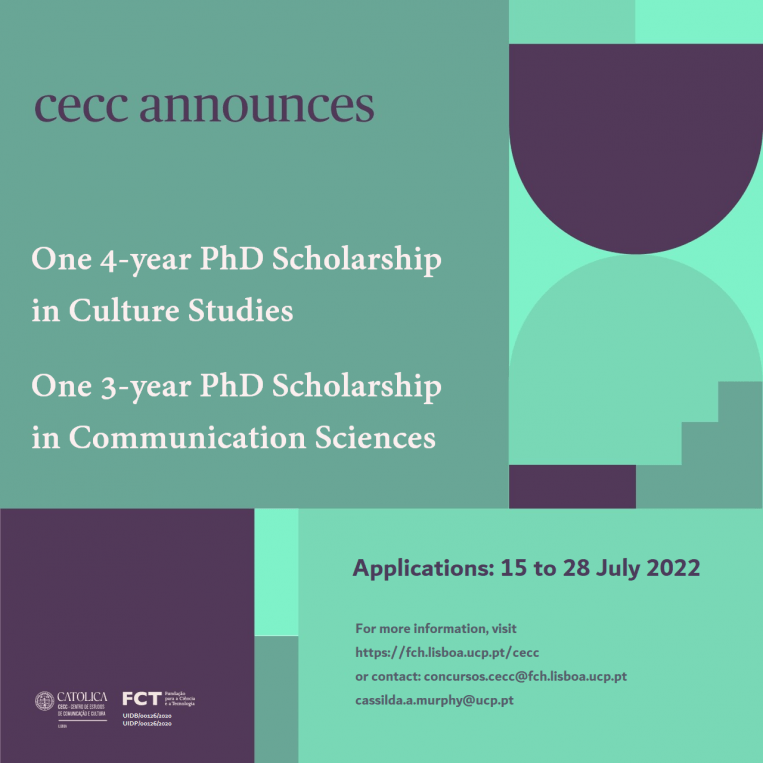
 The Lisbon Consortium