Category: Exhibitions

  • Francisco Trêpa: “Gall Ball” @ CAM curated by MA students of LXC

    Francisco Trêpa: “Gall Ball” @ CAM curated by MA students of LXC

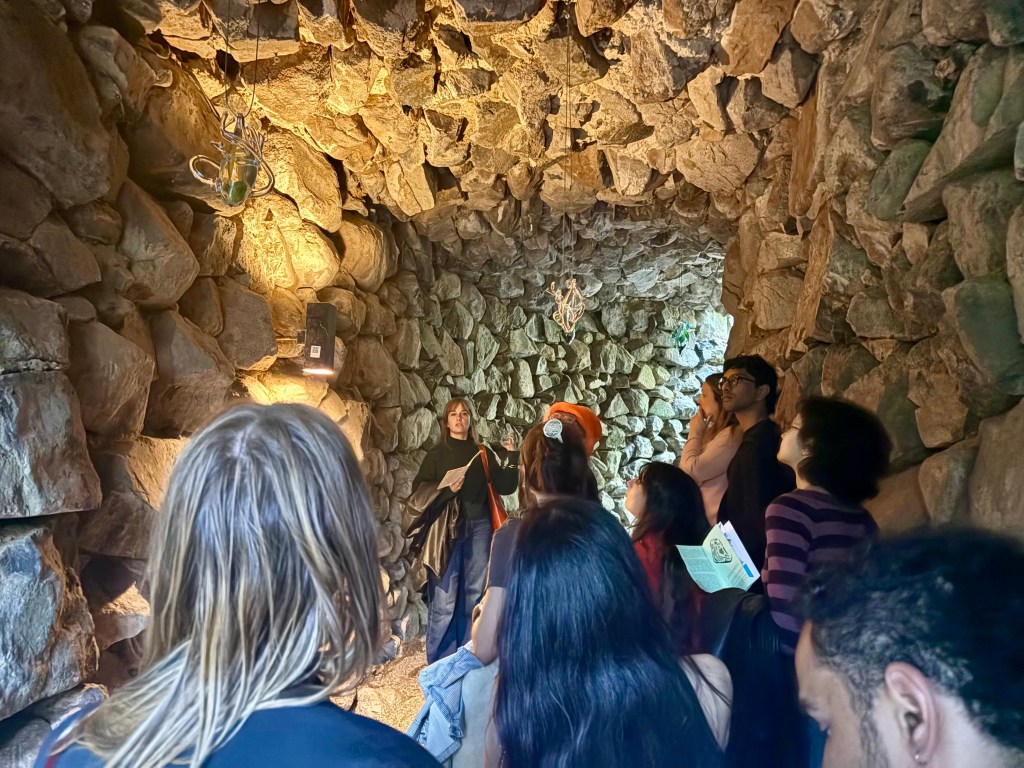
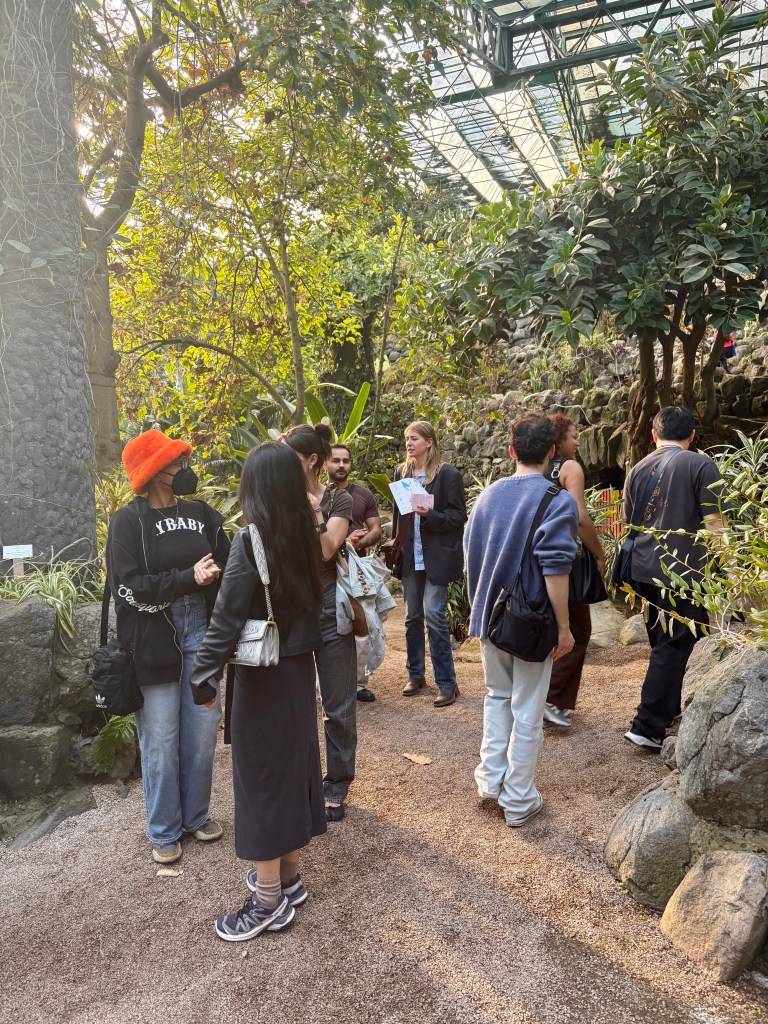
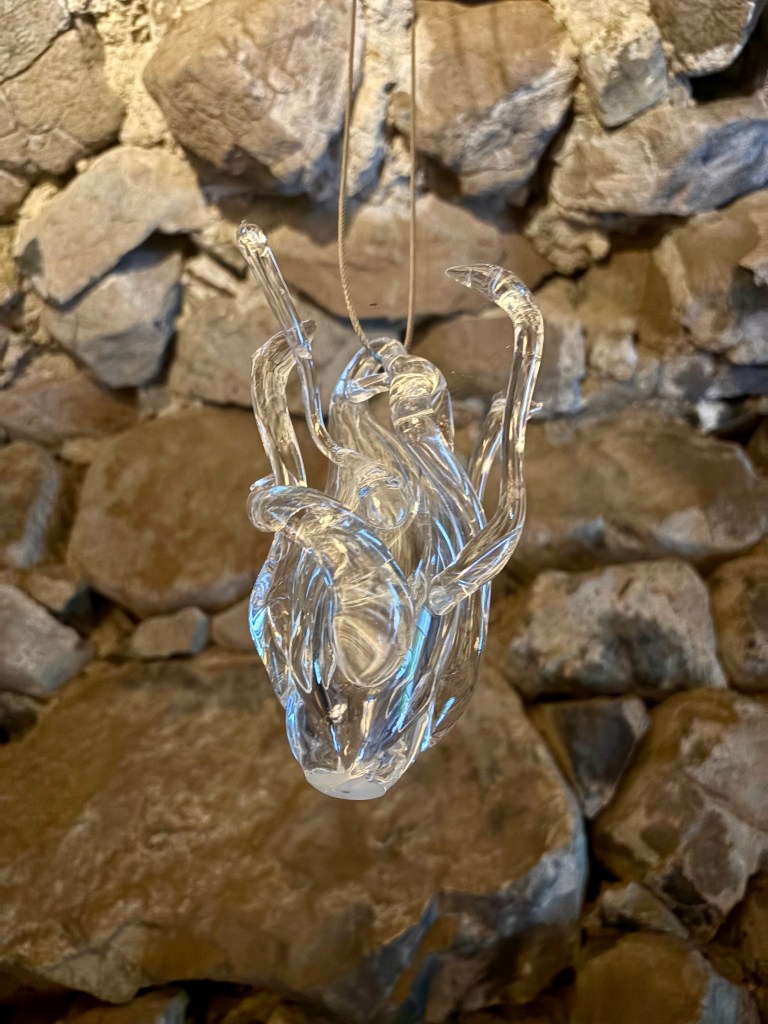
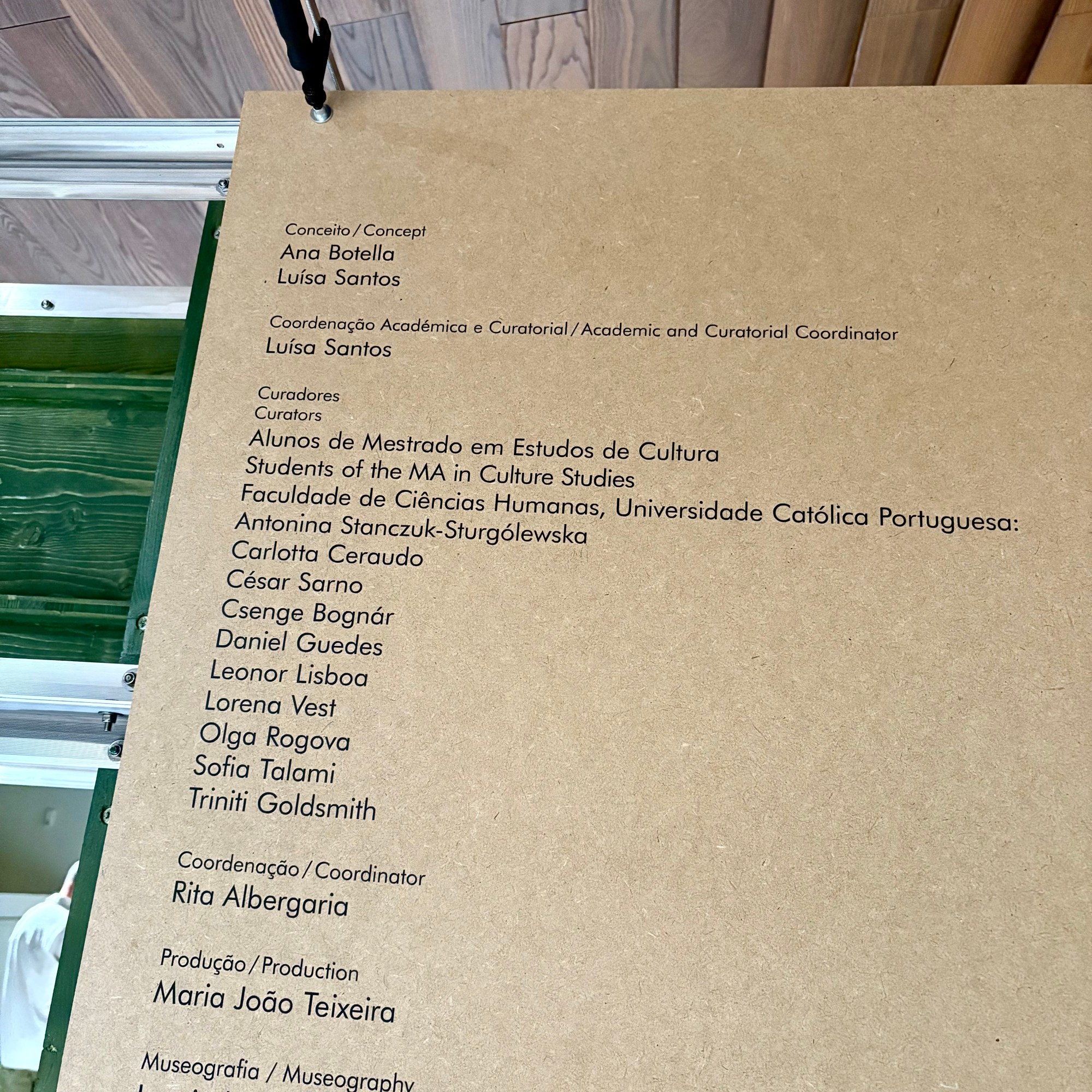
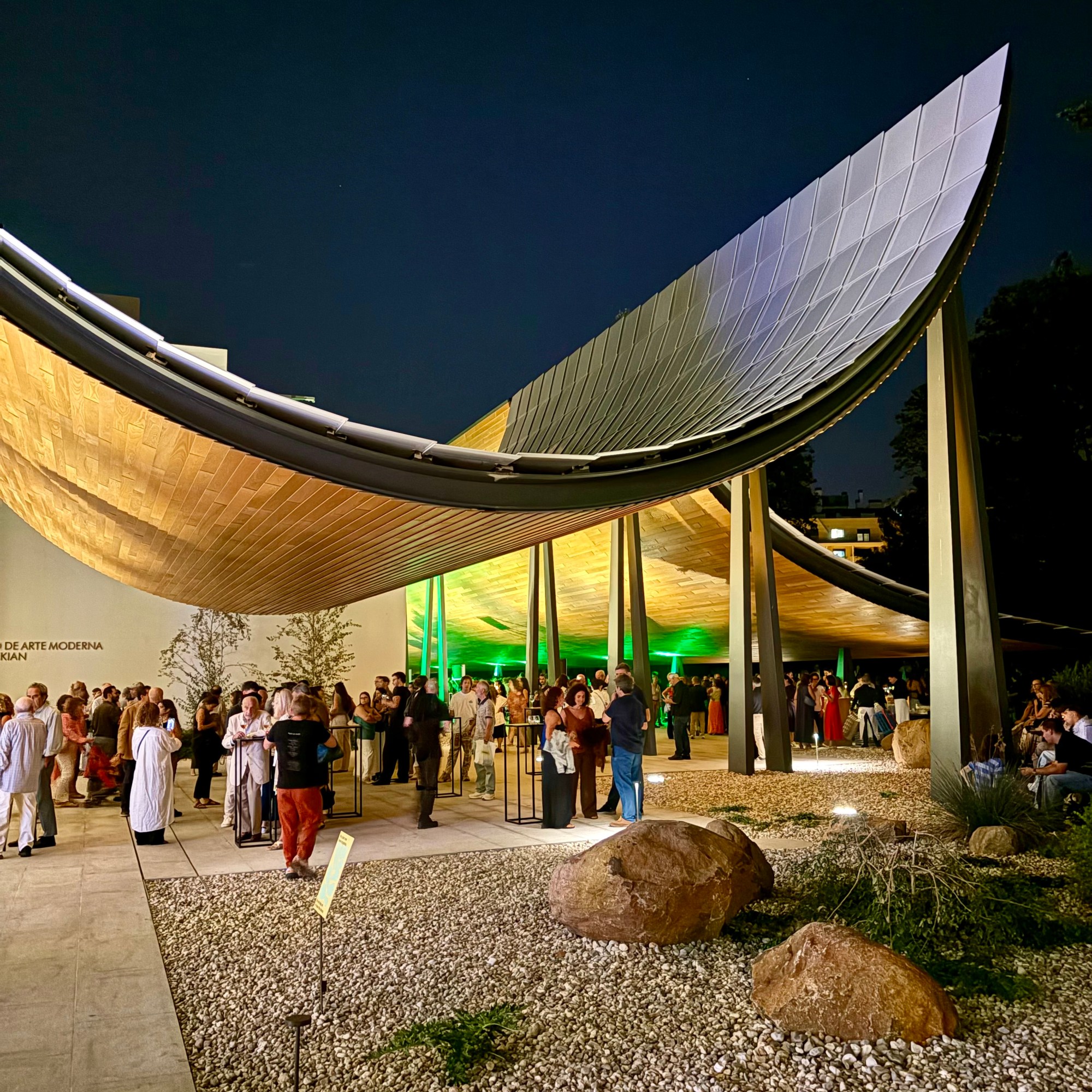
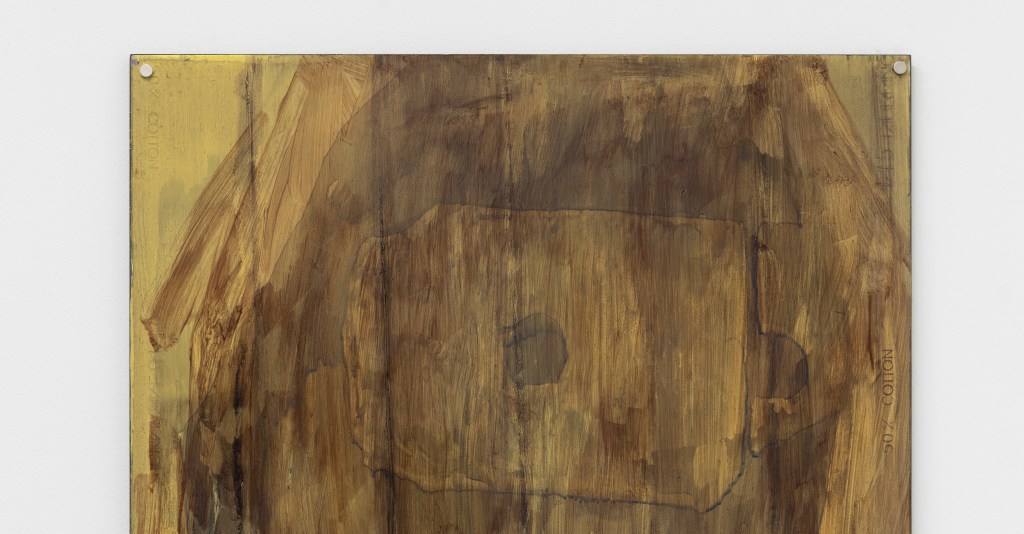
    Francisco Trêpa’s (Lisbon, 1995) ‘Gall Ball’ that is in exhibition in Engawa Space at CAM – Centro de Arte Moderna Gulbenkian is curated by students from the Curatorial Practices seminar in the MA program of Culture Studies, under the supervision of Prof. Luísa Santos and resulting from a protocol with CAM and UCP. The exhibition and the related programming serve as a prologue to Institution(ing)s – Co-Creating Inclusive and Sustainable European Art Institutions, a European Cooperation Project that encourages contemporary art and cultural organizations to co-create innovative institutional models that, through experimentation, co-creation, speculation, and advocacy of sustainable futures, contribute to social inclusion, environmental, economic, and artistic transformation.

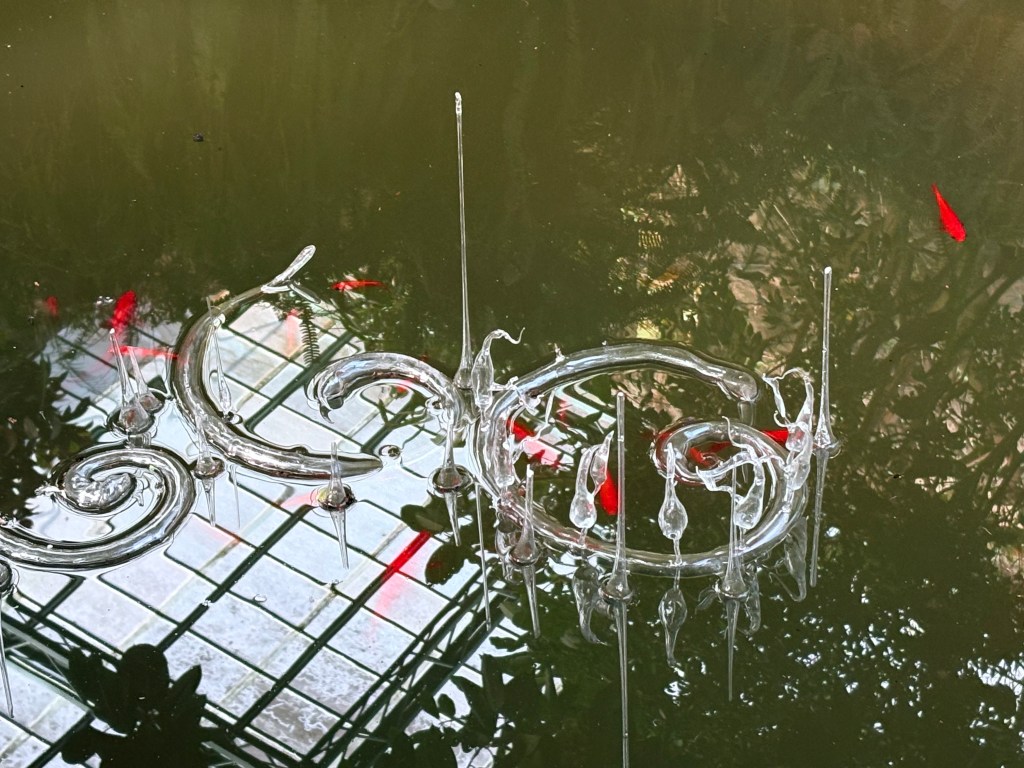
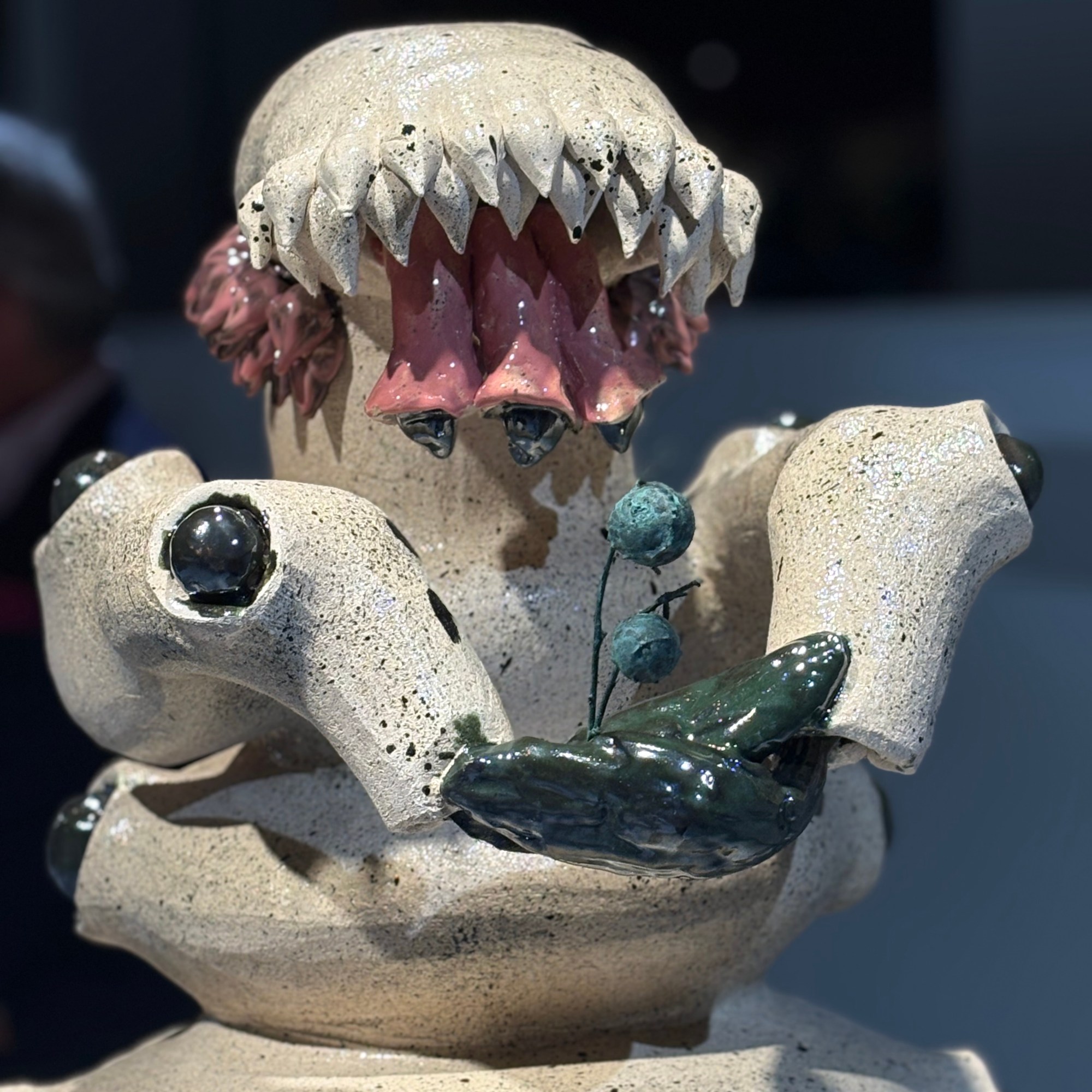
    Francisco Trêpa’s artistic practice explores the interconnections between life forms, metamorphosis, and hybridism. Gall Ball is inspired by the observation of galls found in CAM’s Garden, where the artist first encountered these biological reactions resulting from interactions between plants (such as oaks) and external agents (such as wasps). The effect is a swelling growth on the outside of the plant, providing nutrition and shelter to induce insects.

    Trêpa’s fascination stems from the way galls dissolve the tension between interior and exterior, host and parasite, autonomy and symbiosis. Far from being mere defensive reactions, they represent spaces of transformation and biological empathy – microcosms in which the plant, without apparent direct benefit, hosts the presence of the other. In this gesture of natural hospitality, the artist sees a possible inversion of survivalist logic, pointing instead to cooperation as a vital force in life-affected relationships.

    The ‘ball’ in the title points to a general rehearsal performed by Trêpa’s constellation of ceramic sculptures. The gallery is understood as an extension of the studio, with a space dedicated to production where the artist will be creating and finishing works. The process of physical and chemical transformation through which clay gives way to ceramics is made visible in the sculptures presented at different stages of the process: raw, unglazed, uncoloured, and finished. Over the course of the exhibition, these forms reveal distinct moments of this crystallization, thus manifesting a body in continuous transmutation until it reaches its irreversible condition.

    ‘Gall Ball’ includes an associated programme that includes visits, workshops, and other activities.

    Artistic direction

    Luísa Santos

    Curators and authors of the texts

    César Sarno
    Daniel Guedes
    Lorena Vest
    Olga Rogova
    Triniti Goldsmith

    Curators for the public programme

    Leonor Lisboa
    Carlotta Ceraudo
    Csenge Bognár
    Sofia Talami
    Antonina Stanczuk-Sturgólewska

    10:00 – 18:00 

    Sat, 10:00 – 21:00

    Closed on Tuesday

    Free admission (subject to ticket collection on the same day)

    20 Sep 2025 – 12 Jan 2026

  • Opinião | “Cultura, um espaço cheio de cadeiras vazias” (Marisa Mendes Rodrigues, Bantumen)

    Opinião | “Cultura, um espaço cheio de cadeiras vazias” (Marisa Mendes Rodrigues, Bantumen)

    Marisa Mendes Rodrigues wrote about the exhibition I Ate Civilization and It Poisoned Me for Bantumen.

    This exhibition, organized in the context of the partnership between the international academic network The Lisbon Consortium and CAM – Centro de Arte Moderna Gulbenkian, was curated by the MA students in Culture Studies (seminar of Curatorial Practices), for the Amélia de Mello Foundation Gallery, at the Universidade Católica Portuguesa, in Lisbon.

  • Closing of Rita Ravasco’s Tempo Sentido: Creative Writing Workshop and Open Mic at Casa do Comum (Dec. 8)

    Closing of Rita Ravasco’s Tempo Sentido: Creative Writing Workshop and Open Mic at Casa do Comum (Dec. 8)

    Nostalgia is a “temporal paradox” (Ravasco 2024) that blurs the lines between past and present, between imagination and remembrance. It can be cathartic, alchemical, dull, inspiring or painful. It can be consciously provoked or accidentally triggered by a vision, a sound, a smell.

    For the closing of Rita Ravasco’s installation Tempo Sentido (Casa do Comum, Nov. 13 – Dec. 8) we invite you to participate in our Creative Writing Workshop and/or our Open Mic Session, and share what makes you nostalgic!

    Bring an object or photograph, personal or found, and look into how and why it triggers a nostalgic longing in you.

    Creative Writing Workshop (Bilingual EN/PT)

    Dec. 8, 15h-16h

    Through a series of generative writing prompts anchored in the photo or object you decide to bring, we will explore different dimensions of nostalgia and the way it interacts with emotions, public and private life.

    The workshop prompts will be offered in English and Portuguese. You are free to write in any language.

    Workshop participants have the option to share the outcome of this creative writing session in the Open Mic Session that follows after.

    Workshop led by: Emily Marie Passos Duffy (Lisbon-based poet, performer and researcher)

    Workshop spaces are limited, if you are interested, please register under: info.diffractions@gmail.com

    Open Mic (Bilingual EN/PT)

    Dec. 8, 16:30h-18h

    In our Open Mic Session, we invite participants to share with us their thoughts, stories, poems, etc. about a nostalgic object or photograph they choose to bring (ca. 5 mins/participant). Photographs can be brought in analogue or digital form. Feel free to speak in Portuguese or English.

  • Diffractions: Rita Ravasco’s “Tempo Sentido” in exhibition at FCH

    Diffractions: Rita Ravasco’s “Tempo Sentido” in exhibition at FCH

    Diffractions, No. 8 (2024): Nostalgia

    Guest artist: Rita Ravasco

    Edited by:

    Miriam Thaler
    Gloria Adu-Kankam
    João Oliveira


    Tempo Sentido

    “The cover art by Rita Ravasco, showcasing a seemingly random collection of dysfunctional objects connected by colourful threads, is part of a multimedia art piece with the title Tempo Sentido [Time Sensed] exploring the functioning of memory and nostalgia. The human mind is figuratively represented as a sensory archive through these interconnected objects, representing the way memory and nostalgia can be triggered by sensory experience, creating an endless network of memory, longing and affect across time and space. The digital painting on our cover is interconnected with another digital piece, a video-animation, and a temporary on-site installation at Universidade Católica Portuguesa. Our cover art is in fact a digital sketch and image detail of the installation on site and together with the animation will remain as a digitally archived remnant of the on-site installation. The close communication between the digital and the physical mirror the extension of our very own life and of our memories into digital space. The multilayered piece evokes a myriad of questions connected to the functioning of nostalgia as an affect fusing diverse memories, times and spaces in the human mind as it is triggered by the physical and the digital.” (Miriam Thaler, “Editorial: Nostalgia,” Diffractions 8, 2024: 2-3)

    https://revistas.ucp.pt/index.php/diffractions/issue/view/887

    Rita Ravasco’s Tempo Sentido is in exhibition at Universidade Católica Portuguesa, Faculty of Human Sciences, next to CADOS, until July 26, 2024.

    The exhibition is sponsored by CECC – The Research Centre for Communication and Culture.

  • Opening | Window on the World, June 5, 2024, 16h (FCH-UCP)

    Opening | Window on the World, June 5, 2024, 16h (FCH-UCP)

    Window on the World is a project developed in the scope of the Ecocultures seminar (MA & PhD in Culture Studies, Faculty of Human Sciences), with the support of the Lisbon Consortium and CECC (Research Centre for Communication and Culture). It explores the inextricable relationship between culture and nature.

    The photography exhibition celebrates World Environment Day (June 5) and showcases photos produced and selected by the students participating in the Ecocultures seminar, under the guidance of Prof. Diana Gonçalves. World Environment Day 2024, hosted by Saudi Arabia, focuses on land restoration, desertification, and drought resilience.

    Using the expression “window on the world” as a motto, the exhibition wishes to bring awareness to pressing environmental matters, respond to and engage with worldwide efforts of environmental action creatively, and foster a meaningful reflection on the interrelation and interdependence between humans, non-humans, and the planet Earth.

    Photos: Aishwarya Kumar  |  Emma Hallemans (AUK)  |  Francisca Pereira  |  Hannah Paulina Dörfel  |  Joana Nóbrega  |  Katharina Eva Seelen  |  Lea Breyer  |  Maria Beatriz Amaral  | Nora Frings

  • AYNI | Igor Jesus: Time Machine (2023) Galeria Antecâmara 28.3. 18h

    AYNI | Igor Jesus: Time Machine (2023) Galeria Antecâmara 28.3. 18h

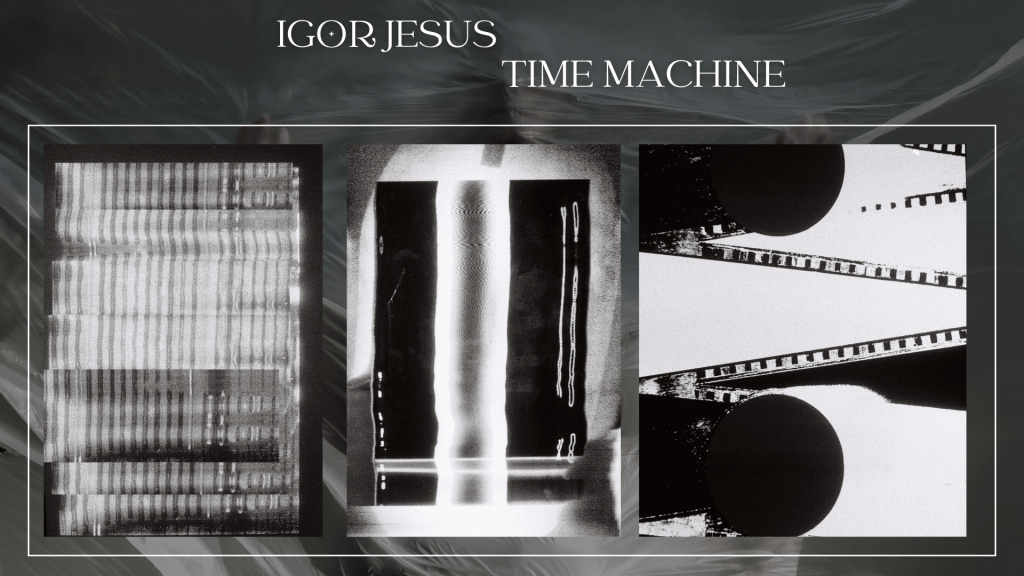
    We would like to invite you to the fifth installation of Ayni: Theorems of Reciprocity, the multi-media installation Time Machine (2023), by Igor Jesus. This installation integrates photography, movement, interactive sound, and radio elements and will premiere at Galeria Antecâmara, on the 28th of March 2024, from 6 p.m.  Join us as we watch Time Machine transition from day to night.

    Presented at Antecamara starting on the 28th March to 4th May 2024, Igor’s Time Machine explores philosophical perspectives that give priority to human-centric views of reality. Consistent with Igor practice, the exhibition highlights that creativity and artistic expression have the special power to make visible what is invisible.The work, in conversation with the physical space of the here and now, also pulsates with dynamic sound and visual effects, offering a sensory journey that extends beyond the boundaries of the gallery space.

    Time Machine builds on Igor Jesus’s previous works, including Poem of Fire (2021), where he blended classical and electronic music together with light and astrological activity. Inspired by the unfinished work of Russian composer Alexander Scriabin (1871–1915), Poem of Fire explored the modeling of sound after the visual, using a NASA database to translate solar pulses into song. Lastly, by framing the piece’s multisensory elements within Galeria Antecâmara, one can imagine Jesus’s narrative infusing the hollowed spaces of the building’s architecture, while also, due to the space’s exhibitionism-ready windows, extending beyond the confines of the gallery.

    Igor Jesus lives and works in Lisbon and has a degree in Sculpture from the Faculty of Fine Arts of the University of Lisbon. In 2013, he won the first prize in the ICA (Institute of Cinema and Audiovisual) competition for the making of short films. Igor most recent group exhibitions include: HangarOut – EntreLinhas, Palácio Marquês de Abrantes (2017), 2016 Artists’ Film International (at MAAT, Lisbon, Whitechapel Gallery, London, Istanbul Modern, Turkey, GAMeC – Galleria d’Arte Moderna e Contemporanea di Bergamo, Italy, and Projecto 88, Mumbai, India).

    Curated by PhD and MA Students in Culture Studies at The Lisbon Consortium, Universidade Católica Portuguesa: Teresa Weinholtz, Aishwarya Kumar, Rosalind Murphy, Ida Svee and Joana Nóbrega. In the framework of the seminar in Curatorial Practices, coordinated by Luísa Santos. Support: República Portuguesa – Cultura | DGARTES – Direção-Geral das Artes.

    Learn more about the project on AYNI website and instagram.

  • AYNI | An Experiment in Intervals III – Violet Desert by The Third Thing, 7.3.-23.3. Antecâmara

    AYNI | An Experiment in Intervals III – Violet Desert by The Third Thing, 7.3.-23.3. Antecâmara

    The opening of the exhibition installation An Experiment in Intervals III – Violet Desert by The Third Thing will take place on March 7, 2024, at 18h

    The Third Thing (PT/AUS) is an arts-based research collaboration between Nithya Iyer and Vlad Mizikov. It seeks to investigate experimental methodologies in the negotiation, actualisation and instrumentalisation of the body in spatial territories. Opening at Antecâmara on the 7th of March, An Experiment in Intervals III – Violet Desert (2022) reads the site of the industrial park in Barreiro, Portugal, through the lens of ‘monstrous architecture’. When the live, attentive and improvisational body – the phenomenological agent – encounters this territory, an Interval is begun: the multiplicity of futures manifest in the tensile and reflexive passage of a body leaking through space-time.

    Curated by MA and PhD Students in Culture Studies: Silvia Laurelli, Hannah Dörfel, Anna Salvi, Inés Solustri and María Moreno Navarro.

    You can find more information about the project at AYNI instagram and website.

  • AYNI | LANDRA: Fundo na Paisagem (Deep into the Landscape) 15.2. 2024 Antecâmara

    AYNI | LANDRA: Fundo na Paisagem (Deep into the Landscape) 15.2. 2024 Antecâmara

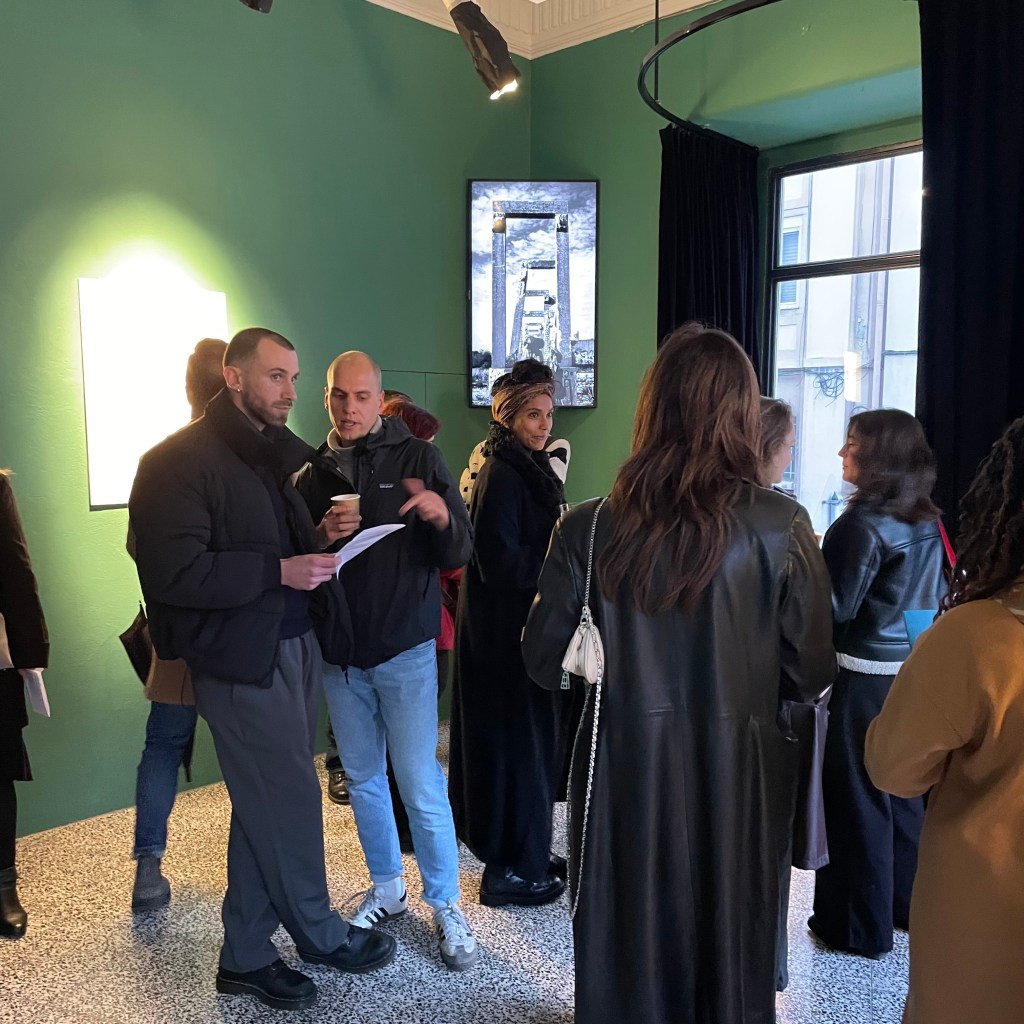
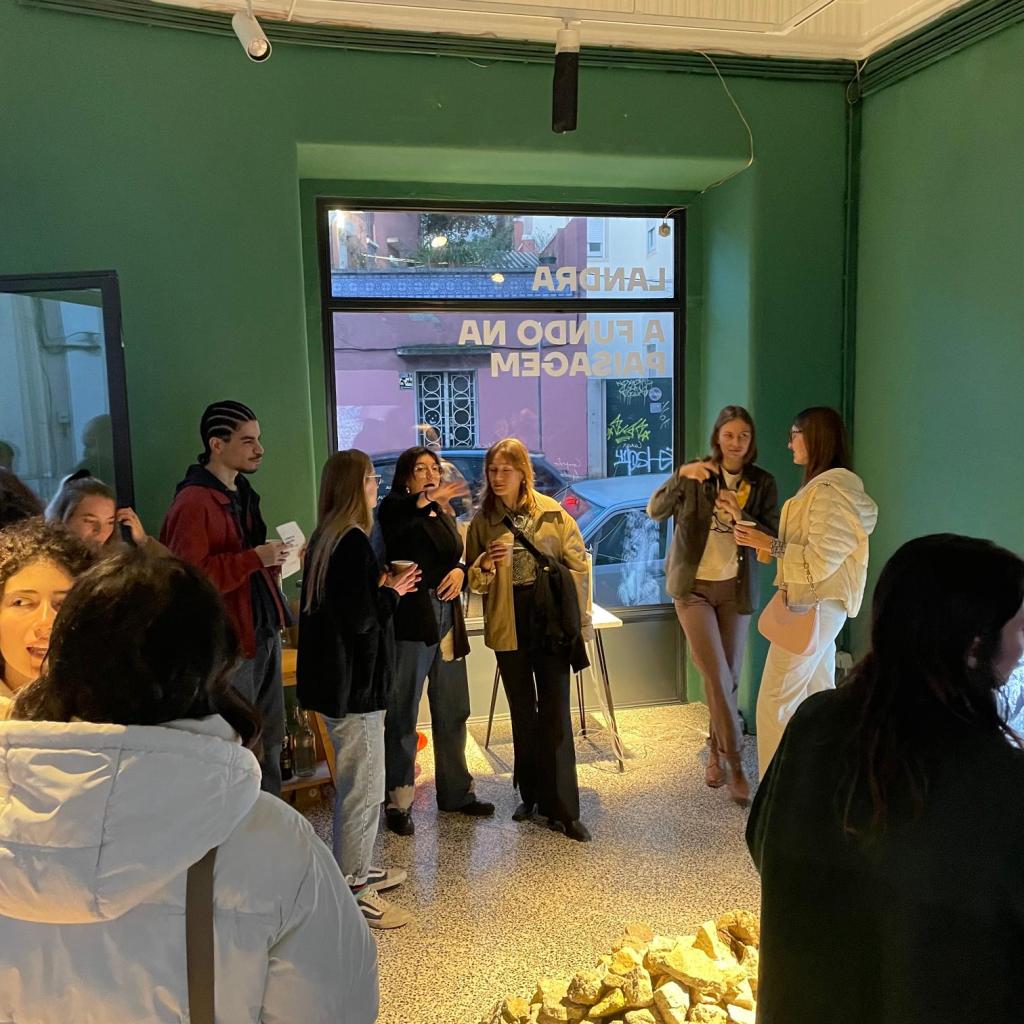
    We’re thrilled to invite you to join us on February 15 at 18:00, in Galeria Antecâmara, for the opening of the A Fundo na Paisagem exhibition, by LANDRA, running till March 1. 

    A Fundo na Paisagem – Deep into the Landscape is a project about life’s unapologetic resilience. In Porto, nestled in the patio of the CCOP, an extraordinary transformation began in August 2022. The artist duo poses a riddle steeped in wonderment: how can a cold cement patio become a vibrant agroforest? In Antecâmara, we will be able to see the different processes behind this transformation, as well as different elements that made the destruction/construction possible. 

    We hope you can join us for the afternoon filled with creativity and conversation. LANDRA, known for their innovative artistic expressions, will be showing the work at the gallery. Galeria Antecâmara, with its captivating ambiance, serves as the perfect meeting place for this unique gathering.

    Should you have any questions or require further information, please do not hesitate to contact us in reply or on instagram. You can also find more information on our website.

  • AYNI | Jabulani Maseko: Goals 18.1. 2024 Hangar

    AYNI | Jabulani Maseko: Goals 18.1. 2024 Hangar

    We would like to invite you to the second installation of Ayni: Theorems of Reciprocity, the projection of “Goals”, a video performance piece by Jabulani Maseko, followed by a roundtable talk with the artist and the curators. It will take place at Hangar on the 18th of January 2024, from 7 p.m.  

    The event will be the second installation of the Ayni: Theorems of Reciprocity project, which is a set of five project rooms at Brotéria, HANGAR, Antecâmara, and Universidade Católica Portuguesa that will feature works by Rita Ferreira, Jabulani Maseko, LANDRA – Sara Rodrigues and Rodrigo Camacho, The Third Thing – Nithya Iyer and Vlad Mizikov, and Igor Jesus.

    Presented at Hangar, in January 2024, Maseko’s video installation Goals (2018) takes center stage. This ten-minute piece unfolds against a winter-landscape in Switzerland, capturing Maseko’s struggle as he pushes a goalpost from one side of the frame to the other. The video cleverly plays with the idiomatic expression “moving the goalpost”, embodying a physical and metaphorical push, reflecting the artist’s journey to redefine boundaries and test the limits of the body. This work also reaffirms the artist’s way of working, which often reflects where he is geographically at any given moment. Following the screening of Goals, the evening transitions into an interactive conversation with Maseko. The talk delves into the overarching theme of the body in his work, exploring its recurrence and significance in his broader artistic portfolio. A unique exploration of the body as a site of contradictory emotions and states is promised, threading the narratives of both personal and collective memory, and offering visitors an engaging and reflective experience.

    Jabulani Maseko, born in Apartheid South Africa in 1977, was the first black student at Redhill, a private school for white children at the time. He left the country at 18, coinciding with the collapse of the regime. His pursuit of higher education led him to the UK, where he earned a master’s degree at the Slade School of Fine Art in London. Maseko’s works have graced group and solo exhibitions across the United States, Europe, and Africa. Maseko’s creative arsenal, which spans sculpture, drawing, painting, installation, and performance, often gravitates towards materials rich with meaning from his childhood in Apartheid South Africa. His works delve into the collective black experience throughout history- a history based on the black body in conflict with society and ultimately in conflict with itself.

    Curated by students of the MA and PhD programmes in Cultural Studies, The Lisbon Consortium, Universidade Católica Portuguesa, in the framework of the seminar in Curatorship, coordinated by Luísa Santos. Support: República Portuguesa – Cultura | DGARTES – Direção-Geral das Artes.  

    Learn more about the project on our website, and our Instagram @ayni_theoremsofreciprocity. 

  • AYNI | Rita Ferreira: Casa de Chá (Tea House) 11.-27.1. 2024 Brotéria

    AYNI | Rita Ferreira: Casa de Chá (Tea House) 11.-27.1. 2024 Brotéria

    The opening of Ayni: Casa de Chá | Tea House exhibition will take place at Brotéria on the 11th January, 2024, from 6 p.m. to 8:30 p.m.

    The exhibition which can be visited during the working hours of Brotéria from 11th to 27th of January, 2024, inaugurates the Ayni, theorems of reciprocity project, which is a set of five project rooms at Brotéria, Antecâmara, HANGAR and Universidade Católica Portuguesa that will feature works by Rita Ferreira, Igor Jesus, LANDRA – Sara Rodrigues and Rodrigo Camacho, The Third Thing – Nithya Iyer and Vlad Mizikov, and Jabulani Maseko.

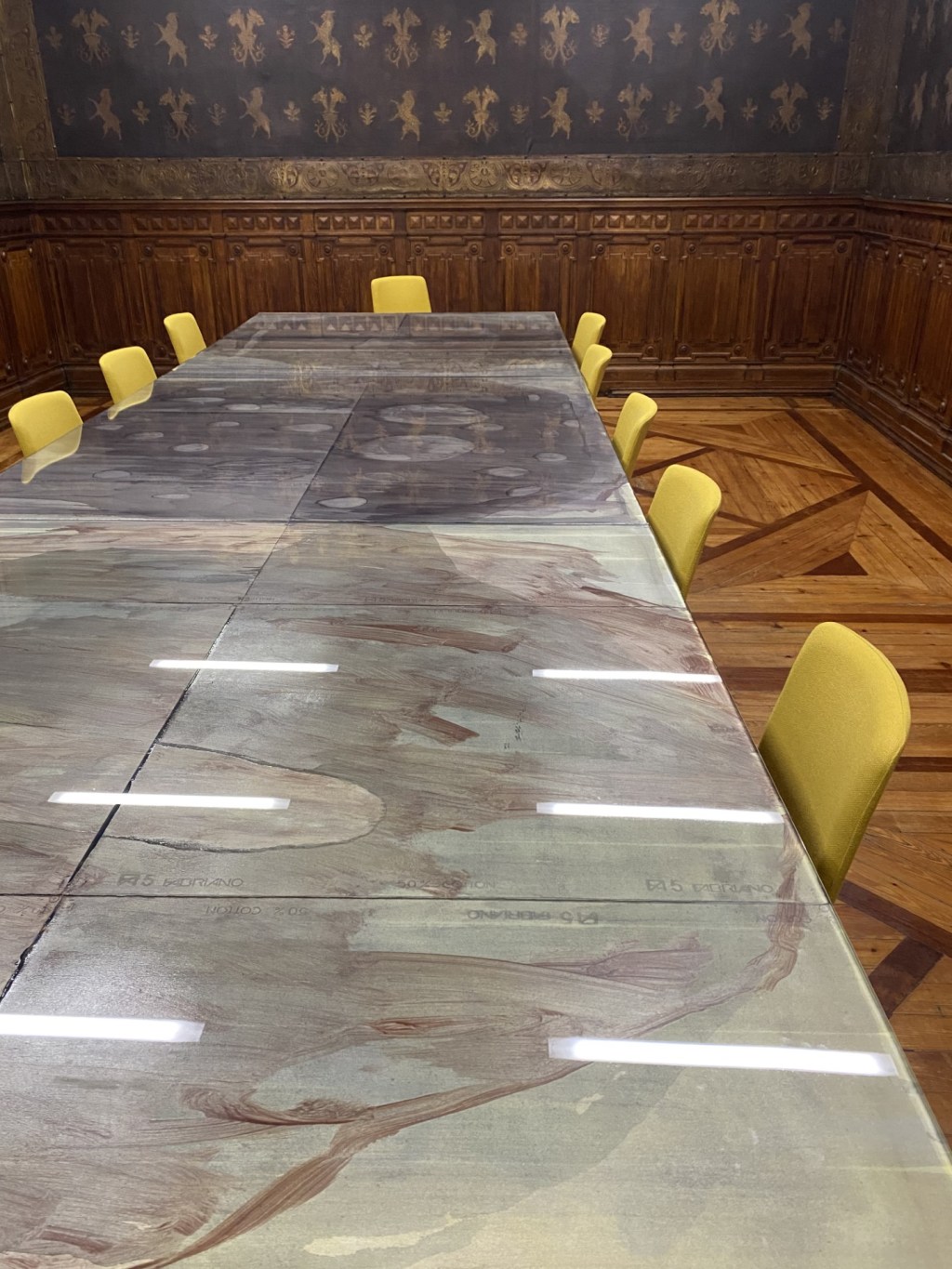
    In Ayni: Casa de Chá | Tea House, artist Rita Ferreira proposes to engage with the aesthetic and functional dimensions of Broteria’s Reading Room, as well as explore the tension between the notions of originality and reproduction. The artist’s painting lies on the surface of a large table, beneath a layer of protective glass. This translucent horizontal surface opens a window into the past and functions as a mirror of the present, inviting the inhabitants of the space to take notice and act upon the artwork. Here, Ferreira’s archive – meaningful or trivial forms and objects collected over time – undergoes a process of abstraction that seeks to fixate the fluid and destabilize the still.

    Rita Ferreira was born in Obidos in 1991 and is currently residing and working in Lisbon. She obtained a BA in Painting at the Lisbon School of Fine Arts (University of Lisbon). In 2023, Rita Ferreira was one of the finalists of the Amadeo Souza-Cardoso Prize and was also one of the finalists in 2022 of the EDP New Artists Prize. 

    Curated by students of the MA and PhD programmes in Cultural Studies, The Lisbon Consortium, Universidade Católica Portuguesa, in the framework of the seminar in Curatorship, coordinated by Luísa Santos. Support: República Portuguesa – Cultura | DGARTES – Direção-Geral das Artes. 

    Learn more about the project on our website, and our instagram @ayni_theoremsofreciprocity.

  • Visit to Photo Ark in photos

    Visit to Photo Ark in photos

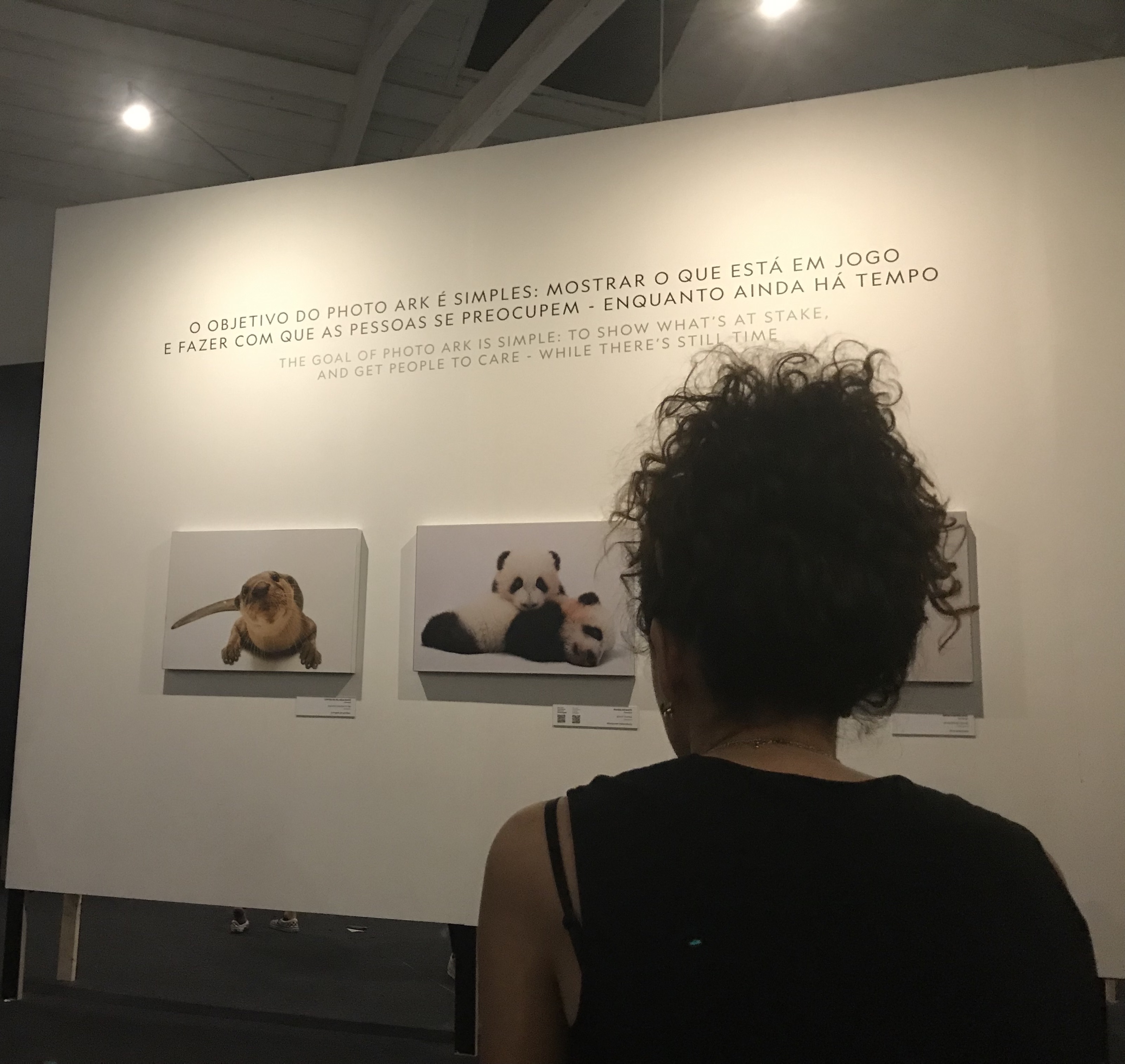
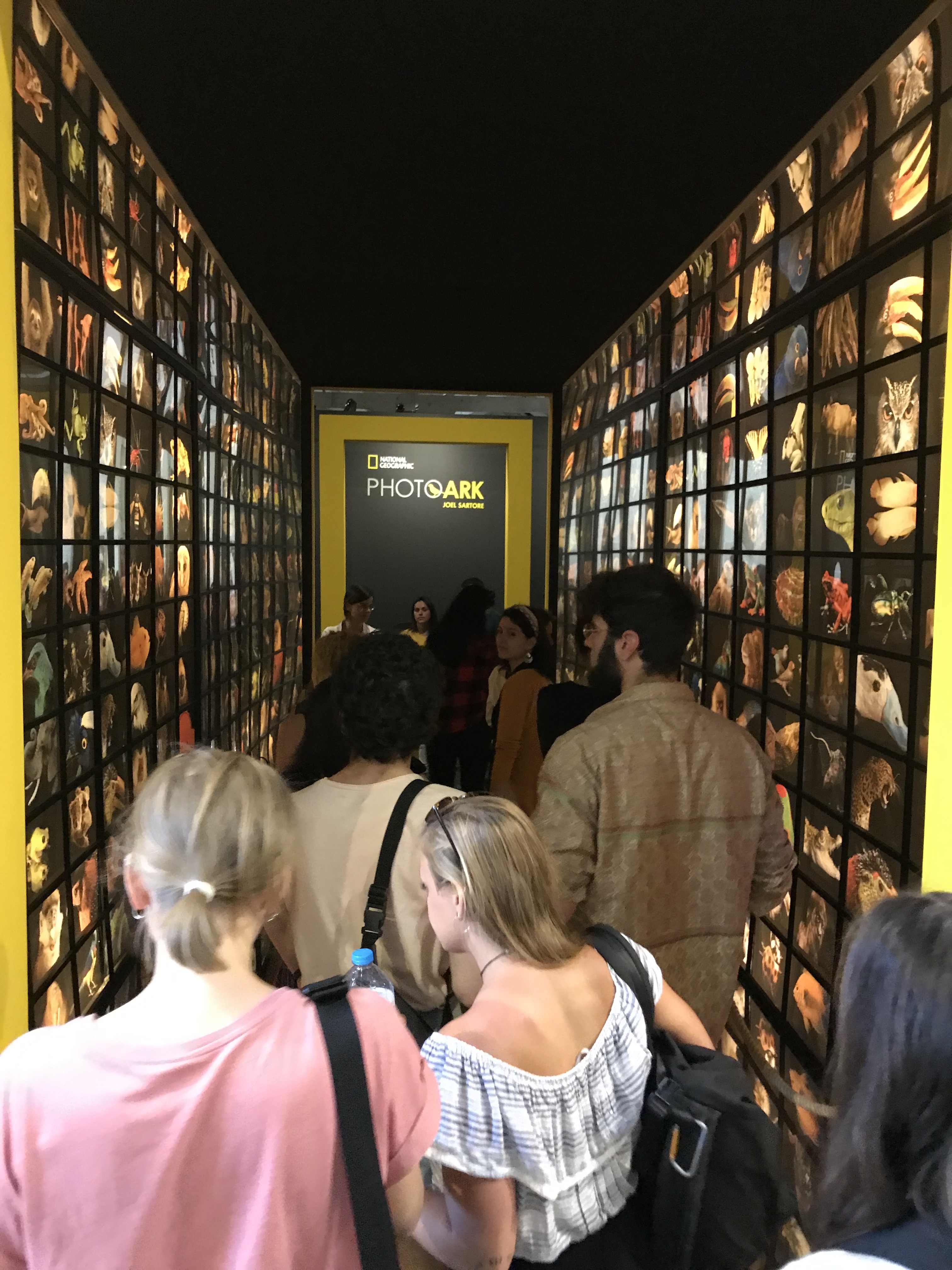
    Two weeks ago, on May 3, the Lisbon Consortium organized a visit to the photography exhibition Photo Ark by Joel Sartore (Cordoaria Nacional). The visit took place in the scope of the seminar on Contemporary Culture and the Environment.

  • Finissage & Catalogue Presentation “The Eyes Listen”

    Finissage & Catalogue Presentation “The Eyes Listen”

    The  finissage and presentation of the catalogue of the exhibition “Os Olhos Escutam-The Eyes Listen” will take place on May 16, at 5pm, at Universidade Católica Portuguesa (Galeria Fundação Amélia de Mello).

    The presentation will be followed by the Performance “Aplauso-Applause” with Tomás Cunha Ferreira, David Louis Zuckerman and Marcos Barbosa.

  • Ballets Russes in Lisbon

    Ballets Russes in Lisbon

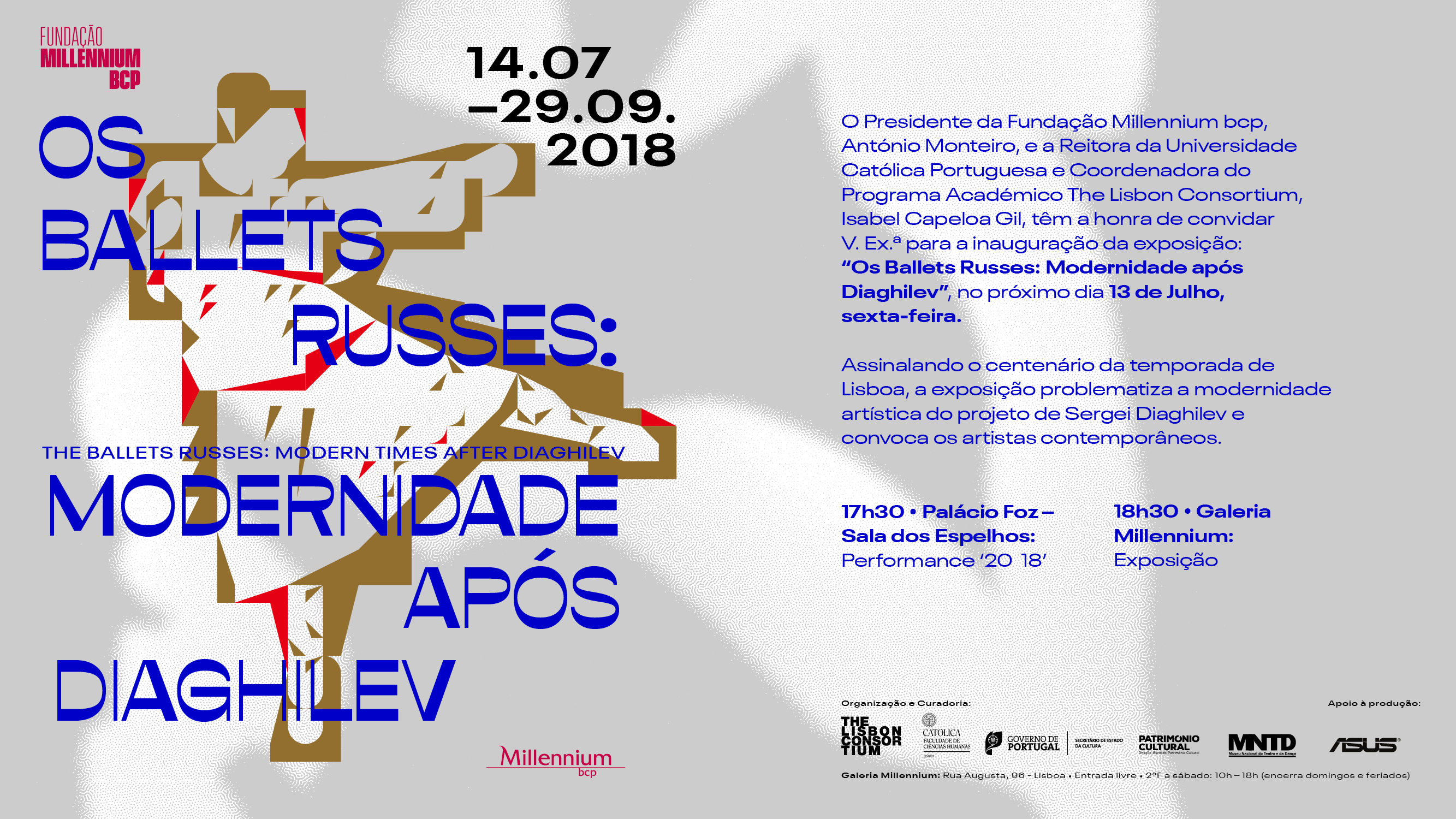
    The inauguration of the Nucleus “The Ballets Russes in Lisbon”  from the exhibition “Os Ballets Russes: Modernidade após Diaghilev”, will take place on July 26th at 6:00 pm, at Museu Nacional do Teatro e da Dança.


    V2_mntd_convite_ballet-russes.jpg

  • Ballets Russes exhibition in images

    Ballets Russes exhibition in images

    This slideshow requires JavaScript.

  • Ballets Russes: exhibition with participation of LxC students

    Ballets Russes: exhibition with participation of LxC students

    AF_e-convite_150_ballet-russes

    Celebrating the centenary of the Ballets Russes season in Lisbon, the exhibition  reflects on the artistic modernity of Serguei Diaghilev’s project and has the participation of contemporary artists.

    “The Ballets Russes: Modernity after Diaghilev” is a Lisbon Consortium project, with the support of Fundação Millennium BCP and other partners, coordinated by Professor Isabel Capeloa Gil, rector of Universidade Católica Portuguesa and director of the LxC, with the assistence of students of the MA and PhD programs in Culture Studies.

    The exhibition, that opens this friday and can be seen until the end of September, comprises three clusters, displayed in different cultural venues in Lisbon and includes a performance by Teatro Praga and a work by Vasco Araújo.

  • 4Cs Project inaugurates exhibition at Gulbenkian

    4Cs Project inaugurates exhibition at Gulbenkian

    13 Shots is the title of the exhibition project by artist Aimée Zito Lema (b. 1982, NL) which opens on Thursday 28 June at the Calouste Gulbenkian Museum (Modern Collection Project Space). Curated by researchers Luísa Santos, Ana Cachola and Daniela Agostinho, this is one of the eight chapters of the exhibition created as part of the 4Cs: from Conflict to Conviviality through Creativity and Culture, a collaborative project coordinated by FCH-UCP and co-funded by the European Union’s “Creative Europe” programme. The project presented here is the result of a period of research residency completed by the artist at Rua das Gaivotas 6. 13 Shots brings together works that explore various aspects of individual, social and political memory – the result of the artist’s collaboration with the Lisbon Theatre of the Oppressed Group at the Calouste Gulbenkian Museum’s Multipurpose Room. Through performative exercises co-created by the artist and the group, the intergenerational transmission of the 25 April revolution and the photographic archive of the ACARTE service become material for investigating the way in which memory is passed on through stories, images, gaps and silences that are reproduced, filled, and reimagined collectively.

    More information:


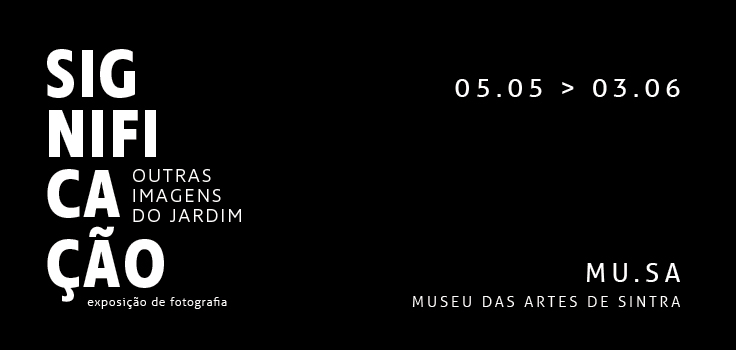
  • Guided tour to “Significações”: June 1st

    imagem visita guiada 1 Junho


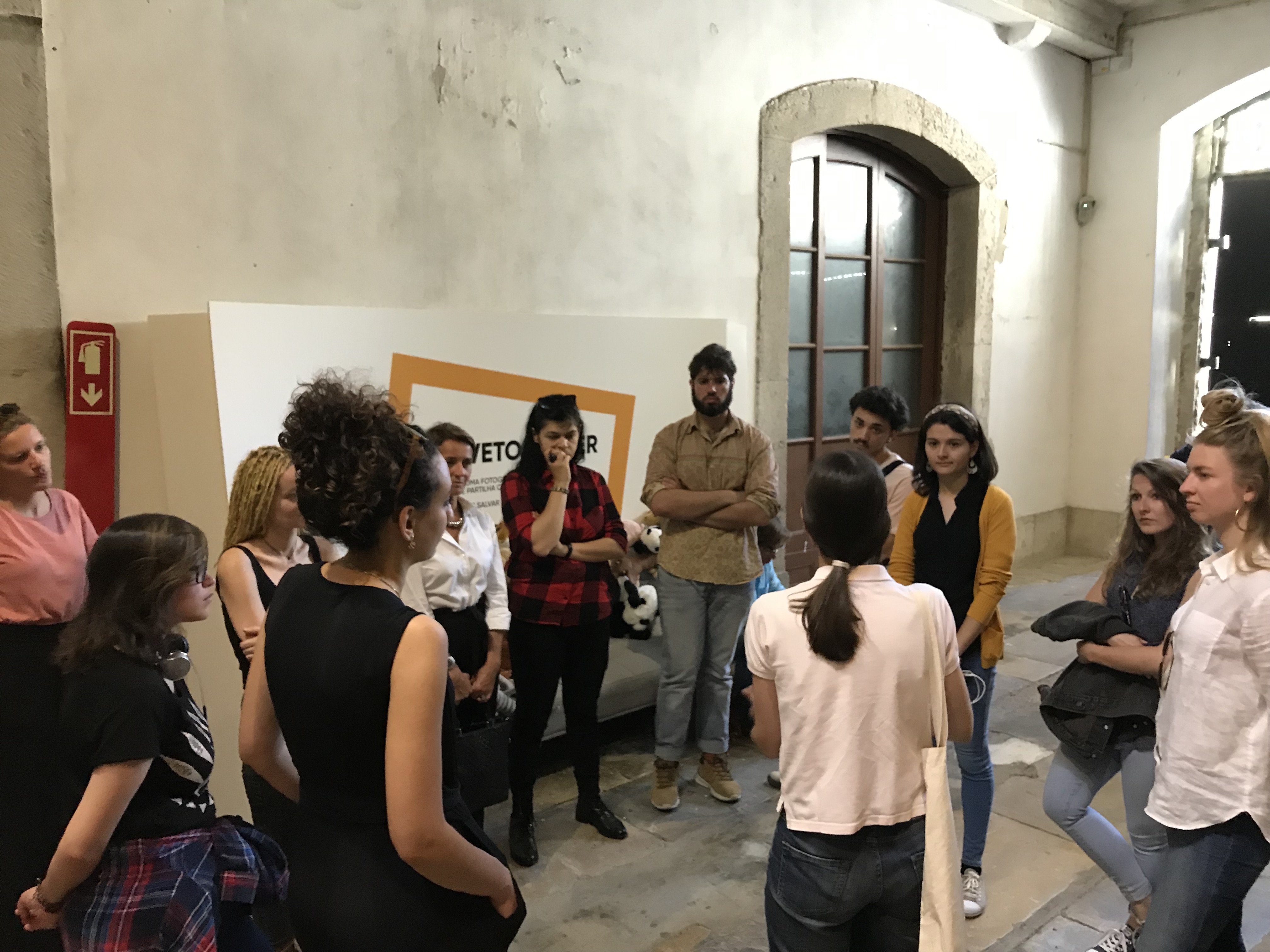
    On June 1st we will go to Sintra’s Art Museum to visit the photography exhibition Significação, guided by Ricardo Escarduça, student of the Master in Culture Studies. The artists will be present for a talk after the visit.

    A bus will leave UCP at 2.30 pm and will return from Sintra at 6.00 pm

    Those who are interested in coming with us, please send a confirmation email to lxconsortium@fch.lisboa.ucp.pt  before May 21, to secure a place in the bus.


  • Group photo exhibition curated by MA student

    Group photo exhibition curated by MA student

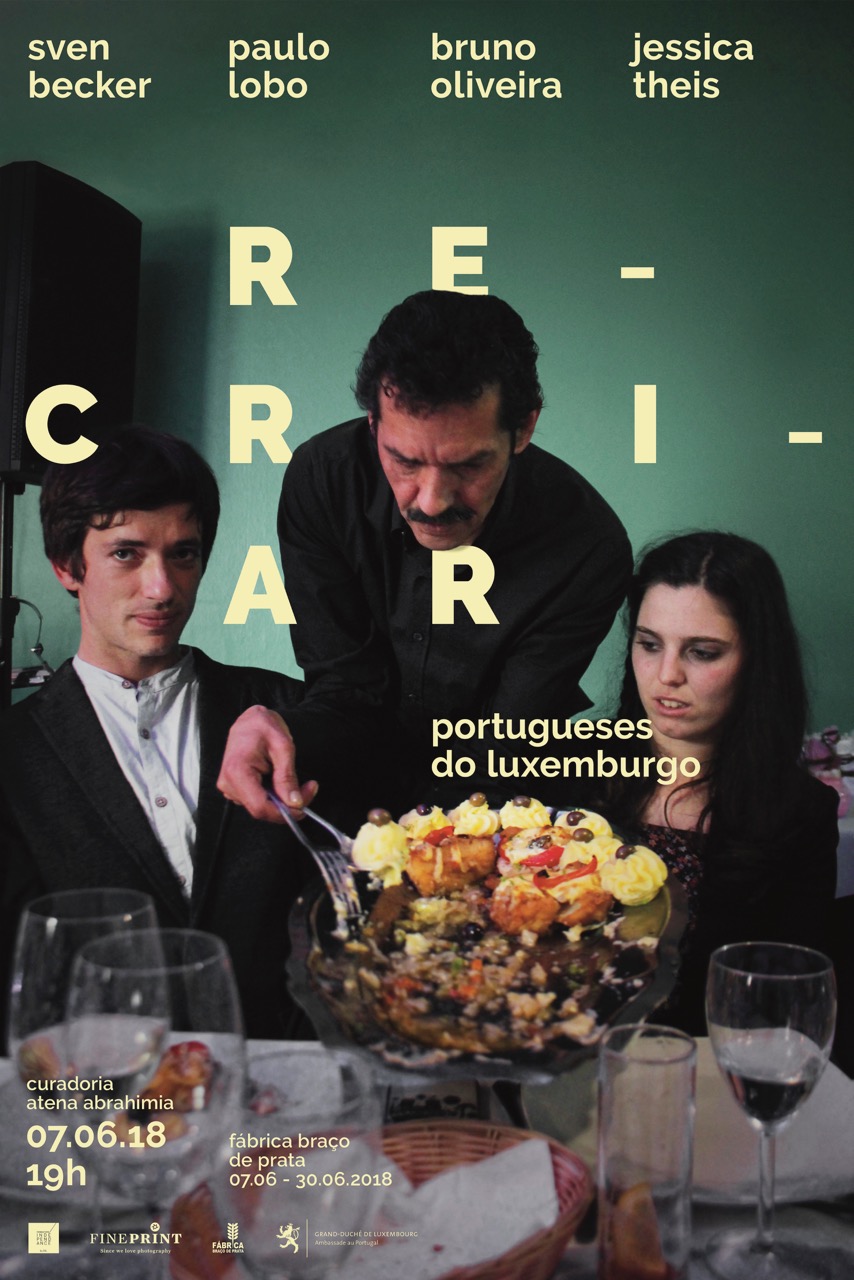
    The MA student Atena Abrahimia was the curator of the group photography exhibition “RECRIAR: Portugueses do Luxemburgo”, that gathers works by Sven Becker, Paulo Lobo, Bruno Oliveira, Jessica Theis. The exhibition will take place between the 7th and the 30th of June in Fábrica Braço de Prata, at Sala Arendt.

    The opening will be May 7

    ABOUT THE PROJECT

    Since the enlargement of the European Union to 28 countries, an increase of migration flows can be observed. During the past decade, the number of intra-European and, above all, international migrants has risen tremendously, which makes it one of the most important and urgent issues of our time.

    The group photography exhibition ‘RECRIAR: Portugueses do Luxemburgo’ concentrates on the public and private lives of the Portuguese who have settled down in Luxembourg since the 1960s. The works of four photographers from Luxembourg will be presented: Sven Becker, Paulo Lobo, Bruno Oliveira and Jessica Theis. Each of them will explore a different aspect of the theme.

    Since 1960, the number of Portuguese in Luxembourg has risen. Today they make up around 16% of the total Luxembourgish population. The Portuguese in Luxembourg represent the highest proportion of Portuguese in relation to the local population, outside of Portugal. What is the reason for this high percentage? What has driven so many Portuguese to leave their country and choose Luxembourg as their destination? Besides trying to find answers to these questions, this exhibition also examines the challenges of identity and belonging as well as the challenges and results of immigration which have shaped the Portuguese Luxembourgers and Luxembourg as a country.


    recriar_poster_final_sans_bordure_small

  • Exhibition at Parques de Sintra organized by a Lxc MA student

    Exhibition at Parques de Sintra organized by a Lxc MA student

    cartaz.png

    The exhibition “Significação. Outras Margens do Jardim” was organized and produced by the Lisbon Consortium Master student Ricardo Escarduça, with the coordination of Maria de Carvalho, during his internship at the Lxc partner Parques de Sintra-Monte da Lua. The exhibition, that opens May 5 and goes until June 3, shows the work of four artists, selected in the open competition. The  juri was composed by Isabel Capeloa Gil, Marc Lenot and Sérgio. B. Gomes and had Peter Hanenberg as scientif adviser.

    More information here

  • Zohar Yanko writes about exhibition at MAAT

    Zohar Yanko, a MA student at the Lisbon Consortium, wrote about the exhibition ‘On Exile’, by José Carlos Teixeira, at MAAT. The text, available in portuguese and english, is part of January edition of Contemporânea Magazine.

    On Exile functions as a liminal space, located on the borderland between ethnographic and artistic research, between the scientific and the philosophical; it is a space where, in the poignant words of Homi K. Bhaba, [2] “[p]rivate and public, past and present, the psyche and the social develop an interstitial intimacy”. This integration of academic, political and psychological discourses with a visual art creates an intimate space for investigation. This unique crossroad invites the visitor to join the effort, to interact with the notion of exile in ways which would not be possible otherwise. It might even lead to wonder about these separations in the first place.

    Zohar Yanko

  • Parques de Sintra: call for artists for photography exhibition

    Parques_de_Sintra_promove_exposicao_coletiva_de_fotografia-noticia-detalhe

    Parques de Sintra Monte da Lua, one of the partners of the Lisbon Consortium, will promote a collective photography exhibition between May 5 and June 3, 2018, under the title “Significação. Outras Imagens do Jardim”. Artists are invited to submit their competition proposals, following the regulations that can be found here.

    In the call for artists, we can read:

    “Using the gardens, parks and hunting grounds that are under Parques de Sintra’s management as a working place, this show intends to promote a fresh look over the historical heritage, stimulating and supporting the artistic contemporary production and its fruitions by diverse audiences.”


  • José Carlos Teixeira at Lisbon Consortium

    Last thursday, November 9, José Carlos Teixeira met the Lisbon Consortium students for an informal meeting. The visual artist, who also teaches at University of Wisconsin-Madison, talked about his background and the current exhibition at MAAT, “On Exhile”, tackling subjects like migration, displacement and identity.

  • Study trip to Porto and Guimarães

    Study trip to Porto and Guimarães

    Last weekend, February 11- 12 2017, some students and teachers of The Lisbon Consortium went on a study trip to Porto and Guimarães. The program included a Talk at Porto City Hall by Guilherme Blanc about the cultural politics of the city, a visit to Serralves Foundation to see Philippe Parreno’s exhibition “A Time Coloured Space”, Joan Miró’s “Materiality and Metamorphosis”, Novo Banco Revelation 2016- Andreia Santana, a choreography at Centro Cultural Vila Flor, in the context of GUIdance Festival – Speak Low if you Speak Love (Wim Vandekeybus) and a visit to José de Guimarães International Arts Centre.

    studytrip-prog-1study-trip-prog-2

    Check some photos of the weekend!

    This slideshow requires JavaScript.

  • Exhibition CHINA NOW, curated by Helena Correia

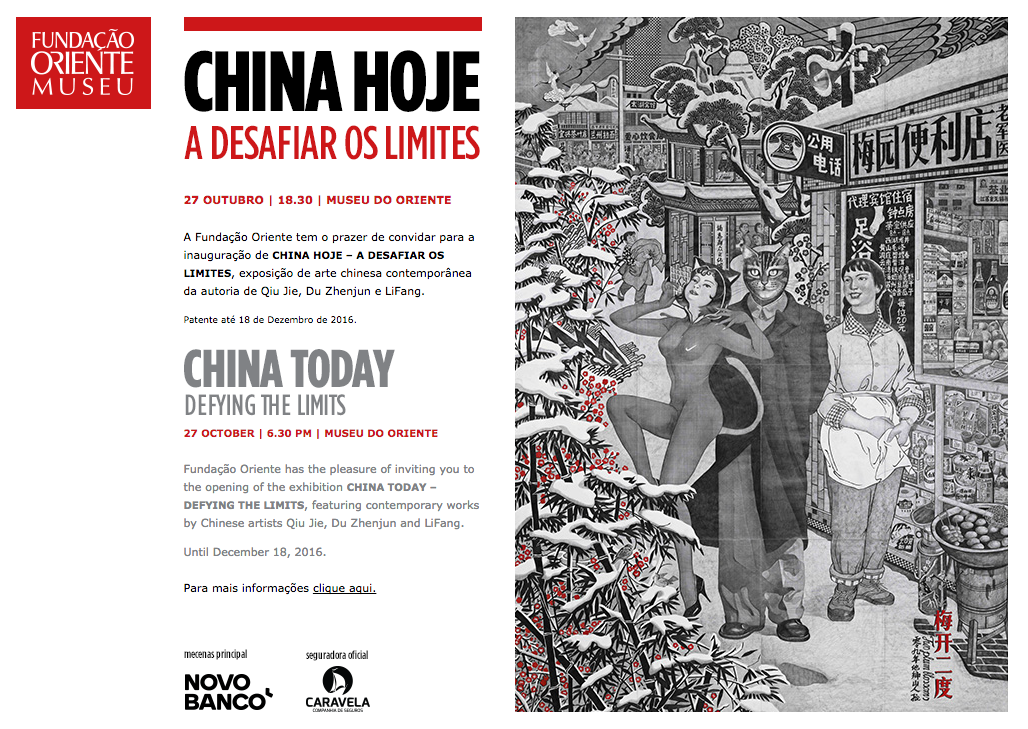
    The exhibition ‘CHINA NOW: Defying the Limits’, opens on the 27th October, 6:30pm, at the Oriente Museum in Lisbon,curated by Helena Silva Correia, Cultural Manager, Curator, Designer and PhD candidate in Cultural Studies at the Lisbon Consortium.
     

    unnamed

    Curatorial Discourse: Helena Silva Correia
    October, 2016

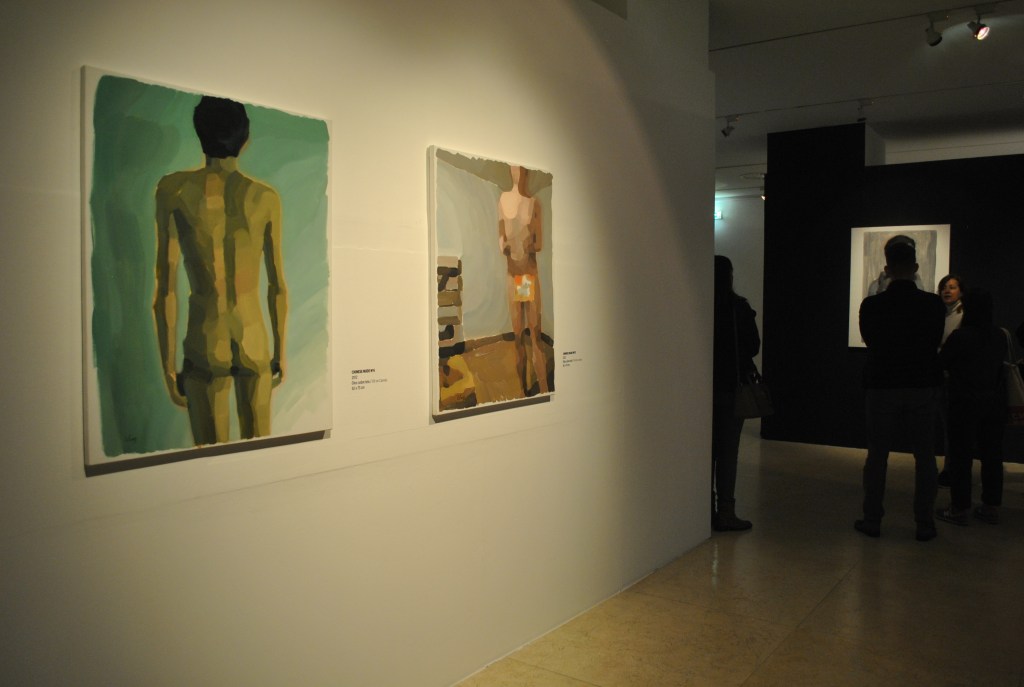
    Qui Jin, Du Zhenjun and Lifang presents us with a contemporary view of the numerous existing realities with which China confronts itself today, utilizing three visual and very different discourses; all with its’ incongruences, disparities and inequalities regarding issues with the environment, population growth, and China’s role in the era of Globalization. Whether they be, world(s) of cyberculture such as social media or socio-economical issues but also creative and artistic freedom, where the diffusion of images of the naked human body is still regarded as pornography.
    The curatorial discourse is based on the Australian researcher and physic’s research, Graham Turner “Compares the Limits of Growth’ with the reality of 30 years ago” (2008) inspired this visual narrative of these three Chinese artists of today, through their work, present the ‘defying the environmental limits’, the search of the Chinese identity or the struggle for greater freedom of expression, all to reflect upon China’s role in the world today.
    Fontes:
    http://www.theguardian.com/commentisfree/2014/sep/02/limits-to-growth-was-right-new-research-shows-were-nearing-collapse

    Click to access Turner_Meadows_vs_historical_data.pdf

    Click to access MSSI-ResearchPaper-4_Turner_2014.pdf

    Cultural Citizenship_Qui Jin

    ‘Cultural Citizenship’ is based on the guarantee of cultural rights for all citizens but it goes further, to stimulate a generation towards a new political conscience “through the appropriation of culture as a right to fruition, experimentation, to information, to memory and participation”, in the words of the philosopher, Marilena Chauí.

    Qui Jin approaches his theme of work inspired by the duality of his ‘cultural citizenship’. As Chinese artist, he constructs and imposes the encounter with the reinterpretation of western advertising and ‘pop culture’, utilizing Chinese iconography with references to Mao Tsé-Tung period, uses manly figures with cat heads, in order to create highly detailed pencil drawings, characteristic of ancestral Chinese art.
    The solitary artist, Qui Jin calls himself “the man from the other mountains” where he grew up in China before living in Switzerland, from 1989. During his childhood and he lived through the Chinese Cultural Revolution, producing propaganda drawings for the local newspaper, in the Province of Shanghai. Today, his work is intrinsically autobiographical as he combines the realism with cultural references of the West with the Orient, concerned with the doctrinaire form of politics that occurred in China. Qiu utilizes mockery, scorn and defame to counterbalance the revolutionary fiction of his art. His artistic style could be described as ‘political pop’, due to the fact that he confronts the history of Chinese society through imagery while it dissolves itself in the western popular culture, creating a visual portrait of his own personal journey as an artist, living outside China.
    The Limits of Growth_Du Zhenjun

    The sustainable development concept appeared with the study developed by the United Nations Organization, with regard to climate change at the beginning of the decade of 1970, in response to humanities’ concerns facing social and environmental crisis, that confronted the world since the second half of the previous century. This concept searches to reconcile societies’ necessity towards economical development with the promotion of social development, and respect towards the environment.

    Du Zhenjun presents us with a dystopian view of the profound social transformations that China has endured since the “Chinese Cultural Revolution” resorting to digital art and technology to create montages of great photographic detail with enormous visual richness, to translate the frenetic growth of globalized capitalism, over the last two decades – with repercussions on the environment, population growth, the growing scarcity of natural resources – water and food, or the more dramatic effects of global warming, such as the rise of sea levels or poor air quality.
    With the Babel Towers of capitalism set in the background, is an allegory to the story of the Genesis, when mankind wanted to construct a city in the shape of a tower that could reach the heavens. God didn’t appreciate the idea and punished mankind by creating numerous languages, and spreading mankind across the World. Today, the World confronts itself with the frenetic economic growth generated by China which defies the limits of CO2 emissions everyday, consequently contributing to the rise of the Planet’s temperature, one may ask until when?

    Freedom of Expression_Li Fang

    The Universal Declaration of 1948 constitutes ‘freedom of expression’ one of the fundamental human rights, and is part of Constitutions of all the democratic systems. This liberty supposes that all individuals have the right to express themselves without being discriminated by their opinions, as the article 19 from the Human Rights Letter on Freedom of Expression confers: “All have the right to freedom of expression and to opinion. This right includes the freedom to have opinions without interference and to search, receive and give information and ideas via any form of communication and without the concern of borders.”

    Li Fang presents us her work utilizing the Human Rights theme — ‘freedom of expression’ which she produced in 2012. The impressionist representation of cyberspace depicts two episodes that Ai Weiwei, in which Li Fang also defies representation and the “mechanical representation” (Benjamin, 1934) contributing with another layer of information or the return of the virtual space to reality, of the limitations imposed by the Chinese authorities to Ai Weiwei’s art work, inevitably associated to the limits of repression and applied force in 2011 when the artist was detained.
    In the same year Ai Weiwei posed naked with his four studio assistants, later diffusing the image via social media, generated a wave of indignation from the Chinese authorities, due to the fact that the image(s) placed in circulation were of naked figures. Ai Weiwei contested that “nudism isn’t pornography”. Consequently in the same month, the social media company Facebook decided to also censor the same image and disactivate the artist’s page.
    Today, Ai Weiwei continues to fight for more transparency and freedom for the public domain in China, a theme in which Li Fang inspired to give continuity to the movement in honour of the fight for freedom of expression beyond the social spaces and internet’s chronological time(s), where social media companies such as Facebook, Twitter, Wikipedia and Youtube are blocked by the ‘Great Fire Wall of China”, and the largest search engine – Google, currently is unable to operate by the regime.


    More info here