Category: Student led activities

  • Registrations open | Echoes of Age, April 3-4 2025

    Registrations open | Echoes of Age, April 3-4 2025

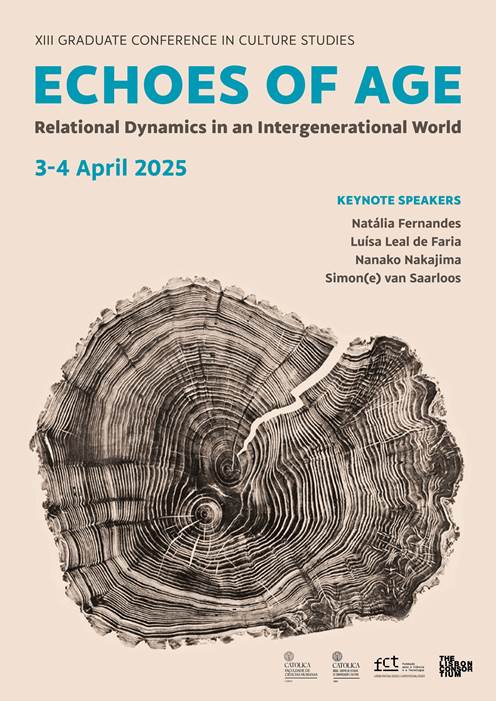
    The registration is open for the upcoming conference, Echoes of Age: Relational Dynamics in an Intergenerational World. This event will bring together artists writers, researchers and professionals to explore the evolving narratives of aging, generational interactions and cultural transformations.

    Conference Details:

    Date: April 3-4, 2025

    Location: Universidade Católica Portuguesa

    Programme:

    Register Here: https://fch.lisboa.ucp.pt/CECC/Echoes-of-age until March 15, 2025.

    Keynote Speakers:

    • Nanako Nakajima: Dance scholar and dramaturg. She is an Associate Professor in Dance Studies at Waseda University, Tokyo. Her publications include The Aging Body in Dance.
    • Luísa Leal de Faria: Full Professor of the Faculty of Human Sciences (FCH) at Universidade Católica Portuguesa (UCP), where she served as Vice-Rector between 2004 and 2012.
    • Simon(e) van Saarloos: Writer, artist and curator based between Oakland, California and Amsterdam, the Netherlands. Van Saarloos is the author of Against Ageism. A Queer Manifesto.
    • Natália Fernandes: Associate Professor with Qualification at the University of Minho, Institute of Education, Department of Social Sciences of Education. Her research area is the Sociology of Childhood.

    For more details, including the conference program, visit the website: echoesofage.wordpress.com contact us at echoesofage.conference@gmail.com for questions.

    Follow @Echoes_of_Age on Instagram for updates and highlights leading up to the conference!

    Registration Fees:

    The registration fee includes coffee breaks and conference materials. Spaces are limited, so we encourage you to register early to secure your spot.

    • Student/Academic Attendees: 85 €
    • CECC Researchers: Exempted from fees, but registration is mandatory.

    Looking forward to seeing you there!

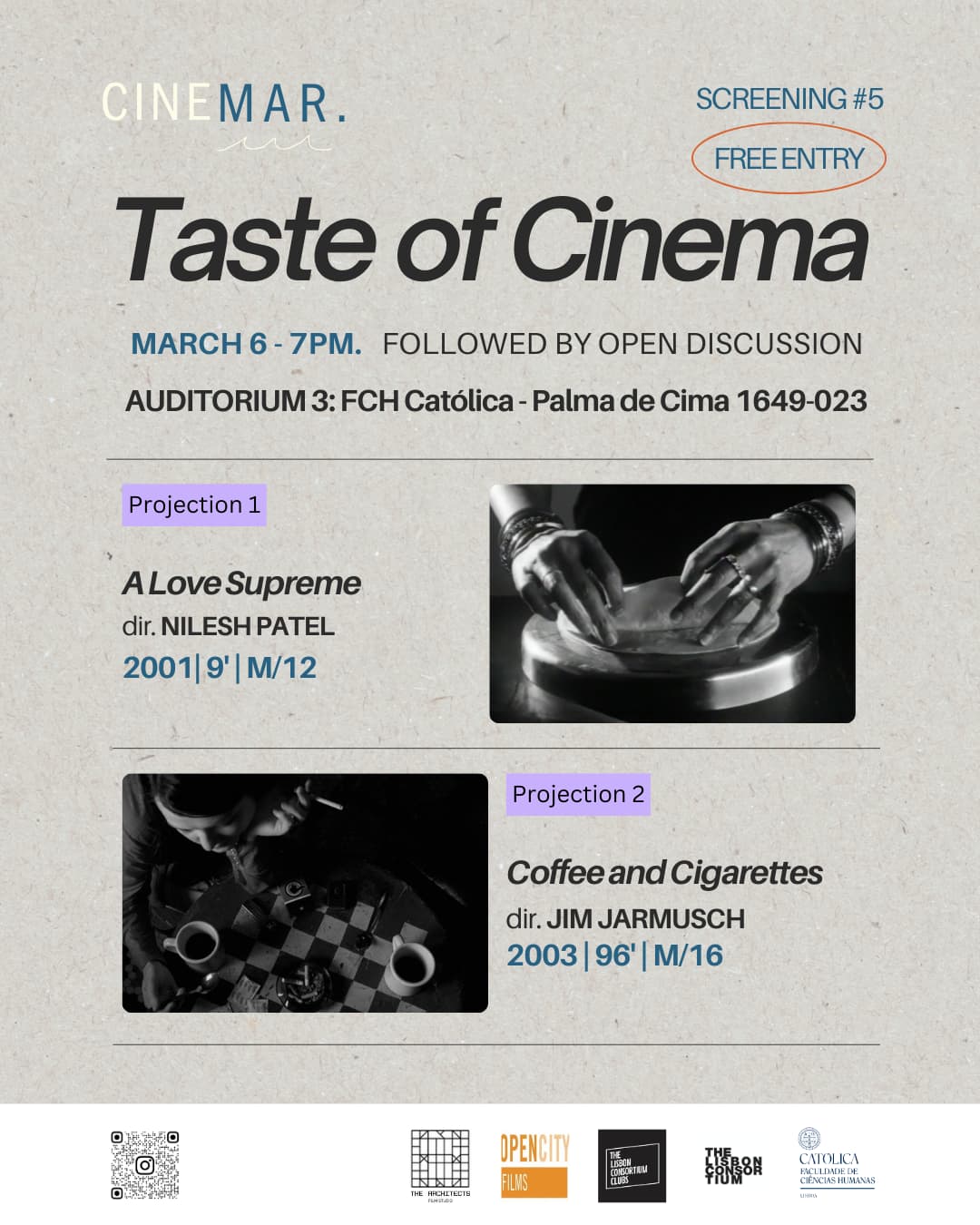
  • CineMar #5: Taste of Cinema – A Love Supreme (dir. Nilesh Patel) and Coffee and Cigarettes (dir. Jim Jarmusch), March 6 at 19:00 (FCH, A3)

    CineMar #5: Taste of Cinema – A Love Supreme (dir. Nilesh Patel) and Coffee and Cigarettes (dir. Jim Jarmusch), March 6 at 19:00 (FCH, A3)

    🎥 A Love Supreme dir. Nilesh Patel

    A tribute to the director’s Mother, who has rheumatoid arthritis. This 9-min documentary explores memory and tradition through the preparation of samosas.

    🎥 Coffee and Cigarettes dir. Jim Jarmusch

    This 11-vignette film captures the intimate moments of human connection found in the simple act of sharing coffee and cigarettes.

    📍 Auditorium D. António Ribeiro (A3), FCH – Católica:https://maps.app.goo.gl/CRtVptT763DP4xMF6

    🗓️ March 6, Thursday

    ⏰ 7:00 PM

    Presented in partnership with @architectsfilmstudio and Open City Films. Join us for this screening that delves into food as a cultural expression, in conjunction with the Our Food-Webbed World: Interdisciplinary Culinary Landscapes conference.

    Looking forward to seeing you there! 

  • CineMar # 4 | City of God @ Avenidas – Um Teatro em Cada Bairro, February 12, 2025, 21:00

    CineMar # 4 | City of God @ Avenidas – Um Teatro em Cada Bairro, February 12, 2025, 21:00

    The next CineMar session City of God (2002) will be held on 12 February, 21h, at Avenidas – Um Teatro em Cada Bairro (Rua Alberto Sousa 10A). The screening will be followed by a conversation with Daniel Guedes.

    The session will be held in English (English subtitles). 

  • CineMar | Screening recap: Bafatá Filme Clube (2012) and Q&A with director Silas Tiny

    CineMar | Screening recap: Bafatá Filme Clube (2012) and Q&A with director Silas Tiny

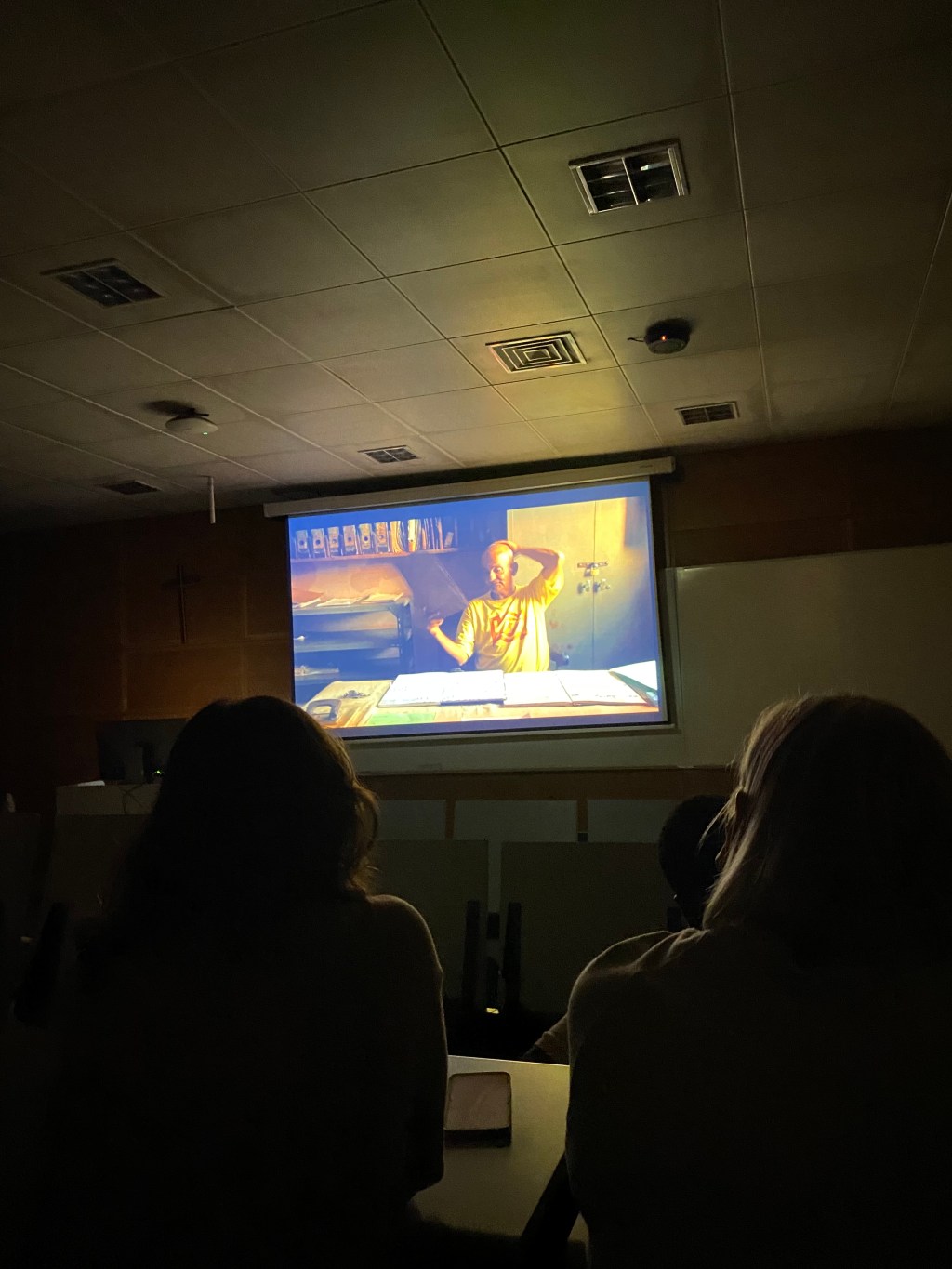
    In November, CineMar, the new Lisbon Consortium Film Club, held its second screening: Bafatá Filme Clube, directed by Silas Tiny in 2012. The selection of this film was in partnership with the production company Real Ficção with a focus on the narratives of cinema. 

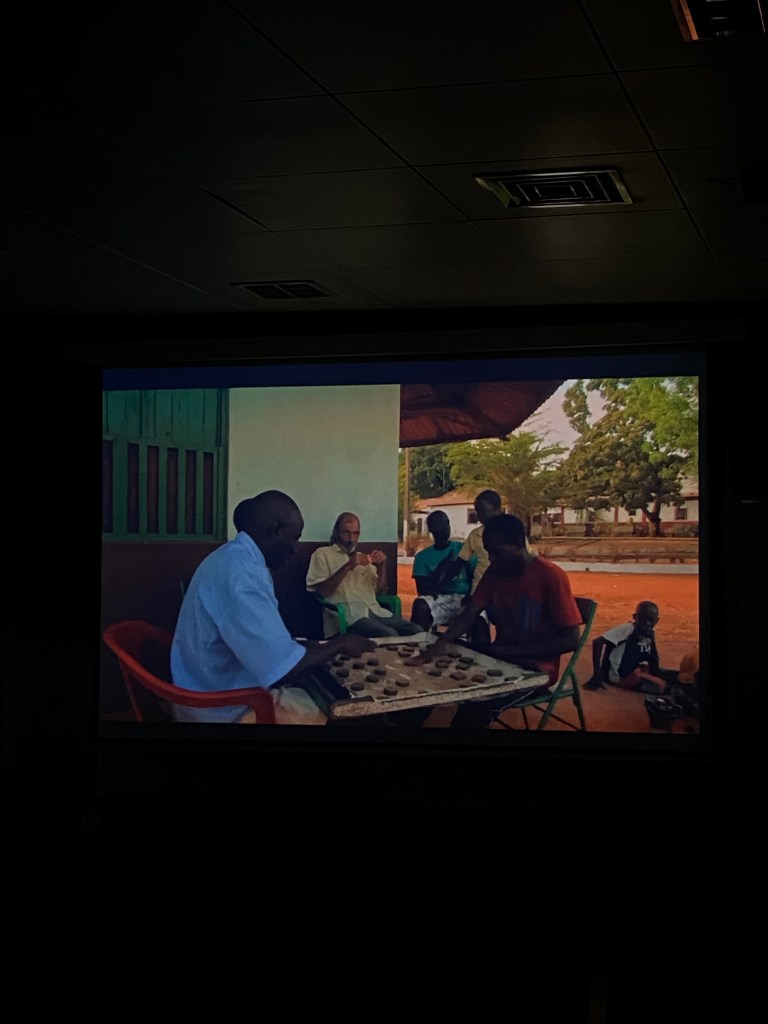
    Set in Bafatá, Guiné-Bissau, the film tells the story of a city club that was once a landmark that served as a gathering place for the local community. Canjajá Mane, an elderly cinema operator reminisces about the days when the cinema was full of people. This is Silas Tiny’s first feature-length documentary, a product of his final project at the Lisbon School of Theatre and Cinema. 

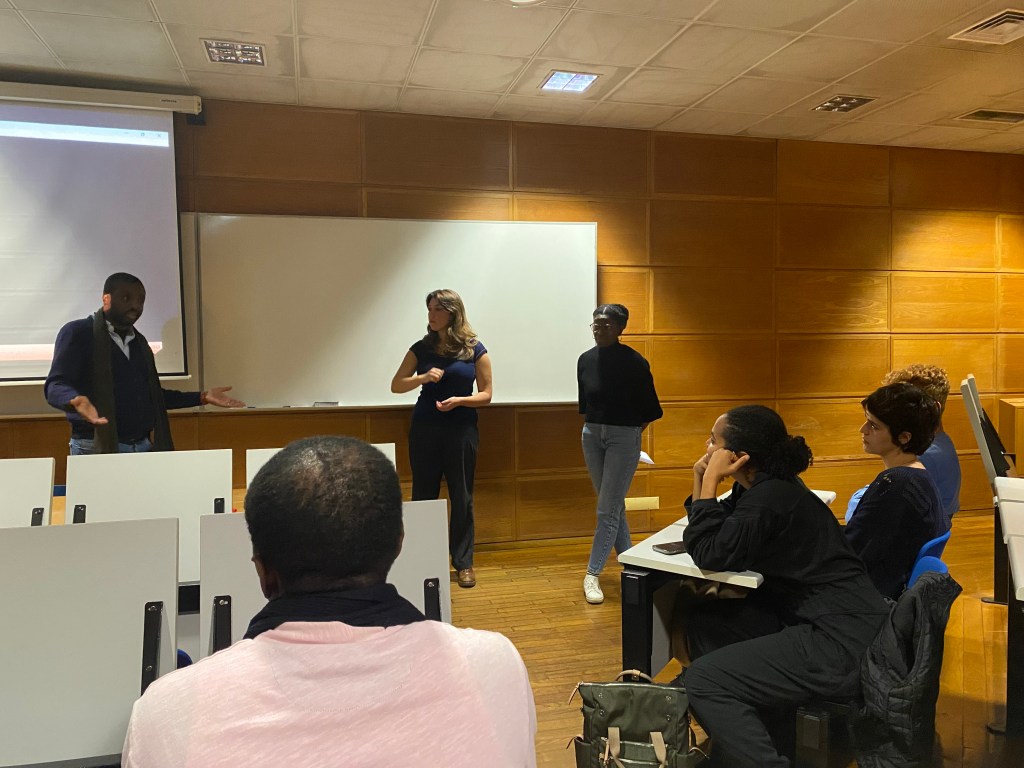
    During the Q&A, the filmmaker Silas stated, one must reflect on the current economic and social conditions of Bafatá, and its effects of the independence in a postcolonialist era. Bafatá Filme Clube was filmed in one of the biggest cities in Guiné-Bissau, which is also the place where the revolutionary and anti-colonial leader Amílcar Cabral was born. As Canjajá Mane walks in the streets of Bafatá, the film invites the audience to digest the current conditions of a place that was once in constant movement. 

    Silas approach to storytelling engages the audience in paying close attention to the way the film depicts the day-to-day life of the local community. The once-grand cinema, now in a state of decay, is characterized by a profound stillness. As time continues to move forward, people find comfort in reminiscing the memories of the traditional cinema that was once a landmark in the city. 

    Interestingly enough, the decaying and the abandonment of traditional cinemas is a common issue shared by other countries around the world. A similar example of this can also be seen in the documentary Cinema, Mon Amour directed by Alexandru Belc in 2015. Set in Romania Cinema, Mon Amour, the film shares a common ground with Bafatá Filme Clube on the preservation of place and memory, and it serves as an invitation for the audience to reflect on how one can keep a memory alive.  

    The next screening of CineMar will be on the 11th of December. 

    Follow @CINEMAR.LXC for more information. 

    Mirian Vanda and Vera Fanizza 

  • Closing of Rita Ravasco’s Tempo Sentido: Creative Writing Workshop and Open Mic at Casa do Comum (Dec. 8)

    Closing of Rita Ravasco’s Tempo Sentido: Creative Writing Workshop and Open Mic at Casa do Comum (Dec. 8)

    Nostalgia is a “temporal paradox” (Ravasco 2024) that blurs the lines between past and present, between imagination and remembrance. It can be cathartic, alchemical, dull, inspiring or painful. It can be consciously provoked or accidentally triggered by a vision, a sound, a smell.

    For the closing of Rita Ravasco’s installation Tempo Sentido (Casa do Comum, Nov. 13 – Dec. 8) we invite you to participate in our Creative Writing Workshop and/or our Open Mic Session, and share what makes you nostalgic!

    Bring an object or photograph, personal or found, and look into how and why it triggers a nostalgic longing in you.

    Creative Writing Workshop (Bilingual EN/PT)

    Dec. 8, 15h-16h

    Through a series of generative writing prompts anchored in the photo or object you decide to bring, we will explore different dimensions of nostalgia and the way it interacts with emotions, public and private life.

    The workshop prompts will be offered in English and Portuguese. You are free to write in any language.

    Workshop participants have the option to share the outcome of this creative writing session in the Open Mic Session that follows after.

    Workshop led by: Emily Marie Passos Duffy (Lisbon-based poet, performer and researcher)

    Workshop spaces are limited, if you are interested, please register under: info.diffractions@gmail.com

    Open Mic (Bilingual EN/PT)

    Dec. 8, 16:30h-18h

    In our Open Mic Session, we invite participants to share with us their thoughts, stories, poems, etc. about a nostalgic object or photograph they choose to bring (ca. 5 mins/participant). Photographs can be brought in analogue or digital form. Feel free to speak in Portuguese or English.

  • First meeting: The Lisbon Consortium Book Club, December 5 2024, 3pm

    First meeting: The Lisbon Consortium Book Club, December 5 2024, 3pm

    The Lisbon Consortium gains another student-led club, dedicated to reading!

    The book club meets for the first time on December 5, 2024, at 3pm in room 242.

    The organizer of the Book Club, Alyse Fan, plans the first meeting to be “a moment to share personal reflections on a book that feels like home to you”. The format is free: “It can be a stanza of poetry that inspired you, lines from a novel that anchored you in light through darkness, or a book that travelled with you to turn a new page in life.” These reflections will be followed by choosing the first book together.

    The Book Club will have monthly meetings and also has a group on the Goodreads platform that will be used to discuss books and book choices. Suggestions for the reading list are always welcome!

    For more information, please contact lisbonconsortiumbookclub@gmail.com.

  • CineMar #2 | Bafatá Filme Clube (2012) and Q&A with the filmmaker Silas Tiny, November 28 2024, 8:30pm

    CineMar #2 | Bafatá Filme Clube (2012) and Q&A with the filmmaker Silas Tiny, November 28 2024, 8:30pm

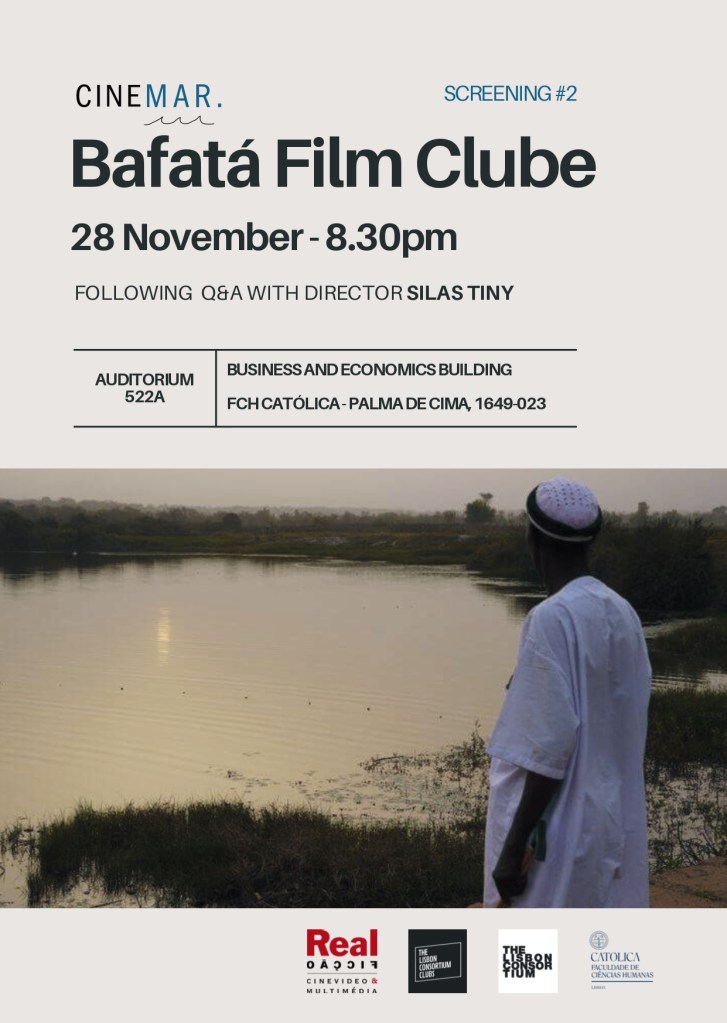
    The next screening of CineMar will be Bafatá Filme Clube (2012) directed by Silas Tiny.

    Set in Bafatá, Guiné-Bissau, the film tells the story of a city club that was once a cinema. Canjajá Mane, an old cinema operator and guard reminisces the time when the cinema club was full of people. Bafatá also serves as a poignant reflection of the economic, and social conditions of a place that continues to be home to many.

    Join us on November 28 at 8:30PM at 522A for the screening of this thought-provoking film, followed by a Q&A with the filmmaker Silas Tiny. Silas Tiny is a filmmaker from São Tomé and founder of the production company OSSOBO Filmes. Bafatá Filme Clube (2012) is his first feature-length documentary, in which he reflects on the effect of post-colonialism in the town of Bafatá in Guiné Bissau and the result of the passage of time in this place, through an old deactivated cinema, guarded by a former projectionist (2023).

    This screening is in partnership with the production company Real Ficção

    Follow us on Instagram for upcoming film screenings @CINEMAR.LXC.

  • CineMar | Screening recap: Ar Condicionado (2020) and Q&A with producer Jorge Cohen

    CineMar | Screening recap: Ar Condicionado (2020) and Q&A with producer Jorge Cohen

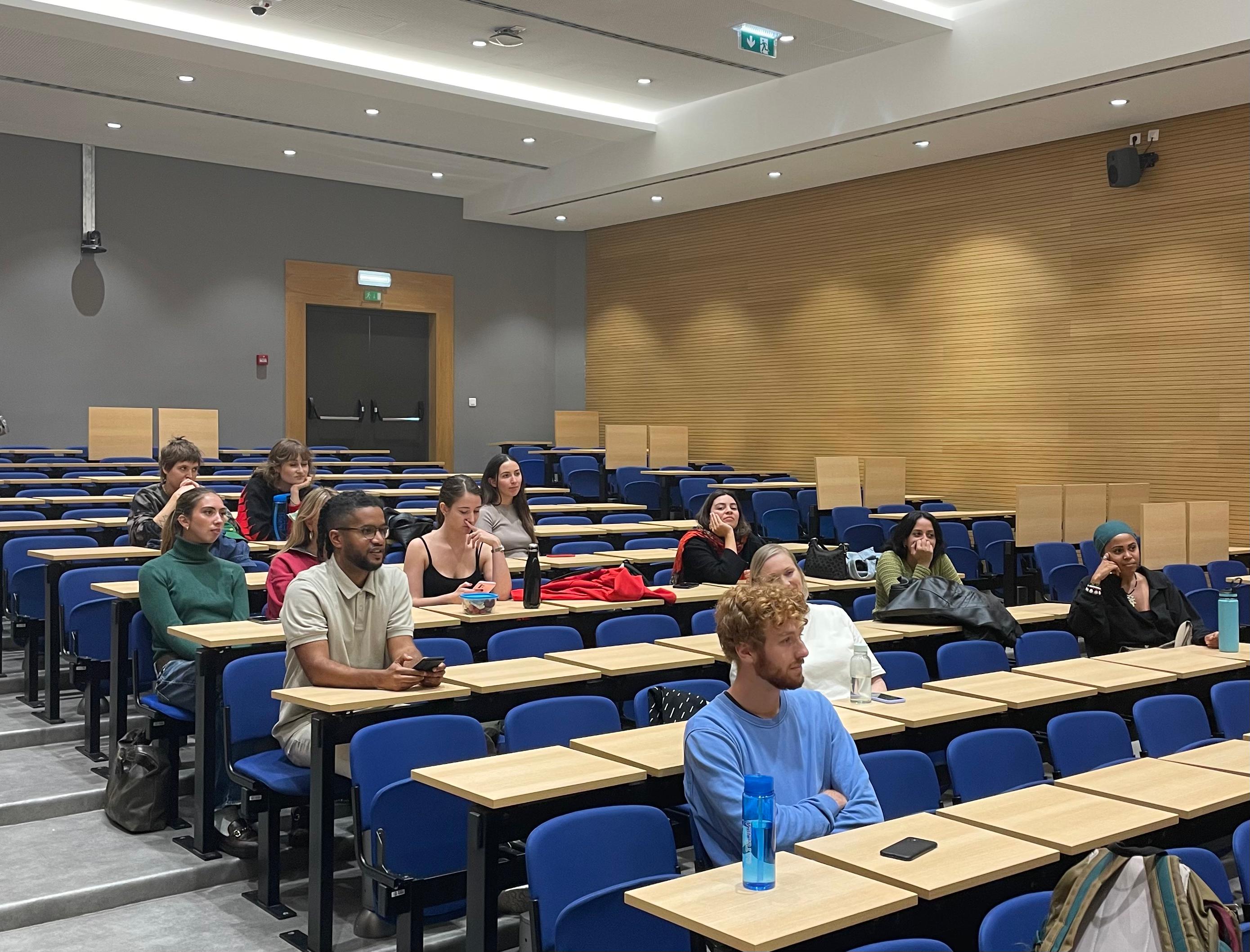
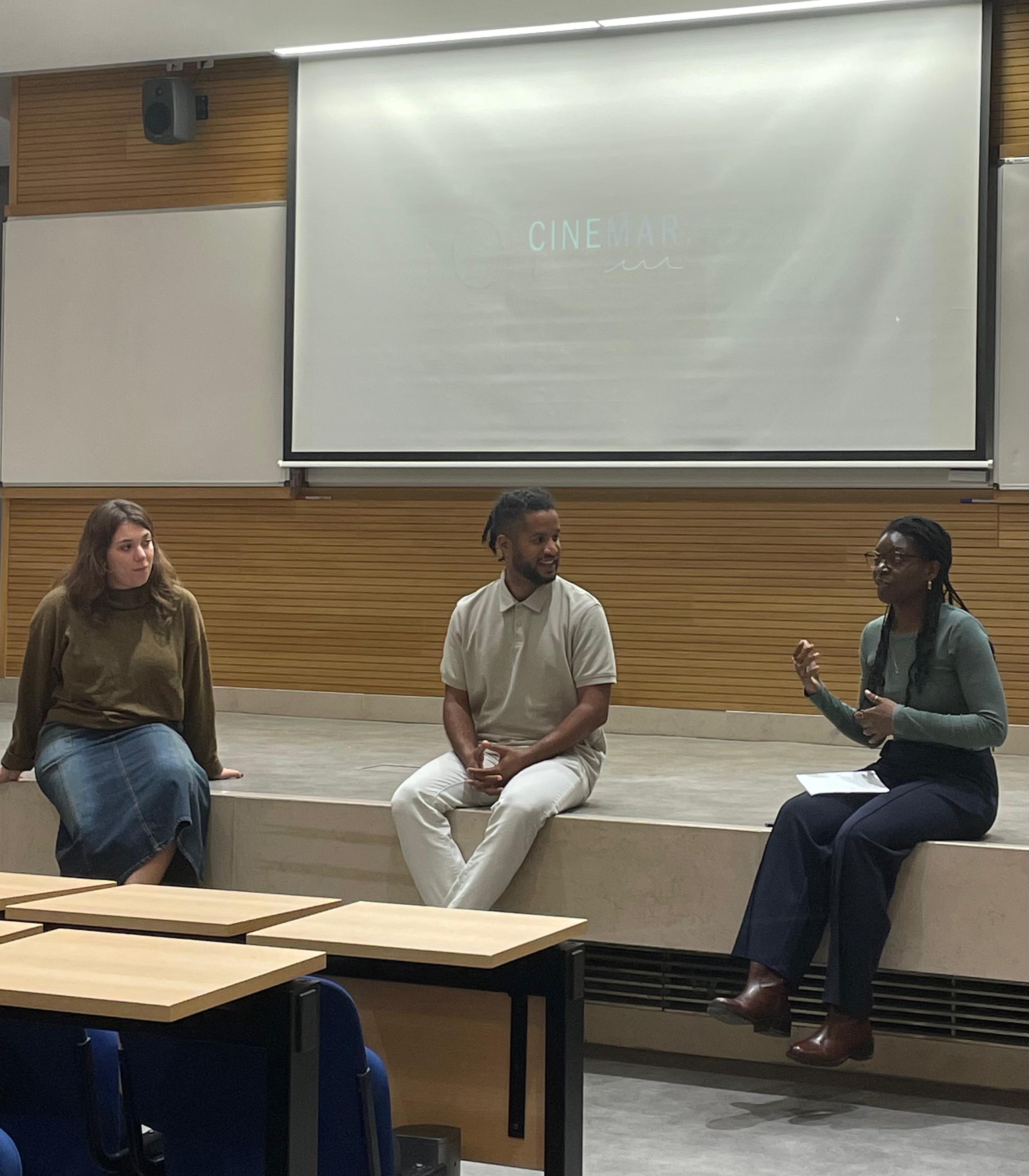
    In October, CineMar, the new Lisbon Consortium Film Club, had its first ever screening: Ar Condicionado, a groundbreaking Angolan film directed by Fradique in 2020. The screening was held at the Auditorium D. António Ribeiro (A3), followed by a conversation with the producer and co-founder of Geração 80 Jorge Cohen.

    Ar Condicionado, produced by Geração 80, is a mesmerizing exploration of Luanda, Angola’s capital city, seen through the eyes of Matacedo, a security guard. Starring José Kiteculo, Filomena Manuel, and David Caracol, the film weaves together threads of the past, present and future of Angola in a socially and politically conscious narrative, as air conditioners mysteriously fall from the buildings.

    During the Q&A, the producer and co-founder of Geração 80, Jorge Cohen stated that films are a good invitation to get to know a country better. Additionally, he highlighted the significance of Matacedo’s everyday life in shaping his relationship with the building he works at and the people living in it.

    The film’s unique perspective offers a glimpse into the ordinary lives of the citizens in Luanda, delving into themes of urban decay, social inequality, and the impact of globalization in urban spaces. The film’s core, composed by Aline Frazão, naturally blends into the story, allowing the audience to also appreciate at the complementary characters of the film, such as the buildings and the city of Luanda.

    You can follow @CINEMAR.LXC for upcoming film screenings.

    Mirian Vanda and Vera Fanizza

  • CfP| Echoes of Age: Relational Dynamics in an Intergenerational World (3-4 April 2025)

    CfP| Echoes of Age: Relational Dynamics in an Intergenerational World (3-4 April 2025)

    The Call for Papers for the next Graduate Conference in Culture Studies is out!

    Organized by students from the PhD program in Culture Studies, the XIII Graduate Conference in Culture Studies – Echoes of Age: Relational Dynamics in an Intergenerational World will take place 3-4 April 2025.

    Abstracts for individual or joint papers and presentations as well as alternative interventions including artistic interventions, co-creative workshops, reading groups are welcome!

    https://echoesofage.wordpress.com/

    echoesofage.conference@gmail.com

  • Diffractions | Vernissage at Casa do Comum, November 13, 5pm

    Diffractions | Vernissage at Casa do Comum, November 13, 5pm

    Rita Ravasco’s Tempo Sentido is moving to Casa do Comum from 13 November – 8 December. 

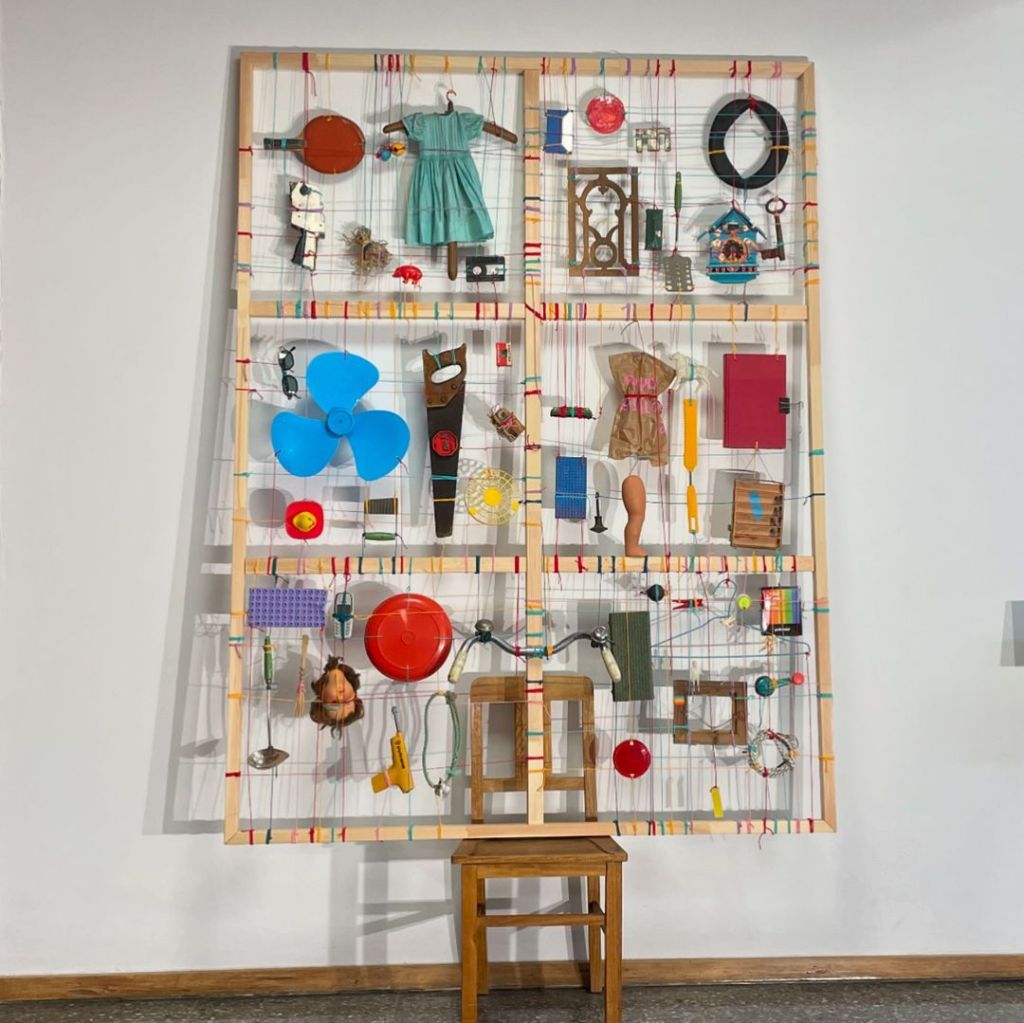
    Tempo Sentido [Time Sensed] is Ravasco’s multimedia digital and on-site installation, originally developed for the Nostalgia exhibition (Universidade Católica Portuguesa, 2024) as part of the current Diffractions issue 8 on the topic of nostalgia. The work consists of three parts: the digital issue cover in conversation with a video-animation, both accessible online, and the material piece.

    In this piece Ravasco figuratively represents the human mind as a sensory archive through a web of interconnected objects, representing the way memory and nostalgia can be triggered by sensory experience, creating an endless network of memory, longing and affect across time and space. The close communication between the digital and the physical mirrors the extension of our own lives and memories into digital space and evokes a myriad of questions connected to the functioning of nostalgia as a felt experience fusing diverse memories, times and spaces in the human mind as it is triggered by the physical and the digital.

    The piece has been funded by CECC – The Research Centre for Communication and Culture.

    You can find the issue of Diffractions about Nostalgia here: https://revistas.ucp.pt/index.php/diffractions/

    Curators: Amadea Kovič, Emily Passos Duffy, Miriam Thaler

    We hope to see you there!

  • CineMar – The Lisbon Consortium gains a new film club

    CineMar – The Lisbon Consortium gains a new film club

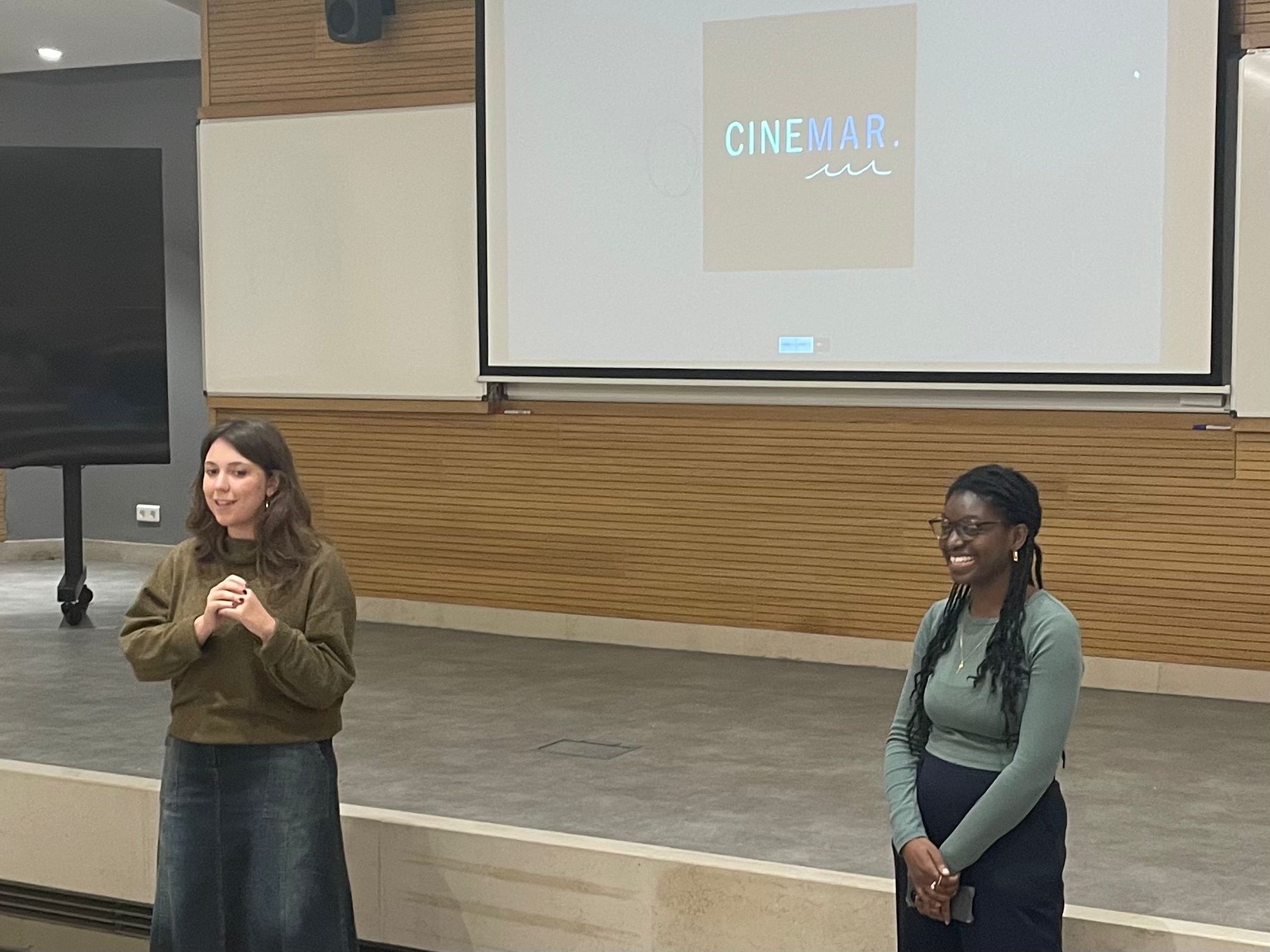
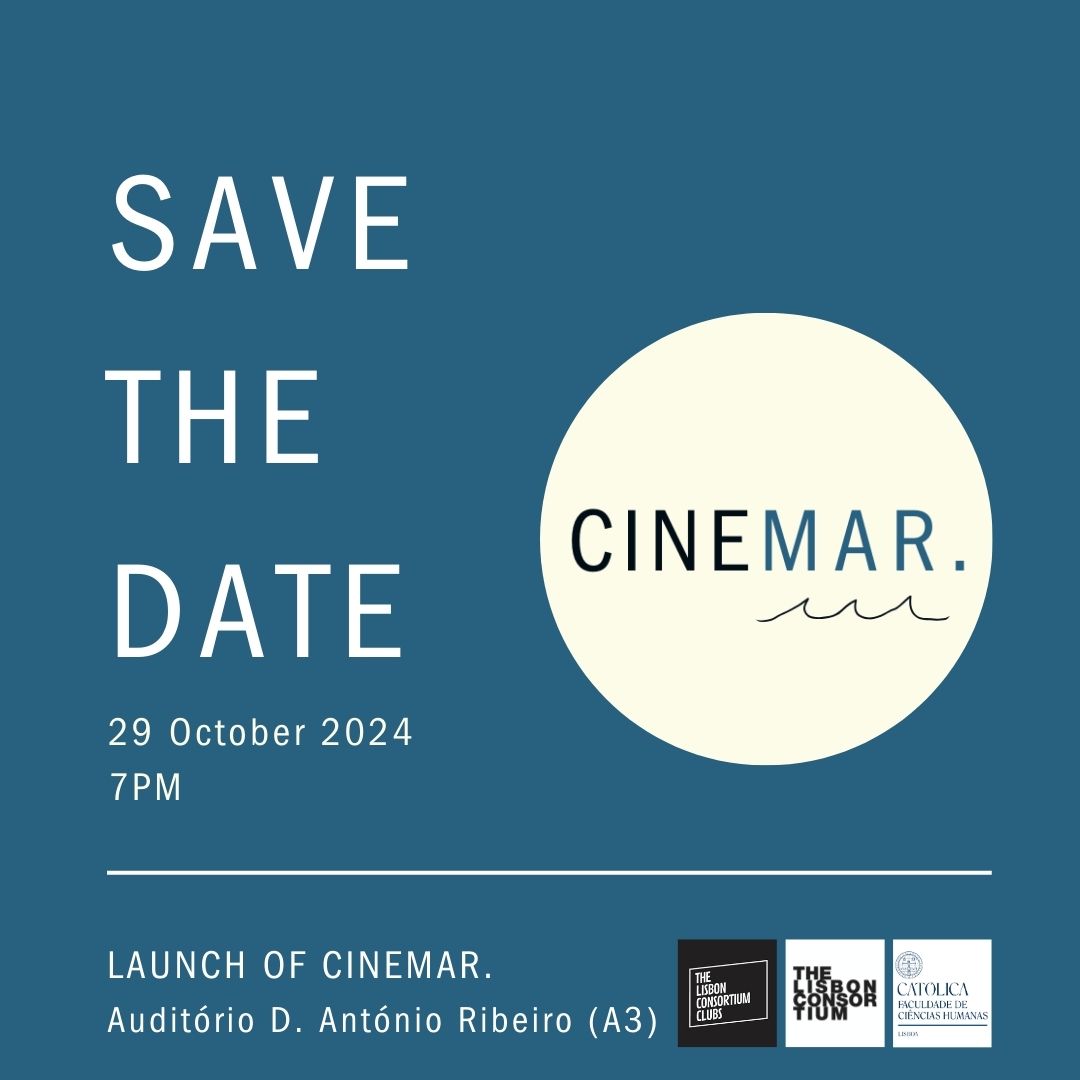
    CineMar, the new film club organized by Mirian Vanda and Vera Fanizza (MA in Culture Studies), aims to build a community around watching films and having conversations together. Each academic semester, there is a cycle organized by monthly themes and two screenings per month.

    In the organizers’ words, “Just like the sea, CineMar aims to create waves of connection through the universal language of cinema. In today’s world of individual streaming, we’re bringing back the magic of the collective experience by watching and discussing films together.”

    The first gathering will be on October 29th at 7pm at the Auditorium D. Antònio Ribeiro (A3). The film to be shown is Ar Condicionado (2020) by Fradique, and there will be a special guest present at the screening.

    The session will be held in English and the film has English subtitles.

    One day, air conditioners in the Angolan capital Luanda start to mysteriously fall from the buildings. When security guard Matacedo is told to get his overheating boss an airco unit by end of day, he embarks on a mission that brings him into contact with the eccentric owner of an electronics store.


    Duration: 72’ | Production: Geração 80
    Language: Portuguese speaking with English subtitles

    https://www.instagram.com/cinemar.lxc/

  • Diffractions: Rita Ravasco’s “Tempo Sentido” in exhibition at FCH

    Diffractions: Rita Ravasco’s “Tempo Sentido” in exhibition at FCH

    Diffractions, No. 8 (2024): Nostalgia

    Guest artist: Rita Ravasco

    Edited by:

    Miriam Thaler
    Gloria Adu-Kankam
    João Oliveira


    Tempo Sentido

    “The cover art by Rita Ravasco, showcasing a seemingly random collection of dysfunctional objects connected by colourful threads, is part of a multimedia art piece with the title Tempo Sentido [Time Sensed] exploring the functioning of memory and nostalgia. The human mind is figuratively represented as a sensory archive through these interconnected objects, representing the way memory and nostalgia can be triggered by sensory experience, creating an endless network of memory, longing and affect across time and space. The digital painting on our cover is interconnected with another digital piece, a video-animation, and a temporary on-site installation at Universidade Católica Portuguesa. Our cover art is in fact a digital sketch and image detail of the installation on site and together with the animation will remain as a digitally archived remnant of the on-site installation. The close communication between the digital and the physical mirror the extension of our very own life and of our memories into digital space. The multilayered piece evokes a myriad of questions connected to the functioning of nostalgia as an affect fusing diverse memories, times and spaces in the human mind as it is triggered by the physical and the digital.” (Miriam Thaler, “Editorial: Nostalgia,” Diffractions 8, 2024: 2-3)

    https://revistas.ucp.pt/index.php/diffractions/issue/view/887

    Rita Ravasco’s Tempo Sentido is in exhibition at Universidade Católica Portuguesa, Faculty of Human Sciences, next to CADOS, until July 26, 2024.

    The exhibition is sponsored by CECC – The Research Centre for Communication and Culture.

  • Space Oddity – On Spatial Narratives

    Space Oddity – On Spatial Narratives

    XII Graduate Conference in Culture Studies
    25-27 January 2024

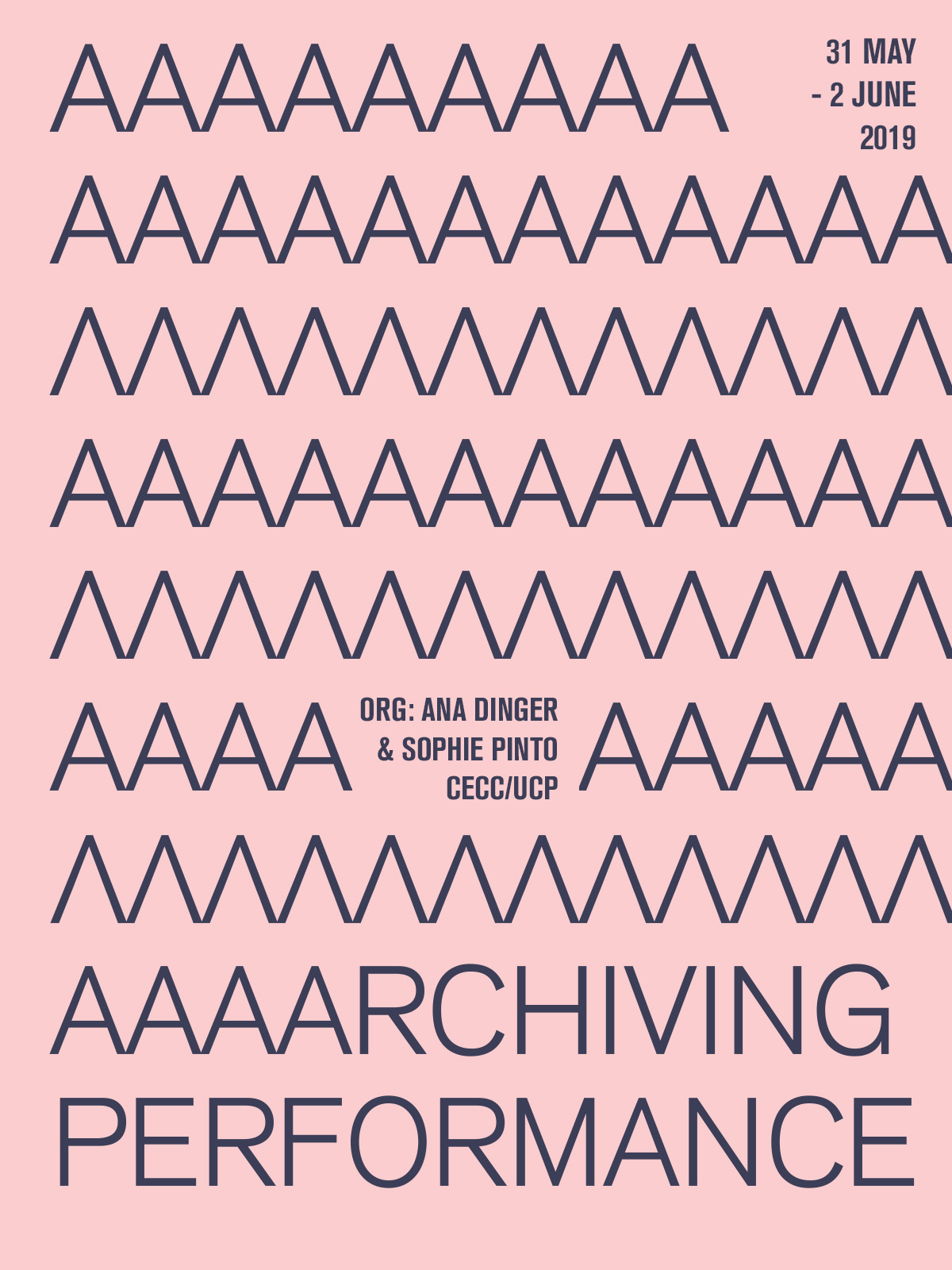
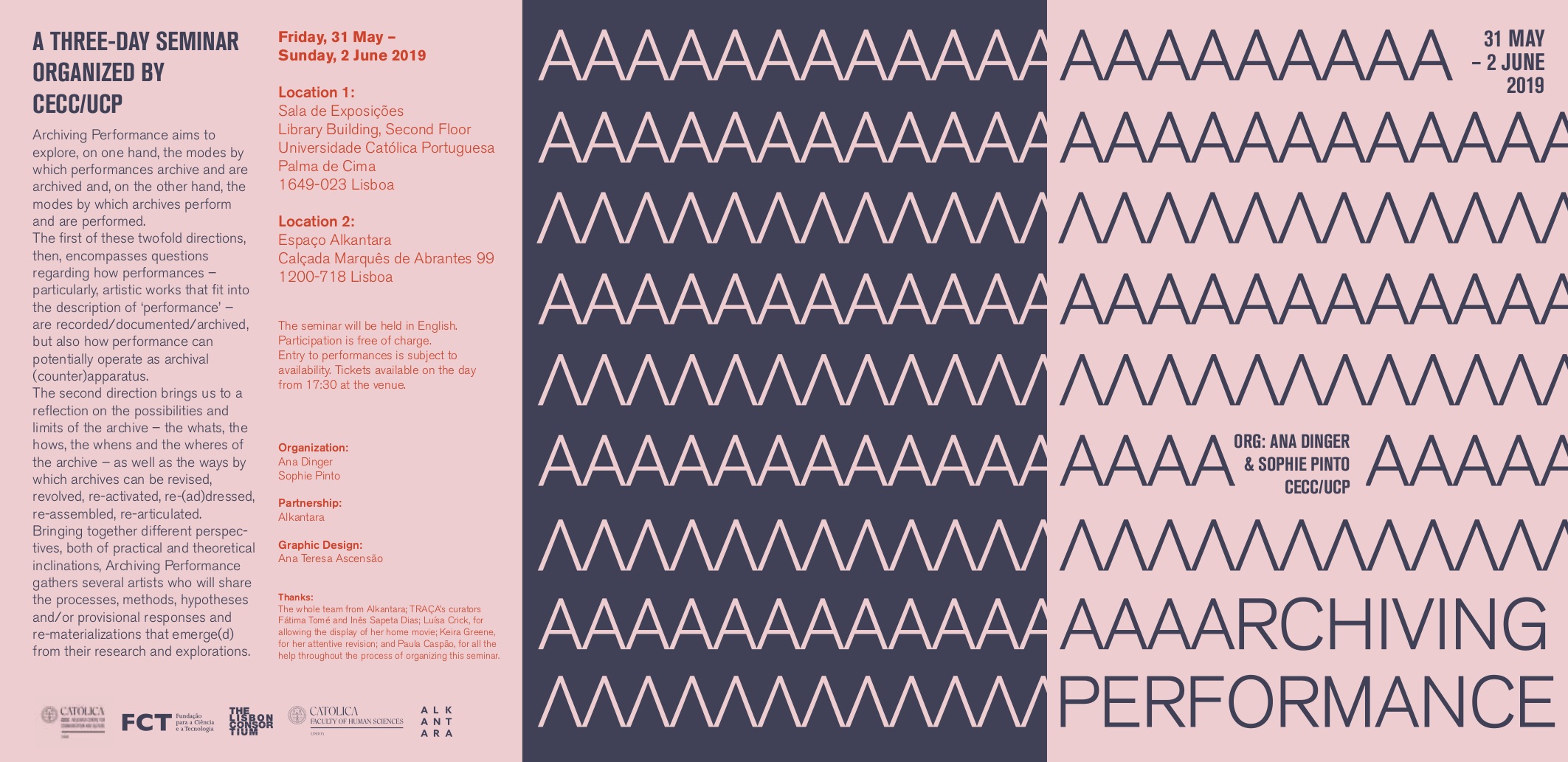
  • Seminar Archiving Performance

    Seminar Archiving Performance

    May 31 to June 2 | UCP & Espaço Alkantara

    Description: Archiving Performance explores, on one hand, the modes by which performances archive and are archived and, on the other hand, the modes by which archives perform and are performed. The three-day seminar will focus on the Portuguese artistic landscape, bringing together several artists who will share their creative processes or (re-)perform works that relate to the topic. Besides galvanizing discussion among participants through vivid artistic cases, the seminar will also draw on theoretical perspectives from seminal authors such as Philip Auslander, Peggy Phelan, Rebecca Schneider, André Lepecki, Eleonora Fabião, Shannon Jackson, Gabriele Brandstetter or Metchild Widrich, among others. 

    The seminar is organized by Lisbon Consortium´s PhD students Ana Dinger & Sophie Pinto. It will take place on May 31, June 1 and June 2 2019, at Católica University and Espaço Alkantara (Calçada Marquês Abrantes 99, Lisbon).

    No fees and no ECTS are involved in this seminar.

    Reading texts will be sent to participants; for this reason, please send your email to dinger.a@gmail.com

  • Ballets Russes in Lisbon

    Ballets Russes in Lisbon

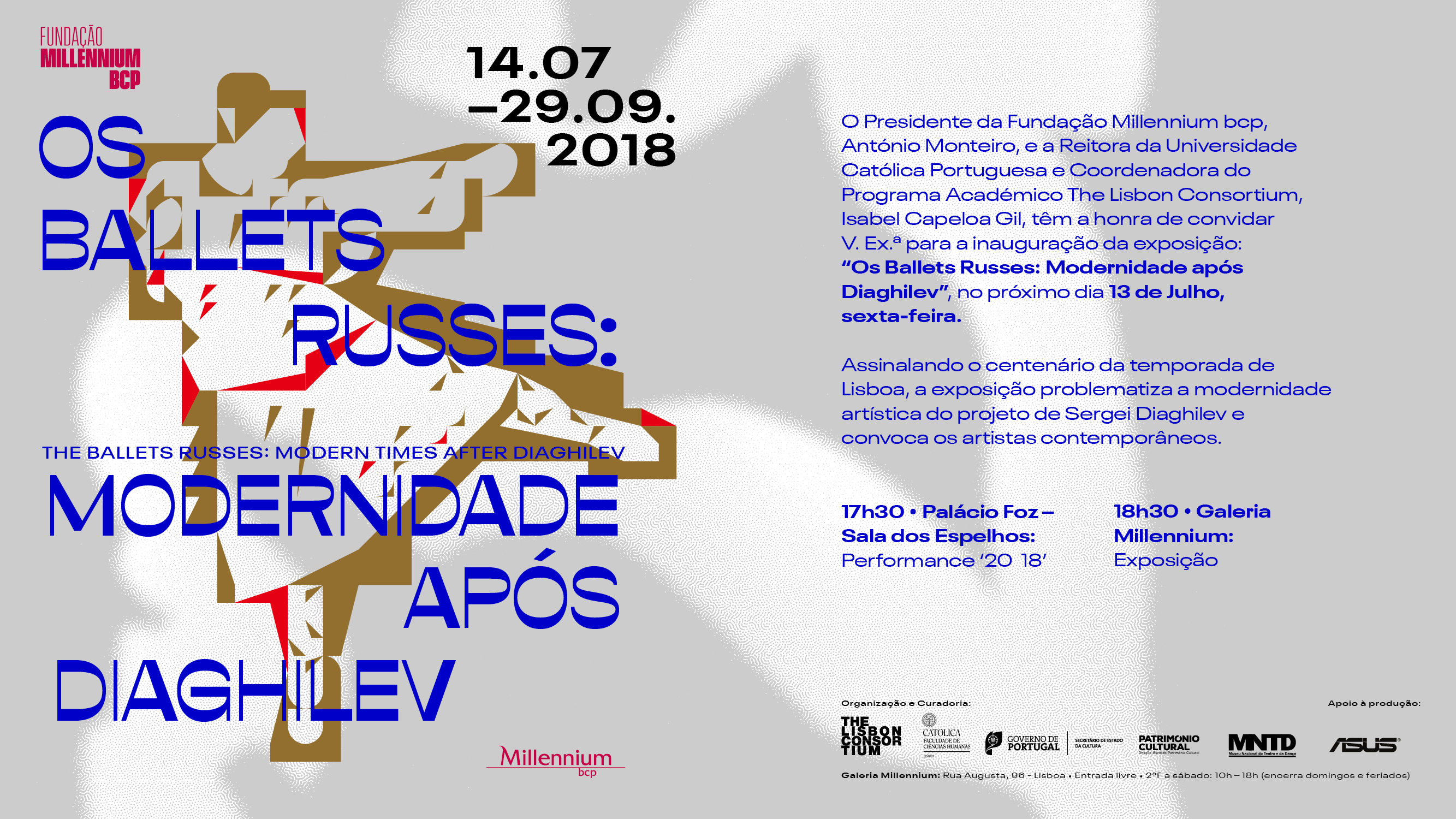
    The inauguration of the Nucleus “The Ballets Russes in Lisbon”  from the exhibition “Os Ballets Russes: Modernidade após Diaghilev”, will take place on July 26th at 6:00 pm, at Museu Nacional do Teatro e da Dança.


    V2_mntd_convite_ballet-russes.jpg

  • Ballets Russes exhibition in images

    Ballets Russes exhibition in images

    This slideshow requires JavaScript.

  • Ballets Russes: exhibition with participation of LxC students

    Ballets Russes: exhibition with participation of LxC students

    AF_e-convite_150_ballet-russes

    Celebrating the centenary of the Ballets Russes season in Lisbon, the exhibition  reflects on the artistic modernity of Serguei Diaghilev’s project and has the participation of contemporary artists.

    “The Ballets Russes: Modernity after Diaghilev” is a Lisbon Consortium project, with the support of Fundação Millennium BCP and other partners, coordinated by Professor Isabel Capeloa Gil, rector of Universidade Católica Portuguesa and director of the LxC, with the assistence of students of the MA and PhD programs in Culture Studies.

    The exhibition, that opens this friday and can be seen until the end of September, comprises three clusters, displayed in different cultural venues in Lisbon and includes a performance by Teatro Praga and a work by Vasco Araújo.

  • VIII Graduate Conference: CFP deadline extension


    REPLACEMENT AND REPLACEABILITY

    6–7 December 2018 | Universidade Católica Portuguesa – Lisbon

    Deadline Extension


    We are happy to announce that the deadline for handing in abstracts concerning the call below has been extended. The earlier deadline was June 15th 2018. This has now been changed to June 30th 2018. We are looking forward to your proposals, and would still like to encourage you to hand in your abstracts as soon as possible because that would help us with some of the logistics. For more information concerning the event, go to replacementconference.wordpress.com. Should any questions arise, you can reach us at  replacementconference2018@gmail.com.


    Call for Papers

    We call for papers for the 8th Graduate Conference in Culture Studies. This edition will be on the theme of Replacement and Replaceability and takes place in Lisbon on the 6th and 7th of December 2018. The conference is organized by The Lisbon Consortium in conjunction with the Research Centre for Communication and Culture at the Universidade Católica Portuguesa.


    We aim to discuss the ways in which the concept of ‘replacement’ can be understood and productively used for the study of contemporary culture. Replacement has been one of the central concepts in the study of culture for quite some time, and, at the risk of overstating this claim, one could say that replacement is a concern in all fields of knowledge dealing with the study of culture today. It is, however, rarely the central focus in academic discussion and this event aims to contribute to a more detailed analysis of the uses, misuses, and usefulness of this particular concept for the study of cultural objects.


    Hearing the words replacement and replaceability, one naturally wonders: Who or what is being replaced? Who is doing the replacing? What counts as replaceable? Is there a logic of replacement? What happens when bodies are deemed replaceable for other bodies? Or for machines? How does replacement communicate with other, related, concepts, such as translation, repetition, reiteration, quotation, citation, metaphor, metonymy, synechdoche, and displacement? And how does it acquire meaning in connection to other concepts like false-consciousness, workforce, precariousness, simulacrum, spectacle, and ideology? How can replacement or replaceability be made useful for the study of cultural objects? Which objects warrant their use? It is on these and related questions that we invite abstracts to be presented at our conference.


    Ideas for proposals

    – Replacement, technology and labor.

    – Replacement and the body.

    – Replacement and disability.

    – Replacement and the queer body.

    – Replacement and colonialism.

    – Replacement and representation.

    – Replacement and translation.

    – Replacement and biopower.

    – Replacement and the digital.

    – Replacement by AI.

    – Replacement and recognition.

    – Replacement and knowledge production.

    – Replacement and simulacrum.

    – Replacement and death.

    – Replacement and the archive.

    – Replacement and documentation.


    Background

    Theoretical understandings of power tend to highlight the importance of controlled reproduction of human beings, or subjects, in order for power to function. One may think of a wide-ranging number of theorists here, from Karl Marx, through Louis Althusser, and on to Michel Foucault. In the study of bureaucratic modes of power exertion, documents can function as the irreplaceable expression of an identity or a right, as in the cases of identity cards, passports, and diplomas.


    In translation studies, the notion of translation as a specific act of replacement is of central concern. In media theory and the study of visual culture, the notion of representation can be understood as a moment in which the image replaces the ‘original.’ In literary studies, concepts such as metaphor and metonymy are examples of replacing one word for another, a procedure considered essential to the production of meaning through language.


    In Lacanian psychoanalysis, the mirror-stage functions as a scene in which the physical body is temporarily replaced by an imaginary double. Feminist- and queer theorists have often critiqued heterosexist and heteronormative approaches to otherness as failed, or attempted copies of heterosexual male life. In posthumanist discourses, the very notion of the human undergoes a moment of replacement by some kind of being that is no longer fully human and all too often celebrated as beyond the human in a teleological way. And post- and de-colonial theorists have read colonial activities of ‘Western powers’ as forced replacements of one culture for another.


  • Diffractions: new deadline for submissions

    Diffractions is an online, peer reviewed and open access graduate journal for the study of culture. The journal is published bi-annually under the editorial direction of graduate students in the doctoral program in Culture Studies at The Lisbon Consortium – Universidade Católica Portuguesa.

    After a short hiatus, Diffractions returns with this second series. If you are interested in the first series of Diffractions, which is discontinued, you can visit the old website at diffractions.net. From now on, all information on Diffractions can be found here. The old website will no longer be updated.

    Check our Call for Papers section to find out about our next issue.

    Find us online at https://diffractions.fch.lisboa.ucp.pt/Series2


    Call for Papers

    DIFFRACTIONS – Graduate Journal for the Study of Culture

    Suspicion

    (NEW) Deadline for submissions: July 31, 2018

    Are we trapped in suspicion? This issue of Diffractions – Graduate Journal for the Study of Culture intends to open a discussion around the deep and pervasive sense of suspicion that has been planted in our society from its inception alongside claims for veracity, truth, surveillance, detection, semblance, expectation, risk, guesswork, discrimination, etc.. Paul Ricoeur already used the notion of suspicion to capture a common spirit that pervades the writings of Marx, Freud and Nietzsche. In spite of their obvious differences, he argues these thinkers jointly constitute a “school of suspicion”, sharing a commitment to unmasking “the lies and illusions of consciousness”. They create a distinctive modern style of interpretation that avoids classic categorizations or self-evident meaning in order to draw out less visible and less satisfying truths. Ricouer’s “hermeneutics of suspicion” had a great impact on literary studies, linking it to a larger history of suspicious interpretation, whereas more recently, in her book “The Limits of Critique”, Rita Felski highlights the difference between critique and suspicion, arguing in favour of the “unreliability of signs that secures the permanence of suspicion” (2015, 36).

    Suspicion is said to lead truth into crisis. But what is truth and who are the truth-tellers of our days? We have learned to be suspicious of the tendency to transform fact into opinion and of the blurry line that divides them. In visual culture, the realist access to the world, the ability to provide persuasive evidence, the possibility of indisputable proof, and the indexical bond between an image and what it represents, are notions that have come under suspicion. Some critique of representation was driven by the suspicion that there must be something ugly and terrifying behind the surface of the conventional idealized image. Ariella Azoulay called our attention to the “ritualistic dimension” of constantly having to reveal the existence of convention, changing the act of storytelling into a “critical position” of suspicion of any photographic image. If our worst suspicion is confirmed, and the hidden reality behind the image is shown to us, has our critical journey come to an end? While a suspicious reading may be helpful for critical analysis as a method, this is not to say that any suspicious reading is a good reading. Suspicion may also be cause for conspiracy theories that fail to bear witness to their objects of analysis.

    Suspicion can be read, on the one hand, as a modality of thinking the other as dangerous, suspicious, almost, or most probably, guilty. This mode of thinking suspicion means to turn it into an obstacle for change to come about, a mode of always already determining what the risks are, a mode of thinking that opens onto a logic of pre-emptive violence when taken to its limit. On the other hand, suspicion can allow for otherness as a site where something might occur, could happen, is as-of-yet undetermined. The latter is a prerequisite for change to come about, or rupture to take place.

    For this issue, we invite articles that question the usefulness of the concept of suspicion for the study of cultural objects. We also welcome work that considers how these cultural objects may scrutinize the very notion of suspicion.

    Contributions and original research might address but are not limited to the following topics:

    • History and archaeology of suspicion
    • Cultural representations of suspicion
    • Suspicion and visual culture
    • Suspicion and art
    • Suspicion and politics
    • Suspicion and media
    • Suspicion and conflict
    • Suspicion and identity
    • Suspicion and modes of reading
    • Suspicious bodies
    • Suspicion and critical thinking
    • Suspicion, paranoia and theories of conspiracy
    • Suspicion producing machines

    We look forward to receiving proposals of 5.000 to 9.000 words (not including bibliography) and a short bio of about 150 words by July 31, 2018 at the following address: info.diffractions@gmail.com

    DIFRRACTIONS also accepts book reviews related to the issue’s topic. If you wish to write a book review, please contact us.


    Editorial Team
    Ilios Willemars
    Sara Magno
    Vera Herold
    Sónia Pereira
    Ekaterina Smirnova
    Sophie Pinto

  • Guided tour to “Significações”: June 1st

    imagem visita guiada 1 Junho


    On June 1st we will go to Sintra’s Art Museum to visit the photography exhibition Significação, guided by Ricardo Escarduça, student of the Master in Culture Studies. The artists will be present for a talk after the visit.

    A bus will leave UCP at 2.30 pm and will return from Sintra at 6.00 pm

    Those who are interested in coming with us, please send a confirmation email to lxconsortium@fch.lisboa.ucp.pt  before May 21, to secure a place in the bus.


  • Group photo exhibition curated by MA student

    Group photo exhibition curated by MA student

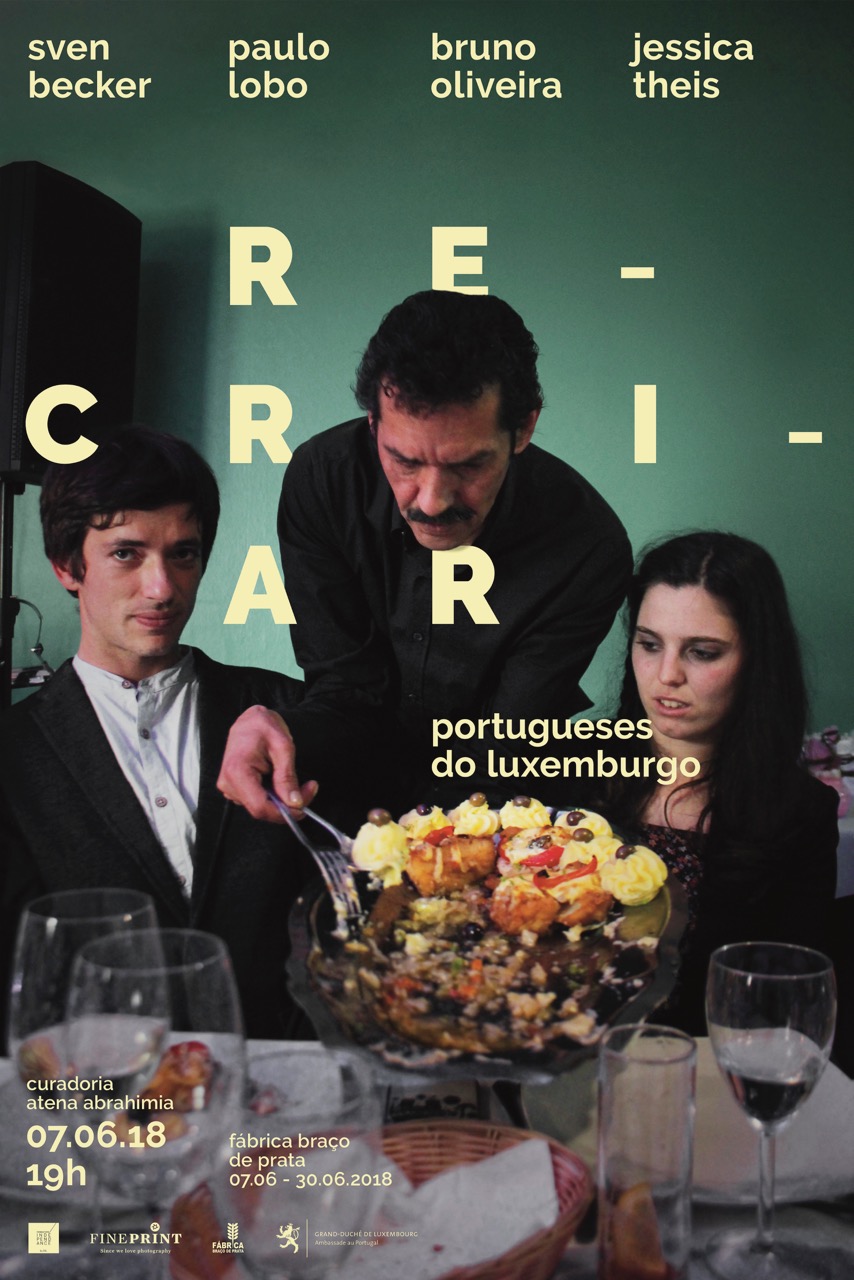
    The MA student Atena Abrahimia was the curator of the group photography exhibition “RECRIAR: Portugueses do Luxemburgo”, that gathers works by Sven Becker, Paulo Lobo, Bruno Oliveira, Jessica Theis. The exhibition will take place between the 7th and the 30th of June in Fábrica Braço de Prata, at Sala Arendt.

    The opening will be May 7

    ABOUT THE PROJECT

    Since the enlargement of the European Union to 28 countries, an increase of migration flows can be observed. During the past decade, the number of intra-European and, above all, international migrants has risen tremendously, which makes it one of the most important and urgent issues of our time.

    The group photography exhibition ‘RECRIAR: Portugueses do Luxemburgo’ concentrates on the public and private lives of the Portuguese who have settled down in Luxembourg since the 1960s. The works of four photographers from Luxembourg will be presented: Sven Becker, Paulo Lobo, Bruno Oliveira and Jessica Theis. Each of them will explore a different aspect of the theme.

    Since 1960, the number of Portuguese in Luxembourg has risen. Today they make up around 16% of the total Luxembourgish population. The Portuguese in Luxembourg represent the highest proportion of Portuguese in relation to the local population, outside of Portugal. What is the reason for this high percentage? What has driven so many Portuguese to leave their country and choose Luxembourg as their destination? Besides trying to find answers to these questions, this exhibition also examines the challenges of identity and belonging as well as the challenges and results of immigration which have shaped the Portuguese Luxembourgers and Luxembourg as a country.


    recriar_poster_final_sans_bordure_small

  • Exhibition at Parques de Sintra organized by a Lxc MA student

    Exhibition at Parques de Sintra organized by a Lxc MA student

    cartaz.png

    The exhibition “Significação. Outras Margens do Jardim” was organized and produced by the Lisbon Consortium Master student Ricardo Escarduça, with the coordination of Maria de Carvalho, during his internship at the Lxc partner Parques de Sintra-Monte da Lua. The exhibition, that opens May 5 and goes until June 3, shows the work of four artists, selected in the open competition. The  juri was composed by Isabel Capeloa Gil, Marc Lenot and Sérgio. B. Gomes and had Peter Hanenberg as scientif adviser.

    More information here

  • “Donald Trump’s Political Reality”: workshop program now available

    The workshop organized by PhD students from the Lisbon Consortium titled “Donald Trump’s Political Reality: The Politics of Fakery and the Fakery of Politics” will place from 10:00 to 18:00 on April 30, 2018 at the Universidade Católica Portuguesa. And continues from 21:00-22:00 in Anjos 70.

    The program is now available. 

  • CALL FOR PAPERS: VIII Graduate Conference in Culture Studies

    viii graduate conference.png

    REPLACEMENT AND REPLACEABILITY IN CONTEMPORARY CULTURE

    VIII Graduate Conference in Culture Studies

    6–7 December 2018 | Universidade Católica Portuguesa – Lisbon


    Call for Papers

    We call for papers for the 8th Graduate Conference in Culture Studies. This edition will be on the theme of “Replacement and Replaceability in Contemporary Culture” and takes place in Lisbon on the 6th and 7th of December 2018. The conference is organized by The Lisbon Consortium in conjunction with the Research Centre for Communication and Culture at the Universidade Católica Portuguesa.

    We aim to discuss the ways in which the concept of ‘replacement’ can be understood and productively used for the study of contemporary culture. Replacement has been one of the central concepts in the study of culture for quite some time, and, at the risk of overstating this claim, one could say that replacement is a concern in all fields of knowledge dealing with the study of culture today. It is, however, rarely the central focus in academic discussion and this event aims to contribute to a more detailed analysis of the uses, misuses, and usefulness of this particular concept for the study of cultural objects.

    Hearing the words replacement and replaceability, one naturally wonders: Who or what is being replaced? Who is doing the replacing? What counts as replaceable? Is there a logic of replacement? What happens when bodies are deemed replaceable for other bodies? Or for machines? How does replacement communicate with other, related, concepts, such as translation, repetition, reiteration, quotation, citation, metaphor, metonymy, synechdoche, and displacement? And how does it acquire meaning in connection to other concepts like false-consciousness, workforce, precariousness, simulacrum, spectacle, and ideology? How can replacement or replaceability be made useful for the study of cultural objects? Which objects warrant their use? It is on these and related questions that we invite abstracts to be presented at our conference.


    Ideas for proposals

    -Replacement, technology and labor.

    – Replacement and the body.

    – Replacement and disability.

    Replacement and the queer body.

    Replacement and colonialism.

    Replacement and representation.

    Replacement and translation.

    Replacement and biopower.

    Replacement and the digital.

    Replacement by AI.

    Replacement and recognition.

    Replacement and knowledge production.

    Replacement and simulacrum.

    Replacement and death.

    Replacement and the archive.

    – Replacement and documentat

    Background

    Theoretical understandings of power tend to highlight the importance of controlled reproduction of human beings, or subjects, in order for power to function. One may think of a wide-ranging number of theorists here, from Karl Marx, through Louis Althusser, and on to Michel Foucault. In the study of bureaucratic modes of power exertion, documents can function as the irreplaceable expression of an identity or a right, as in the cases of identity cards, passports, and diplomas.

    In translation studies, the notion of translation as a specific act of replacement is of central concern. In media theory and the study of visual culture, the notion of representation can be understood as a moment in which the image replaces the ‘original.’ In literary studies, concepts such as metaphor and metonymy are examples of replacing one word for another, a procedure considered essential to the production of meaning through language.

    In Lacanian psychoanalysis, the mirror-stage functions as a scene in which the physical body is temporarily replaced by an imaginary double. Feminist- and queer theorists have often critiqued heterosexist and heteronormative approaches to otherness as failed, or attempted copies of heterosexual male life. In posthumanist discourses, the very notion of the human undergoes a moment of replacement by some kind of being that is no longer fully human and all too often celebrated as beyond the human in a teleological way. And post- and de-colonial theorists have read colonial activities of ‘Western powers’ as forced replacements of one culture for another.


    We invite proposals for contributions in the form of 20-minute presentations in which replacement or replaceability are used either as concepts of analysis, put into dialogue with a cultural object, or in which the concepts themselves come under theoretical scrutiny.

    Proposals should be no longer than 250 words and have to be sent to replacementconference2018@gmail.com no later than June 15th 2018.

    Your abstract will be peer reviewed and you will receive notification of acceptance as soon as possible thereafter, but no later than the end of July 2018.

    Upon acceptance you will be requested to register and provide some personal details to finalize your registration.

    The conference will be a two-day event, taking place at the Universidade Católica Portuguesa. It is scheduled to take place on the 6th and 7th of December 2018.


    Registration fee

    The Registration Fee is €50,00 (this includes lunch, coffee breaks and conference materials).

    For The Lisbon Consortium students and members of CECC, there is no registration fee.

    Organizing Committee

    Sara Magno, Jad Khairallah & Ilios Willemars


    For more information, updates and details, see replacementconference.wordpress.com/
  • Student’s curatorship project: Artivism = Capital

    Student’s curatorship project: Artivism = Capital

    Artivism = Capital – puts together the students’ final projects of the 2nd edition of the Curatorship seminar, in the frame of the MA & PhD international program in Culture Studies. This curatorial project unites 4 artworks prepared by the Portuguese and international artists Alexandra Ferreira & Bettina Wind, Maria Trabulo, Marilá Dardot and Nikolaj Bendix Skyum Larsen, who draw attention to problems such as migration crisis, passive citizenship, economic instability, and political injustice.
    Artivism = Capital will be published online as a special edition of Contemporânea magazine.

    Follow the project activities on facebook and on instagram.

  • Workshop “Donald Trump’s Political Reality”: call for participation

    The workshop organized by PhD students from the Lisbon Consortium is titled “Donald Trump’s Political Reality: The Politics of Fakery and the Fakery of Politics”. It takes place on April 30, 2018 at the Universidade Católica Portuguesa.

    https://trumpsfakeryofpolitics.wordpress.com/

    Call for Participation – Workshop – The Lisbon Consortium

    This workshop on politics in the time of Donald Trump’s presidency is organized by PhD students from the Lisbon Consortium. The aim is to think and discuss the notion of an emerging political field that can perhaps be characterized by the prevalence of claims of inauthenticity, fakeness, lies, semblance, virtuality and error. Claims of “Fake News” are constantly made by different agencies within the Trump administration and by the president himself as well. This notion of fakeness, often comes to stand for a supposed political strategy by Trump’s opponents, suggestive of a binary between the ‘real,’ ‘truthful,’ and ‘honest,’ on the one hand, and a supposed rhetorico-political strategy of discrediting this ‘truth’ on the other. ‘The media’ is turned into the political opponent, suggesting that unmediated, direct, and straight-forward speech by Trump – ironically, often by means of his Twitter account – provides ‘the people’ with a truth that is less fake, less political, and more pure.

    Trump’s critics, at the same time, often use a similar rhetorics of fakery when it comes to criticizing this presidency. The common slogan “Not My President” performatively conjures up a connotation of a fake-presidency, a presidency that is not binding for all, one that can be disavowed at will. Indeed, there seems to be a rhetoric of crisis, of exceptionality, and of scandalousness, one that finds its grounding in the problematics of the political lie and distortion that are used by the Trump administration time and again to generate publicity and confusion.

    This workshop aims at discussing the logic of fakery in the connection to mediation within the context of Trump’s politics. In his recent book Scatter 1. The Politics of Politics in Foucault, Heidegger, and Derrida, 2016, Geoffrey Bennington asks a question that can be summarized as follows What if political rhetoric is unavoidable, an irreducible part of politics itself?” and in response, we want to ask: “What happens when fakery becomes the main strategy of political attack?” (Bennington 4). Following Jean-Jacques Baudrillard’s warning in, Simulacra and Simulation, that one should not all too readily read a political scandal as scandalous, and instead attempt to read it as part and parcel to a larger power structure that inscribes and overwrites the very notion of reality and the real, we ask: “What if Trump’s presidency is not a scandal?” (Baudrillard 12).

    This workshop aims to analyze these problematics with an eye for an emerging field of political power that has both racist, sexist, heterosexist, and otherwise discriminatory elements, whilst at the same time promoting a classist economical agenda that marginalizes middle and low class Americans at the benefit of the extremely wealthy, big business, and high finance. A theoretical point of departure for our discussion will be that these two elements, economical state power on the one hand, and a logic of discrimination and racism on the other, should be analyzed in their connections rather than opposed to one another. Following Michel Foucault’s analyses of racism in connection to biopower, and with it to economy and capitalist State power, we suggest that an analysis of politics in the times of Trump should aim at a reading that pays attention to discrimination at the intersection of race, sex, gender, and class, and refuses to artificially oppose these elements of political strategy to each other (Foucault 259–261).

    The organizers invite everyone who is interested to join and discuss these issues with us during a morning and afternoon program which will include presentations and a lot of time for discussion.

    We call for proposals for ten minute presentations on themes related to the above. Proposals for presentations should be 300 words at the most and should be send to trumpsfakeryofpolitics[at]gmail[dot]com before March 15, 2018. The subject of your email should include your name and the words “proposal workshop Trump’s fakery of politics”. The organizers of the workshop will then notify you about the acceptance of your proposal as soon as possible.

    The workshop will take place on April 30, 2018, at the Universidade Católica Portuguesa. More information about the location and exact times will follow.

    Keywords:
    • Donald Trump
    • Truth/Fakery
    • ‘fake-news’
    • Simulacrum
    • Political activism
    • Fascism
    • Biopower
    • Classism
    • Racism
    • Virtuality
    Baudrillard, Jean. Simulacra and Simulation. Ann Arbor, MI: University of Michigan Press, 2010. Print.
    Bennington, Geoffrey. Scatter 1: The Politics of Politics in Foucault, Heidegger, and Derrida. First edition. New York, NY: Fordham University Press, 2016. Print.
    Foucault, Michel. Society Must Be Defended: Lectures at the Collège de France, 1975-76. Ed. Mauro Bertani, Alessandro Fontana, and François Ewald. Trans. David Macey. New York: Picador, 2003. Print.
  • Photo essay on Rua do Benformoso, by Reuben Ross

    Reuben Ross, Phd student of the Lisbon Consortium, published a photo essay on Rua do Benformoso, in Lisbon, on Public Books, a site  founded in 2012 by Sharon Marcus , a literary critic, and Caitlin Zaloom, an anthropologist, “to create a diverse new home for intellectual debate online”

    Check the photo essay here:

    The Street and the World: Rua do Benformoso, Lisbon

  • Reading circle open to students and professors: ‘The politics of Trump’s politics, A Politics of Surroundings Special’

     The PhD students in Culture Studies at the Lisbon Consortium  that organize the reading circle are preparing a special session, date to be announced.

    The politics of Trump’s politics, A Politics of Surroundings Special

    In his recent book Scatter 1. The Politics of Politics in Foucault, Heidegger, and Derrida, 2016, Geoffrey Bennington poses the following question: “What if political rhetoric is unavoidable, an irreducible part of politics itself?”

    We would like to invite the corpus of The Lisbon Consortium, students and professors, to join us in a close reading of Bennington’s book and to participate in the discussion of the main ideas presented in it. Our intention is to see how the author responds to his question, and to use his conceptual framework to critically engage with the state of contemporary politics.

    More HERE